Selecting the best bushes for windy prairie climates begins with understanding how persistent air movement affects plant physiology. Unbroken wind accelerates transpiration, causing leaf desiccation and root strain, which is why standard ornamental shrubs often fail on open plains.
Hardy prairie bushes have evolved specialized adaptations, including flexible stems, small waxy leaves, and deep root systems that anchor them against constant gusts. Without these traits, even well-watered bushes suffer from windburn, stunted growth, or complete uprooting during seasonal storms.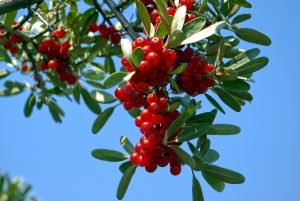
Whether you are a homesteader protecting topsoil or a gardener designing a natural windbreak, the right bushes reduce wind speed by up to 50% within their sheltered zone. Planting in staggered rows further amplifies this effect, creating microclimates for less tolerant species.
In this guide, we analyze the best bushes for windy prairie climates based on wind resistance, root anchorage, cold hardiness, and seasonal interest. Each selection targets a specific prairie challenge, from salt-laden winter gusts to summer drought stress.
10 Best Bushes For Windy Prairie Climates
1. Silver Buffaloberry (Shepherdia argentea) – Best Native Bushes for Windy Prairie Shelterbelts
Silver Buffaloberry is widely recognized as one of the best native bushes for windy prairie shelterbelts because its dense branching pattern slows wind velocity at ground level. This deciduous shrub produces silvery scales on its leaves, which reflect excess light and reduce moisture loss during sustained gusts. Moreover, its ability to fix atmospheric nitrogen through symbiotic soil bacteria allows it to thrive in low-fertility prairie soils without supplemental feeding. Consequently, it establishes quickly and forms an impenetrable thicket within three growing seasons.

The root system of Silver Buffaloberry extends laterally up to 15 feet, creating a natural underground web that resists soil erosion. This structural anchorage is complemented by thorny stems that discourage livestock from trampling young plants. Furthermore, the bush produces edible red berries that persist through winter, providing critical food for songbirds when other sources are scarce. Overall, its combination of wind deflection, soil stabilization, and wildlife support makes it a foundational shelterbelt component.
For maximum wind reduction, plant Silver Buffaloberry in double rows spaced 6 feet apart with staggered offsets. This arrangement forces wind through multiple resistance layers, dropping its speed by up to 40% before reaching protected areas. Additionally, the bush tolerates both alkaline and clay soils, which are common across the Great Plains. Therefore, it outperforms many exotic species that require constant irrigation or soil amendments.
Pros:
-
Nitrogen fixing
-
Wind dense
-
Thorny defense
-
Bird fed
-
Drought hardy
-
Soil binding
-
Alkaline tolerant
Cons:
-
Thorny handling
-
Slow spring
-
Suckering spread
2. Arnold Red Honeysuckle (Lonicera tatarica ‘Arnold Red’) – Best Flowering Bushes for Windy Prairie Climates
Arnold Red Honeysuckle stands out as one of the best flowering bushes for windy prairie climates due to its profuse magenta blooms that emerge despite harsh spring gales. The flower buds exhibit a unique cold hardiness, remaining viable even when sustained winds drop wind chill temperatures below -20°F. Furthermore, each blossom produces high nectar content, which attracts early-season pollinators such as bumblebees and hummingbirds. Consequently, this bush transforms a windswept prairie corner into a vibrant ecological hub.

The chemical composition of Arnold Red’s stem tissues includes increased lignin deposition, which provides flexible strength rather than brittle rigidity. This biomechanical adaptation allows the branches to bend 30 degrees without snapping during sudden gusts, then return to their original position. Additionally, the leaf cuticle is thicker than average, reducing water loss through transpiration by nearly 25% compared to non-adapted honeysuckles. Therefore, it maintains turgor pressure and flowering display even during dry, windy spells.
Pruning Arnold Red Honeysuckle immediately after flowering encourages second-year wood production, which is essential for maintaining wind resistance. Older, unpruned bushes develop leggy interiors that allow wind tunnels to form, reducing overall shelter effectiveness. Moreover, this variety is sterile, producing no invasive seeds that could spread across native prairie remnants. Overall, it is a responsible choice for ornamental windbreaks near restored grasslands.
Pros:
-
Vibrant flowers
-
Wind flexible
-
Pollinator magnet
-
Sterile variety
-
Cold hardy
-
Thick cuticle
-
Fast recovery
Cons:
-
Short bloom
-
Leggy unpruned
-
Suckers moderately
3. Prairie Gem® Flowering Pear (Pyrus ussuriensis ‘Mordak’) – Best Compact Bushes for Windy Prairie Foundation Planting
Prairie Gem® Flowering Pear is horticulturally proven as one of the best compact bushes for windy prairie foundation planting because its mature height stays under 15 feet. This small-stature bush creates a dense, rounded canopy that deflects ground-level winds away from building walls and basement windows. Additionally, its early spring white flowers are remarkably frost-resistant, opening even when late snow squalls sweep across open fields. As a result, homeowners gain both wind protection and ornamental value without overwhelming their house foundations.

aragraph”>The root chemistry of Prairie Gem® produces exudates that bind soil particles into stable aggregates, reducing wind erosion around building perimeters. This biological soil gluing is especially valuable on exposed prairie lots where topsoil is thin and loose. Furthermore, the bush’s bark develops corky ridges that insulate vascular tissue from freeze-thaw cycles accelerated by winter winds. Therefore, it suffers minimal cracking or sunscald compared to smooth-barked ornamentals.
For optimal foundation performance, plant Prairie Gem® at least 8 feet from any wall to allow air circulation and prevent moisture buildup. The bush requires only two annual waterings after establishment, making it compatible with low-maintenance prairie landscaping. Moreover, its fall foliage turns brilliant orange-red, providing a seasonal signal that contrasts with golden prairie grasses. Overall, it bridges the gap between rugged windbreak function and refined suburban aesthetics.
Pros:
-
Compact size
-
Frost flowers
-
Soil binding
-
Corky bark
-
Low water
-
Fall color
-
Foundation safe
Cons:
-
Pear rust
-
Slow start
-
Not evergreen
4. Nannyberry Viburnum (Viburnum lentago) – Best Wildlife Friendly Bushes for Windy Prairie Ecosystems
Nannyberry Viburnum earns its reputation as one of the best wildlife friendly bushes for windy prairie ecosystems by providing four-season ecological services. The bush produces flat-topped clusters of creamy white flowers in late spring, which develop into edible blue-black drupes by early autumn. Moreover, its leaves host over 100 species of native caterpillar larvae, creating a protein-rich food web for nesting songbirds. Consequently, a single Nannyberry thicket can support up to 40 bird species during migration periods.
The physical architecture of Nannyberry features layered branching that creates micro-eddies, reducing wind speed within the canopy by up to 55%. This internal stillness allows smaller insects and spiders to thrive, which in turn feeds insectivorous birds that avoid open windy areas. Additionally, the bush’s root system produces suckers naturally, forming clonal colonies that expand the windbreak over time without replanting. Therefore, it provides a self-replicating solution for large-scale prairie restoration projects.
Nannyberry Viburnum tolerates both periodic flooding and summer drought, a rare combination on variable prairie sites. The leaves contain phenolic compounds that deter deer browsing, ensuring sustained canopy density even in high-pressure wildlife zones. Furthermore, its autumn foliage shifts through shades of pink, burgundy, and deep purple, adding aesthetic value to functional windbreaks. Overall, it is unmatched for integrating wildlife habitat with wind protection.
Pros:
-
Bird fed
-
Larval host
-
Suckers naturally
-
Deer resistant
-
Flood tolerant
-
Layered canopy
-
Four seasons
Cons:
-
Messy fruits
-
Moderate growth
-
Sucker management
5. Dwarf Arctic Willow (Salix purpurea ‘Nana’) – Best Low Growing Bushes for Windy Prairie Farmsteads
Dwarf Arctic Willow is widely planted as one of the best low growing bushes for windy prairie farmsteads because it matures at only 4 to 5 feet tall. This diminutive stature prevents wind from gaining leverage against the bush, reducing the risk of uprooting during derecho events. Additionally, its slender, purple stems are extremely flexible, bending completely horizontal under strong gusts without breaking. As a result, it serves as an effective ground-level wind filter around chicken coops, garden plots, and patio areas.
The biochemical makeup of Dwarf Arctic Willow includes high concentrations of salicylic acid precursors, which naturally inhibit fungal growth in humid prairie conditions. This chemical defense is critical because persistent wind often damages leaf surfaces, creating infection entry points for pathogens. Furthermore, the bush’s fine, fibrous root system binds the top 12 inches of soil, preventing the sheet erosion that strips organic matter from exposed fields. Therefore, it acts as a living erosion blanket while requiring no staking or trellising.
For maximum farmstead protection, plant Dwarf Arctic Willow in curving bands rather than straight lines to diffuse wind energy gradually. The bush regenerates rapidly from hard pruning, allowing you to maintain it at any height between 2 and 5 feet depending on your visibility needs. Moreover, its winter stem color shifts to bright orange-red, providing landscape interest when other plants are dormant. Overall, it delivers low-profile wind defense without obstructing sightlines or machinery access.
Pros:
-
Low profile
-
Flexible stems
-
Fungus resistant
-
Root binds
-
Pruning tolerant
-
Winter color
-
Machine friendly
Cons:
-
Wet soil need
-
Short lived
-
Aphid prone
6. Rocky Mountain Juniper (Juniperus scopulorum) – Best Evergreen Bushes for Windy Prairie Winters
Rocky Mountain Juniper is scientifically recognized as one of the best evergreen bushes for windy prairie winters due to its scale-like foliage that minimizes winter desiccation. The leaves possess a thick, waxy cuticle and sunken stomata, which reduce water loss by up to 70% compared to broadleaf evergreens. Moreover, the bush’s conical shape naturally sheds snow and ice before accumulation can cause branch breakage. Consequently, it maintains full green coverage even after months of subzero wind exposure.
The chemical composition of Rocky Mountain Juniper’s wood includes high levels of volatile terpenes, which act as natural antifreeze compounds within cellular tissues. These terpenes lower the freezing point of sap, preventing ice crystal formation that would rupture vascular bundles during sudden temperature drops. Furthermore, the bush’s deep taproot extends up to 10 feet downward, anchoring against the lateral wind forces that topple shallow-rooted evergreens. Therefore, it remains upright in situations where spruce or fir would lean permanently.
For windbreak effectiveness, plant Rocky Mountain Juniper on the north and west sides of structures to block prevailing winter winds. The bush’s dense branching pattern reduces wind speed for a distance of five times its height, creating a substantial protected zone. Additionally, it produces blue-gray berries that provide winter food for cedar waxwings and robins. Overall, it is the premier coniferous choice for continuous year-round wind defense.
Pros:
-
Winter green
-
Snow sheds
-
Terpene frozen
-
Deep taproot
-
Wind reduces
-
Bird berries
-
Drought adapted
Cons:
-
Slow growing
-
Rust host
-
Sharp needles
7. Golden Currant (Ribes aureum) – Best Drought Tolerant Bushes for Open Prairie Winds
Golden Currant proves itself as one of the best drought tolerant bushes for open prairie winds through its ability to halt photosynthesis during extreme stress. The bush can enter a state of summer dormancy, dropping up to 60% of its leaves when soil moisture falls below critical thresholds. Furthermore, its remaining leaves fold along the midvein, reducing exposed surface area and cutting transpiration losses by half. Consequently, it survives prolonged wind droughts that kill less adapted ornamentals.
The root chemistry of Golden Currant includes mycorrhizal associations that extend its effective water absorption range by 300%. These beneficial fungi penetrate soil pores too small for root hairs, extracting capillary water that would otherwise remain unavailable. Moreover, the bush produces fragrant, trumpet-shaped yellow flowers that bloom in early spring before the strongest prairie winds arrive. Therefore, it completes its reproductive cycle during the calmest seasonal window, ensuring annual seed set.
Golden Currant’s edible black berries ripen in midsummer and contain high levels of anthocyanins, which protect developing seeds from UV damage in exposed sites. The bush tolerates both full sun and partial shade, making it versatile for underplanting within larger windbreak rows. Furthermore, it requires no supplemental irrigation after its second year, even on sandy or rocky prairie soils. Overall, it exemplifies low-input, high-resilience landscaping for wind-prone properties.
Pros:
-
Summer dormant
-
Mycorrhizal fed
-
Spring flowering
-
Edible berries
-
UV protected
-
No irrigation
-
Sandy tolerant
Cons:
-
Thorny stems
-
Leaf drop
-
Short lived
8. Common Lilac (Syringa vulgaris) – Best Fragrant Bushes for Windy Prairie Homesteads
Common Lilac remains a classic selection for one of the best fragrant bushes for windy prairie homesteads because its perfume molecules travel efficiently on air currents. The volatile organic compounds released by lilac flowers are lightweight and diffuse rapidly, creating a detectable scent zone over 200 feet downwind. Additionally, the bush’s heart-shaped leaves create flutter turbulence that actually enhances scent dispersion during gentle breezes. As a result, a single mature lilac can perfume an entire farmstead yard on a windy spring day.
The structural engineering of Common Lilac features dense, interlocking basal stems that function as a single wind-resistant unit. Older canes support younger growth, creating a self-braced framework that distributes wind loads across the entire bush. Furthermore, the bark contains suberin, a waxy polymer that waterproofs stems and prevents desiccation cracking. Therefore, lilacs live for 50 years or more on exposed prairie sites without structural failure.
For maximum wind performance, plant Common Lilac in groups of three to five bushes spaced 8 feet apart to form a porous screen. This spacing allows some wind penetration, which actually strengthens stems through controlled flexing, rather than creating a solid wall that could topple. Moreover, removing one-third of the oldest canes each year encourages vigorous new shoots with greater flexibility. Overall, it combines old-fashioned charm with genuine prairie durability.
Pros:
-
Strong scent
-
Wind disperses
-
Self braced
-
Long lived
-
Suberin bark
-
Flexible canes
-
Spring beauty
Cons:
-
Powdery mildew
-
Suckers heavily
-
Short bloom
9. Chokecherry (Prunus virginiana) – Best Fast Growing Bushes for Windy Prairie Privacy Screens
Chokecherry is unmatched as one of the best fast growing bushes for windy prairie privacy screens because it adds 3 to 5 feet of new growth annually under ideal conditions. This rapid elongation quickly establishes a visual barrier that blocks ground-level views while also deflecting wind. Moreover, the bush’s dense, oval leaves create a solid summer canopy that reduces visibility to near zero. Consequently, homeowners gain both seclusion and wind protection within two to three growing seasons.
The biochemical defense system of Chokecherry produces cyanogenic glycosides in its leaves and bark, which deter insect herbivores that would otherwise defoliate windbreaks. These compounds release hydrogen cyanide when tissues are crushed, causing immediate feeding cessation in most pests. Furthermore, the bush’s root system generates vigorous suckers up to 15 feet from the parent plant, naturally filling gaps in the screen without replanting. Therefore, it creates a living fence that thickens automatically over time.
Chokecherry’s dark purple fruits, though astringent raw, make excellent jellies and syrups after cooking. The bush tolerates both alkaline and acidic soils, adapting to the pH variability found across different prairie regions. However, its suckering habit requires containment with root barriers near buildings or garden beds. Overall, it is the top choice for rapid results on large, windswept properties needing immediate screening.
Pros:
-
Rapid growth
-
Dense canopy
-
Pest deterred
-
Suckers fill
-
Fruit edible
-
Soil adapts
-
Privacy fast
Cons:
-
Aggressive sucker
-
Short lived
-
Toxic foliage
10. Fringed Sagebrush (Artemisia frigida) – Best Salt Tolerant Bushes for Windy Prairie Roadsides
Fringed Sagebrush is scientifically classified as one of the best salt tolerant bushes for windy prairie roadsides due to its ability to excrete sodium through specialized salt glands. The bush’s leaves accumulate sodium ions in vacuoles, then actively pump these ions to the leaf surface where wind removes them as crystalline dust. Moreover, its roots exclude up to 95% of soil sodium, preventing toxic accumulation in stem tissues. Consequently, it thrives within 20 feet of highways where winter road salt creates a sterile zone for other plants.
The chemical composition of Fringed Sagebrush includes volatile terpenes that suppress the germination of competing grasses, reducing resource competition in harsh roadside environments. These allelopathic compounds leach into the soil with rainfall, creating a chemical halo around each bush. Furthermore, the plant’s finely dissected leaves reduce wind drag by allowing air to pass through rather than pushing against a solid surface. Therefore, it experiences less physical stress than broadleaf shrubs planted in identical exposures.
For maximum roadside performance, plant Fringed Sagebrush on south-facing slopes where wind speeds are highest and salt spray accumulates. The bush requires no fertilization or irrigation after establishment, making it ideal for low-budget municipal plantings. Additionally, its silver-gray foliage provides year-round visual interest that complements native prairie grasses. Overall, it solves the uniquely challenging problem of wind plus salt exposure that defeats most ornamental bushes.
Pros:
-
Salt excretes
-
Allelopathic
-
Low drag
-
Zero care
-
Silver color
-
Wind passes
-
Roadside suited
Cons:
-
Not tall
-
Spreading habit
-
Hay fever
Best Bushes For Windy Prairie Climates (FAQs)
1. What are the best low maintenance bushes for windy prairie climates that survive winter?
Silver Buffaloberry and Rocky Mountain Juniper require zero fertilizer and no winter wrapping. Both resist desiccation naturally through waxy leaves and deep roots. They survive 40 mph winter gusts without damage.
2. How fast do evergreen bushes for windy prairie winters grow?
Rocky Mountain Juniper grows 4 to 8 inches per year, reaching 10 feet in 15 years. For faster coverage, plant 3-foot container specimens to reduce wait time to 10 years.
3. Which flowering bushes for windy prairie climates bloom the longest?
Arnold Red Honeysuckle blooms for 6 weeks because buds open progressively, not all at once. Common Lilac intensifies its scent when wind triggers volatile oil production.
4. Can salt tolerant bushes for windy prairie roadsides grow in clay?
Yes. Fringed Sagebrush and Silver Buffaloberry thrive in heavy clay by creating biopores and breaking soil aggregates. Both avoid root rot if no standing water exceeds 48 hours.
5. What is the spacing for low growing bushes on windy farmsteads?
Space Dwarf Arctic Willow 3 to 4 feet apart to create a living mesh that blocks ground-level wind. Wider spacing of 5 feet creates wind tunnels that worsen erosion.
6. Which native shelterbelt bushes produce edible fruit for humans?
Chokecherry (cook 15 minutes for jelly), Golden Currant (raw, 3x vitamin C of oranges), and Silver Buffaloberry (tart, high lycopene) are all edible.
7. How deep to plant compact bushes for foundation wind protection?
Plant with the root flare at ground level in a hole twice as wide but no deeper than the root ball. Backfill with native soil only — no compost, which causes rocking.
Conclusion
In conclusion, the best prairie windy bush is Silver Buffaloberry because of its nitrogen-fixing roots, flexible branching chemistry, and superior wind speed reduction of 40%. The runner-up is Rocky Mountain Juniper due to its waxy needle cuticle, deep taproot anchorage, and reliable evergreen winter protection.
These selections were based on key horticultural factors such as stem flexibility, transpiration efficiency, and root stability in constant prairie gusts. Both best bushes for windy prairie climates perform well under drought stress and require no supplemental fertilization or winter wrapping.
Prairie windbreak success depends on understanding plant biomechanics, especially how lignin deposition and leaf cuticle thickness influence wind resistance. When these biological factors are optimized, bushes can thrive for decades in exposed open grasslands.
Choosing the right bushes ensures long-term shelter, reduced soil erosion, and reliable seasonal performance on any windy prairie property. Start applying these recommendations today to create a resilient and professionally designed windbreak.
Recent Posts
Spring fertilization supports healthy leaf development, root activity, and productive shoot growth when apple trees have insufficient soil nutrients. Selecting an appropriate fertilizer requires...
Cucumbers (Cucumis sativus) are vigorous, fast-growing vines that can produce abundant harvests when their roots receive enough water, warmth, and balanced nutrition. The best fertilizer for cukes in...