Often overlooked among surrounding vegetation, weeds with little blue flowers can quickly establish themselves in lawns, gardens, fields, and disturbed areas. Their small blue blooms provide a useful identification clue, although leaf shape, stem structure, growth habit, and flowering season are equally important.
Flower color alone is not enough for reliable identification because several unrelated weed species produce similar blue or blue-purple flowers. Examining the entire plant helps distinguish creeping lawn weeds from upright field species and harmless wildflowers.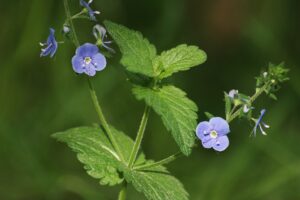
Some species spread through seeds, while others rely on creeping stems, rhizomes, or persistent root systems. Understanding these growth mechanisms is important because removing the visible flowers without addressing the plant’s reproductive structure may allow the infestation to return.
In this guide, we will examine common weeds with little blue flowers, focusing on identification characteristics, growing conditions, reproduction, and practical control approaches.
10 Common Weeds With Little Blue Flowers
1. Creeping Speedwell (Veronica filiformis) – Small blue flowers in lawns
Creeping speedwell is a common lawn weed recognized by its tiny pale-blue flowers and thin stems that spread horizontally through grass. The rounded leaves are small, while the flowers appear individually above the low-growing foliage. Its creeping stems can root at nodes, allowing the plant to occupy bare patches and expand laterally.

- 600+ Creeping Speedwell Seeds for Planting Creeping Speedwell Ground Cover Plant Seeds Non-GMO Heirloom Flower Outdoor Garden
It favors moist, moderately fertile lawns and areas where turf growth is thin. Low growth allows it to survive mowing that removes taller competing vegetation. Its ability to spread across the soil surface makes established patches increasingly noticeable. Dense turf can reduce opportunities for new plants to establish.
Hand removal works best when infestations are small and the plants can be lifted with their roots. Improving turf density can reduce available space for creeping speedwell. For larger infestations, use only a herbicide specifically labeled for the weed and intended lawn type. Repeated monitoring is important because small stems can remain hidden among grass.
Pros
- Tiny blue flowers
- Low growth
- Easy spotting
- Creeping habit
- Moisture tolerant
- Lawn adapted
- Distinctive blooms
Cons
- Spreads laterally
- Lawn competitor
- Persistent
2. Persian Speedwell (Veronica persica) – Tiny blue-flowered garden weed
Persian speedwell produces small blue flowers with darker markings and rounded leaves carried along slender stems. The flowers are often noticeably larger than those of some creeping speedwells, making the species easier to recognize when viewed closely. Its seed capsules develop after flowering and help maintain populations in cultivated soil.

This annual or winter-growing weed commonly appears in gardens, lawns, cultivated beds, and disturbed ground. It can complete its reproductive cycle relatively quickly under favorable conditions. Seeds allow new plants to appear after soil disturbance or cultivation. Regular observation is therefore useful during flowering periods.
Removing plants before mature seed capsules develop can reduce future populations. Hand weeding is practical for isolated plants, particularly in garden beds. Mulch can suppress new seedlings by reducing exposed soil and limiting light at the surface. Dense, healthy ground cover also makes establishment more difficult.
Pros
- Blue flowers
- Small stature
- Easy identify
- Common
- Fast cycle
- Garden adapted
- Distinct markings
Cons
- Seeds readily
- Reappears seasonally
- Disturbs beds
3. Forget-Me-Not (Myosotis spp.) – Blue-flowered weed in moist gardens
Forget-me-not species produce clusters of small blue flowers that can appear among lawns, garden beds, woodland edges, and moist disturbed ground. Their flowers usually have a contrasting yellow or white center, while the leaves are generally soft and slightly hairy. Fine hairs on the foliage can reduce airflow immediately against the leaf surface, influencing moisture loss and leaf temperature.

- Vibrant Color Trio: Includes classic true blue, soft pink, and pure white forget-me-not varieties, creating a charming pastel mix with tiny, star-shaped blooms and yellow centers for delightful spring-to-summer display.
- Easy & Reliable Growth: These cold-hardy, heirloom-style seeds are simple to grow, often self-sowing naturally to form dense carpets in shady or moist garden spots, borders, or woodland areas.
Some species are intentionally cultivated, while others can behave as weeds when they spread beyond their intended planting areas. They can produce numerous seeds that remain capable of producing new plants under suitable conditions. Moist, fertile locations generally provide favorable growing conditions. Their attractive flowers can also make them easy to overlook during early management.
Pulling plants before seed production is suitable for small unwanted populations. Removing flowering plants before seeds mature can reduce subsequent spread considerably. Garden mulch and dense companion planting can limit exposed soil where seedlings establish. Herbicide use should be based on the specific species and surrounding plants because desirable ornamentals may be sensitive.
Pros
- Blue flowers
- Attractive blooms
- Easy identify
- Moisture tolerant
- Seed producing
- Garden compatible
- Distinct center
Cons
- Can spread
- Self-seeding
- Moisture dependent
4. Blue-Eyed Grass (Sisyrinchium spp.) – Grass-like weed with blue flowers
Blue-eyed grass has narrow, grass-like leaves and small blue to violet flowers that emerge above the foliage. Despite its common name, it belongs to the iris family rather than the true grasses. Its underground rhizomes can store energy and support regrowth when the above-ground foliage is removed.

- Easy to Cultivate: Western blue eyed grass seeds thrive in USDA zones 3–10, growing up to 4–16 inches tall. This low-maintenance blue eyed grass plant flourishes in partial shade or sunny areas.
- Striking Petals: This blue flower produces vibrant, iris-like petals from spring through summer. As stunning perennial ornamental grass, it adds brilliant color to lawns, rock gardens, or containers.
It may appear naturally in lawns, meadows, roadsides, and other open areas with suitable moisture. Some species are valued as native or ornamental plants, so identification should precede removal. Flowering stems can make scattered plants highly visible during their blooming period. Its grass-like foliage can otherwise make identification difficult when flowers are absent.
Small unwanted patches can be removed manually by loosening the soil and extracting the root system. Repeated mowing may limit flowering but does not necessarily eliminate established plants. Maintaining the desired vegetation can reduce available space for expansion. Where chemical control is considered, verify that the product is labeled for the site and target species.
Pros
- Blue blooms
- Grass-like foliage
- Distinct flowers
- Rhizomatous growth
- Adaptable
- Easy flowering ID
- Meadow tolerant
Cons
- Harder identification
- Can reseed
- Rhizome regrowth
5. Asiatic Dayflower (Commelina communis) – Weed with bright blue flowers
Asiatic dayflower produces distinctive blue flowers with two prominent petals and a smaller lower petal, making it one of the easier blue-flowered weeds to recognize. Its fleshy stems and broad leaves form a spreading plant that can occupy gardens, cultivated areas, and disturbed soil. Stem nodes can root when they contact suitable soil, giving the plant an additional method of vegetative expansion.

- Stunning Aesthetics: Pale Rose Peony Poppies feature large, delicate blooms resembling peonies, with a soft, pastel pink hue that adds a romantic touch to gardens.
- Cultivation Tips: They thrive in well-drained soil with full sun to partial shade, requiring minimal care but offering spectacular spring to early summer blooms.
It prefers warm conditions and moist, fertile soil, where growth can become dense during the active season. Individual flowers typically last for a short period, so flowering may appear intermittent even when the plant is well established. Seed production contributes to persistence in disturbed ground. The combination of seeds and vegetative growth can make control more difficult.
Pulling is most effective when the soil is moist and the entire root system is removed. Repeated removal of new growth can gradually weaken established patches. Mulching can reduce new seedlings and limit available space. For larger infestations, use a properly labeled control product according to its instructions and site restrictions.
Pros
- Bright blue flowers
- Distinctive blooms
- Fast growth
- Moisture tolerant
- Spreading stems
- Easy flowering ID
- Seed production
Cons
- Persistent
- Spreads readily
- Moisture dependent
6. Corn Speedwell (Veronica arvensis) – Tiny blue flowers on a lawn weed
Corn speedwell produces very small blue flowers above compact stems and rounded, shallowly lobed leaves. The flowers can be easy to miss because they are only a few millimeters across and often appear among short vegetation. Its annual life cycle allows it to germinate, flower, and produce seeds within a relatively short period.

- WEED KILLER FOR LAWNS: Ortho WeedClear Lawn Weed Killer Ready-To-Use1 weed killer spray refill, kills weeds including dandelions, dollarweed, chickweed, and clover without harming your lawn (when used as directed)
- HOW TO USE: Attach the battery-powered Ortho Comfort Wand weed killer sprayer from your previous bottle to your new Ortho WeedClear Lawn Weed Killer Ready-to-Use1 Refill bottle to spot treat with a continuous stream--no bending or pumping required

It commonly appears in lawns, gardens, cultivated fields, and disturbed ground with relatively dry or well-drained soil. Low-growing stems allow it to remain beneath mowing height, helping established plants survive routine lawn maintenance. Seed production allows populations to reappear when soil is disturbed. Thin turf and exposed soil create favorable opportunities for establishment.
Hand pulling is practical when populations are limited and the soil is loose enough to remove the roots. Improving turf density can reduce the open spaces needed for new seedlings. Mulching garden beds can also suppress germination by blocking light at the soil surface. Larger infestations may require a site-appropriate herbicide used strictly according to its label.
Pros
- Tiny blue flowers
- Compact growth
- Easy identify
- Annual cycle
- Lawn tolerant
- Seed producing
- Widespread
Cons
- Hard to notice
- Reseeds readily
- Low growing
7. Heal-All (Prunella vulgaris) – Purple-blue flower weed in lawns
Heal-all, also called self-heal, produces dense flower heads containing small purple-blue flowers above low, leafy stems. Its leaves are usually oval and arranged opposite one another, providing useful identification clues when flowers are not present. The plant spreads through creeping stems that can root at nodes, allowing established patches to expand across suitable ground.

- 3rd Party Lab Tested: No Foreign Substances, No Fillers, Herb ID Confirmed for Your Safety, Micro test
- 100% Natural Products: No Artificial Colors or Flavors, No Sugar or Sweeteners Added
It commonly grows in lawns, meadows, roadsides, and open areas where soil remains moderately moist. Its low growth habit allows it to tolerate regular mowing better than many upright plants. Flowering stems rise above the foliage during the growing season, making established patches easier to recognize. Some gardeners intentionally retain it because it can be attractive and useful to pollinators.
Where it is unwanted, hand removal is effective for small patches when the roots and creeping stems are extracted. Maintaining dense turf reduces the bare spaces where new plants can establish. Regular mowing can prevent flowering but may not eliminate established plants. Chemical treatment should be reserved for situations where it is necessary and should match the lawn species and product label.
Pros
- Blue-purple flowers
- Low growth
- Creeping stems
- Pollinator value
- Easy flowering ID
- Lawn tolerant
- Hardy
Cons
- Spreads laterally
- Mowing tolerant
- Persistent
8. Viper’s Bugloss (Echium vulgare) – Blue-flowered roadside weed
Viper’s bugloss develops striking blue flowers along tall, upright flowering stems and has coarse, bristly foliage. The flowers can change from pinkish-purple during development to blue as they mature, creating a useful identification feature. Stiff trichomes cover much of the plant and can reduce herbivory while also influencing heat and moisture exchange at the leaf surface.

- PREMIUM SEED PACK: Contains 100 high-quality Vipers Bugloss seeds that produce stunning pink buds opening to vibrant blue trumpet-shaped flowers from June through September.
- WILDLIFE MAGNET: Attracts beneficial pollinators including birds, bees, butterflies, and hummingbird moths while being deer resistant for worry-free gardening.
It commonly occurs on roadsides, disturbed ground, grasslands, and dry open sites. The plant develops a substantial root system that helps it persist in relatively dry conditions. Numerous flowers can attract pollinating insects, although the species may become undesirable where it spreads aggressively. Its tall structure also allows it to compete effectively for sunlight.
Young plants are easier to remove before they develop substantial roots or produce seeds. Digging can be effective for isolated plants when the main root is removed completely. Cutting flowering stems before seed maturation can reduce future spread, although regrowth may occur. Protective gloves are sensible when handling bristly plants, and any chemical treatment should follow local labeling requirements.
Pros
- Bright blue flowers
- Distinctive blooms
- Drought tolerant
- Tall growth
- Easy identification
- Pollinator interest
- Hardy
Cons
- Bristly foliage
- Deep root
- Can spread
9. Forget-Me-Not Weed (Myosotis spp.) – Small blue flowers in damp lawns
Forget-me-not species can appear as volunteer plants in damp lawns and garden areas, producing clusters of tiny blue flowers with contrasting centers. Their soft, hairy leaves grow from slender stems and become more noticeable as flowering develops. Seed capsules mature after flowering and release numerous small seeds that can establish new plants in favorable soil.
- Vibrant Color Trio: Includes classic true blue, soft pink, and pure white forget-me-not varieties, creating a charming pastel mix with tiny, star-shaped blooms and yellow centers for delightful spring-to-summer display.
- Easy & Reliable Growth: These cold-hardy, heirloom-style seeds are simple to grow, often self-sowing naturally to form dense carpets in shady or moist garden spots, borders, or woodland areas.
Moist, shaded, or partially shaded locations can provide excellent growing conditions for these plants. Their relatively delicate appearance can make them easy to overlook until several plants bloom simultaneously. Some species are cultivated intentionally, so identification should precede removal. Local conditions and species differences determine whether a population behaves as a minor volunteer or a troublesome spreader.
Hand pulling is usually sufficient for small unwanted patches, particularly before seeds mature. Removing spent plants promptly can reduce the amount of seed returned to the soil. Garden mulch can limit new seedlings by reducing exposed soil. Where plants are growing among desirable ornamentals, mechanical removal is generally preferable to indiscriminate herbicide use.
Pros
- Tiny blue blooms
- Easy identify
- Moisture tolerant
- Soft foliage
- Seed producing
- Shade tolerant
- Attractive flowers
Cons
- Self-seeding
- Can spread
- Moisture dependent
10. Blue Phlox-Like Weed (Gilia spp.) – Small blue flowers in disturbed ground
Several Gilia species produce small blue, lavender, or violet flowers and can appear in open, disturbed environments where vegetation is sparse. Their finely divided or narrow foliage helps distinguish them from broadleaf lawn weeds with similarly colored flowers. Fine foliage increases the amount of photosynthetic surface exposed to available light while maintaining a relatively low overall leaf mass.

- 100% Pure, Non-GMO Seeds - No fillers, favorites only! Includes 25 easy-to-grow species: Cornflower Dwarf Blue, Candytuft, Sweet William, Indian Blanket, Prairie Coneflower, Mexican Hat, Cornflower Tall Blue, Lance leaf Coreopsis, Mixed Red Shirley, Wild Cosmos, Blanket Flower, Black Eyed Susan, Wild Perennial Lupine, Purple Coneflower, Russel Lupine, Plains Coreopsis, Siberian Wallflower, Blue Flax, Scarlet Flax, Annual Red Phlox, Sulphur/Orange Cosmos, Gloriosa Daisy
- Attracts Pollinators - With up to 300 square feet of ground cover, this non-GMO seed mix is sure to bring the bugs and birds to your yard! Easily attract bees, butterflies, and hummingbirds to pollinate blooms.
These plants are more commonly encountered in open fields, roadsides, dry ground, or naturalized areas than in intensively maintained lawns. Identification can be challenging because flower color varies between species and populations. Some native species may be ecologically valuable rather than undesirable weeds. Consequently, location and the plant’s growth behavior should be considered before removal.
For unwanted plants in small areas, hand removal before seed development provides a straightforward control method. Maintaining desirable ground cover reduces opportunities for annual species to establish in disturbed soil. Avoid removing unidentified native plants solely because they have blue flowers. When chemical control is necessary, identify the species first and select a product specifically labeled for the intended site.
Pros
- Small blue flowers
- Fine foliage
- Easy flowering clue
- Adaptable
- Seed producing
- Low maintenance
- Distinct appearance
Cons
- Identification difficult
- Color variation
- Can reseed
Control Strategies for Weeds With Little Blue Flowers
Identifying the species should come before choosing a control method, because blue-flowered plants can include desirable wildflowers, native species, and genuine weeds.
Manual Removal
- Pull young plants
- Remove roots
- Work before seeding
- Check surrounding soil
Hand removal is particularly effective for isolated weeds in gardens and small lawn infestations. Removing the complete root or creeping stem system is important for species capable of vegetative regrowth.
Improve Lawn Density
- Overseed thin areas
- Maintain suitable mowing
- Avoid bare soil
- Water appropriately
A dense lawn leaves fewer gaps where opportunistic weeds can establish. Proper mowing height and appropriate irrigation also help desirable turf compete effectively.
Mulching
- Block sunlight
- Cover bare soil
- Reduce seedlings
- Maintain coverage
Organic or inorganic mulch can reduce germination in garden beds by creating a physical barrier between seeds and light.
Herbicide Control
- Identify first
- Select appropriate product
- Follow the label
- Protect desirable plants
Herbicides should not be selected simply because a plant has blue flowers. Species identification, site restrictions, nearby vegetation, and the product label all matter.
Weeds With Little Blue Flowers FAQs
1. What are the most common weeds with little blue flowers?
Common examples include several speedwell species, Asiatic dayflower, heal-all, and some forget-me-not species. Exact identification requires examining the leaves, stems, flower structure, and growing environment.
2. How can I identify a weed with tiny blue flowers?
Start with the flower shape and number of petals, then examine leaf arrangement, stem characteristics, growth habit, and location. A plant-identification reference or extension service can help confirm uncertain species.
3. Are all blue-flowered plants weeds?
No. Some blue-flowered plants are desirable wildflowers or intentionally cultivated ornamentals. Do not remove an unidentified plant solely because it has blue flowers.
4. Why do small blue-flowered weeds keep returning?
Repeated appearance can result from persistent roots, creeping stems, or seeds stored in the soil. Removing plants before they produce mature seeds and addressing vegetative growth can reduce recurrence.
5. Can mowing eliminate blue-flowered weeds?
Mowing can reduce flowering and seed production, but it does not necessarily kill plants with low-growing stems, crowns, roots, or creeping growth. Combining mowing with other appropriate management methods is usually more effective.
6. Are weeds with little blue flowers harmful?
Their impact varies considerably by species. Some compete with turf or crops, while others provide habitat or food for insects and may have ecological value.
7. What is the best way to prevent little blue-flowered weeds?
Maintaining dense desirable vegetation, reducing unnecessary soil disturbance, removing weeds before seed production, and monitoring problem areas regularly can substantially reduce establishment.
Conclusion
In conclusion, weeds with little blue flowers cannot be identified reliably from flower color alone because several unrelated species share similar blooms. Examining leaf shape, flower structure, stem characteristics, growth habit, and habitat provides a much more dependable identification process.
Speedwells, Asiatic dayflower, heal-all, and other blue-flowering plants each have different reproductive strategies and therefore require different management approaches. Creeping species may require attention to runners or rooted stems, while annual weeds are often easier to suppress by preventing seed production.
For small infestations, timely hand removal remains a practical starting point, particularly when plants are young and the soil is workable. Dense lawns, adequate ground cover, appropriate mulching, and careful monitoring can further reduce opportunities for new plants to establish.
Before removing any blue-flowered plant, identify it carefully and consider whether it is actually unwanted in your landscape. That simple step can prevent accidental removal of beneficial wildflowers while allowing you to target genuinely invasive or troublesome species with a more effective control strategy.
Recent Posts
Spring fertilization supports healthy leaf development, root activity, and productive shoot growth when apple trees have insufficient soil nutrients. Selecting an appropriate fertilizer requires...
Cucumbers (Cucumis sativus) are vigorous, fast-growing vines that can produce abundant harvests when their roots receive enough water, warmth, and balanced nutrition. The best fertilizer for cukes in...