Often mistaken for harmless plants, weeds with 5 leaves can quickly spread and dominate lawns, gardens, and agricultural spaces if left unmanaged. Their distinct leaf patterns make identification easier, yet many property owners overlook them until infestations become difficult to control.
Understanding plant structure is essential for accurate identification and proper management. Many invasive species develop compound or palmate leaves that improve light capture and growth efficiency in competitive environments.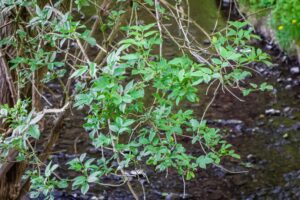
These weeds thrive in disturbed soils where reduced competition allows rapid establishment. Their ability to reproduce through seeds, runners, or deep root systems makes them persistent and difficult to eliminate once established.
In this guide, we will examine common weeds with 5 leaves, how to identify them correctly, and practical methods to control their spread effectively across different environments.
10 Most Common Weeds With 5 Leaves
1. Virginia Creeper (Parthenocissus quinquefolia) – Climbing weed with five leaflets
Virginia creeper is a climbing plant recognized by its five distinct leaflets arranged in a palmate pattern. The leaves spread outward like fingers, making identification straightforward in most environments. It climbs using adhesive tendrils that attach firmly to surfaces. These tendrils produce a natural adhesive that allows strong vertical growth on walls and trees.

This weed thrives along fences, buildings, and forest edges where it receives partial sunlight. Rapid growth allows it to cover large areas quickly, often smothering nearby plants. Dense foliage can block sunlight and reduce plant diversity. These traits contribute to its invasive nature.
Control involves cutting vines and removing root systems to prevent regrowth. Herbicides are more effective when applied to freshly cut stems. Regular pruning reduces spread and limits damage. Ongoing monitoring is necessary for long-term control.
Pros
- Fast growth
- Easy identify
- Hardy
- Climbing
- Adaptable
- Dense foliage
- Widespread
Cons
- Invasive
- Hard remove
- Spreads fast
2. Cinquefoil (Potentilla spp.) – Low-growing lawn weed with five leaflets
Cinquefoil is a low-growing weed that forms clusters of five leaflets close to the ground. The leaves are slightly serrated and spread outward, creating a dense mat. Yellow flowers appear during warm seasons. Its stolon-based growth allows it to spread horizontally and dominate turf areas.

- Condition of cinquefoil herb : a brand-new, boxed as depicted
- Active Ingredients of Dried Potentilla Palustris Herbal Tea: Comarum palustre L. - 100% five finger grass herb
This weed thrives in lawns, gardens, and open fields with moderate sunlight. It competes with grass for nutrients and moisture, reducing lawn quality. Dense patches make removal more difficult over time. These characteristics make it a persistent lawn weed.
Manual removal works best when roots are completely removed. Herbicides may be needed for widespread infestations. Improving lawn health reduces regrowth potential. Consistent maintenance is key to control.
Pros
- Low growth
- Dense spread
- Easy identify
- Hardy
- Common
- Adaptable
- Fast spread
Cons
- Invasive
- Lawn damage
- Persistent
3. Horse Chestnut Seedlings (Aesculus hippocastanum) – Five-leaf seedling growth
Horse chestnut seedlings produce palmate leaves with five large leaflets during early growth stages. These leaflets grow symmetrically from a central point, making them easy to identify. Seedlings often appear unexpectedly in gardens. Stored nutrients in the seed support rapid early development and root establishment.
They thrive in fertile soils and shaded areas with adequate moisture. Growth is fast, and seedlings can quickly develop into larger plants. Competition with nearby plants increases as they mature. Early removal is essential to prevent long-term growth.
Pulling seedlings is effective when they are small. Larger plants require digging to remove roots completely. Regular inspections help prevent establishment. Early action reduces effort.
Pros
- Large leaves
- Easy identify
- Fast growth
- Strong roots
- Hardy
- Seed spread
- Adaptable
Cons
- Becomes tree
- Hard remove
- Spreads seeds
4. Wild Cannabis (Cannabis sativa – feral) – Five-leaf palmate weed
Wild cannabis produces palmate leaves often consisting of five narrow, serrated leaflets. The plant grows upright with strong stems and distinct foliage. Leaf structure enhances light capture for rapid growth. Increased surface area improves photosynthetic efficiency and supports fast vertical development.
It thrives in open, sunny areas with disturbed soil conditions. Rapid growth allows it to outcompete surrounding vegetation. Seed production ensures continued spread in suitable environments. These traits contribute to persistence.
Removal requires uprooting entire plants before seed production. Herbicides may be used depending on regulations. Monitoring prevents regrowth. Early intervention improves control success.
Pros
- Distinct leaves
- Fast growth
- Tall plant
- Hardy
- Adaptable
- Recognizable
- Seed spread
Cons
- Spreads fast
- Hard control
- Persistent
5. Silverweed (Potentilla anserina) – Creeping weed with five leaf clusters
Silverweed produces compound leaves that often appear in five-part groupings with serrated edges. The undersides of leaves have a silvery appearance, aiding identification. It spreads through creeping runners across the soil. Runner systems allow rapid lateral expansion and colonization of open ground.
This weed thrives in moist soils, lawns, and disturbed areas. Its creeping habit enables it to form dense mats quickly. Competition with other plants reduces biodiversity. These characteristics make it difficult to control.
Manual removal requires removing runners completely. Improving drainage reduces favorable conditions. Herbicides may be used for large infestations. Regular monitoring limits spread.
Pros
- Creeping growth
- Easy identify
- Fast spread
- Hardy
- Adaptable
- Dense mats
- Moist tolerant
Cons
- Invasive
- Spreads runners
- Hard control
6. Clover (Trifolium spp. – mutation) – Five-leaf clover variant weed
Clover occasionally produces five leaflets due to genetic mutation, creating a rare but noticeable variation. The leaves are typically rounded and grow in a clustered pattern close to the ground. It spreads through creeping stems known as stolons. These stolons root at nodes, allowing rapid horizontal expansion across lawns.
This weed thrives in nitrogen-poor soils where grass struggles to compete. Its ability to fix nitrogen improves its own survival while spreading aggressively. Dense patches can quickly form in weak lawns. These traits make it persistent.
Control involves improving lawn nutrition to outcompete clover. Manual removal works for small patches. Selective herbicides may be required for large infestations. Regular lawn care reduces recurrence.
Pros
- Easy identify
- Low growth
- Nitrogen fixing
- Fast spread
- Hardy
- Common
- Adaptable
Cons
- Spreads fast
- Lawn takeover
- Persistent
7. Wood Sorrel (Oxalis spp.) – Clover-like weed sometimes appearing with five leaves
Wood sorrel usually has three leaflets but can occasionally present five due to growth variation. The heart-shaped leaves resemble clover but are thinner and more delicate. Yellow or pink flowers develop quickly. The plant uses rapid seed ejection mechanisms to spread efficiently.
It thrives in gardens, lawns, and shaded areas with moist soil. Fast reproduction allows it to spread before detection. Dense clusters compete with surrounding plants. These traits make it invasive.
Manual removal is effective when roots are fully removed. Herbicides can improve control in larger infestations. Reducing moisture limits growth conditions. Early removal is essential.
Pros
- Fast growth
- Easy spread
- Common
- Small size
- Adaptable
- Recognizable
- Hardy
Cons
- Invasive
- Spreads seeds
- Hard control
8. Lupin Seedlings (Lupinus spp.) – Five-leaf early-stage weed
Lupin seedlings often display five leaflets during early growth stages before developing more complex structures. Leaves radiate from a central point in a palmate arrangement. Seedlings appear in disturbed soil. Seed nutrient reserves support rapid initial development and root establishment.
They thrive in sandy or well-drained soils with good sunlight exposure. Growth can be rapid under favorable conditions. Competition increases as plants mature. These traits require early management.
Removal is easiest during the seedling stage. Larger plants require digging to remove roots completely. Monitoring prevents establishment. Early action minimizes spread.
Pros
- Easy identify
- Fast growth
- Distinct leaves
- Hardy
- Adaptable
- Seed spread
- Early detection
Cons
- Spreads seeds
- Becomes large
- Hard remove
9. Virginia Strawberry (Potentilla indica) – Five-leaf lookalike weed
Virginia strawberry produces leaves that sometimes appear as five leaflets, especially in dense growth. The plant resembles true strawberries but produces small, flavorless fruit. It spreads through runners across the soil surface. Runner propagation allows efficient colonization of open ground.
It thrives in lawns, gardens, and partially shaded areas. Rapid spread allows it to form dense mats quickly. Competition reduces lawn quality and plant diversity. These traits make it invasive.
Manual removal requires removing runners completely. Improving lawn density helps suppress growth. Herbicides may be necessary for large infestations. Consistent monitoring improves control.
Pros
- Creeping growth
- Easy identify
- Fast spread
- Hardy
- Adaptable
- Dense cover
- Common
Cons
- Invasive
- Spreads runners
- Hard control
10. Geranium (Geranium dissectum) – Deeply lobed weed resembling five leaves
Geranium dissectum has deeply divided leaves that can appear as five separate segments. The foliage is finely cut, giving it a jagged and complex structure. It produces small pink-purple flowers. Leaf segmentation increases surface area, improving light absorption efficiency.
This weed thrives in gardens, roadsides, and disturbed soils. Rapid growth allows it to compete with cultivated plants. Seed production ensures continued spread. These characteristics support persistence.
Manual removal is effective when roots are removed completely. Herbicides may be used for widespread infestations. Maintaining dense vegetation reduces growth opportunities. Early control improves results.
Pros
- Distinct leaves
- Fast growth
- Easy identify
- Hardy
- Adaptable
- Common
- Seed spread
Cons
- Spreads fast
- Invasive
- Persistent
Control Strategies for Weeds With 5 Leaves
Effective weed management requires combining multiple approaches for long-term success.
Manual Removal
- Remove roots fully
- Best early stage
- Prevent regrowth
Lawn Improvement
- Fertilize properly
- Increase density
- Reduce gaps
Mulching
- Blocks sunlight
- Stops germination
- Retains moisture
Herbicides
- Use selectively
- Apply early
- Follow labels
Weeds With 5 Leaves FAQs
1. What does it mean when a weed has 5 leaves?
It often indicates a compound or palmate leaf structure, which helps in plant identification.
2. Are weeds with 5 leaves dangerous?
Most are not toxic, but some can be invasive or harmful to surrounding plants.
3. How do I identify weeds with 5 leaves accurately?
Look at leaflet arrangement, growth pattern, and root system for correct identification.
4. Why do some weeds appear to have 5 leaves but actually don’t?
Overlapping growth or leaf division can create the appearance of five leaves.
5. What is the fastest spreading weed with 5 leaves?
Creeping weeds like cinquefoil or silverweed spread rapidly through runners.
6. Can mowing remove these weeds?
Mowing helps control growth but does not eliminate roots.
7. What is the best way to prevent these weeds?
Maintain a dense, healthy lawn and remove weeds early.
Conclusion
In conclusion, recognizing weeds with 5 leaves early allows for more effective control and prevents them from spreading aggressively across your lawn or garden. Correct identification based on leaf structure and growth habit ensures you apply the right removal method.
Some weeds spread through runners, while others rely on deep roots or rapid seed production, making control strategies vary. Understanding these differences improves long-term management success.
Consistent monitoring and early intervention are the most effective ways to maintain a healthy landscape. Combining manual removal, lawn care, and selective treatments delivers the best results.Take action early and stay consistent to keep your outdoor spaces weed-free and thriving.
Recent Posts
Spring fertilization supports healthy leaf development, root activity, and productive shoot growth when apple trees have insufficient soil nutrients. Selecting an appropriate fertilizer requires...
Cucumbers (Cucumis sativus) are vigorous, fast-growing vines that can produce abundant harvests when their roots receive enough water, warmth, and balanced nutrition. The best fertilizer for cukes in...