If you are wondering why your sea grape leaves are turning brown, it can be alarming, especially for coastal gardeners who value the lush foliage of this tropical plant. Sea grapes (Coccoloba uvifera) are prized for their large, leathery leaves and resilience, but several environmental and cultural factors can stress the plant.
Browning leaves can indicate issues such as improper watering, nutrient deficiencies, or pest infestations. If not addressed, these problems reduce the plant’s vigor and affect its growth and aesthetic appeal.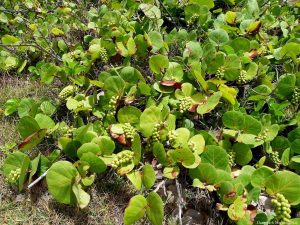
Environmental stress like strong sunlight, high winds, or salt exposure can exacerbate leaf browning. Identifying the exact cause is crucial to restore healthy foliage and prevent permanent damage.
In this guide, we will explore the most common reasons sea grape leaves turn brown, explain their signs, and provide actionable solutions. This includes water stress, nutrient imbalances, environmental factors, and pest management to ensure your sea grape thrives.
Why Are My Sea Grape Leaves Turning Brown? 10 Reasons
1. Water Stress (Overwatering or Underwatering Issues)
Sea grape leaves turning brown are often directly linked to water stress caused by inconsistent irrigation practices. Overwatering restricts oxygen flow to the roots, which disrupts nutrient absorption and leads to gradual leaf browning. Additionally, underwatering causes dehydration in leaf tissues, resulting in crispy edges and early leaf decline. As a result, the plant struggles to maintain cellular balance and visible foliage health deteriorates.
From a chemical perspective, improper water levels interfere with nutrient transport mechanisms such as potassium and magnesium movement within the plant. Consequently, chlorophyll production drops, which accelerates browning and weakens photosynthesis efficiency. Moreover, prolonged stress damages root membranes, reducing overall uptake capacity. Therefore, consistent soil moisture balance is essential for restoring healthy leaf pigmentation.
To correct this issue, adjust watering schedules based on soil moisture rather than fixed timing. Furthermore, improve drainage using sandy or loamy soil mixes that prevent water stagnation around roots. In addition, mulching helps regulate evaporation rates and stabilizes soil hydration levels. Therefore, proper irrigation control quickly restores leaf turgidity and prevents further browning progression.
Signs: Yellowing leaves before browning, soft roots, foul soil smell.
Solution: Improve drainage and regulate watering frequency.
2. Nutrient Deficiency (NPK Imbalance and Micronutrient Loss)
Sea grape leaves turning brown can also result from nutrient deficiencies, particularly nitrogen, potassium, and magnesium shortages. Nitrogen deficiency reduces chlorophyll production, leading to pale foliage that gradually turns brown. Potassium deficiency weakens cell wall integrity, making leaf edges highly susceptible to scorch. As a result, the plant loses structural stability and overall vigor declines.
From a biochemical standpoint, insufficient nutrients disrupt enzyme activity responsible for energy transfer and photosynthesis. Consequently, ATP production slows, which directly affects leaf metabolism and pigment retention. Moreover, magnesium deficiency reduces chlorophyll molecule formation, intensifying discoloration patterns. Therefore, balanced nutrient availability is essential for sustained leaf health.
To fix this issue, apply a balanced slow-release fertilizer such as 10-10-10 or 12-8-12 to restore nutrient equilibrium. Furthermore, supplement micronutrients like iron, magnesium, and manganese to rebuild chlorophyll efficiency. In addition, avoid excessive fertilization because salt buildup can worsen leaf burn symptoms. Therefore, controlled feeding ensures steady recovery and prevents future deficiencies.
Signs: Pale leaves, slow growth, brown margins.
Solution: Balanced fertilization with micronutrients.
3. Environmental Stress (Sun, Wind, and Salt Exposure)
Sea grape leaves turning brown are frequently caused by harsh environmental conditions such as excessive sunlight, strong coastal winds, and salt spray. UV radiation damages leaf tissue cells, leading to scorched patches and uneven discoloration. Salt exposure disrupts water balance within plant cells, accelerating dehydration and leaf edge burn. As a result, exposed foliage deteriorates faster than protected sections.
On a physiological level, wind stress increases transpiration rates, causing rapid water loss from leaf surfaces. Consequently, the plant struggles to maintain hydration equilibrium, which weakens cellular structures. Moreover, salt ions interfere with nutrient uptake pathways, reducing potassium and calcium availability. Therefore, environmental exposure significantly accelerates visible leaf damage.
To correct this issue, provide partial shade for young or newly planted sea grapes during peak sunlight hours. Furthermore, install windbreaks or barriers in coastal areas to reduce salt and wind impact. In addition, rinse foliage occasionally with fresh water to remove salt buildup. Therefore, environmental protection significantly improves long-term leaf recovery.
Signs: Crispy edges, patchy browning, wind-facing damage.
Solution: Shade, wind protection, and salt management.
4. Pest Infestation (Sap-Sucking Insects and Leaf Damage)
Sea grape leaves turning brown can also be caused by pests such as spider mites, aphids, and scale insects. These pests feed on plant sap, reducing nutrient flow within leaf tissues. Additionally, their feeding activity causes small punctures that develop into brown spots. As a result, leaf function declines and visible damage spreads.
From a biological standpoint, sap loss weakens internal nutrient circulation, disrupting photosynthesis and energy storage. Consequently, chlorophyll degradation accelerates, leading to patchy browning and curling leaves. Moreover, pest excretions can promote fungal growth on leaf surfaces. Therefore, untreated infestations quickly escalate plant stress.
To resolve this issue, inspect leaves regularly and apply neem oil or insecticidal soap when pests are detected. Furthermore, prune heavily infested leaves to prevent spread. In addition, encourage beneficial insects such as ladybugs for natural control. Therefore, early pest management restores plant vitality effectively.
Signs: Sticky residue, small insects, spotted leaves.
Solution: Organic pest control and pruning.
5. Fungal Infections (Leaf Spot and Rot Diseases)
Sea grape leaves turning brown may indicate fungal infections such as leaf spot or anthracnose. These pathogens thrive in humid conditions and spread rapidly across leaf surfaces. Additionally, they create dark lesions that expand into larger brown patches. As a result, infected leaves lose photosynthetic efficiency.
From a microbial perspective, fungi penetrate leaf tissues and disrupt cellular function by breaking down plant proteins. Consequently, nutrient transport is blocked, accelerating tissue death. Moreover, spores spread through water droplets, increasing infection rates. Therefore, poor air circulation significantly worsens fungal activity.
To treat this condition, remove infected leaves immediately to prevent spread. Furthermore, apply copper-based fungicides or organic antifungal treatments. In addition, improve airflow around the plant by pruning dense branches. Therefore, sanitation and airflow control are essential for disease recovery.
Signs: Dark spots, spreading lesions, leaf decay.
Solution: Fungicide treatment and pruning.
6. Soil Salinity Build-Up (Salt Toxicity in Root Zone)
Sea grape leaves turning brown are often linked to excessive salt accumulation in soil. High salinity disrupts osmotic balance, making it difficult for roots to absorb water. Additionally, salt ions accumulate in leaf tissues, causing tip burn and discoloration. As a result, plant hydration efficiency declines significantly.
Chemically, salt toxicity interferes with ion exchange processes involving potassium and calcium. Consequently, enzyme function is impaired, and chlorophyll production drops. Moreover, prolonged exposure leads to root dehydration and cellular collapse. Therefore, soil salinity is a critical stress factor in coastal environments.
To fix this issue, flush the soil thoroughly with fresh water to reduce salt concentration. Furthermore, use organic mulch to minimize evaporation and salt accumulation. In addition, avoid over-fertilizing with mineral salts. Therefore, salinity management restores root function and leaf health.
Signs: Leaf tip burn, stunted growth, dry soil crust.
Solution: Soil flushing and salt reduction.
7. Poor Soil Drainage (Root Oxygen Deprivation)
Sea grape leaves turning brown can also result from poor soil drainage that suffocates roots. Waterlogged soil prevents oxygen exchange, leading to root decay. Additionally, damaged roots cannot absorb nutrients efficiently, causing leaf discoloration. As a result, the plant gradually weakens.
From a soil chemistry perspective, anaerobic conditions promote harmful bacteria that degrade root tissue. Consequently, nutrient uptake systems collapse, and chlorophyll production decreases. Moreover, toxic compounds accumulate in the root zone, worsening stress conditions. Therefore, drainage quality directly impacts plant survival.
To correct this issue, improve soil structure using sand, compost, or perlite for better aeration. Furthermore, raise planting beds to enhance water runoff. In addition, avoid frequent deep watering in compact soils. Therefore, improving drainage restores oxygen flow and root health.
Signs: Mushy roots, slow growth, persistent wet soil.
Solution: Improve aeration and drainage.
8. Transplant Shock (Root Disturbance After Planting)
Sea grape leaves turning brown often occur after transplanting due to shock. Root disturbance reduces the plant’s ability to absorb water and nutrients efficiently. Additionally, sudden environmental changes stress leaf tissues, causing rapid browning. As a result, the plant temporarily loses vigor.
Biologically, root damage disrupts hormone signaling responsible for growth regulation. Consequently, auxin distribution becomes imbalanced, slowing regeneration. Moreover, reduced root function limits chlorophyll synthesis in leaves. Therefore, transplant shock significantly impacts early plant stability.
To fix this issue, water consistently and avoid fertilizing immediately after transplanting. Furthermore, provide partial shade to reduce stress on new foliage. In addition, use root stimulants to encourage regeneration. Therefore, careful post-transplant care ensures recovery.
Signs: Sudden leaf drop, wilting, browning after planting.
Solution: Shade, watering, and root support.
9. Nutrient Lockout (Soil pH Imbalance)
Sea grape leaves turning brown can result from nutrient lockout caused by incorrect soil pH. When pH is too high or too low, nutrients become unavailable to roots. Additionally, this leads to hidden deficiencies even in fertilized soil. As a result, leaves show stress symptoms despite feeding.
From a chemical standpoint, pH imbalance affects solubility of essential nutrients like iron and magnesium. Consequently, chlorophyll production declines, leading to yellowing and browning. Moreover, enzyme activity slows, reducing metabolic efficiency. Therefore, soil pH balance is essential for nutrient accessibility.
To correct this issue, test soil pH and adjust using lime or sulfur as needed. Furthermore, use pH-balanced fertilizers to maintain stability. In addition, improve organic matter content to buffer fluctuations. Therefore, correcting pH restores nutrient absorption efficiency.
Signs: Yellowing veins, poor growth, nutrient deficiency symptoms.
Solution: Adjust soil pH and improve balance.
10. Natural Leaf Aging (Normal Browning Process)
Sea grape leaves turning brown may simply be part of the plant’s natural aging cycle. Older leaves lose chlorophyll over time as the plant reallocates energy to new growth. Additionally, these leaves gradually dry and fall off. As a result, browning is not always a sign of disease.
Biologically, nutrient recycling occurs as the plant withdraws nitrogen and magnesium from aging leaves. Consequently, older foliage becomes less functional and begins to discolor. Moreover, this process supports healthier new leaf development. Therefore, natural shedding is part of normal growth cycles.
To manage this, simply prune dead or aging leaves regularly. Furthermore, ensure the plant continues receiving proper water and nutrients. In addition, monitor new growth for overall plant health. Therefore, natural aging should not be a cause for concern.
Signs: Lower leaf browning, old leaves only, healthy new growth.
Solution: Prune and maintain regular care.
Why Are My Sea Grape Leaves Turning Brown FAQs
1. Why are my sea grape leaves turning brown?
Sea grape leaves turn brown mainly due to water stress, nutrient deficiencies, salt exposure, pests, or environmental stress. Identifying the exact cause helps restore healthy green foliage.
2. Can overwatering cause sea grape leaves to turn brown?
Yes, overwatering reduces oxygen in the soil, leading to root damage and nutrient uptake failure. This often results in yellowing leaves that gradually turn brown.
3. How do I fix brown leaves on a sea grape plant?
Fix brown leaves by correcting watering habits, improving soil drainage, applying balanced fertilizer, and protecting the plant from wind and salt exposure.
4. Does salt damage cause sea grape leaves to brown?
Yes, salt spray or soil salinity disrupts water balance in the plant. This leads to leaf tip burn, dehydration, and progressive browning.
5. Should I cut off brown sea grape leaves?
Yes, removing fully brown leaves helps improve airflow and redirects energy to healthy new growth. However, avoid removing partially green leaves unless necessary.
6. What fertilizer is best for sea grape health?
A balanced slow-release fertilizer with NPK such as 10-10-10 or 12-8-12 is ideal. It supports root strength, leaf health, and overall plant recovery.
7. Can sea grape leaves recover after turning brown?
No, brown leaves will not turn green again. However, improving care conditions encourages new healthy leaf growth.
Conclusion
In conclusion, why are my sea grape leaves turning brown? is a question that usually points to a combination of water stress, nutrient imbalance, environmental damage, or pest activity affecting sea grape plant health. The best solution is to correctly identify the primary cause early and apply targeted correction such as proper watering, balanced fertilization, and environmental protection.
The runner-up approach involves ongoing maintenance practices like pest control, soil improvement, and regular pruning, which help prevent recurrence of leaf browning. These supportive actions strengthen the plant’s long-term resilience and recovery rate.
Consistent monitoring of soil moisture, nutrient levels, and exposure conditions ensures the sea grape maintains healthy green foliage throughout the seasons. Small adjustments in care often produce significant improvements in leaf color and plant vigor.
Take action today by correcting the underlying stress factors and applying the right care strategy so your sea grape can recover fully. With proper management, your plant will regain its lush appearance and continue thriving in coastal or garden environments.
Recent Posts
Spring fertilization supports healthy leaf development, root activity, and productive shoot growth when apple trees have insufficient soil nutrients. Selecting an appropriate fertilizer requires...
Cucumbers (Cucumis sativus) are vigorous, fast-growing vines that can produce abundant harvests when their roots receive enough water, warmth, and balanced nutrition. The best fertilizer for cukes in...