Across gardens, lawns, and farmland, identifying weeds with jagged leaves is essential for early control and long-term landscape health. These plants often spread aggressively, compete for nutrients, and can quickly dominate unmanaged spaces if left unchecked.
Jagged or serrated leaf edges are a key botanical feature used in weed identification. This tooth-like margin increases surface area and can enhance light capture, but it also makes these weeds easier to recognize compared to smooth-leaf species.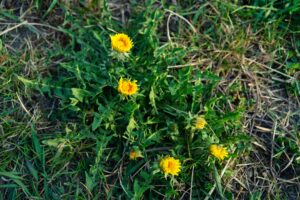
Many of these weeds reproduce through seeds, rhizomes, or taproots, making them persistent and difficult to remove without proper strategy. Some even produce chemicals that suppress nearby plant growth, giving them a competitive advantage.
In this guide, we explore the most common weeds with jagged leaves, their identifying features, growth habits, and effective control methods to help you manage them efficiently.
10 Most Common Weeds With Jagged Leaves
1. Dandelion (Taraxacum officinale) – Best weed with jagged leaves for lawn identification
Dandelion is the best weed with jagged leaves for lawn identification because its deeply toothed foliage forms a distinctive basal rosette that is easy to recognize. The jagged edges point backward toward the root, which helps differentiate it from similar weeds. Bright yellow flowers quickly transition into wind-dispersed seed heads, enabling rapid spread. The taproot stores carbohydrates, allowing the plant to regenerate even after repeated cutting or mowing.
The plant thrives in compacted lawns, sidewalks, and disturbed soils where competition is limited. Its deep root system allows it to access nutrients and water beyond the reach of shallow-rooted grasses. Rapid seed production accelerates colonization across large areas. These biological traits make it highly persistent.
Effective control requires removing the entire taproot to prevent regrowth. Selective herbicides can improve results when applied during active growth. Regular mowing limits seed production but does not eliminate established plants. Long-term management requires consistency.
Pros
- Easy identify
- Deep root
- Hardy
- Fast spread
- Drought tolerant
- Common
- Resilient
Cons
- Persistent
- Spreads seeds
- Hard remove
2. Sow Thistle (Sonchus oleraceus) – Best fast-growing weed with jagged leaves
Sow thistle is the best fast-growing weed with jagged leaves because it develops rapidly and produces soft, serrated foliage with slight prickles along the edges. Its upright growth habit and hollow stem distinguish it from dandelion. Yellow flowers produce wind-dispersed seeds that allow quick colonization. The hollow stem improves internal nutrient transport, supporting accelerated vertical growth and expansion.
This weed commonly appears in gardens, roadsides, and agricultural fields. It thrives in nutrient-rich soils and disturbed ground where competition is minimal. Its rapid life cycle allows multiple generations within a single growing season. These traits contribute to aggressive spread.
Manual removal is effective when performed early before flowering. Herbicide application may be necessary for dense infestations. Maintaining thick vegetation reduces establishment opportunities. Early intervention significantly improves control success.
Pros
- Fast growth
- Easy identify
- Common
- Soft stem
- Quick spread
- Annual
- Adaptable
Cons
- Invasive
- Spiny edges
- Rapid seeding
3. Prickly Lettuce (Lactuca serriola) – Best tall weed with jagged leaves
Prickly lettuce is the best tall weed with jagged leaves because it grows vertically with deeply serrated foliage that often twists along the stem. The leaves feature spiny edges and a pronounced midrib with small prickles. It produces yellow flowers and windborne seeds similar to dandelions. Latex sap within the plant reduces moisture loss and deters herbivores, improving survival in harsh conditions.
This weed thrives in dry, open environments such as roadsides and fields. Its deep taproot supports drought resistance and long-term persistence. Vertical leaf orientation reduces direct sunlight exposure, conserving water. These adaptations increase its competitiveness.
Control is most effective when plants are removed during early growth stages. Herbicides perform better before the plant matures. Repeated mowing helps limit seed production but may not eliminate the root. Monitoring prevents reinfestation.
Pros
- Drought tolerant
- Tall growth
- Distinct leaves
- Deep root
- Hardy
- Adaptable
- Easy spread
Cons
- Spiny
- Invasive
- Tough control
4. Wild Mustard (Sinapis arvensis) – Best agricultural weed with jagged leaves
Wild mustard is the best agricultural weed with jagged leaves because it spreads aggressively in crop fields while displaying lobed, serrated foliage that is easy to identify. Lower leaves are deeply jagged, while upper leaves become smoother as the plant matures. Bright yellow flowers contribute to rapid seed production. Glucosinolates released by the plant can suppress nearby vegetation, improving its competitive advantage.
It thrives in fertile soils and disturbed agricultural environments. Fast germination allows it to outcompete young crops early in the season. Large seed output ensures continued presence in the soil seed bank. These traits make it a major concern for farmers.
Early removal is essential to prevent seed formation. Herbicides can be effective when timed correctly. Crop rotation reduces long-term infestation risk. Integrated management delivers the best results.
Pros
- Fast growth
- Bright flowers
- Easy identify
- Seed spread
- Common
- Hardy
- Competitive
Cons
- Invasive
- Crop issue
- Rapid spread
5. Ragweed (Ambrosia artemisiifolia) – Best allergenic weed with jagged leaves
Ragweed is the best allergenic weed with jagged leaves because its finely divided, serrated foliage produces one of the most recognizable jagged patterns among common weeds. It grows rapidly and releases massive amounts of pollen into the air. The plant thrives in disturbed soils and open areas. High pollen production enhances reproduction efficiency while contributing significantly to seasonal allergies.
This weed spreads quickly in roadsides, vacant lots, and agricultural fields. Its ability to produce thousands of seeds ensures long-term persistence. Dense growth allows it to dominate open spaces easily. These characteristics make ragweed difficult to control.
Manual removal before flowering reduces pollen exposure and spread. Herbicides may be required for larger infestations. Maintaining dense ground cover helps suppress growth. Early action is critical for effective control.
Pros
- Fast spread
- Easy identify
- Common
- Hardy
- Seed bank
- Adaptable
- Tall growth
Cons
- Allergenic
- Invasive
- Persistent
6. Lamb’s Quarters (Chenopodium album) – Best common garden weed with jagged leaves
Lamb’s quarters is the best common garden weed with jagged leaves because it produces irregular, toothed foliage that often appears dusty due to a natural coating. The leaves vary in shape but typically show uneven serrations, making identification easier. It grows rapidly and produces thousands of seeds per plant. The powdery leaf coating reduces water loss by reflecting sunlight, improving drought tolerance.
This weed thrives in nutrient-rich soils, especially in vegetable gardens and disturbed areas. Its fast growth allows it to outcompete young crops for sunlight and nutrients. Seed production ensures long-term persistence in the soil. These traits make it highly invasive in cultivated spaces.
Control involves early removal before seed development. Mulching helps suppress germination by blocking light. Herbicides may be used in severe infestations. Consistent monitoring prevents re-establishment.
Pros
- Fast growth
- Easy identify
- Common
- Seed prolific
- Hardy
- Adaptable
- Edible
Cons
- Invasive
- Spreads quickly
- Competitive
7. Canada Thistle (Cirsium arvense) – Best invasive weed with jagged leaves and spines
Canada thistle is the best invasive weed with jagged leaves and spines because it features sharply serrated, spiny edges that make it both recognizable and difficult to handle. The leaves are deeply lobed with rigid prickles along the margins. It spreads through both seeds and underground rhizomes. Rhizome systems store energy and allow the plant to regenerate even after the above-ground portion is removed.
This weed commonly invades fields, pastures, and roadsides. Its underground network enables rapid expansion across large areas. Dense growth crowds out desirable vegetation. These characteristics make it extremely persistent.
Effective control requires repeated cutting or targeted herbicide use. Removing roots is essential but difficult due to extensive rhizomes. Long-term management often involves integrated control methods. Persistence is key to elimination.
Pros
- Deep roots
- Hardy
- Spreads fast
- Recognizable
- Perennial
- Competitive
- Resilient
Cons
- Spiny
- Hard remove
- Highly invasive
8. Curly Dock (Rumex crispus) – Best weed with curly jagged leaves
Curly dock is the best weed with curly jagged leaves because its long, narrow leaves have distinctly wavy, serrated edges that are easy to spot. The plant develops a deep taproot and produces tall seed stalks. Its reddish-brown seed heads remain visible long after maturity. The deep taproot stores nutrients that allow regrowth even after repeated cutting or grazing.
This weed thrives in poorly drained soils, roadsides, and pastures. Its ability to tolerate different soil conditions increases its spread. Seed production contributes to long-term persistence in affected areas. These traits make it difficult to control once established.
Manual removal is most effective when the root is completely extracted. Herbicides may be necessary for larger infestations. Improving soil drainage can reduce growth conditions. Early control yields better results.
Pros
- Unique leaves
- Deep root
- Hardy
- Easy identify
- Adaptable
- Seed producer
- Persistent
Cons
- Tough root
- Spreads seeds
- Hard control
9. Shepherd’s Purse (Capsella bursa-pastoris) – Best small weed with jagged leaves
Shepherd’s purse is the best small weed with jagged leaves because it forms a low-growing rosette of deeply toothed foliage. Its small size makes it less noticeable until it begins to flower and spread. The plant produces heart-shaped seed pods that are easy to identify. Rapid seed production ensures multiple growth cycles within a single season, increasing population density quickly.
This weed thrives in gardens, lawns, and disturbed soils. It grows quickly and competes with young plants for nutrients. Its small stature allows it to spread unnoticed. These traits make early detection important.
Manual removal is effective when done early. Mulching reduces germination rates. Herbicides may be used for larger infestations. Consistent maintenance helps prevent spread.
Pros
- Small size
- Fast growth
- Easy identify
- Common
- Seed prolific
- Adaptable
- Hardy
Cons
- Spreads fast
- Hard detect
- Persistent
10. Chickweed (Stellaria media) – Best low-growing weed with jagged leaves
Chickweed is the best low-growing weed with jagged leaves because it forms dense mats of small, slightly serrated leaves that spread across soil surfaces. Its delicate appearance contrasts with its aggressive growth habit. It produces small white flowers and spreads quickly in cool conditions. Shallow roots allow rapid surface expansion, enabling the plant to cover ground efficiently and outcompete other species.
This weed thrives in moist, shaded environments such as gardens and lawns. Its creeping growth pattern allows it to form dense patches. Rapid reproduction increases its spread during cooler seasons. These characteristics make it a common nuisance.
Control involves removing entire patches to prevent regrowth. Improving drainage reduces favorable conditions. Herbicides can help manage larger infestations. Regular monitoring ensures long-term control.
Pros
- Fast spread
- Low growth
- Easy identify
- Soft texture
- Common
- Hardy
- Adaptable
Cons
- Invasive
- Spreads quickly
- Hard control
Control Strategies for Weeds With Jagged Leaves
Effective management depends on timing, consistency, and method selection.
Manual Removal
- Best for small infestations
- Remove full roots
- Works
for taproot weeds
Mulching
- Blocks sunlight
- Reduces germination
- Improves soil health
Herbicides
- Use selective types
- Apply during growth
- Follow instructions
Cultural Control
- Maintain dense lawns
- Improve soil health
- Reduce disturbances
Weeds With Jagged Leaves FAQs
1. What are weeds with jagged leaves?
They are weeds with serrated or toothed leaf edges, often easier to identify due to their distinct shape.
2. Why do weeds have jagged leaves?
Jagged edges can improve light absorption and water efficiency, giving weeds a growth advantage.
3. Are jagged-leaf weeds harder to remove?
Many are harder to remove because they often have deep roots or aggressive reproduction systems.
4. What is the most common jagged-leaf weed?
Dandelion is one of the most common and recognizable.
5. Do all jagged-leaf weeds spread quickly?
Most spread rapidly through seeds or roots, making early control important.
6. Can herbicides control these weeds?
Yes, especially when applied during early growth stages.
7. What is the best prevention method?
Maintaining a healthy, dense lawn reduces weed establishment.
Conclusion
In conclusion, identifying weeds with jagged leaves early allows for faster control and prevents widespread infestation across lawns and gardens. The best overall option for easy identification and management is the dandelion due to its distinct leaf pattern, widespread presence, and well-understood control methods.
The runner-up is Canada thistle because of its aggressive spread and recognizable spiny foliage, although it requires more effort to eliminate due to its rhizome system. Each weed presents unique challenges depending on its root structure, reproduction method, and growth environment.
Consistent monitoring, early removal, and proper lawn care significantly improve control success. Take action early and apply the right method to keep your landscape healthy and weed-free.
Recent Posts
Spring fertilization supports healthy leaf development, root activity, and productive shoot growth when apple trees have insufficient soil nutrients. Selecting an appropriate fertilizer requires...
Cucumbers (Cucumis sativus) are vigorous, fast-growing vines that can produce abundant harvests when their roots receive enough water, warmth, and balanced nutrition. The best fertilizer for cukes in...