Gardeners can create balanced displays by selecting plants that complement kangaroo paws well through colour, texture, flowering season, and compatible water needs. Thoughtful combinations also support a cohesive garden design.
Kangaroo paws generally thrive in sunny positions with free-draining soil and good airflow. Their upright flowers pair well with grasses, low shrubs, groundcovers, and drought-tolerant flowering plants in Australian-inspired landscapes.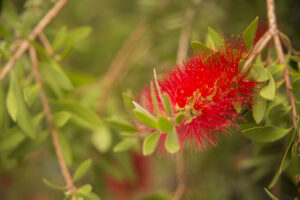
Successful combinations consider mature size, root competition, irrigation, and local climate. Plants needing constant moisture or creating dense shade may be unsuitable companions in many Australian gardens.
In this guide, we compare 30 suitable companions by appearance, growing requirements, and landscape uses. These plants that complement kangaroo paws well can create a colourful garden with year-round structure and seasonal interest.
What Plants Complement Kangaroo Paws Well? 30 Best
1. Little John Bottlebrush – Best Flowering Shrub for Kangaroo Paws
Little John Bottlebrush is an attractive companion for kangaroo paws because its compact growth and red brush-like flowers create a strong contrast with upright kangaroo paw flower stems. Both plants can suit sunny Australian gardens with well-drained soil and relatively low water requirements once established. Its rounded shrub form also provides a useful middle layer between taller flowering plants and low groundcovers.

- Little John Bottlebrush is a beautiful shrub that is native to Australia. With its rounded form and bright green leaves, it is a popular choice for gardeners and landscapers alike. This evergreen plant can grow up to 6-10 feet tall, making it a great option for a privacy screen or focal point in the landscape.
- One of the standout features of Little John Bottlebrush is its flowers. The plant produces bright red or yellow bottlebrush-like flowers that bloom in spring or summer. These striking flowers attract birds and other wildlife, making the shrub an important part of any bird-friendly garden.
Plant Little John Bottlebrush in a sunny position where its mature width will not crowd neighbouring kangaroo paws. Water regularly during establishment, then adjust irrigation according to rainfall, soil drainage, and the needs of the selected kangaroo paw variety. Light pruning after flowering can help maintain a compact shape and encourage fresh growth.
The combination works particularly well in native garden borders, gravel gardens, and low-maintenance landscapes. Red bottlebrush flowers provide a different flowering form from the distinctive paw-shaped blooms, helping create visual variety. Avoid planting the shrub too closely because restricted airflow and competition can affect both plants.
- Contrasting red flowers
- Compact shrub growth
- Suitable for sunny gardens
- Attractive native landscaping
- Provides middle-layer structure
- Supports garden biodiversity
- Can tolerate dry conditions once established
- Requires room to mature
- Needs establishment watering
- May need occasional pruning
2. Grevillea – Best Australian Native Flowering Companion
Grevilleas complement kangaroo paws through their unusual flowers, evergreen foliage, and wide range of growth habits. Depending on the species or cultivar, they can provide a low groundcover, medium shrub, or taller background plant. Their flowers also attract nectar-feeding birds, adding wildlife value to a native garden.

- ✅ ABOUT PRODUCT- This package contains New Fresh 10pcs Mixed Grevillea Flower Seeds , SEEDS ONLY, no live plants.The photos show are the mature plant in the future, not the actual plant you will receive
- ✅ PREMIUM FLOWER SEED MIXTURES - 100% NON-GMO pure plant seed mixes without any fillers are expertly blended considering height, color, bloom time and more so that the resulting meadow looks as pleasant as possible throughout the entire season
Choose a grevillea variety that matches the mature height and spread of the kangaroo paws. Most garden grevilleas prefer full sun and well-drained soil, although individual species differ in their tolerance of frost, drought, and soil conditions. Avoid high-phosphorus fertilisers because many Australian native plants are sensitive to excessive phosphorus.
Grevilleas can extend the flowering interest of a garden while creating a layered planting arrangement. Their fine foliage contrasts with the broader leaves of many kangaroo paw varieties, making the combination visually interesting even when flowers are absent. Select compatible varieties rather than assuming every grevillea has identical growing requirements.
- Wide variety of flower colours
- Numerous compact cultivars
- Attractive evergreen foliage
- Supports nectar-feeding birds
- Suitable for sunny borders
- Offers different plant heights
- Complements Australian native gardens
- Some species grow very large
- Sensitive to excessive phosphorus
- Drainage requirements vary by species
3. Westringia – Best Compact Shrub for Kangaroo Paws
Westringia, commonly known as coastal rosemary, is a useful companion for kangaroo paws because its dense grey-green foliage provides an attractive contrast against their upright leaves and colourful flowers. Its naturally rounded growth habit creates structure without competing visually with the flower spikes. Many cultivars are suitable for coastal and relatively dry Australian gardens.

- MATURE SIZE: Grows to 3-4 feet tall and wide, perfect as a medium-sized ornamental shrub for landscaping and garden borders
- APPEARANCE: Features silvery-gray foliage with small, narrow leaves and a dense, rounded growth habit that provides year-round interest
Plant westringia in a sunny position with well-drained soil and enough space for its mature spread. Water consistently while establishing the shrub, then reduce irrigation according to the local climate and soil conditions. Light trimming can maintain a compact shape and prevent the shrub from becoming overly dense.
Westringia works particularly well along pathways, garden borders, and around the edges of native planting beds. Its small flowers can provide additional seasonal interest without overwhelming the kangaroo paws. Select a compact cultivar when planting near smaller varieties of kangaroo paws to avoid excessive competition.
- Attractive grey-green foliage
- Compact cultivars available
- Suitable for coastal gardens
- Useful evergreen structure
- Tolerates dry periods once established
- Responds well to light pruning
- Complements colourful flower spikes
- Needs good drainage
- Some cultivars become wide
- Requires shaping in formal borders
4. Eremophila – Best Drought-Tolerant Native Companion
Eremophila is a strong companion choice for kangaroo paws because many species tolerate dry conditions and produce colourful tubular flowers. Their foliage ranges from narrow green leaves to silvery or grey forms, creating attractive contrast with kangaroo paw foliage. Depending on the variety, eremophilas can also provide nectar for birds and other garden visitors.

Choose an eremophila species suited to the local rainfall, soil, and temperature conditions. Most garden varieties perform best in sunny positions with excellent drainage, particularly in areas that experience wet winters. Avoid excessive irrigation around established plants because persistently wet soil can encourage root problems.
The combination is especially suitable for water-wise native borders and informal Australian gardens. Eremophila flowers introduce different shapes and colours, while its shrub structure provides a backdrop for the upright kangaroo paw stems. Check the mature size because some species spread substantially more than compact garden cultivars.
- Many drought-tolerant species
- Colourful tubular flowers
- Attractive foliage variations
- Suitable for native gardens
- Supports nectar-feeding wildlife
- Offers useful background structure
- Good choice for water-wise landscaping
- Requires excellent drainage
- Species differ in frost tolerance
- Some varieties grow quite large
5. Lomandra – Best Ornamental Grass-Like Companion
Lomandra is one of the most practical companions for kangaroo paws because its arching, strap-like foliage creates a soft contrast with their upright flower stems. Many varieties are hardy, adaptable, and suitable for low-maintenance Australian landscapes. Their clumping growth habit also helps create a structured planting arrangement.

- Evergreen Perennial: Slender green leaves with creamy-white stripes form an arching mound.
- Size: Compact, clumping growth reaches about 2-3 feet tall and wide at maturity.
Plant lomandra in a sunny or lightly shaded position with soil drainage appropriate for the selected cultivar. Water regularly during establishment, then allow the plant to adapt to local rainfall conditions. Space clumps according to their expected mature width so that they do not crowd smaller kangaroo paw varieties.
Lomandra is particularly useful along pathways, driveways, and the front or middle sections of native garden beds. Its foliage remains attractive when kangaroo paws are not flowering, helping maintain year-round structure. Select compact cultivars for smaller gardens and larger varieties where a substantial foliage mass is required.
- Attractive arching foliage
- Many compact cultivars
- Useful year-round structure
- Suitable for native borders
- Relatively low maintenance
- Complements upright flower stems
- Tolerates a range of conditions
- Some varieties become large
- Clumps require space
- Flowering is generally less prominent
6. Dianella – Best Blue-Green Foliage Companion
Dianella, commonly called flax lily, complements kangaroo paws through its strappy foliage, small flowers, and decorative blue or purple berries in suitable species. Its foliage creates a softer visual layer around the upright stems of kangaroo paws. Different cultivars offer green, blue-green, or variegated leaves for varied garden designs.

- ADD ELEGANT TEXTURE & COLOR: Dianella, commonly known as Flax Lily, offers strappy, grass-like foliage in rich green or variegated tones—perfect for adding contrast and structure to gardens or containers
- LOW-MAINTENANCE, HIGH IMPACT PLANT: This drought-tolerant perennial thrives in sun or part shade and requires little upkeep—ideal for low-water gardens and busy gardeners.

Grow dianella in a sunny to partly shaded position, choosing a variety that matches the light and drainage conditions of the planting area. Water during establishment and maintain adequate moisture during prolonged dry periods, especially in warmer climates. Avoid allowing dense clumps to grow directly over the crowns of smaller kangaroo paws.
Dianella is useful for creating layered native garden beds and filling spaces between larger shrubs. Its foliage remains decorative beyond the main flowering period, while berries can provide additional seasonal interest. Check the mature spread because some species and cultivars form broad clumps that need occasional division or thinning.
- Attractive strappy foliage
- Blue-green leaf options
- Decorative berries on suitable species
- Useful for layered planting
- Several ornamental cultivars
- Suitable for native gardens
- Provides structure between flowering seasons
- Some varieties spread widely
- May need occasional thinning
- Water requirements vary by species
7. Blue Fescue – Best Blue Ornamental Grass
Blue fescue is an attractive companion for kangaroo paws because its compact, blue-grey foliage creates a strong colour contrast with green leaves and bright flower spikes. Its rounded clumps can soften the edges of planting beds without taking attention away from taller flowering plants. It is particularly useful in gardens with excellent drainage and moderate temperatures.

- Ornamental Grass: These blue fescue grasses add beauty and texture to your garden.
- Cold Hardy: Perfect for Zones 4-8, thriving in colder climates.
Plant blue fescue in full sun and sharply drained soil to maintain compact growth and attractive foliage colour. Avoid excessive irrigation and heavy, poorly drained soil because these conditions can shorten the life of the clumps. Divide or replace ageing plants when the centres become untidy or begin to die back.
Blue fescue works well as a foreground planting around kangaroo paws, particularly in gravel gardens and contemporary landscape designs. Its cool-toned foliage contrasts with red, orange, and yellow flowers. In hot and humid climates, select a more heat-tolerant ornamental grass if blue fescue struggles to remain healthy.
- Distinctive blue-grey foliage
- Compact clumping habit
- Attractive foreground plant
- Contrasts with warm flower colours
- Suitable for gravel gardens
- Requires limited pruning
- Creates neat planting patterns
- Sensitive to poor drainage
- Can struggle in humid heat
- Clumps may need replacement
8. Kangaroo Grass – Best Australian Native Grass Companion
Kangaroo grass is a natural companion for kangaroo paws because both plants are associated with Australian landscapes and can suit sunny, well-drained garden positions. Its fine foliage and seasonal flower heads introduce movement and a more naturalistic appearance. It is particularly useful in native meadow-style gardens.

- ✅ ABOUT PRODUCT- This package contains New Fresh 10pcs Green Tiliacora triandra Plant Seeds Generic , SEEDS ONLY, no live plants.The photos show are the mature plant in the future, not the actual plant you will receive
- ✅ PREMIUM TREE SEED MIXTURES -Premium Seed Mix is a blend of high quality ingredients and fertilisers designed specifically for germinating and growing from seeds with vigorous
Grow kangaroo grass in an open position with enough sunlight for healthy clump development. Establishment watering may be necessary, but established plants can tolerate relatively dry conditions depending on the local climate and soil. Allow sufficient space between clumps so that air can circulate around neighbouring kangaroo paws.
The combination works well in informal native borders, naturalistic planting schemes, and larger garden beds. Kangaroo grass provides a softer background that helps the colourful kangaroo paw flowers stand out. Manage old foliage and seed heads according to the desired appearance and local fire-management requirements.
- Australian native grass
- Naturalistic landscape appearance
- Fine foliage texture
- Suitable for sunny gardens
- Adds seasonal movement
- Can tolerate dry conditions once established
- Complements native planting schemes
- Can spread by seed
- Requires seasonal foliage management
- Needs space in meadow plantings
9. Poa Labillardierei – Best Native Tussock Grass
Poa labillardierei, commonly known as tussock grass, complements kangaroo paws through its dense clumping habit and fine foliage. Its rounded form provides a useful contrast with the upright flower stems of kangaroo paws. The combination is suitable for naturalistic Australian gardens where different heights and textures are important.

- GAILLARDIA FLOWER SEED - Also named blanket flower due to the blossom color patterning that resembles the blankets of many indigenous American tribes. There are numerous species and varieties of this plant in circulation; our particular offering features brightly colored red and yellow discs.
- EASY TO GROW, HARVEST, AND ENJOY - Fast growing, drought tolerant, and tolerance of poor and varying soil types makes this plant an ideal pioneer plant for establishing wildflower meadows. 70-80 days from seed to flower. Grows best from spring to late fall. Each packet contains a minimum of 50 seeds.
Plant tussock grass in a position with suitable sunlight and well-drained soil. Water during establishment and monitor moisture during extended dry weather, as growing conditions influence its appearance and vigour. Keep sufficient space between the grass clumps and kangaroo paws to prevent excessive competition.
Poa labillardierei works well in larger garden borders, native meadow designs, and informal landscape plantings. Its foliage provides structure even when the kangaroo paws are not in flower. Remove old or damaged leaves periodically to maintain a tidy appearance and encourage healthy new growth.
- Attractive tussock formation
- Fine foliage texture
- Australian native grass
- Useful garden structure
- Complements upright flowers
- Suitable for naturalistic landscapes
- Provides year-round foliage interest
- Needs room to develop
- May require old foliage removal
- Water needs vary with climate
10. Pigface – Best Succulent Groundcover for Kangaroo Paws
Pigface is a useful groundcover companion because its fleshy foliage and colourful daisy-like flowers create a contrasting layer beneath kangaroo paws. Many species tolerate coastal exposure, sandy soil, and dry conditions once established. Its spreading growth can also cover bare soil in suitable garden locations.

- LIVE SEDUM TILE: 10" by 20" live plant mat featuring a combination of sedum succulent plants with earthy colors and contrasting shapes. These easy ground cover plants offer endless DIY possibilities.
- DIY LIVING WALLS: Easily create a living wall with these live succulents. This low-maintenance plant mix is also great for green roofs and vertical gardens.
Plant pigface in full sun and freely draining soil, allowing enough space for its spreading stems. It is particularly useful on slopes, raised beds, and coastal garden borders where water drains quickly. Avoid allowing it to cover the crowns of kangaroo paws or grow so densely that it restricts airflow.
Pigface flowers provide additional colour, while its low growth habit creates a visual transition between the ground and taller flowering plants. It can be an effective option for water-wise gardens with sandy or gravelly soil. However, its spreading habit requires management where a neat, clearly defined planting layout is preferred.
- Attractive succulent foliage
- Colourful daisy-like flowers
- Useful spreading groundcover
- Suitable for coastal gardens
- Tolerates dry conditions once established
- Helps cover exposed soil
- Works in gravel landscapes
- Can spread aggressively
- Needs excellent drainage
- May crowd smaller plants
11. Creeping Myoporum – Best Low-Growing Native Groundcover
Creeping myoporum is an excellent companion for kangaroo paws because it forms a low carpet of foliage that contrasts with their upright growth. Its small leaves and delicate flowers provide a subtle ground-level planting layer. It is particularly useful in sunny, water-wise landscapes where a spreading groundcover is required.

- Gorgeous foliage.
- Great for any place indoor or outdoor (in mild climate)
Plant creeping myoporum in well-drained soil with sufficient sunlight and space for its stems to spread. Water during establishment, then adjust irrigation to suit local rainfall and the needs of neighbouring plants. Keep the groundcover away from kangaroo paw crowns and maintain enough open space for airflow.
The plant can help soften the appearance of gravel beds, slopes, and the edges of native garden borders. Its low profile allows kangaroo paw flowers to remain the main visual feature. Check the selected species and cultivar because growth rate, spread, and suitability can differ.
- Low-growing foliage
- Useful spreading groundcover
- Small ornamental flowers
- Suitable for sunny positions
- Can cover exposed soil
- Complements upright plants
- Useful in water-wise landscapes
- Can spread beyond its space
- Requires good drainage
- Needs occasional boundary trimming
12. Scaevola – Best Fan Flower Groundcover
Scaevola, commonly called fan flower, complements kangaroo paws through its distinctive fan-shaped flowers and spreading growth habit. Depending on the species and cultivar, flowers may be blue, purple, pink, or white. Its low-growing form creates a colourful foreground beneath taller kangaroo paw flower stems.

- LIVE PLANT: Includes one live White Fan Flower (Scaevola Aemula) ready to plant.
- UNIQUE BLOOMS: Produces delicate white fan-shaped flowers that bloom abundantly throughout the season.
Grow scaevola in a sunny position with well-drained soil and enough space for its spreading habit. Water during establishment and maintain moisture during prolonged dry weather, particularly in containers and raised beds. Avoid overwatering plants growing in heavy soils because root problems can develop under persistently wet conditions.
Scaevola is useful in borders, hanging baskets, containers, and native-inspired garden beds. Its flowers add a different shape from kangaroo paw blooms, making the planting combination more visually varied. Choose a variety with water requirements compatible with the kangaroo paw cultivar and local climate.
- Distinctive fan-shaped flowers
- Several flower colours
- Spreading groundcover habit
- Useful for garden borders
- Suitable for containers
- Provides foreground colour
- Attracts garden pollinators
- Needs suitable drainage
- May require extra summer watering
- Some varieties need trimming
13. Chrysocephalum – Best Yellow Flowering Native Companion
Chrysocephalum is a useful companion for kangaroo paws because its small yellow or orange flower clusters provide a warm colour contrast. Its foliage and low-to-medium growth habit can soften the base of taller plants. The combination is particularly effective in sunny native gardens and water-wise planting beds.

- Custom-made Item, No Return. Please consider and respect our no return policy before you place the order. If you wonder why the price is up, ask Amazon.
- For Plant Orders - "Starter" plants contain root, shipped in recycle packaging with organic material. Might be trimmed to fix in the shipping box.
Plant chrysocephalum in a sunny position with free-draining soil. Allow enough space for the selected variety to spread, and water regularly while it establishes. Once established, many forms tolerate dry periods, although prolonged drought can reduce flowering and foliage quality.
The golden flowers create an attractive contrast with red, orange, pink, and yellow kangaroo paw cultivars. Its smaller scale also makes it suitable for the front of a mixed native border. Trim tired growth when necessary to maintain a compact shape and encourage fresh foliage.
- Bright yellow flowers
- Warm colour contrast
- Suitable for sunny gardens
- Useful foreground planting
- Can tolerate dry periods
- Attractive in native borders
- Provides additional seasonal colour
- Needs good drainage
- Flowering declines under severe stress
- Some varieties require trimming
14. Brachyscome – Best Australian Native Daisy Companion
Brachyscome, commonly known as native daisy, adds delicate flowers and a softer growth habit to kangaroo paw plantings. Its daisy-like blooms are available in several colours, including purple, pink, and white. The smaller flowers contrast with the distinctive shape and height of kangaroo paw blooms.

- Variety of Colors: The Mixed Brachyscome angustifolia flower seeds produce a beautiful array of colors, including shades of blue, pink, white, and purple, adding vibrant diversity to any garden.
- Compact Growth: These flowers are known for their compact and bushy growth habit, making them ideal for borders, containers, and rock gardens.
Grow brachyscome in a sunny to lightly shaded position with well-drained soil. Maintain consistent moisture during establishment and flowering, especially in containers or hot weather. Avoid placing it where larger shrubs will create dense shade or where spreading kangaroo paw foliage will overwhelm its smaller growth.
Brachyscome works well along the front of garden borders, around pathways, and in mixed native plantings. Its flowering habit can provide additional colour between larger kangaroo paw flower stems. Select a variety with compatible water requirements because some forms perform better with more regular moisture than drought-adapted kangaroo paw cultivars.
- Delicate daisy-like flowers
- Several flower colours
- Suitable for border planting
- Compact growth options
- Complements upright flowers
- Useful around pathways
- Supports pollinator activity
- Needs moisture during establishment
- Can be crowded by larger plants
- Flowering may decline in extreme heat
15. Banksia – Best Structural Australian Native Companion
Banksias complement kangaroo paws through their distinctive flower spikes, evergreen foliage, and strong architectural appearance. Dwarf and compact cultivars are particularly useful because they can provide structure without dominating smaller kangaroo paw varieties. Their unusual flowers also attract nectar-feeding birds and other wildlife.

- LIVE AQUARIUM PLANT - 15 Dwarf Sag Plants (Dwarf Sagittaria Subulata)
- SIZE: Our Dwarf Sag Plants ranges from 2-3 inches typically. Size will vary slightly as these are live plants.
Select a banksia species or cultivar suited to the garden’s soil, climate, and available space. Many banksias require excellent drainage and perform poorly in heavy, waterlogged soils. Avoid excessive phosphorus fertilisers and allow enough room for the plant to reach its mature size.
Dwarf banksias can create an attractive middle or background layer in native garden beds. Their flower forms contrast with the paw-shaped blooms, creating a varied display through different flowering periods. Because banksia species vary considerably, check the mature dimensions and growing requirements before planting them beside kangaroo paws.
- Distinctive native flower spikes
- Attractive evergreen foliage
- Compact cultivars available
- Supports nectar-feeding birds
- Provides garden structure
- Complements Australian native planting
- Offers architectural interest
- Some species grow very large
- Requires excellent drainage
- Sensitive to excessive phosphorus
16. Correa – Best Native Shrub for Seasonal Flowers
Correa is a useful companion for kangaroo paws because its bell-shaped flowers create a different flowering form and can extend seasonal garden interest. Many species have attractive evergreen foliage and are suitable for Australian native gardens. Their shrubs can also provide a softer background around upright kangaroo paw stems.

- Material Characteristics: The Hook & Loop Garden Plant Ties are made from nylon material, ensuring reliable support in various weather conditions and reducing the risk of breakage or wear
- Adjustable & Reusable Design: These ties feature an adjustable design suitable for different sizes of plant stems and vines. They are also reusable, making them ideal for multiple gardening projects and supporting plant growth, which helps save costs and is environmentally friendly
Grow correa in well-drained soil and select a position according to the light requirements of the chosen species. Many varieties tolerate partial shade, while others perform well in sunnier positions when moisture and drainage are appropriate. Water during establishment and avoid prolonged waterlogging around the roots.
Correa works particularly well in mixed native borders where its bell-shaped flowers contrast with kangaroo paw blooms. It can also provide shelter and structure for smaller plants when positioned carefully. Select compact varieties where space is limited, and avoid allowing dense shrub growth to shade sun-loving kangaroo paws.
- Attractive bell-shaped flowers
- Evergreen shrub structure
- Several flowering colours
- Compact cultivars available
- Suitable for native borders
- Adds seasonal flowering interest
- Useful background planting
- Light requirements vary by species
- Needs suitable drainage
- Dense growth may create shade
17. Lavender – Best Fragrant Companion Plant
Lavender complements kangaroo paws through its fragrant foliage, purple flower spikes, and rounded growth habit. Its silvery-green leaves provide a contrasting texture, while the flowers can create a coordinated colour scheme with purple, pink, and red kangaroo paw varieties. It is particularly suitable for sunny gardens with freely draining soil.

- SUMMER FLOWERS: Produces classic purple blooms with a strong, soothing lavender scent.
- GROWTH: Reaches about 12 inches tall and wide with a compact, mounded habit.
Plant lavender in full sun and avoid heavy soils that remain wet after rain or irrigation. Water during establishment, then allow the soil to dry appropriately between watering sessions. Prune lightly after flowering to maintain a compact shape, but avoid cutting deeply into old woody stems.
Lavender is useful along pathways, garden borders, and Mediterranean-style planting beds. Its fragrance and flowering spikes provide additional sensory interest around kangaroo paws. However, lavender can suffer when planted in humid, poorly ventilated conditions, so select varieties adapted to the local climate.
- Fragrant foliage
- Purple flower spikes
- Attractive silvery-green leaves
- Suitable for sunny positions
- Good drainage compatibility
- Useful pathway planting
- Supports pollinating insects
- Sensitive to waterlogged soil
- Some varieties dislike humid climates
- Requires periodic pruning
18. Rosemary – Best Evergreen Culinary Companion
Rosemary is a practical companion for kangaroo paws because it provides evergreen foliage, aromatic leaves, and small flowers while sharing a preference for sunny, well-drained growing conditions. Its upright or spreading varieties can create a useful structural layer around flowering kangaroo paws. The plant also provides culinary leaves for household use.

- For delicious, fresh flavor in garden-to-table meals, choose easy-to-grow Bonnie Plants Rosemary with Miracle-Gro Pour & Feed Singles Ready-to-Use Plant Food 4-pack for your garden; trust the experts with more than 200 years of experience
- Easy-to-grow, fragrant Rosemary tastes delicious flavoring meats, breads, cookies, crackers, cheese, and even oils and vinegars; the herb tastes stronger fresh than dried, so harvest it often to promote new growth
Choose an upright or prostrate rosemary variety according to the garden layout and available space. Plant it in full sun with excellent drainage, and avoid frequent heavy watering once the shrub is established. Light pruning can maintain its shape and encourage branching without cutting excessively into old woody growth.
Rosemary is suitable for gravel gardens, Mediterranean-inspired landscapes, and mixed ornamental borders. Its evergreen foliage provides structure after kangaroo paw flowers have faded. However, large rosemary shrubs can compete for space, so select compact cultivars and maintain sufficient distance between plants.
- Evergreen foliage
- Aromatic culinary leaves
- Upright and spreading varieties
- Suitable for sunny gardens
- Good drainage compatibility
- Useful garden structure
- Small seasonal flowers
- Can become woody
- Large varieties need space
- Poor drainage causes root problems
19. Salvia – Best Colourful Flowering Companion
Salvia provides colourful flower spikes that complement the distinctive blooms of kangaroo paws. Depending on the species and cultivar, flowers can be blue, purple, red, pink, or white. Many ornamental salvias also attract bees, butterflies, and other pollinating insects.

- Heat & Drought Tolerant: Blue sage seeds grow into 18 inch perennial salvia spikes that thrive in full sun and rocky soils, ideal blue wildflower seeds for USDA zones 2-12 and pollinator garden seeds.
- Easy Germination: Salvia farinacea seeds are surface sown (since light is needed) in late fall; For spring, mix salvia seeds for planting with moist sand, store in the refrigerator for 30 days before planting. Keep the soil lightly moist germination (1-2 weeks), thin or space plants 12-18 inches apart.
Choose drought-tolerant salvia varieties that suit the sunny, well-drained conditions preferred by many kangaroo paws. Water during establishment and adjust irrigation according to the particular salvia species. Remove spent flower stems where appropriate to encourage further flowering and maintain a tidy appearance.
Salvia works well in mixed borders where its flower spikes create additional vertical interest. Purple and blue varieties can contrast with red and yellow kangaroo paws, while red salvias can create a coordinated warm-colour display. Avoid pairing moisture-demanding salvias with kangaroo paw cultivars that require relatively dry conditions unless separate irrigation can be provided.
- Several flower colours
- Attractive flower spikes
- Many drought-tolerant varieties
- Supports pollinating insects
- Provides seasonal colour
- Suitable for mixed borders
- Several compact cultivars
- Water needs vary by species
- Some varieties require deadheading
- May need periodic division or pruning
20. Alyogyne – Best Australian Native Flowering Shrub
Alyogyne, sometimes called native hibiscus, provides large colourful flowers that create a striking contrast with kangaroo paw blooms. Its shrub-like growth can form an attractive background, particularly when compact varieties are selected. The combination works well in sunny Australian gardens with suitable drainage and enough space for mature growth.

- EXOTIC VARIETY: Snow White Zebra Plant (Aphelandra) features striking dark green leaves with bold white stripes and produces vibrant yellow flowers
- MATURE SIZE: Comes established in a 6-inch pot, perfect for indoor growing as a statement houseplant
Plant alyogyne in a sunny position with well-drained soil and room for its branching structure. Water during establishment and maintain appropriate moisture during prolonged dry weather. Prune lightly to manage the shrub’s shape and encourage healthy branching, taking care not to remove excessive flowering growth.
The large flowers provide a different scale and form from the upright kangaroo paw blooms. Alyogyne can be used behind smaller kangaroo paw varieties or as a feature shrub in a mixed native garden. Check the selected species because frost tolerance, mature size, and water requirements differ.
- Large colourful flowers
- Australian native plant options
- Attractive shrub structure
- Useful background planting
- Complements upright flower stems
- Suitable for sunny gardens
- Several ornamental varieties
- Some species are frost-sensitive
- Requires room to mature
- Pruning may be necessary
21. Hardenbergia – Best Native Flowering Climber
Hardenbergia is a useful companion for kangaroo paws because its climbing or scrambling habit adds a different vertical dimension to the garden. Its purple, pink, or white flowers can create a colourful display on fences and trellises behind lower kangaroo paw plantings. This arrangement helps use vertical space without requiring additional ground area.

- PREMIUM SEEDS:A woody vine originally native to Australia but now a popular and widely grown ornamental, suitable for USDA Zones 9 and above.
- EASY TO GROW: Seeds come ready to plant. Instructions are included.
Plant hardenbergia near a suitable support structure and provide enough room for its stems to develop. It performs well in sunny to partly shaded positions, depending on the species and local climate. Train young stems onto a trellis or fence and prune after flowering where needed to control its spread.
Hardenbergia works particularly well behind kangaroo paws in native garden borders and boundary plantings. Its climbing growth provides height while the kangaroo paws create a lower flowering layer. Keep the climber away from the crowns of smaller plants because unmanaged stems can cover neighbouring foliage.
- Attractive purple flowers
- Pink and white cultivars available
- Makes use of vertical space
- Suitable for fences and trellises
- Australian native climber
- Creates a layered garden design
- Useful for boundary planting
- Requires a support structure
- Can become vigorous
- Needs occasional pruning
22. Acacia Cognata – Best Weeping Foliage Companion
Acacia cognata is an attractive companion for kangaroo paws because its fine, weeping foliage creates a soft background for their upright flower stems. Compact cultivars can provide a rounded or cascading form, while larger specimens can become useful feature plants. Its foliage is especially effective in contemporary Australian landscape designs.
No products found.
Select a compact cultivar suited to the available planting area and local climate. Plant it in a sunny to partly shaded position with well-drained soil, and provide regular moisture while it establishes. Avoid placing it so close to kangaroo paws that its mature canopy creates excessive shade.
Acacia cognata can add movement and year-round foliage interest to a mixed native garden. Its fine leaves contrast with the broader leaves of many kangaroo paw cultivars, while its form can soften hard landscape features. Check cultivar size carefully because mature dimensions differ substantially.
- Attractive fine foliage
- Weeping growth habit
- Compact cultivars available
- Useful evergreen structure
- Complements upright flower stems
- Suitable for modern landscapes
- Adds movement and texture
- Some cultivars grow large
- Needs room for mature canopy
- Excess shade can affect nearby plants
23. Saltbush – Best Silver Foliage Companion
Saltbush is a useful companion for kangaroo paws because its silvery foliage creates a distinctive contrast with green leaves and bright flowers. Many species are adapted to dry Australian environments and can suit water-wise landscapes. Their shrub forms also provide structure in exposed garden positions.

Select a saltbush species suited to the local climate, soil salinity, and available space. Many forms perform best in sunny positions with well-drained soil, although individual species vary in their tolerance of moisture and frost. Allow sufficient distance between shrubs and kangaroo paws to reduce competition and maintain airflow.
Saltbush works particularly well in dryland gardens, coastal-inspired landscapes, and native planting schemes. Its pale foliage can make red, orange, and yellow kangaroo paw flowers stand out more clearly. Choose a manageable species because some saltbush plants can become substantial shrubs.
- Attractive silver foliage
- Useful dryland garden plant
- Many Australian native species
- Provides shrub structure
- Strong colour contrast
- Suitable for sunny positions
- Several species tolerate coastal exposure
- Some species grow very large
- Species differ in soil tolerance
- Requires space for mature growth
24. Aloe – Best Succulent Architectural Companion
Aloe plants complement kangaroo paws through their architectural leaf rosettes and colourful flower spikes. Their fleshy leaves create a strong textural contrast with the upright, grass-like foliage of kangaroo paws. Many ornamental aloes are suitable for sunny gardens with excellent drainage.

- A beautiful, structural succulent with healing properties
- Low-maintenance and easy to grow for beginners
Choose an aloe species or cultivar that suits the available space and local climate. Plant it in a sunny position with well-drained soil and avoid frequent irrigation once established, particularly during cooler or wetter periods. Allow sufficient distance between the rosette and neighbouring kangaroo paws because some aloe species become quite broad.
Aloe works well in gravel gardens, succulent borders, and contemporary landscape designs. Its flower spikes can introduce additional colour at different times of the year, depending on the species. Avoid planting thorny or very large aloes beside narrow pathways where their leaves could become a hazard.
- Architectural leaf rosettes
- Colourful flower spikes
- Many drought-tolerant species
- Suitable for gravel gardens
- Strong textural contrast
- Relatively low water needs once established
- Several compact cultivars
- Some species have sharp leaves
- Frost tolerance varies
- Requires excellent drainage
25. Agave – Best Architectural Plant for Modern Gardens
Agave creates a bold architectural contrast with kangaroo paws through its symmetrical rosettes and strong leaf shapes. Its structural form can anchor a gravel garden or contemporary native-inspired landscape. Compact agave species are particularly useful where a strong focal point is required without relying on another flowering shrub.

- Stylish and Versatile Outdoor Decor: Elevate your outdoor space with our stunning green artificial agave plant-28 x 28 x 22 inches (L x W x H). This fake plant boasts a lifelike appearance that makes it ideal for patios, gardens, or as part of a large artificial plant outdoor arrangement.
- Impeccable Quality with Low Maintenance: Designed with durability in mind, this artificial agave UV resistant plant ensures long-lasting beauty in any environment. Unlike realistic fake plants, it requires no watering or upkeep, making it the perfect choice for busy homeowners.
Plant agave in full sun with excellent drainage, preferably in a raised bed or gravelly soil where water does not collect around the roots. Choose a species with a mature size appropriate for the garden and leave adequate clearance around the leaf tips. Water during establishment, then reduce irrigation according to the species and climate.
The combination can work well in dry gardens where both plants receive suitable sunlight and drainage. Agave provides strong evergreen structure while kangaroo paws contribute seasonal flower colour. However, many agaves have sharp leaf tips, so they should be positioned away from paths, seating areas, and children’s play spaces.
- Strong architectural form
- Evergreen structural interest
- Suitable for gravel gardens
- Many drought-tolerant species
- Complements upright flower stems
- Useful focal-point plant
- Requires limited pruning
- Sharp leaf tips can be hazardous
- Some species grow very large
- Sensitive to waterlogged soil
26. Dwarf Bottlebrush – Best Compact Native Flowering Companion
Dwarf bottlebrush varieties are useful companions for kangaroo paws because they provide colourful flowers without necessarily requiring the space of larger bottlebrush trees. Their rounded growth habit creates a contrasting middle layer, while the brush-like blooms introduce another distinctive flower shape. Compact cultivars are particularly suitable for smaller native garden borders.

- A somewhat rare dwarf cultivar of the bottlebrush tree, Little John is a miniature, slow-growing form that matures at 3 to 4 feet tall. It is an excellent choice for a low hedge or accent plant, or in any application where a low-growing, mounding shrub is needed.
- This plant is known for its bright, vibrant, blood-red, bottlebrush-shaped cones of flowers. The blooms are present from mid-spring until late fall, attracting butterflies, bees, and especially hummingbirds, making it a great choice for pollinator gardens.
Choose a cultivar with a mature height and width appropriate for the garden bed. Plant in a sunny position with good drainage and water consistently during establishment. Prune lightly after flowering if necessary to maintain a compact shape and prevent the shrub from crowding nearby kangaroo paws.
Dwarf bottlebrushes work well in mixed native borders, foundation plantings, and low-maintenance garden designs. Their flowers can attract birds and other nectar-feeding wildlife, while their foliage provides structure throughout the year. Avoid planting them too close to kangaroo paw crowns because dense growth can reduce airflow.
- Compact varieties available
- Distinctive brush-like flowers
- Attractive native shrub
- Supports nectar-feeding birds
- Suitable for garden borders
- Provides middle-layer structure
- Complements kangaroo paw blooms
- Some cultivars need shaping
- Requires establishment watering
- Dense shrubs may restrict airflow
27. Native Hibiscus – Best Large-Flowering Companion
Native hibiscus, including suitable Australian hibiscus species, can complement kangaroo paws through large flowers and attractive shrub foliage. Their blooms provide a different scale and shape from kangaroo paw flowers, creating a layered display. The plants can be useful as background shrubs when the garden has sufficient room.

- Live Double Peach Hibiscus Tree: Includes braided hibiscus in a 3 gallon container; features upright growth with layered peach-toned blooms suitable for indoor décor or outdoor planting
- Soft Peach Flowering Display: Produces double-layered peach blooms with a full, rounded appearance; adds a warm color tone to patios, entryways, or garden arrangements
Choose a species adapted to the local climate and available sunlight. Provide well-drained soil and enough space for the shrub to reach its mature size, while watering during establishment and prolonged dry periods. Avoid placing large shrubs where they will shade sun-loving kangaroo paws for much of the day.
Native hibiscus can provide a colourful backdrop for smaller kangaroo paw varieties. Its larger flowers create contrast and help establish a layered landscape design. Because species differ in frost tolerance and water requirements, confirm suitability before planting them together.
- Large ornamental flowers
- Attractive shrub foliage
- Provides background colour
- Creates layered garden structure
- Several species and cultivars
- Complements upright flowers
- Useful feature planting
- Some species require more water
- May grow too large for small beds
- Frost tolerance varies
28. Eucalyptus Mallee – Best Small Australian Native Tree
Compact eucalyptus mallee forms can provide a useful background for kangaroo paws in larger gardens. Their distinctive bark, branching structure, and foliage create an authentic Australian landscape appearance. Smaller species and cultivars are preferable where the intention is to add height without overwhelming the flower bed.

- Heirloom Seeds
- Heirloom Eucalyptus
Choose a compact species suited to the available space, soil, and local climate. Plant it where the mature canopy will not create excessive shade over kangaroo paws, and allow enough room for the root system and branches. Establishment watering is important, but long-term irrigation should reflect the species and local rainfall.
A small mallee can provide vertical structure behind lower shrubs and flowering perennials. Its foliage creates a natural backdrop for colourful kangaroo paw blooms, especially in larger native gardens. Avoid selecting a large eucalyptus for a small garden because mature size and root competition can become difficult to manage.
- Distinctive Australian appearance
- Provides background height
- Attractive bark and foliage
- Compact species available
- Suitable for larger native gardens
- Creates layered planting
- Adds year-round structure
- Mature size must be considered
- Can create excessive shade
- Root competition is possible
29. Everlasting Daisy – Best Long-Lasting Flowering Companion
Everlasting daisies provide colourful flowers that complement the unusual blooms of kangaroo paws. Their papery flower heads can add seasonal interest in shades of yellow, white, pink, and other colours, depending on the species. They are especially useful in sunny Australian-style gardens and naturalistic planting designs.

- Unique, vibrant pink flowers that add a pop of color to any garden
- Long-lasting blooms that are perfect for dried flower arrangements
Grow everlasting daisies in a sunny position with well-drained soil and adequate space for airflow. Water during establishment and avoid excessive irrigation in soils that remain wet for long periods. Some species are annuals or short-lived perennials, so succession sowing may be useful for maintaining flowering displays.
Everlasting daisies work well at the front of garden borders and between larger kangaroo paw clumps. Their flower forms create a softer, more delicate contrast with the upright paw-shaped blooms. Select species and varieties suited to local rainfall and temperature because not all everlasting daisies have identical growing requirements.
- Colourful papery flowers
- Several flower colours
- Suitable for sunny borders
- Attractive naturalistic planting
- Useful foreground flowers
- Some flowers dry well
- Complements upright blooms
- Some species are short-lived
- Requires good drainage
- May need succession sowing
30. Native Violet – Best Low-Growing Companion for Partly Shaded Edges
Native violet can complement kangaroo paws in garden areas where the planting layout includes partly shaded edges or nearby sheltered spaces. Its low-growing habit and small flowers create a soft ground-level layer that contrasts with taller kangaroo paw stems. It is particularly useful where a garden bed transitions from a sunny planting area to a more sheltered position.

- Colorful Bloom: These plants produce vibrant, eye-catching blooms throughout the entire growing season, keeping your garden alive and visually captivating year-round
- Easy to Sow: Each packet contains multiple seeds, making it simple to cultivate a large number of Flowers and enjoy a lush, fragrant, and colorful garden
Plant native violet in a position that receives suitable light for the selected species, often partial shade or filtered sunlight. It generally prefers more consistent moisture than drought-adapted kangaroo paws, so avoid placing it directly in a dry planting zone unless irrigation can be managed separately. Use it around the edges of the bed rather than allowing it to cover kangaroo paw crowns.
Native violet is useful for softening pathway edges, shaded borders, and sheltered garden corners. Its low foliage creates a gentle transition between hard surfaces and taller ornamental plants. Because its moisture requirements can differ from those of kangaroo paws, it is best used in a separate but visually connected planting area.
- Attractive low-growing habit
- Small ornamental flowers
- Useful for sheltered edges
- Softens pathway borders
- Provides ground-level texture
- Suitable for partial shade
- Creates a layered garden design
- Requires more moisture than many kangaroo paws
- May spread into neighbouring spaces
- Unsuitable for very dry exposed positions
7 Important Factors to Consider When Choosing Companion Plants for Kangaroo Paws
1. Match Sunlight Requirements
Kangaroo paws generally perform best in full sun, where they can develop strong foliage and flowering stems. Choose companions that also tolerate sunny conditions if they will share the same planting bed. Plants that require dense shade may be better positioned elsewhere in the garden.
2. Prioritise Well-Drained Soil
Good drainage is essential for many kangaroo paw varieties because persistently wet soil can contribute to crown and root problems. Select companions with similar drainage preferences, particularly native shrubs, grasses, and succulents. If the soil is heavy clay, consider raised beds, mounding, or appropriate soil improvement before planting.
3. Consider Water Requirements
Not every attractive flowering plant has the same irrigation requirements as kangaroo paws. Drought-tolerant shrubs, grasses, and groundcovers are often easier to combine with them than plants requiring constant moisture. Where water needs differ, separate planting zones and irrigation lines can help prevent overwatering or drought stress.
4. Select Complementary Flower Colours
Kangaroo paws are available in red, orange, yellow, pink, and other colours, depending on the species and cultivar. Purple salvia, yellow chrysocephalum, blue scaevola, and red bottlebrush can create contrasting or coordinated colour combinations. Consider the flowering periods as well as the colours so that the garden remains attractive across different seasons.
5. Plan Mature Plant Height and Spread
Choose companions according to their mature dimensions rather than their size at purchase. Taller shrubs and small trees can provide background structure, while grasses and groundcovers fill the foreground. Maintain adequate spacing to prevent excessive shading, root competition, and restricted airflow around kangaroo paw crowns.
6. Use Different Foliage Textures
A visually interesting garden combines different leaf shapes, sizes, and colours. Lomandra, dianella, and ornamental grasses provide strap-like foliage, while westringia and saltbush offer finer or silvery leaves. Succulents and shrubs introduce additional forms that help distinguish each planting layer.
7. Consider Local Climate and Maintenance
Kangaroo paw varieties and companion plants differ in their tolerance of frost, humidity, coastal exposure, and prolonged rainfall. Choose species suited to local conditions rather than assuming every Australian native plant will grow successfully in every region. Also consider pruning, deadheading, replacement, and irrigation needs before deciding on the final combination.
What Plants Complement Kangaroo Paws Well Frequently Asked Questions
1. What plants grow best with kangaroo paws?
Grevillea, westringia, lomandra, dianella, eremophila, and suitable native grasses are useful companions for kangaroo paws. They can provide contrasting foliage, flowering interest, and garden structure while sharing similar sunny and well-drained growing conditions. Always select varieties suited to the local climate and soil.
2. Can you plant lavender with kangaroo paws?
Yes, lavender can be a suitable companion because both plants generally prefer sunny positions and well-drained soil. Its purple flower spikes and aromatic foliage contrast with the distinctive kangaroo paw blooms. Avoid planting either species in heavy soil that remains wet for extended periods.
3. Are ornamental grasses good companions for kangaroo paws?
Yes. Lomandra, kangaroo grass, and suitable tussock grasses can complement kangaroo paws through their foliage texture and clumping growth habits. They also help create layered native garden designs, although spacing is important to prevent excessive competition.
4. What groundcovers grow well around kangaroo paws?
Pigface, creeping myoporum, and suitable scaevola varieties can be useful groundcovers in compatible garden conditions. Their low growth creates a foreground layer beneath taller kangaroo paw flowers. Keep spreading plants away from the crowns to maintain airflow and prevent overcrowding.
5. Can kangaroo paws grow with succulents?
Yes. Suitable aloes and compact agaves can complement kangaroo paws in sunny gardens with excellent drainage. Their architectural foliage contrasts with the upright flower stems. Select non-invasive, appropriately sized species and avoid placing sharp-leaved plants beside narrow pathways.
6. Do kangaroo paws need full sun?
Many kangaroo paw varieties flower best in full sun, although light requirements can vary by species and growing conditions. Adequate sunlight generally supports stronger flowering and compact growth. In very hot climates, some varieties may benefit from protection from extreme afternoon heat, depending on local conditions.
7. What plants should you avoid planting beside kangaroo paws?
Plants that require consistently wet soil, create dense shade, or spread aggressively can be unsuitable companions. Moisture-demanding plants may require irrigation that increases the risk of problems around kangaroo paw crowns. Choose plants with compatible growing requirements and maintain enough space for healthy airflow.
Conclusion
In conclusion, grevillea, westringia, and lomandra are among the best overall companions for kangaroo paws because they provide complementary foliage, attractive structure, and suitable options for sunny Australian gardens. Little John bottlebrush is another excellent choice when colourful flowering shrubs are needed to create contrast.
Dianella, kangaroo grass, poa, and blue fescue are useful for adding foliage texture and a layered appearance. For low-growing colour, pigface, creeping myoporum, scaevola, chrysocephalum, and brachyscome can create attractive foreground plantings when their spreading habits and moisture needs are managed.
Lavender, rosemary, salvia, banksia, correa, and eremophila provide additional flowering interest and garden structure. Succulents such as aloe and agave can also work well in appropriately drained beds, while larger shrubs and compact eucalyptus forms can provide a background layer in spacious gardens.
Choose companion plants according to sunlight, drainage, mature size, and water requirements rather than appearance alone. A carefully planned combination can help kangaroo paws remain the focal point while creating a colourful, balanced, and relatively low-maintenance garden.
Recent Posts
A dependable food garden needs crops that provide substantial nutrition, reliable harvests, and practical storage options. Choosing the best garden crops for survival can help households produce...
Four o’clocks bring colorful evening flowers, but their performance depends on where they grow. Choosing the best place to plant 4 o'clocks means providing suitable sunlight, drainage, and...