Successful hydroponic production depends on supplying plants with balanced mineral nutrition because their roots cannot obtain essential elements from ordinary garden soil. Choosing the best nutrients for hydroponic plants therefore requires more than comparing the nitrogen, phosphorus and potassium (NPK) numbers printed on fertilizer labels.
A complete hydroponic nutrient solution should supply nitrogen, phosphorus, potassium, calcium, magnesium and sulphur, together with essential micronutrients such as iron, manganese, zinc, boron, copper and molybdenum. The correct formulation also depends on the crop, growth stage, water quality, growing medium and hydroponic system being used.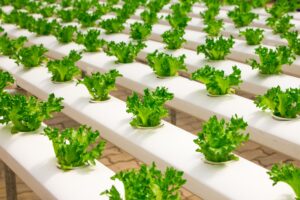
Some nutrient products are supplied as one-part liquids, while others require two or three components that must be combined in a particular sequence. Dry soluble fertilizers are another option, particularly for commercial growers who prepare larger volumes of nutrient solution.
In this guide, the best nutrients for hydroponic plants include versatile formulas for leafy vegetables, specialist feeds for fruiting crops, beginner-friendly products and concentrated options for larger growing systems. Each selection has different nutritional characteristics, so understanding its intended application is essential before adding it to a reservoir.
20 Best Nutrients For Hydroponic Plants
1. General Hydroponics Flora Series – Best Three-Part Nutrient System for Hydroponics
General Hydroponics Flora Series is the best three-part nutrient system for hydroponics because it allows growers to adjust nutrient proportions as plants move from vegetative growth into flowering and fruit production. Its three components, FloraMicro, FloraGro and FloraBloom, work together to supply the major nutrients and supporting minerals required throughout the growing cycle.

- The Flora Series is a hydroponic-based nutrient system that helps fulfill your plants’ nutrient needs at every stage of growth
- Nutrients included in the Series are FloraMicro, FloraBloom, and FloraGro
FloraMicro provides essential micronutrients and contributes nitrogen and calcium to the feeding program. FloraGro supports vegetative development, while FloraBloom contributes nutrients needed during flowering and fruit production. The three products are combined according to the manufacturer’s feeding schedule rather than being mixed together as undiluted concentrates.
This flexibility makes the system suitable for lettuce, herbs, tomatoes, peppers and other hydroponic crops when the feeding program is adjusted to their requirements. Growers should monitor electrical conductivity (EC) and pH instead of assuming that the manufacturer’s maximum feeding rate is appropriate for every crop. Its three-part arrangement requires more measuring and storage space than a single-bottle nutrient.
- Three components allow flexible nutrient management.
- Designed for use throughout different growth stages.
- Supplies a broad range of essential nutrients.
- Suitable for many hydroponic crop types.
- Feeding charts simplify nutrient preparation.
- Concentrated liquids are easy to measure.
- Useful for growers who want control over feeding ratios.
- Requires three separate bottles.
- Incorrect mixing can create nutrient imbalances.
- More measuring is required than with one-part formulas.
2. MasterBlend 4-18-38 – Best Dry Nutrient Formula for Hydroponic Vegetables
MasterBlend 4-18-38 is the best dry nutrient formula for hydroponic vegetables for growers who want to prepare their own nutrient solution using concentrated soluble fertilizers. Its 4-18-38 analysis provides nitrogen, phosphorus and potassium, while the commonly used feeding program combines it with calcium nitrate and magnesium sulphate.

- MasterBlend 4-18-38 Master Kit (3 Separate Components in correct amounts)
- Contains MasterBlend 4-18-38, Calcium Nitrate 15.5-0-0, and Epsom Salt (Magnesium Sulfate)
The three components have separate nutritional functions, making the combination useful for preparing balanced solutions for crops such as tomatoes, lettuce, cucumbers and peppers. Calcium nitrate supplies calcium and additional nitrogen, while magnesium sulphate supplies magnesium and sulphur. Each component must be measured accurately and dissolved separately according to the manufacturer’s instructions.
This formulation is particularly attractive to commercial growers because dry concentrates can be economical when preparing large quantities of nutrient solution. However, MasterBlend 4-18-38 should not be treated as a complete standalone fertilizer when the prescribed calcium nitrate and magnesium sulphate components are required. Proper weighing, water quality assessment and EC monitoring are important for consistent results.
- Concentrated dry formulation.
- Suitable for preparing larger nutrient batches.
- Commonly used for hydroponic vegetables.
- Can be economical for regular production.
- Works with a complementary calcium and magnesium program.
- Allows precise nutrient preparation.
- Useful for experienced growers and commercial operations.
- Requires additional nutrient components.
- Accurate weighing is necessary.
- Not a complete standalone feeding solution.
3. Jack’s 321 Nutrient System – Best Nutrient Program for Commercial Hydroponics
Jack’s 321 is the best nutrient program for commercial hydroponics for growers who prefer a structured dry-salt feeding system. The commonly used program combines a base fertilizer, calcium nitrate and magnesium sulphate to provide a controlled supply of essential plant nutrients.

- Bundle of 2 Items: You receive (1) 2.2-pound bag of Part A 5-12-26 and (1) 2.2-pound bag of Cal Nit Part B 15-0-0 water soluble fertilizer.
- Two-Part Feeding System: Designed for use together in hydroponic setups, featured micronutrients in part A work together with the complimentary macronutrients in part B to give your plants a comprehensive feeding from start to finish.
The system is based on a measured ratio of fertilizer components rather than relying on one universal NPK product. Its formulation can be adapted to different crops and production conditions, provided growers use the appropriate product grades and follow the manufacturer’s preparation guidance. This makes it particularly useful where nutrient mixing is part of a regular greenhouse production routine.
Jack’s 321 can support leafy vegetables, herbs and fruiting crops when the nutrient concentration is adjusted to crop requirements. Growers should check the exact formulation because different Jack’s fertilizer products are not interchangeable simply because they belong to the same brand. It also requires careful preparation, particularly when concentrated stock solutions are used.
- Suitable for structured hydroponic feeding programs.
- Dry formulation is convenient for bulk preparation.
- Allows precise nutrient concentration management.
- Can support different crop types.
- Useful for greenhouse production.
- Provides a repeatable mixing approach.
- Can offer good value for regular nutrient preparation.
- Requires multiple fertilizer components.
- Mixing errors can affect nutrient balance.
- Product selection requires attention to formulation.
4. General Hydroponics MaxiGro – Best Nutrients for Hydroponic Leafy Greens
General Hydroponics MaxiGro is the best nutrient formula for hydroponic leafy greens for growers looking for a concentrated, water-soluble fertilizer intended primarily for vegetative growth. Its formulation is designed to support foliage development, making it relevant to crops such as lettuce, spinach, basil and other leafy vegetables.

- Made in United States
- Package length : 7.9"

The product is supplied as a dry soluble fertilizer that is dissolved in water before being introduced into the hydroponic system. Its nutrient profile is intended to support active vegetative growth, although the precise feeding concentration should be adjusted according to crop age, water quality and the manufacturer’s instructions. Growers should also confirm whether additional calcium or other elements are needed for their particular water and system.
MaxiGro is particularly useful for crops harvested mainly for their leaves rather than their fruits. It can also be used during the vegetative phase of some longer-cycle crops as part of an appropriate nutrient program. Fruiting crops may require a different formulation or feeding strategy as they progress into flowering and fruit development.
- Formulated for vegetative plant development.
- Suitable for leafy hydroponic crops.
- Concentrated water-soluble powder.
- Easy to store compared with bulky liquid products.
- Useful for lettuce and culinary herbs.
- Allows controlled nutrient preparation.
- Suitable for growers seeking a simple dry formula.
- Primarily intended for vegetative feeding.
- May require complementary nutrients depending on water quality.
- Not a universal replacement for every growth-stage formula.
5. General Hydroponics MaxiBloom – Best Hydroponic Nutrients for Flowering Plants
General Hydroponics MaxiBloom is the best hydroponic nutrient formula for flowering plants for growers who want a soluble fertilizer intended for the reproductive phase of plant development. Its nutrient balance is different from a vegetative formula, making it a useful option for crops that are transitioning into flowering and fruit production.

The product is supplied as a water-soluble powder that must be dissolved thoroughly before use. Its formulation is designed to support flowering and fruiting, but it should not be assumed that increasing phosphorus and potassium alone will guarantee better yields. Adequate nitrogen, calcium, magnesium and micronutrients remain important during reproductive growth.
MaxiBloom can be incorporated into a suitable hydroponic feeding program for flowering and fruiting crops. Growers should follow the manufacturer’s recommended application rates and monitor EC to avoid excessive nutrient concentrations. It is not automatically the ideal standalone formula for every crop or every stage of development.
- Designed for flowering and fruiting stages.
- Concentrated soluble powder.
- Easy to store and measure.
- Useful in stage-based feeding programs.
- Provides an alternative to vegetative formulas.
- Can be incorporated into hydroponic systems.
- Suitable for growers managing reproductive growth carefully.
- Not designed as a universal all-stage formula.
- Requires accurate dilution.
- Crop-specific nutrient adjustments may still be necessary.
6. Advanced Nutrients pH Perfect Grow, Micro and Bloom – Best Nutrient Trio for pH Management
Advanced Nutrients pH Perfect Grow, Micro and Bloom is the best nutrient trio for growers seeking a structured feeding program with pH-management features. The three-part system is designed to provide nutrients at different stages while incorporating technology intended to help manage nutrient-solution pH.

The Micro component contributes essential micronutrients and other elements, while Grow and Bloom provide complementary nutrients for vegetative and reproductive development. The products must be combined according to the manufacturer’s instructions, with the correct mixing order and recommended quantities. The pH Perfect feature should not be interpreted as a guarantee that every water source will remain at an ideal pH without testing.
This nutrient program can be considered for hydroponic crops that benefit from stage-based feeding, including tomatoes, peppers and other fruiting plants. Its multi-bottle arrangement allows feeding adjustments but also makes correct measurement particularly important. Growers should continue monitoring pH and EC because water alkalinity, source-water composition and plant uptake can influence reservoir chemistry.
- Three-part nutrient program.
- Designed for different plant growth stages.
- Includes pH-management technology.
- Provides a structured feeding approach.
- Suitable for a range of hydroponic crops.
- Allows adjustments to nutrient proportions.
- Useful for growers who want a coordinated product range.
- Requires several bottles.
- Can be more expensive than basic dry salts.
- pH still needs to be monitored.
7. FoxFarm Hydroponic Nutrient Trio – Best Nutrient Set for Hydroponic Growers
FoxFarm’s hydroponic nutrient products are the best nutrient set for hydroponic growers who prefer a coordinated feeding program rather than purchasing unrelated fertilizers. Grow Big Hydroponic, Big Bloom and Tiger Bloom are commonly used together in a staged program, with each product serving a different nutritional role.

- THRIVE WITH VEGETATIVE GROWTH: Experience vegetative growth with Fox Farm Grow Big Hydroponic, designed specifically for hydroponic systems. The 3-2-6 nutrient mix supports plants, size and structure
- QUICK NUTRIENT ABSORPTION: Formulated for immediate absorption, this hydroponic nutrient solution ensures plants get the nutrients they need right when needed. This liquid concentrate helps plants quickly utilize essential nutrients, leading to vegetitve growth
Grow Big Hydroponic is intended to support vegetative development, while Tiger Bloom is formulated for flowering and reproductive growth. Big Bloom is a complementary product that contributes additional ingredients to the feeding program. The products should be used according to their individual labels rather than treating the trio as three interchangeable complete fertilizers.
This range may suit growers cultivating tomatoes, peppers and other plants with distinct vegetative and reproductive stages. However, the complete nutrient contribution must be assessed from the individual labels, particularly for calcium, magnesium and micronutrients. Growers should not assume that a three-product package automatically supplies every element in the correct quantities for every hydroponic crop.
- Provides a coordinated feeding range.
- Includes a vegetative growth product.
- Includes a flowering-stage product.
- Offers flexibility across crop development.
- Suitable for growers managing fruiting crops.
- Allows feeding schedules to be adjusted.
- Provides multiple formulations for different purposes.
- Requires careful use of several products.
- Not every component is a complete base nutrient.
- Additional mineral supplementation may be necessary.
8. CANNA Aqua Vega – Best Nutrients for Vegetative Hydroponic Growth
CANNA Aqua Vega is the best nutrient formula for vegetative hydroponic growth for growers using recirculating systems who need a product intended for the active growth stage. It is designed to support the development of leaves, stems and roots before plants move into their reproductive phase.

- Aqua Vega nutrition also contains ph.-stabilizers, which makes it extremely easy to keep
- Aqua Vega is easy to use, dissolves directly and is extremely suitable for growing with recirculating
The formula is part of CANNA’s Aqua nutrient range, which is developed for recirculating hydroponic systems. Its nutrient composition is intended to support vegetative development while supplying minerals through the circulating nutrient solution. Growers should select the appropriate product version and follow the manufacturer’s instructions for their water and system.
Aqua Vega is particularly relevant to plants that have established their initial roots and are developing substantial vegetative growth. It should be replaced or complemented with the appropriate flowering-stage formulation when the crop reaches the relevant development stage. Regular monitoring of reservoir concentration and pH remains important for avoiding nutrient stress.
- Designed for vegetative hydroponic growth.
- Developed for recirculating systems.
- Supports stage-based nutrient management.
- Suitable for established growing plants.
- Provides a dedicated vegetative formulation.
- Can be used within a coordinated CANNA program.
- Useful for growers managing crop development systematically.
- Not intended as the only formula for every growth stage.
- Requires the correct product version for the system.
- Must be used according to its feeding schedule.
9. CANNA Aqua Flores – Best Hydroponic Nutrients for Fruiting Crops
CANNA Aqua Flores is the best hydroponic nutrient formula for flowering and fruiting crops for growers using compatible recirculating systems. It is designed for the reproductive stage, when plants require a different nutrient balance from the one used during early vegetative development.

Aqua Flores is intended to provide nutrients during flowering and fruit development as part of CANNA’s Aqua feeding program. Its formulation should be used according to the manufacturer’s recommendations, taking into account the crop’s development stage and the concentration of the nutrient solution. It is important to maintain sufficient calcium and magnesium because reproductive growth does not eliminate the need for these elements.
The product can be considered for suitable flowering and fruiting hydroponic crops when used within the correct system and feeding schedule. Growers should avoid switching formulations solely according to a fixed calendar because crop development can vary with temperature, light intensity and plant variety. Monitoring EC, pH and plant response helps determine whether the feeding program is appropriate.
- Formulated for flowering and fruiting.
- Designed for compatible recirculating systems.
- Provides a dedicated reproductive-stage feed.
- Works within a coordinated nutrient program.
- Suitable for stage-based crop management.
- Allows growers to separate vegetative and reproductive feeding.
- Useful for growers seeking a specialist formulation.
- Not a universal all-stage nutrient.
- Requires correct system compatibility.
- Feeding concentration must be monitored.
10. General Hydroponics FloraNova Grow – Best One-Part Nutrient for Vegetative Hydroponics
General Hydroponics FloraNova Grow is the best one-part nutrient option for vegetative hydroponics for growers who want a concentrated liquid formula without preparing a three-part nutrient mixture. It is formulated to support vegetative development and can be considered for plants that are producing leaves, stems and new roots.

- General Hydroponics FloraNova Grow 7-4-10 contains the robust strength of dry fertilizer in the rapid application of a liquid
- Supports and nourishes plants from their first moments of growth into later stages
The concentrated formula supplies nutrients through the hydroponic solution, reducing the number of separate bottles required compared with multi-part systems. Its intended vegetative application makes it relevant to leafy growth and the early development of longer-cycle crops. The product should be shaken and measured according to the manufacturer’s instructions to ensure a consistent application.
FloraNova Grow is useful when a grower wants a dedicated vegetative feed rather than one formulation for every stage. Fruiting plants may need a different nutrient balance as they progress into flowering and fruit development. Growers should also check whether their water source and the product’s nutrient profile provide adequate calcium, magnesium and micronutrients.
- Concentrated liquid formulation.
- Designed for vegetative development.
- Requires fewer bottles than three-part systems.
- Suitable for stage-based feeding programs.
- Easy to measure in small quantities.
- Useful for leafy growth.
- Can simplify nutrient preparation.
- Primarily intended for vegetative feeding.
- Requires accurate dilution.
- May need a different formula during flowering.
11. General Hydroponics FloraNova Bloom – Best Liquid Nutrient for Hydroponic Flowering
General Hydroponics FloraNova Bloom is the best liquid nutrient option for hydroponic flowering for growers who prefer a concentrated formula designed for reproductive development. It provides an alternative to dry flowering fertilizers and can be incorporated into a suitable feeding program for flowering and fruiting plants.

- General Hydroponics FloraNova Bloom
- The unique formulation of highly purified minerals and natural additives combines the benefits of both organic and soil-less gardening methods
The product is designed to provide a different nutrient balance from FloraNova Grow, making it appropriate for the reproductive phase when used according to the manufacturer’s instructions. It supplies nutrients through the reservoir or irrigation solution, where they are available for root uptake. Correct dilution is essential because concentrated nutrient solutions can cause root-zone salinity problems when applied excessively.
FloraNova Bloom can be considered for hydroponic crops that have reached the appropriate flowering or fruiting stage. Its use should be based on crop development rather than assuming every plant needs the same feeding schedule. Growers should continue checking pH and EC and observe leaf condition, flower development and fruit quality throughout production.
- Concentrated liquid nutrient.
- Designed for reproductive development.
- Provides a dedicated flowering-stage option.
- Easy to measure and dilute.
- Can be used in suitable hydroponic systems.
- Complements a stage-based feeding program.
- Useful for growers who prefer liquid fertilizers.
- Not intended as a universal vegetative feed.
- Requires accurate nutrient measurement.
- Crop-specific adjustments may still be needed.
12. Botanicare Pure Blend Pro Grow – Best Nutrients for Hydroponic Vegetative Plants
Botanicare Pure Blend Pro Grow is the best nutrient option for hydroponic vegetative plants for growers interested in a formulated liquid feed intended to support foliage and early plant development. It is designed for use during the vegetative phase and can be considered for suitable crops grown in hydroponic and other soilless production systems.

- Botanicare Pure Blend Pro Grow 3-2-4 is a premium, one-part plant food
- Beneficial for fruits, flowers, vegetables, houseplants, shrubs, and cacti
The product is part of the Pure Blend Pro range and is intended to provide nutrients that support vegetative growth. Growers should examine its current product label to understand the nutrient analysis, recommended application rates and any complementary products required for their system. Its use should be guided by crop requirements rather than by the assumption that all plants need identical nutrient concentrations.
Pure Blend Pro Grow may suit growers who want a liquid vegetative formula for leafy plants and the early growth stages of fruiting crops. It is important to verify compatibility with the selected hydroponic method and maintain suitable solution pH and EC. The nutrient program may need to change as plants enter flowering and fruit production.
- Liquid formulation for vegetative feeding.
- Designed for active plant growth.
- Suitable for selected soilless systems.
- Can be incorporated into a stage-based program.
- Convenient for measured liquid applications.
- Provides an alternative to dry fertilizer salts.
- Useful for growers managing vegetative development.
- Requires checking the current label for full nutrient coverage.
- May need a complementary flowering formula.
- Application rates must be adjusted to crop requirements.
13. Botanicare Pure Blend Pro Bloom – Best Nutrient Formula for Hydroponic Fruit Production
Botanicare Pure Blend Pro Bloom is the best nutrient formula for hydroponic fruit production for growers who want a dedicated reproductive-stage product within a coordinated feeding range. It is intended for flowering and fruiting development rather than serving as a universal nutrient for every stage of plant growth.

- Botanicare Pure Blend Pro Bloom Soil 1-4-5 is a premium, one-part plant food for fruiting and flowering plants
- Beneficial for fruits, flowers, vegetables, houseplants, shrubs, and succulents
The formula is designed to support plants during reproductive growth, when nutrient requirements can differ from those during early vegetative development. Growers should consult the current product label for its complete nutrient analysis and instructions before incorporating it into a reservoir. The product should be evaluated alongside the base nutrient program to ensure that calcium, magnesium and micronutrients remain adequately supplied.
Pure Blend Pro Bloom can be considered for suitable hydroponic fruiting and flowering crops when used within an appropriate nutrient schedule. It should not be selected simply because a crop has begun producing flowers; the entire nutrient balance and plant condition must be considered. Regular EC and pH measurements help growers identify changes in the solution before they cause significant crop stress.
- Designed for reproductive-stage feeding.
- Liquid formulation is easy to measure.
- Complements a vegetative nutrient program.
- Suitable for selected hydroponic crops.
- Can support stage-based nutrient management.
- Provides an alternative to dry bloom fertilizers.
- Useful for growers managing fruiting development.
- Not a universal all-stage nutrient.
- Requires checking the complete nutrient analysis.
- May need complementary base nutrients.
14. Dyna-Gro Foliage-Pro – Best Nutrient for Hydroponic Foliage Plants
Dyna-Gro Foliage-Pro is the best nutrient option for hydroponic foliage plants for growers considering a concentrated fertilizer formulated for leafy plant development. Its balanced nutrient approach makes it an option worth evaluating for foliage production, although growers should confirm that the current label and formulation suit their particular hydroponic method.

- Foliage-Pro is a high nitrogen, low phosphorus complete nutrition formula
- Foliage-Pro 9-3-6 is a complete liquid plant nutrient developed with ten years of field and laboratory testing
The product is a liquid fertilizer intended to supply nutrients for foliage development, but its suitability as a complete hydroponic base depends on the crop, water source and actual nutrient composition. Growers should check the label for calcium, magnesium and essential micronutrients instead of relying only on the NPK analysis. A product that performs well for container-grown foliage plants is not automatically a complete nutrient solution for a recirculating hydroponic system.
Foliage-Pro may be considered for selected leafy plants where its formulation is compatible with the growing method and the manufacturer’s directions. Before using it in a reservoir, assess its solubility, concentration and suitability for continuous root exposure. Monitor pH, EC and plant response carefully, and use a dedicated hydroponic nutrient if the product does not meet the crop’s full mineral requirements.
- Liquid fertilizer is convenient to measure.
- Intended for foliage development.
- Provides an alternative to multi-part products.
- Useful for evaluating foliage nutrition.
- Can be applied in controlled quantities.
- Suitable for selected plants when label directions permit.
- Offers a concentrated feeding option.
- Hydroponic suitability must be verified.
- May not meet every crop’s complete nutrient needs.
- Requires careful monitoring in reservoirs.
15. TPS Hydroponic Nutrients – Best One-Part Nutrient for Home Hydroponics
TPS Hydroponic Nutrients is the best one-part nutrient option for home hydroponics for growers who want a liquid product designed to simplify nutrient preparation. Its published formulation includes NPK 4-3-6, calcium, magnesium and several micronutrients, making it a practical product to evaluate for general hydroponic feeding.

- Made for AeroGarden Systems – Formulated to support plant growth in AeroGarden and similar units.
- Supports Healthy Growth & Roots – Helps encourage steady development and strong root systems.
The formulation includes calcium and magnesium alongside micronutrients such as iron, manganese, zinc, boron and copper. This broader nutrient profile is important because hydroponic roots depend on the solution for minerals that soil would normally supply or buffer. The product is designed to be diluted into water according to the manufacturer’s instructions.
Its one-part format can reduce the complexity of preparing nutrient solutions for smaller home systems. However, growers should still assess whether the formulation meets the requirements of their crop and whether their source water contributes additional minerals. EC and pH should be monitored, especially when growing fruiting crops with changing nutrient requirements.
- One-part liquid formulation.
- Includes calcium and magnesium.
- Contains several essential micronutrients.
- Simplifies nutrient preparation.
- Suitable for evaluating general hydroponic feeding.
- Convenient for smaller home systems.
- Provides a balanced NPK formulation.
- One formulation may not suit every crop.
- May require adjustments for heavy-feeding plants.
- Correct dilution is still essential.
16. AeroGarden Liquid Plant Food – Best Nutrients for Small Indoor Hydroponic Gardens
AeroGarden Liquid Plant Food is the best nutrient option for small indoor hydroponic gardens for growers using compatible countertop growing systems. It is designed for convenient feeding in compact hydroponic units, making it particularly relevant to indoor herbs, salad greens and other small plants.
- Made for AeroGarden Systems – Formulated to support plant growth in AeroGarden and similar units.
- Supports Healthy Growth & Roots – Helps encourage steady development and strong root systems.
The liquid formulation is intended to be added to the water reservoir at the recommended rate. Its use is straightforward for growers who do not want to weigh dry fertilizer salts or prepare complicated stock solutions. However, the feeding instructions should be followed carefully because small reservoirs can experience rapid changes in nutrient concentration.
This product is most appropriate for growers using compatible indoor gardening systems and crops that fit the equipment’s growing capacity. Larger plants and commercial production systems may require a different nutrient program with more precise control over mineral concentrations. Growers should periodically clean the reservoir and replace the nutrient solution according to the system and manufacturer’s instructions.
- Designed for indoor hydroponic gardens.
- Convenient liquid formulation.
- Easy to measure and add to water.
- Suitable for compatible countertop systems.
- Useful for growing herbs and salad greens.
- Reduces the need for dry-salt preparation.
- Beginner-friendly feeding approach.
- Best suited to compatible small systems.
- May be less economical for larger production.
- Requires regular reservoir maintenance.
17. VIVOSUN Hydroponic Nutrients A and B – Best Two-Part Nutrient for Home Growers
VIVOSUN Hydroponic Nutrients A and B are the best two-part nutrient option for home growers who want a coordinated liquid feeding system. The separate formulations are designed to supply complementary nutrients after dilution, making the system suitable for growers who prefer a prepared nutrient program.

- The Perfect Combination: This two-part base nutrient system delivers a concentrated blend of holistic macro and micronutrients tailored to fuel plant growth from vegetative development right through the flowering stage
- Rich Nutrient Elements: This bundle contains a rich spectrum of key elements - nitrogen, phosphorus, potassium, calcium, magnesium and more; Together they deliver comprehensive nutrition to promote robust growth at every stage while eliminating risks of nutrient deficiencies
Two-part nutrient systems separate certain concentrated ingredients to reduce the risk of unwanted chemical reactions during storage. Calcium, for example, can react with concentrated sulphates or phosphates and form compounds that are less available to plants. The components should therefore be diluted separately in water, following the correct mixing sequence on the product label.
This nutrient format can be useful in small and medium-sized hydroponic setups where growers want a manageable liquid feeding program. It is important to check the specific product’s nutrient analysis and feeding schedule because different A and B formulas are not necessarily identical. Measure EC and pH after mixing and adjust the nutrient strength to the crop’s growth stage.
- Two-part liquid feeding system.
- Convenient for home hydroponic setups.
- Components are designed to work together.
- Simplifies preparation compared with individual fertilizer salts.
- Suitable for growers seeking a coordinated nutrient range.
- Allows measured nutrient application.
- Can support a structured feeding schedule.
- Requires two separate products.
- Mixing order must be followed.
- Product formulations should be checked before use.
18. House & Garden Aqua Flakes – Best Nutrient System for Recirculating Hydroponics
House & Garden Aqua Flakes is the best nutrient system for recirculating hydroponics for growers considering a dedicated two-part nutrient program. Its Aqua range is intended for hydroponic cultivation, where dissolved nutrients circulate around the root zone and must remain available throughout the feeding period.

The product is supplied as a two-part nutrient system, with the separate components intended to be combined in water according to the manufacturer’s directions. This arrangement helps keep certain ingredients apart while concentrated, reducing the possibility of precipitation before dilution. The precise mixing rate and appropriate product version should always be confirmed from the current label.
Aqua Flakes can be evaluated for compatible recirculating systems and crops that require a controlled mineral supply. Growers should maintain adequate aeration, reservoir hygiene and solution monitoring because nutrient availability is affected by more than fertilizer selection alone. It is also important to check whether the formulation is appropriate for the crop and water source being used.
- Designed for hydroponic nutrient delivery.
- Two-part formulation.
- Suitable for compatible recirculating systems.
- Provides a coordinated feeding program.
- Allows measured nutrient preparation.
- Useful for growers seeking specialist hydroponic products.
- Can be incorporated into controlled reservoir management.
- Requires two-part mixing.
- Correct system compatibility must be confirmed.
- Reservoir monitoring remains necessary.
19. Calcium Nitrate – Best Calcium Supplement for Hydroponic Plants
Calcium nitrate is the best calcium supplement for hydroponic plants when the nutrient solution needs additional calcium and nitrogen. It is a highly soluble fertilizer salt commonly used in hydroponic nutrient recipes and commercial feeding programs.

- PREMIUM QUALITY INGREDIENTS – Cz Garden Calcium Nitrate 15.5-0-0 is a water soluble, high purity, premium Nitrogen + Calcium fertilizer designed to boost the healthy development of all your indoor flowers, lawn, and garden vegetables.
- 100% WATER SOLUBLE - GREENHOUSE GRADE – High Purity, Premium Quality fertilizer. Beware of lower grade Agricultural Grade Calcium Nitrate that leaves oily skim on your solution, irrigation equipment, and plant roots.
Calcium supports cell-wall development, growing points and the structural integrity of plant tissues, while nitrate nitrogen contributes to vegetative growth. In hydroponics, calcium availability is particularly important in rapidly developing tissues and fruits. Insufficient calcium supply or poor calcium movement within the plant can contribute to disorders such as blossom-end rot in tomatoes.
Calcium nitrate is not a complete hydroponic fertilizer because it does not supply all the essential mineral elements. It is normally combined with other compatible nutrient salts or used as part of a formulated fertilizer program. Avoid mixing concentrated calcium nitrate directly with concentrated phosphate or sulphate fertilizers because precipitation can occur.
- Supplies readily available calcium.
- Also provides nitrate nitrogen.
- Commonly used in hydroponic recipes.
- Highly soluble fertilizer form.
- Useful for correcting calcium shortages.
- Supports growing tissues and cell-wall development.
- Suitable for measured stock-solution preparation.
- Does not provide complete plant nutrition.
- Can precipitate with concentrated phosphates and sulphates.
- Excessive application can unbalance nutrient concentrations.
20. Magnesium Sulphate – Best Magnesium Supplement for Hydroponic Plants
Magnesium sulphate is the best magnesium supplement for hydroponic plants when growers need to supply magnesium and sulphur through a nutrient solution. Commonly known as Epsom salt in its agricultural form, it is widely used as a component of hydroponic nutrient recipes.

- SHIPMENT CONTAINS: One 3-pound resealable bag of fragrance free epsom salt for relaxing baths and soaks
- RELAXING SOAK: Dissolves easily in warm water to create a soothing bath experience that helps relax muscles and reduce tension
Magnesium is central to chlorophyll structure and is essential for photosynthesis, while sulphur contributes to amino acid and protein formation. A magnesium shortage can produce interveinal chlorosis, commonly appearing first on older leaves because magnesium is mobile within the plant. Magnesium sulphate dissolves in water and can be incorporated into carefully calculated nutrient solutions.
However, magnesium sulphate is a supplement rather than a complete hydroponic fertilizer. It does not provide nitrogen, phosphorus, potassium, calcium or the full range of micronutrients required for plant growth. Growers should calculate the required concentration and consider the existing magnesium and sulphur content of their source water before adding it to the reservoir.
- Supplies magnesium and sulphur.
- Highly soluble in water.
- Useful in hydroponic nutrient recipes.
- Supports chlorophyll formation.
- Helps address magnesium deficiency.
- Convenient for preparing measured nutrient solutions.
- Can complement calcium nitrate-based feeding programs.
- Not a complete hydroponic fertilizer.
- Excess magnesium can disturb nutrient balance.
- Requires accurate concentration calculations.
7 Important Factors to Consider When Buying Nutrients for Hydroponic Plants
1. Complete Macronutrient and Micronutrient Content
A suitable hydroponic nutrient program should supply nitrogen, phosphorus, potassium, calcium, magnesium and sulphur, alongside essential micronutrients. The NPK numbers alone do not establish whether a fertilizer is complete because they describe only three major nutrients. Check the product label for the remaining elements and identify any components that must be purchased separately.
2. Crop Type and Nutritional Requirements
Different hydroponic crops have different nutritional demands, so a formula suitable for lettuce may not be ideal for tomatoes or cucumbers. Leafy vegetables generally require a feeding program that supports sustained vegetative growth, while fruiting crops need balanced nutrition throughout flowering and fruit development. Select a formula according to the crop rather than relying on a universal fertilizer recommendation.
3. Plant Growth Stage
Nutrient requirements change as plants progress from germination and seedling establishment into vegetative growth, flowering and fruiting. Some products are designed for a particular stage, while others provide a complete nutrient program that can be adjusted throughout development. Follow the manufacturer’s feeding schedule and avoid changing nutrient ratios without understanding the crop’s requirements.
4. Hydroponic System Compatibility
The selected nutrient must be appropriate for the type of hydroponic system being operated. Deep water culture, nutrient film technique, drip irrigation and ebb-and-flow systems differ in root exposure, solution movement and reservoir management. Choose products intended for the relevant growing method and ensure that they dissolve properly without leaving excessive sediment.
5. Nutrient Concentration, pH and EC
Electrical conductivity measures the overall concentration of dissolved ions in the nutrient solution, while pH affects the availability of individual nutrients for root uptake. A solution that is too concentrated can cause osmotic stress, whereas an overly dilute solution may fail to meet crop demand. Monitor both measurements regularly and adjust them according to the crop, growth stage and manufacturer’s instructions.
6. Water Quality and Nutrient Compatibility
The mineral composition of source water influences how much additional fertilizer is needed. Hard water may already contain considerable calcium and magnesium, while reverse-osmosis or rainwater may require more complete mineral supplementation. Avoid mixing concentrated calcium products directly with concentrated phosphate or sulphate products because insoluble compounds can form and reduce nutrient availability.
7. Product Cost and Ease of Preparation
Compare nutrient products based on the amount of finished nutrient solution they can prepare rather than the price of the bottle or bag alone. Concentrated liquids can be convenient for small systems, while dry soluble fertilizers may offer economic advantages for larger production volumes. Also consider storage requirements, measuring equipment, mixing complexity and the availability of reliable feeding instructions.
Best Nutrients For Hydroponic Plants Frequently Asked Questions
1. What Are the Best Nutrients for Hydroponic Plants?
The best nutrients are complete, water-soluble formulations that supply all essential mineral elements in suitable proportions. General Hydroponics Flora Series, MasterBlend 4-18-38 used with its required complementary components, and Jack’s 321 are examples of established nutrient programs. The most suitable choice depends on the crop, growing system, water quality and production scale.
2. Can I Use Ordinary Garden Fertilizer in Hydroponics?
Some water-soluble fertilizers can be used in carefully calculated hydroponic nutrient recipes, but ordinary garden fertilizers are not automatically suitable for reservoir-based growing. They may lack calcium, magnesium or essential micronutrients, and some formulations contain ingredients that are unsuitable for continuous root exposure. Choose a fertilizer specifically intended for hydroponics or verify that the product can supply the crop’s complete nutritional requirements.
3. What NPK Ratio Is Best for Hydroponic Plants?
There is no single NPK ratio that is ideal for every hydroponic plant. Leafy vegetables, herbs, tomatoes and fruiting crops have different nutrient demands, and their requirements change as they develop. A complete nutrient formulation should also provide calcium, magnesium, sulphur and micronutrients rather than relying on NPK alone.
4. Do Hydroponic Plants Need Calcium and Magnesium?
Yes, calcium and magnesium are essential mineral nutrients for hydroponic plants. Calcium supports cell-wall development and growing tissues, while magnesium is central to chlorophyll and photosynthesis. Some nutrient systems include both elements in their base formulas, while others require complementary products such as calcium nitrate or magnesium sulphate.
5. How Often Should I Change Hydroponic Nutrient Solution?
The replacement frequency depends on the crop, reservoir volume, system design, water quality and rate of nutrient uptake. Small reservoirs can experience faster changes in nutrient concentration than larger, well-managed systems. Monitor pH, EC, water level and plant condition, and follow a suitable reservoir-maintenance schedule rather than relying on one universal replacement interval.
6. What Is the Difference Between One-Part and Two-Part Hydroponic Nutrients?
One-part nutrients combine the required fertilizer ingredients into a single formulation, making preparation relatively straightforward. Two-part nutrients separate certain components to prevent undesirable reactions when concentrated, such as precipitation involving calcium and phosphates or sulphates. Both formats can provide effective plant nutrition when they are correctly formulated and used according to their labels.
7. Can I Use Epsom Salt as the Only Hydroponic Fertilizer?
No, Epsom salt cannot provide complete nutrition for hydroponic plants. It supplies magnesium and sulphur but does not provide the full range of essential macronutrients and micronutrients. It should only be used as a calculated supplement within a balanced nutrient solution.
Conclusion
In conclusion, the best nutrients for hydroponic plants depend on the crop, production method, water quality and the level of control required by the grower. General Hydroponics Flora Series is an excellent all-around choice for flexible feeding, while MasterBlend 4-18-38 is a strong runner-up for growers who prefer preparing dry nutrient solutions using complementary fertilizer components.
For beginners managing small indoor gardens, a simple one-part or coordinated two-part nutrient system can make fertilizer preparation easier. Commercial growers may prefer concentrated dry formulas because they allow larger quantities of nutrient solution to be prepared with accurate measurements.
Remember that fertilizer selection is only one part of successful hydroponic production because root oxygenation, reservoir hygiene, pH, EC, temperature and water quality also influence nutrient uptake. A complete feeding program should be adjusted to the crop’s development and supported by regular monitoring rather than relying exclusively on a manufacturer’s maximum feeding recommendation.
Ultimately, choose a nutrient system that provides the essential mineral elements, is compatible with your hydroponic equipment and offers clear mixing instructions. Maintaining a balanced nutrient solution will help support healthy root development, consistent vegetative growth, flowering and productive harvests.
Recent Posts
Hydroponic gardening allows growers to cultivate vegetables, herbs, fruits and selected ornamental plants without relying on conventional garden soil. The best plants to grow hydroponically are...
The best liquid plant food for hydroponics should supply essential macronutrients, including nitrogen, phosphorus, and potassium, together with calcium, magnesium, sulfur, and necessary...