Incorporating slender evergreen trees for landscaping is an effective way to introduce height, structure, and year-round greenery without occupying excessive garden space. Their narrow growth habits make them particularly useful along driveways, property boundaries, walkways, courtyards, and restricted planting beds.
Unlike broad-spreading trees, columnar and fastigiate evergreens direct much of their growth upward, creating strong vertical accents in residential and commercial landscapes. Many varieties also provide privacy, wind protection, architectural interest, and attractive foliage throughout the year.
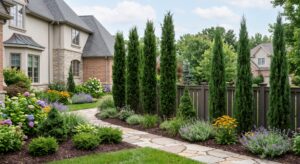
However, slender evergreen trees differ considerably in mature height, spread, growth rate, sunlight requirements, and environmental adaptability. Selecting suitable cultivars is important because some narrow trees eventually develop wider crowns, while others retain a naturally compact, upright structure.
In this guide, we examine 30 of the best slender evergreen trees for landscaping, including narrow conifers, upright hollies, compact cypresses, and architectural evergreens. Each selection includes its growing requirements, landscape applications, advantages, and potential limitations to help you choose an appropriate tree for your available space.
30 Best Slender Evergreen Trees For Landscaping
1. Italian Cypress – Best Tall Slender Evergreen Tree for Formal Landscaping
Italian Cypress (Cupressus sempervirens) is one of the most recognizable slender evergreen trees for landscaping because of its exceptionally narrow, upright growth habit. Its dark green foliage forms a distinctive column that introduces height and structure without occupying substantial horizontal space. Mature trees can reach approximately 40–60 feet tall, depending on cultivar and growing conditions.

- A Mediterranean garden classic that adds a strong verticle accent. An ideal specimen to dominate a landscape with its densely branched, narrow, columnar form. Excellent next to tall buildings or lining a long drive for a formal look.
- Grows easily in a wide range of soil types, provided good drainage. Water deeply and regularly during the first growing season to establish an extensive root system; reduce frequency once established. Feed with a general purpose fertilizer before new growth begins in spring.
Plant Italian Cypress in full sunlight and well-drained soil, preferably in locations protected from persistent severe winds. It tolerates dry conditions once established but performs poorly in waterlogged ground. Allow sufficient spacing between specimens to accommodate their mature width and maintain good air circulation.
Italian Cypress is particularly effective beside driveways, entranceways, garden walls, and Mediterranean-inspired landscapes. Its naturally vertical form generally requires little shaping, although damaged or overgrown branches may need attention. Choose appropriately sized cultivars because standard varieties can become extremely tall.
- Naturally narrow columnar growth
- Evergreen foliage throughout the year
- Excellent vertical landscape accent
- Good drought tolerance after establishment
- Suitable for formal garden designs
- Requires relatively little shaping
- Ideal for narrow planting spaces
- Requires excellent soil drainage
- Can become excessively tall
- Some cultivars are vulnerable to disease
2. Skyrocket Juniper – Best Pencil-Shaped Evergreen for Narrow Landscapes
Skyrocket Juniper (Juniperus scopulorum ‘Skyrocket’) is a narrow evergreen conifer with tightly arranged blue-green to silvery foliage. Its exceptionally upright growth habit makes it suitable for landscaping areas where conventional trees would occupy too much space. Mature specimens commonly develop into tall, slender columns.

- Welcome the impressive stature and striking beauty of the Juniper 'Skyrocket' into your landscape. This majestic evergreen conifer stands tall and slender, showcasing its unique form and vibrant greenery throughout the seasons.
- Delivering Nature's Joy: From large, high-impact trees and reliable, versatile shrubs to tropical fruits, rare house and patio plants and much more, our varieties provide the garden solutions you need
Grow Skyrocket Juniper in full sun and well-drained soil, avoiding locations with prolonged root saturation. It tolerates drought once established and performs well in exposed landscapes with adequate drainage. Provide enough spacing to prevent neighboring trees from crowding their naturally narrow crowns.
This juniper works particularly well beside entrances, fences, pathways, and architectural features. Its blue-toned foliage creates a strong contrast against darker shrubs and green lawns. Minimal pruning is generally required when the tree receives sufficient sunlight and growing space.
- Very narrow upright growth
- Attractive silvery-blue foliage
- Excellent for restricted planting areas
- Good drought tolerance
- Evergreen year-round appearance
- Minimal routine pruning
- Suitable for formal and modern landscapes
- Requires well-drained soil
- Can develop foliage problems in humid conditions
- Needs adequate sunlight
3. Emerald Green Arborvitae – Best Slender Evergreen for Privacy Landscaping
Emerald Green Arborvitae (Thuja occidentalis ‘Smaragd’) is a compact evergreen conifer valued for its dense, naturally upright foliage. Its relatively narrow pyramidal shape makes it useful for residential boundaries, foundation plantings, and small garden screens. Mature plants commonly reach approximately 10–15 feet tall and 3–4 feet wide.

- For sale are 20 Emerald Green Arborvitaes that are approximately 6-12" tall and ships bareroot
- INSTANT PRIVACY AND SCREENING - Creates dense, impenetrable living walls that block neighbors, traffic, and unsightly views while maintaining an elegant, manicured appearance year-round
Plant Emerald Green Arborvitae in full sun or partial shade and fertile, well-drained soil. Maintain consistent moisture during establishment, particularly in exposed or dry locations. Avoid excessive crowding because adequate airflow helps maintain healthy foliage.
This arborvitae is suitable for lining walkways, framing entrances, and creating narrow evergreen hedges. Its compact dimensions make it easier to accommodate than larger arborvitae varieties. Periodic watering during dry weather helps prevent browning and maintains dense growth.
- Naturally compact upright shape
- Dense evergreen foliage
- Suitable for narrow boundaries
- Attractive year-round greenery
- Excellent for privacy planting
- Tolerates partial shade
- Requires relatively little shaping
- Vulnerable to prolonged drought
- Can suffer winter foliage damage
- Slower growth than vigorous arborvitae varieties
4. Degroot’s Spire Arborvitae – Best Extremely Narrow Evergreen Accent Tree
Degroot’s Spire Arborvitae (Thuja occidentalis ‘Degroot’s Spire’) is an exceptionally narrow evergreen cultivar with upright branches and distinctive spiraling foliage. Its slender silhouette makes it an excellent choice for small gardens, narrow planting strips, and formal landscape arrangements. The tree develops a strong vertical appearance without requiring a broad planting bed.
No products found.
Grow this arborvitae in full sun or partial shade and moist, well-drained soil. Water regularly during establishment and protect young plants from prolonged drought. Its naturally narrow growth habit usually requires less pruning than broader hedge varieties.
Degroot’s Spire is particularly useful as a vertical accent beside entrances, pathways, and garden walls. Its unusual foliage arrangement creates visual interest even when planted individually. Allow enough space for mature development rather than attempting to maintain an excessively restricted width through repeated pruning.
- Exceptionally narrow growth habit
- Distinctive spiraling foliage
- Evergreen ornamental structure
- Excellent for small gardens
- Suitable for formal landscaping
- Attractive vertical accent
- Requires limited routine shaping
- Relatively slow development
- Requires consistent establishment moisture
- Can suffer in prolonged drought
5. Sky Pencil Holly – Best Slender Evergreen Tree for Small Gardens
Sky Pencil Holly (Ilex crenata ‘Sky Pencil’) is a narrow evergreen shrub that is frequently trained and used as a small tree-like landscape accent. Its upright branches create a pencil-shaped silhouette that fits particularly well beside doors, pathways, and restricted planting beds. Mature plants commonly reach approximately 8–10 feet tall while remaining relatively narrow.

- 📝 live 2-3 ft Sky Pencil Holly comes with easy to use plant food and features columnar foliage that holds its deep Green color year-round
- 💚 This gorgeous Holly grows well in organic soils or potted in a container — perfect for framing walkways, windows, or entryways for an inviting look

Plant Sky Pencil Holly in full sun or partial shade and acidic, well-drained soil. Maintain consistent moisture, particularly during hot weather and establishment. Avoid alkaline soils because they can cause nutrient deficiencies and foliage discoloration.
This holly is useful for symmetrical entrance plantings, container arrangements, and narrow garden borders. Its compact dimensions make it easier to maintain than many conventional evergreen trees. Protect it from severe winter exposure where its growing range requires additional shelter.
- Very narrow upright shape
- Glossy evergreen foliage
- Excellent for small spaces
- Suitable for container landscaping
- Attractive architectural appearance
- Works well beside entrances
- Requires limited width for establishment
- Requires acidic soil
- Sensitive to prolonged drought
- Can suffer winter damage in unsuitable climates
6. Irish Yew – Best Slender Evergreen for Formal Garden Designs
Irish Yew (Taxus baccata ‘Fastigiata’) is a narrow-growing evergreen conifer with upright branches and dense dark green needles. Its naturally columnar shape creates a formal appearance in traditional and contemporary gardens. Mature plants can develop into substantial vertical accents without spreading as widely as many other yews.

Grow Irish Yew in fertile, well-drained soil under full sun or partial shade. It tolerates a range of soil conditions but should not be planted where roots remain waterlogged. Regular watering during establishment encourages healthy foliage and root development.
Irish Yew is suitable for framing garden entrances, creating vertical accents, and establishing formal evergreen arrangements. It responds well to careful pruning when size management is necessary. All parts of yew plants, apart from the fleshy aril surrounding the seed, contain highly toxic compounds, so placement requires caution around children and animals.
- Naturally columnar growth
- Dense dark green needles
- Excellent formal landscape appearance
- Tolerates partial shade
- Responds well to pruning
- Long-lived evergreen structure
- Suitable for architectural planting
- Highly toxic plant parts
- Slow growth compared with vigorous conifers
- Requires well-drained soil
7. Hicks Yew – Best Narrow Evergreen for Shaped Landscaping
Hicks Yew (Taxus × media ‘Hicksii’) is an upright evergreen shrub that develops a narrow, dense form suitable for formal landscape designs. Its dark green needles provide year-round structure, while its tolerance of pruning makes it useful for maintaining controlled dimensions. Although botanically a large shrub, it can serve as a slender tree-like feature in landscaping.

- No ship to AK,CA,HI
- Dense, glossy, dark green needles cover its long vertical branches, creating an elegant living screen without taking up unnecessary space.
Plant Hicks Yew in full sun or partial shade and fertile, well-drained soil. Water regularly during establishment, especially in locations exposed to drying winds. Its growth habit becomes denser when provided with appropriate sunlight and sufficient root space.
Hicks Yew is effective for narrow hedges, entrance framing, and vertical garden accents. It tolerates shaping better than many naturally narrow conifers. Its foliage and seeds are poisonous if ingested, so avoid planting it where children or pets may chew the branches or berries.
- Dense evergreen foliage
- Naturally upright growth
- Excellent pruning tolerance
- Suitable for formal hedges
- Attractive dark green needles
- Performs in partial shade
- Long-lasting landscape structure
- Toxic if plant parts are ingested
- Relatively slow growth
- Sensitive to waterlogged soil
8. Taylor Juniper – Best Slender Evergreen for Cold-Climate Landscaping
Taylor Juniper (Juniperus virginiana ‘Taylor’) is a narrow, upright evergreen cultivar with attractive green foliage and a compact columnar form. Its growth habit makes it useful for narrow boundaries, formal landscape arrangements, and vertical accents. It is particularly valuable where a tall juniper is needed without the broad spread of conventional varieties.

- Narrow, upright growth habit reaches 15–20 ft. tall while maintaining a compact 3–4 ft. width, making it ideal for small spaces and tight landscape areas.
- Evergreen blue-green foliage provides year-round color, texture, and visual interest in every season
Plant Taylor Juniper in full sun and well-drained soil. It tolerates relatively dry conditions after establishment and generally performs well in cold climates. Avoid excessive irrigation and poorly drained planting locations because prolonged root saturation can reduce plant health.
Taylor Juniper can be used to frame driveways, mark entrances, and create narrow evergreen screens. Its upright form generally needs little pruning when planted correctly. Allow sufficient spacing for mature development and avoid placing it directly beneath overhead utilities.
- Narrow columnar growth
- Evergreen foliage
- Good cold tolerance
- Suitable for restricted spaces
- Good drought tolerance after establishment
- Relatively low maintenance
- Useful for formal screening
- Requires full sunlight
- Sensitive to poor drainage
- Can become too tall for small structures
9. Blue Arrow Juniper – Best Blue-Green Slender Evergreen Tree
Blue Arrow Juniper (Juniperus scopulorum ‘Blue Arrow’) is a narrow evergreen conifer with upright branches and attractive blue-gray foliage. Its columnar form provides vertical structure in gardens where broad trees would interfere with walkways or buildings. It is an excellent option for modern landscaping and dry-climate planting.

- Elegant, narrow columnar shape adds vertical interest to any garden, ideal for small spaces and landscape focal points
- Dense blue-green foliage provides year-round color, enhancing your garden's aesthetic appeal throughout all four seasons
Grow Blue Arrow Juniper in full sun and well-drained soil. Water consistently during establishment, then reduce irrigation once the root system becomes established. Good air circulation and suitable spacing help maintain healthy foliage.
Blue Arrow Juniper is suitable for lining driveways, creating symmetrical entrance arrangements, and introducing contrast into evergreen borders. Its natural shape usually requires little pruning. It is best avoided in humid, poorly ventilated locations where juniper foliage diseases may become problematic.
- Narrow upright silhouette
- Attractive blue-gray foliage
- Good drought tolerance
- Evergreen year-round structure
- Suitable for small planting beds
- Minimal shaping requirements
- Excellent modern landscape accent
- Requires good drainage
- Needs full sunlight
- May struggle in humid conditions
10. Dwarf Alberta Spruce – Best Compact Slender Evergreen for Entryways
Dwarf Alberta Spruce (Picea glauca ‘Conica’) is a compact evergreen conifer with a naturally symmetrical, narrow pyramidal form. Its dense needles create a neat architectural appearance that works well in formal gardens, containers, and entrance plantings. Although slower growing than many larger conifers, it retains an attractive compact shape.
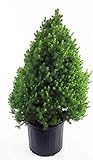
- It is fully rooted in the soil and can be planted immediately upon arrival, weather permitting. Planting and how-to-care instructions will arrive with shipment.
- For Best results, plant in used zones 3-8. Mature Height is 6-8ft, mature spread is 3-4ft.
Plant Dwarf Alberta Spruce in full sun and moist, well-drained soil. It prefers cooler conditions and may struggle in hot locations with intense afternoon sunlight. Water regularly during establishment and avoid allowing container-grown plants to dry out excessively.
This spruce is especially useful beside entrances, along walkways, and in symmetrical landscape arrangements. Its compact mature size makes it easier to accommodate than full-sized spruce trees. Monitor for spider mites and other pests, particularly during hot, dry weather.
- Compact pyramidal growth
- Dense evergreen needles
- Naturally symmetrical appearance
- Excellent for containers
- Suitable for small gardens
- Attractive year-round structure
- Requires little formative pruning
- Sensitive to excessive heat
- Vulnerable to spider mites
- Relatively slow growth
11. Fastigiate Atlas Cedar – Best Slender Blue-Green Evergreen Accent
Fastigiate Atlas Cedar (Cedrus atlantica ‘Fastigiata’) is a narrow-growing cedar cultivar with upright branches and attractive blue-green needles. Its distinctive structure makes it a striking focal point in formal and contemporary landscapes. It offers a more substantial architectural appearance than many compact columnar shrubs.

- ESSENTIAL AROMATHERAPY: Day-to-day tension can take a major toll on our energy levels, and sometimes it can be a challenge to stay positive. Atlas Cedar is balancing with a sweet, woodsy scent that is grounding and centering.
- NATURAL/RESPONSIBLY MADE: This oil is extracted through steam distillation of wood. Made in state-of-the-art laboratories, naturally derived and subject to purity testing in-house, vegan and never tested on any animals.
Grow this cedar in full sun and well-drained soil. Established plants tolerate relatively dry conditions, although regular moisture supports healthy growth during establishment. Avoid locations with persistent waterlogging and provide sufficient room for mature development.
Fastigiate Atlas Cedar works well as a standalone specimen or as part of a symmetrical planting arrangement. Its unusual narrow structure introduces height without the wide spreading canopy of standard Atlas Cedar. It is most suitable for gardens that can accommodate a medium-to-large evergreen tree.
- Attractive blue-green needles
- Upright architectural structure
- Evergreen year-round foliage
- Good drought tolerance after establishment
- Strong ornamental focal point
- Suitable for formal landscaping
- Distinctive alternative to common cypresses
- Requires substantial mature space
- Needs well-drained soil
- Not suitable for very small containers
12. Horstmann’s Silberlocke Korean Fir – Best Slender Evergreen With Silver Needles
Horstmann’s Silberlocke Korean Fir (Abies koreana ‘Horstmann’s Silberlocke’) is an ornamental evergreen conifer with distinctive recurved needles that expose their silvery undersides. Its narrow pyramidal shape makes it an attractive specimen for smaller landscapes. Upright purple cones can provide additional ornamental interest as the tree matures.

- Title - Cones of Abies Koreana Silberlocke the Korean Fir.
- Product Type - Photo Print
Plant Korean Fir in full sun or light partial shade and moist, well-drained soil. It generally prefers cooler growing conditions and protection from excessive heat. Maintain even moisture during establishment without allowing roots to remain saturated.
This fir is particularly suitable for specimen planting near entrances and garden seating areas. Its unusual silver foliage provides contrast against dark green shrubs and lawns. Although it develops a relatively narrow shape, allow sufficient room for its eventual canopy.
- Distinctive silver-backed needles
- Attractive narrow pyramidal habit
- Ornamental purple cones
- Evergreen foliage
- Excellent specimen tree
- Strong architectural appearance
- Suitable for smaller landscapes
- Sensitive to excessive heat
- Requires consistently suitable moisture
- Needs well-drained soil
13. Lawson’s Cypress ‘Ellwood’s Pillar’ – Best Dwarf Slender Evergreen for Small Spaces
Lawson’s Cypress ‘Ellwood’s Pillar’ (Chamaecyparis lawsoniana ‘Ellwood’s Pillar’) is a compact evergreen conifer with a narrow, columnar growth habit. Its densely arranged blue-green to gray-green foliage makes it suitable for small gardens, rockeries, and structured planting beds. It is considerably smaller than standard Lawson’s Cypress varieties.
No products found.
Grow this cultivar in full sun and moist, well-drained soil. It can tolerate several soil textures provided drainage remains adequate. Avoid prolonged drought during establishment and provide suitable air circulation around the foliage.
Ellwood’s Pillar is useful for narrow garden borders, containers, and small architectural planting arrangements. Its compact mature dimensions make it easier to manage than large cypress trees. Growth is relatively slow, so it is not the best selection when rapid screening is required.
- Compact columnar shape
- Attractive blue-green foliage
- Suitable for small gardens
- Works in containers
- Dense ornamental structure
- Relatively manageable mature size
- Useful for formal planting arrangements
- Slow growth
- Requires consistent soil moisture
- Sensitive to prolonged drought
14. Hinoki Cypress ‘Gracilis’ – Best Slender Evergreen With Textured Foliage
Hinoki Cypress ‘Gracilis’ (Chamaecyparis obtusa ‘Gracilis’) is an ornamental evergreen conifer with an upright pyramidal habit and layered, textured foliage. Its dark green sprays create a refined appearance suitable for Japanese-inspired gardens and formal landscape arrangements. It develops a more substantial silhouette than extremely narrow pencil-shaped conifers.

- This Plant will Ship in a fabric Grow Bag ( see pics ) - The plants are currently growing in a 2.5 Quart nursery pot However they will NOT ship in a plastic pot.
- A small evergreen shrub, the Dwarf Hinoki Cypress grows well in both sunlight and shade
Plant Hinoki Cypress in full sun or partial shade and fertile, moist, well-drained soil. Protect young plants from prolonged drought and harsh drying winds. Mulching around the root zone helps conserve moisture and maintain more stable soil conditions.
This cultivar is particularly effective as a specimen tree in courtyards, rock gardens, and mixed evergreen borders. Its textured branches create visual depth even when planted individually. Allow adequate room for the mature canopy because it is not as narrow as some fastigiate cultivars.
- Attractive layered foliage
- Evergreen ornamental structure
- Excellent Japanese garden specimen
- Naturally upright growth
- Suitable for partial shade
- Adds texture to landscape designs
- Works well in mixed evergreen borders
- Requires consistent establishment moisture
- Wider than pencil-shaped evergreens
- Sensitive to poor drainage
15. Golden Hinoki Cypress – Best Slender Evergreen With Golden Foliage
Golden Hinoki Cypress cultivars, including Chamaecyparis obtusa ‘Crippsii’, are ornamental evergreens valued for their golden-yellow foliage and attractive pyramidal structure. Their upright branching creates height and color in landscapes where ordinary green conifers may appear visually repetitive. Cultivar selection is important because mature sizes and growth habits vary.

- Great for use in asian style gardens and landscapes, Large containers, as accent or specimen plants or as a colorful evergreen privacy screen
- Broad, upright pyramidal shape with spreading branches; loose and open. Sprays of feathery, bright golden yellow foliage on frond-like spreading branches
Grow Golden Hinoki Cypress in full sun or partial shade and moist, well-drained soil. Protect foliage from excessive drying conditions, especially when young plants are exposed to strong sunlight and wind. Mulching helps maintain consistent moisture around the roots.
These trees work particularly well as focal points in Japanese-inspired landscapes, entrance gardens, and mixed evergreen borders. Their golden foliage creates contrast against darker trees and shrubs. Standard golden cultivars can become broad, so choose a narrower selection where planting space is restricted.
- Attractive golden foliage
- Evergreen landscape structure
- Strong ornamental focal point
- Suitable for mixed conifer borders
- Adds color contrast
- Attractive architectural branching
- Multiple cultivar choices
- Some cultivars become broad
- Requires consistent soil moisture
- Needs careful cultivar selection for narrow spaces
16. Japanese Cedar ‘Elegans’ – Best Textured Evergreen for Architectural Landscaping
Japanese Cedar (Cryptomeria japonica ‘Elegans’) is an ornamental evergreen conifer with soft, fine-textured foliage and an attractive upright growth habit. Its foliage develops bronze or reddish tones during colder weather in suitable climates. The tree creates a distinctive landscape feature without the rigid appearance of many columnar conifers.
No products found.
Plant Japanese Cedar in fertile, moist, well-drained soil with full sun or partial shade. It performs best where the root zone receives consistent moisture, particularly during dry weather. Avoid exposed sites with extreme drying winds.
Japanese Cedar is useful as a specimen tree in Japanese gardens, woodland borders, and mixed evergreen plantings. Its soft foliage provides contrast against broadleaf shrubs and formal hedges. The standard ‘Elegans’ form can become wider with maturity, so it is better suited to landscapes with moderate planting space than extremely narrow strips.
- Soft attractive foliage
- Distinctive seasonal color changes
- Evergreen landscape interest
- Suitable for Japanese gardens
- Attractive specimen tree
- Works in woodland-inspired designs
- Adds texture to mixed plantings
- Standard form can become broad
- Requires consistent moisture
- Sensitive to prolonged dry conditions
17. Columnar Blue Spruce – Best Slender Evergreen With Blue Needles
Columnar Blue Spruce cultivars are narrow-growing forms of Picea pungens selected for their upright shape and attractive blue needles. They provide a strong vertical accent in landscapes where foliage color and compact growth are equally important. Cultivars such as ‘Fastigiata’ can be useful alternatives to broader blue spruce varieties.

- A very narrow, upright form of the Norway Spruce!
- A Super fast growing Spruce, with dark green needles grows a foot a year!
Plant columnar blue spruce in full sun and moist, well-drained soil. It generally performs best in cooler climates and may struggle in regions with persistent summer heat and humidity. Maintain adequate spacing and avoid overhead irrigation that keeps foliage wet for extended periods.
This spruce is effective as a specimen tree, entrance accent, or feature in a formal conifer collection. Its blue foliage provides strong contrast against green hedges and ornamental grasses. Choose disease-resistant material where available because some blue spruce selections are vulnerable to needle diseases.
- Attractive blue needles
- Upright landscape structure
- Evergreen year-round appearance
- Excellent specimen tree
- Strong color contrast
- Suitable for formal gardens
- Narrow cultivars reduce space requirements
- Performs poorly in excessive heat
- Vulnerable to needle diseases
- Requires good soil drainage
18. Columnar Norway Spruce – Best Slender Evergreen for Large Landscapes
Columnar Norway Spruce (Picea abies ‘Cupressina’) is a narrow evergreen conifer with dense branches and a distinctive upright form. Its relatively compact width makes it useful for creating vertical accents in large gardens and spacious property boundaries. It maintains the classic dark green appearance associated with Norway Spruce.
- A very narrow, upright form of the Norway Spruce!
- A Super fast growing Spruce, with dark green needles grows a foot a year!
Grow this spruce in full sun and moist, well-drained soil. It prefers cooler climates and can struggle in prolonged heat or severe drought. Provide sufficient room for its mature height and protect young trees from competition with aggressive surrounding vegetation.
Columnar Norway Spruce is suitable for formal evergreen arrangements and tall landscape accents. Its dense foliage provides more visual coverage than many open-branched conifers. It is most appropriate for spacious properties rather than very small courtyards.
- Narrow upright growth habit
- Dense evergreen branches
- Attractive dark green needles
- Suitable for large formal gardens
- Provides year-round structure
- Strong vertical accent
- Good cold tolerance
- Requires considerable height clearance
- Sensitive to excessive heat
- Needs moist but well-drained soil
19. Columnar White Spruce – Best Hardy Slender Evergreen for Cold Regions
Columnar White Spruce cultivars are upright forms of Picea glauca that provide evergreen structure in cooler landscapes. Their dense needles and narrow branching make them useful for formal boundaries and specimen planting. Cultivars such as ‘Pendula’ and other upright selections differ in their final shape, so confirm the growth habit before purchasing.

- EASY TO PLANT - Arrives as a 6 – 12” plug with a strong root system for quick planting and growth in your landscape.
Plant White Spruce in full sun and moist, well-drained soil. It tolerates cold winters and generally prefers cooler growing conditions. Water regularly during establishment and avoid excessively dry sites.
Columnar White Spruce is suitable for northern gardens, large entrance areas, and structured conifer collections. Its evergreen foliage provides reliable seasonal color. Some cultivars may develop wider or irregular crowns with age, so choose a clearly identified narrow selection.
- Excellent cold hardiness
- Evergreen needle coverage
- Attractive upright structure
- Suitable for formal planting
- Provides year-round greenery
- Useful as a specimen conifer
- Adapted to cooler climates
- Some cultivars become broad
- Performs poorly in excessive heat
- Requires adequate establishment moisture
20. Columnar Eastern Red Cedar – Best Slender Native Evergreen for Dry Landscapes
Columnar Eastern Red Cedar (Juniperus virginiana) cultivars are narrow-growing selections of a hardy North American evergreen tree. Their dense foliage and upright branching make them suitable for naturalistic landscapes, property boundaries, and vertical garden accents. Some cultivars retain a relatively narrow form as they mature.

- Easily grown in average, dry to moist, well-drained soils in full sun. Tolerates a wide range of soils and growing conditions, from swamps to dry rocky glades. Prefers moist soils but is intolerant of constantly wet soils. It has the best drought resistance of any conifer native to the eastern U.S.
- Juniperus virginiana, commonly called Eastern red cedar, is native to Missouri where it typically occurs on limestone bluffs and glades, wood margins, fields, pastures and fence rows throughout the state except for the southeastern lowlands.
Grow Eastern Red Cedar in full sun and well-drained soil. It tolerates drought once established and adapts to a range of soil types, including relatively poor conditions. Avoid persistently wet locations and allow sufficient room for mature canopy development.
Columnar Eastern Red Cedar works well in native-inspired gardens and exposed landscape positions. Its evergreen foliage provides visual structure throughout the year and can support wildlife. Avoid planting near susceptible apple and crabapple trees where cedar-apple rust could become a concern.
- Hardy evergreen growth
- Good drought tolerance
- Suitable for native landscapes
- Adaptable to varied soil types
- Provides wildlife habitat
- Useful for narrow boundaries
- Requires relatively little maintenance
- Requires full sunlight
- Can host cedar-apple rust
- Mature size varies by cultivar
21. Japanese Holly ‘Sky Sentry’ – Best Upright Evergreen for Formal Borders
Japanese Holly ‘Sky Sentry’ (Ilex crenata ‘Sky Sentry’) is an upright evergreen cultivar with small, glossy leaves and a narrow branching structure. It is suitable for compact landscape arrangements where a formal vertical feature is needed. Its relatively small foliage creates a refined appearance similar to a neatly maintained boxwood column.

- The Japanese Sky Pencil is female only cultivar of Ilex Crenata. Dense evergreen foliage that retains its natural shape without pruning making it very easy to care for. Fully mature plants reach sizes of 6-8 feet H x 24-36 inches wide.
- MULTI USE: With its unique appearance you may find that there are several places that you may want to place your Sky Holly. They do well as container plants, tall hedges or privacy screens. In order for your plant to produce berries both male and females must be present for pollination.
Plant Sky Sentry in acidic, well-drained soil and full sun or partial shade. Maintain even soil moisture during establishment and avoid locations where alkaline soil causes nutrient deficiencies. Prune lightly when necessary to maintain its natural upright shape.
This cultivar works well in entrance gardens, narrow borders, and structured courtyard designs. Its evergreen foliage provides a consistent background for flowering perennials and seasonal bedding plants. It is better suited to moderate-height accents than tall screening applications.
- Narrow upright growth
- Small glossy evergreen leaves
- Suitable for formal borders
- Compact planting footprint
- Attractive architectural appearance
- Works in partial shade
- Requires relatively light shaping
- Requires acidic soil
- Relatively slow growth
- Limited height compared with large conifers
22. Irish Juniper – Best Compact Slender Evergreen for Rock Gardens
Irish Juniper (Juniperus communis ‘Hibernica’) is a narrow evergreen conifer with a distinctive upright, columnar habit. Its blue-green foliage and compact growth make it suitable for rock gardens, formal planting arrangements, and narrow landscape beds. It creates a vertical feature without requiring the extensive space needed by larger trees.

Grow Irish Juniper in full sun and well-drained soil. It tolerates relatively dry conditions after establishment and performs best where air circulation is good. Avoid excessive irrigation and heavy soils that remain saturated after rainfall.
Irish Juniper is useful for introducing structure into alpine gardens, gravel landscapes, and mixed conifer collections. Its naturally compact shape generally requires minimal pruning. Growth is relatively slow, making it more suitable for controlled ornamental landscaping than rapid privacy screening.
- Compact columnar growth
- Attractive blue-green foliage
- Excellent for rock gardens
- Good drought tolerance
- Suitable for gravel landscaping
- Minimal routine pruning
- Evergreen ornamental structure
- Relatively slow growth
- Requires full sunlight
- Sensitive to poorly drained soil
23. Gold Cone Juniper – Best Golden Slender Evergreen for Landscape Color
Gold Cone Juniper (Juniperus communis ‘Gold Cone’) is a compact evergreen conifer with a narrow, upright shape and attractive golden-yellow foliage. Its bright coloration creates contrast in gardens dominated by darker evergreen trees. The naturally conical growth habit makes it suitable for small landscape accents and decorative planting beds.

- Plant is delivered in a #3 size container. It is fully rooted in the soil and can be planted immediately upon arrival, weather permitting.
- For Best results, plant in used zones 5-8. Mature Height is 6-7ft, mature spread is 2-3ft.
Plant Gold Cone Juniper in full sun and well-drained soil. Strong sunlight generally helps maintain its golden foliage coloration, while poor drainage can cause root decline. Water regularly during establishment and reduce irrigation once the plant becomes established.
This juniper is useful in rock gardens, entrance borders, and mixed conifer arrangements. Its relatively modest mature size makes it easier to accommodate than tall pencil pines. The tree grows slowly, so it is better suited to ornamental accents than rapid screening.
- Attractive golden-yellow foliage
- Naturally narrow conical form
- Suitable for compact gardens
- Good drought tolerance after establishment
- Excellent color contrast
- Works in rock gardens
- Requires little shaping
- Slow growth
- Requires full sunlight
- Needs well-drained soil
24. Weeping Alaska Cedar – Best Slender Evergreen With Pendulous Branches
Weeping Alaska Cedar (Chamaecyparis nootkatensis cultivars) is an evergreen conifer valued for its narrow form and gracefully drooping branches. Selected cultivars can create tall, slender landscape features with a distinctive cascading appearance. Its architectural silhouette makes it particularly attractive in formal and woodland-inspired gardens.

- Alternate names: Nootka Falsecypress, Yellow-Cedar, Yellow/Weeping Nootka Cypress, Chamaecyparis nootkatensis 'Pendula' (aka Callitropsis n., Xanthocyparis n., Cupressus n.)
- evergreen foliage
Plant Weeping Alaska Cedar in moist, well-drained soil with full sun or partial shade, depending on the cultivar and climate. It generally performs best in cooler regions with reliable moisture. Protect young trees from severe drying winds and prolonged heat stress.
This cedar is suitable for specimen planting near garden entrances, ponds, and architectural features. Its pendulous branches create movement and visual interest without requiring a broad canopy. Mature dimensions vary considerably, so select a cultivar with an appropriate height and spread for the site.
- Distinctive drooping branches
- Evergreen foliage
- Attractive architectural silhouette
- Suitable for specimen planting
- Creates vertical landscape interest
- Works in woodland-inspired gardens
- Multiple ornamental cultivars
- Sensitive to prolonged heat
- Requires consistent moisture
- Mature size varies by cultivar
25. Weeping White Spruce – Best Narrow Evergreen With Cascading Branches
Weeping White Spruce cultivars, including Picea glauca ‘Pendula’, are ornamental evergreens with upright trunks and gracefully descending branches. Their narrow growth habit creates a distinctive vertical feature in gardens where conventional spreading trees would occupy too much room. The cascading foliage adds texture and movement to structured landscapes.

- FORMAL, NARROW, CONICAL SHAPE PENDULOUS, STIFFLY HELD, DROOPING BRANCHES!
- LOADS OF LIGHT, GRAY-GREEN FOLIAGE!
Grow Weeping White Spruce in full sun and moist, well-drained soil. It generally prefers cooler growing conditions and should be protected from prolonged heat and drought. Provide sufficient space for the branches to develop naturally without interfering with walkways.
This spruce is useful as a focal point in formal gardens, entrance arrangements, and larger rock gardens. Its pendulous growth produces a more dramatic appearance than conventional columnar conifers. Mature shape can depend on staking and training during the early stages of development.
- Distinctive cascading branches
- Attractive evergreen needles
- Narrow vertical structure
- Excellent specimen tree
- Suitable for formal gardens
- Adds movement and texture
- Works in cooler climates
- Requires cooler growing conditions
- May need early structural training
- Sensitive to prolonged drought
26. Columnar Japanese Plum Yew – Best Slender Evergreen for Shaded Landscapes
Columnar Japanese Plum Yew (Cephalotaxus harringtonia upright cultivars) is a shade-tolerant evergreen conifer with dense, dark green foliage. Its upright selections can provide narrow landscape accents in locations where many sun-loving columnar trees perform poorly. The foliage has a softer appearance than traditional junipers and cypresses.

- Shipping Advisory: Shipments to California may be delayed or refused due to state regulations
Plant Japanese Plum Yew in partial shade or filtered sunlight and moist, well-drained soil. It tolerates more shade than many conventional conifers and benefits from protection against intense afternoon sunlight in hot climates. Maintain even moisture during establishment without allowing waterlogged roots.
This plant is useful for shaded courtyards, woodland borders, and sheltered garden spaces. Its relatively compact growth makes it easier to incorporate into smaller landscapes. Select a genuinely upright cultivar because spreading Japanese Plum Yew varieties are not suitable where a narrow form is essential.
- Excellent shade tolerance
- Dense evergreen foliage
- Attractive dark green color
- Suitable for woodland gardens
- Soft-textured ornamental appearance
- Useful for sheltered spaces
- Relatively manageable growth
- Upright cultivars can be difficult to source
- Requires well-drained soil
- Growth is relatively slow
27. Podocarpus ‘Maki’ – Best Slender Evergreen for Modern Landscaping
Podocarpus ‘Maki’ (Podocarpus macrophyllus ‘Maki’) is an upright evergreen shrub or small tree with narrow growth and dense, slender leaves. Its compact columnar form makes it useful for modern landscapes, patios, and narrow planting beds. The dark green foliage creates a clean architectural appearance throughout the year in suitable climates.

- Attention - this item does not ship to CA or AZ due to state law. You may not order this item if you live in California or Arizona.
- The Podocarpus Maki is an evergreen shrub with dense, upright growth and glossy dark green foliage that provides year-round beauty.
Plant Podocarpus ‘Maki’ in full sun or partial shade and well-drained soil. Water regularly during establishment and avoid prolonged saturation around the root system. It tolerates pruning well, making it possible to maintain a more formal shape when necessary.
This cultivar is effective beside entrances, along garden walls, and in structured evergreen borders. Its manageable dimensions make it more suitable for residential landscaping than large podocarpus species. Protect it from severe frost and choose a suitable cultivar for the local climate.
- Naturally upright growth
- Dense evergreen foliage
- Suitable for modern gardens
- Tolerates regular pruning
- Attractive dark green leaves
- Works in narrow planting beds
- Suitable for formal arrangements
- Limited frost tolerance
- Requires good soil drainage
- Needs watering during establishment
28. Italian Stone Pine ‘Silver Crest’ – Best Compact Evergreen for Mediterranean Landscaping
Italian Stone Pine ‘Silver Crest’ (Pinus pinea ‘Silver Crest’) is a compact ornamental evergreen conifer with attractive silvery-green needles. It is commonly grown as a small architectural tree rather than a very tall pencil-shaped specimen. Its relatively controlled dimensions make it useful for courtyards, containers, and Mediterranean-inspired landscapes.

- Interior Designers Note: Combining contemporary flair with classic elegance, this sophisticated wall art print features an iconic Brown Sports & Sports Teams design that will transform your space
- Real Pine Wood: Hand-stretched over a sustainably-sourced 1.5-inch thick wood inner frame. This gallery-wrapped canvas is available in a variety of decorative floater frames to create the illusion of suspended artwork.
Grow this pine in full sun and sharply drained soil. It tolerates dry conditions once established and performs best in locations with sufficient sunlight and good air circulation. Container-grown specimens require appropriate drainage and periodic root management.
Silver Crest is suitable for accent planting near patios and entranceways where a distinctive evergreen form is desired. Its silvery needles provide contrast against darker foliage. It develops a broader canopy than extremely narrow junipers, so it should be selected for moderate rather than extremely restricted spaces.
- Attractive silvery-green needles
- Compact ornamental growth
- Suitable for container landscaping
- Good drought tolerance after establishment
- Excellent Mediterranean garden accent
- Evergreen year-round foliage
- Strong architectural appearance
- Broader than pencil-shaped conifers
- Requires full sunlight
- Sensitive to poorly drained soil
29. Southern Magnolia ‘Little Gem’ – Best Compact Evergreen Tree for Residential Landscaping
Southern Magnolia ‘Little Gem’ (Magnolia grandiflora ‘Little Gem’) is a compact evergreen tree with glossy dark green leaves and fragrant white flowers. Compared with standard Southern Magnolia, it generally develops a smaller, more upright growth habit. Its dense foliage makes it useful for residential gardens where an ornamental evergreen tree is desired.

- Little Gem Magnolia comes with easy to use plant food. It blooms every year during summer months with white flowers
- This tree features narrow, compact growth. No pruning is necessary to keep Little Gem shapely to compliment the landscape
Plant Little Gem Magnolia in full sun or partial shade and fertile, well-drained soil. Maintain consistent moisture during establishment and apply mulch to protect the root zone. Although more compact than standard magnolias, it still needs sufficient space for its mature canopy.
This magnolia works well as a specimen tree near entrances, patios, and residential boundaries. Its flowers add seasonal interest while the evergreen foliage provides year-round structure. It is not an extremely narrow tree, so avoid placing it in planting strips that cannot accommodate its eventual width.
- Glossy evergreen foliage
- Attractive fragrant white flowers
- More compact than standard magnolia
- Suitable for residential landscapes
- Excellent specimen tree
- Provides year-round greenery
- Strong ornamental appeal
- Wider than true columnar trees
- Requires adequate root space
- Needs consistent moisture during establishment
30. Columnar Sweet Bay Magnolia – Best Slender Evergreen for Warm-Climate Landscapes
Columnar Sweet Bay Magnolia selections (Magnolia virginiana cultivars) are evergreen or semi-evergreen trees in warmer climates, depending on cultivar and local winter temperatures. Their upright growth, attractive foliage, and fragrant flowers make them useful for residential landscape accents. Some selections develop a relatively narrow form suitable for structured planting arrangements.

- FRAGRANT WHITE FLOWERS – Produces creamy white, lemon-scented flowers that bloom in late spring to early summer
- 1'-2' ESTABLISHED HEIGHT: Arrives in a 1-gallon container, minimizing transplant shock and giving you a strong start for your landscape
Plant Sweet Bay Magnolia in full sun or partial shade and moist, well-drained soil. It tolerates wetter conditions better than many conventional conifers, although prolonged stagnant water should still be avoided. Maintain adequate moisture during establishment and select a cultivar appropriate for the local climate.
This magnolia is useful in courtyard landscapes, near water features, and as a vertical accent in mixed evergreen plantings. Its fragrant flowers and attractive foliage provide additional ornamental value. Evergreen performance and mature dimensions vary with cultivar and climate, so confirm the plant’s characteristics before purchasing.
- Attractive evergreen or semi-evergreen foliage
- Fragrant ornamental flowers
- Upright cultivar options
- Suitable for warm-climate landscapes
- Useful near water features
- Attractive residential specimen
- Adds year-round landscape structure in mild climates
- Evergreen performance varies by climate
- Mature width differs between cultivars
- Requires adequate establishment moisture
7 Important Factors to Consider When Choosing Slender Evergreen Trees for Landscaping
1. Mature Height and Spread
The mature dimensions of an evergreen tree determine whether it will fit comfortably into the available landscape space. Some columnar cypresses remain exceptionally narrow, while other upright cultivars gradually develop broader crowns. Check the expected height and spread before planting, especially near fences, buildings, and paved surfaces.
2. Growth Habit and Cultivar Selection
Not every evergreen described as upright or pyramidal will maintain a slender shape throughout its life. Fastigiate and columnar cultivars are generally more suitable for narrow planting beds because their branches grow predominantly upward. Confirm the cultivar name because different selections within the same species can have substantially different mature dimensions.
3. Sunlight Requirements
Most junipers, Italian Cypress, and many spruce varieties perform best in full sunlight. Other evergreens, including yew and Japanese plum yew, tolerate partial shade more effectively. Assess the daily sunlight exposure of the planting location before choosing a species to avoid weak growth and sparse foliage.
4. Soil Drainage and Moisture
Well-drained soil is essential for many slender evergreen conifers because prolonged root saturation can encourage root diseases and decline. Some species prefer consistently moist soil, while junipers and Italian Cypress generally tolerate drier conditions after establishment. Improve drainage where necessary and avoid excessive irrigation.
5. Climate and Cold Tolerance
Choose trees that can withstand the temperature range and seasonal conditions of your location. Italian Cypress and several podocarpus selections perform best in warmer climates, while Korean Fir, Norway Spruce, and White Spruce generally prefer cooler conditions. Heat, humidity, drought, and severe winter exposure can all influence long-term performance.
6. Maintenance and Pruning Requirements
Some columnar evergreens maintain their natural shape with minimal intervention, while others require occasional trimming to control size or encourage dense branching. Consider watering, pest monitoring, mulching, and seasonal cleanup when selecting a tree. Avoid repeatedly cutting into bare interior wood on conifers that do not readily regenerate from old branches.
7. Landscaping Purpose and Planting Location
Determine whether the tree will serve as a privacy screen, entrance accent, driveway border, container specimen, or architectural focal point. A narrow juniper may suit a small planting strip, whereas a larger columnar cedar is more appropriate for a spacious property. Also check for underground utilities, overhead wires, foundations, and property-boundary restrictions before planting.
Slender Evergreen Trees For Landscaping Frequently Asked Questions
1. What Are the Best Slender Evergreen Trees for Landscaping?
Italian Cypress, Skyrocket Juniper, Emerald Green Arborvitae, Degroot’s Spire Arborvitae, and Irish Yew are among the best options for slender evergreen landscaping. They offer different mature heights, foliage textures, and growing requirements. The best choice depends on available space, climate, and the desired landscape function.
2. What Is the Narrowest Evergreen Tree for Small Gardens?
Skyrocket Juniper, Degroot’s Spire Arborvitae, and Sky Pencil Holly are excellent choices for particularly narrow planting areas. Their naturally upright growth habits allow homeowners to introduce height without requiring a broad planting bed. Mature dimensions still vary with growing conditions and cultivar.
3. Which Slender Evergreen Trees Grow Tall and Narrow?
Italian Cypress, Skyrocket Juniper, Taylor Juniper, and columnar arborvitae cultivars are popular choices for tall, narrow landscaping. These trees develop predominantly vertical growth and generally occupy less horizontal space than conventional spreading evergreens. Confirm the mature width before planting because some cultivars become broader as they age.
4. Are Slender Evergreen Trees Suitable for Small Front Yards?
Yes, compact columnar evergreens are particularly useful in small front yards where spreading trees may obstruct walkways, windows, and driveways. Sky Pencil Holly, Emerald Green Arborvitae, and compact Lawson’s Cypress cultivars can provide attractive vertical structure. Choose plants according to their mature dimensions rather than their nursery size.
5. Which Slender Evergreen Trees Are Best for Privacy?
Emerald Green Arborvitae, Skyrocket Juniper, Taylor Juniper, and suitable columnar cypress varieties can create narrow evergreen screens. Closely arranged plants provide better coverage than isolated specimens, although spacing should still accommodate mature growth. For dense privacy, choose varieties with foliage that extends close to the ground.
6. Can Slender Evergreen Trees Grow in Containers?
Yes, several compact evergreens, including Dwarf Alberta Spruce, Sky Pencil Holly, compact Lawson’s Cypress, and suitable Podocarpus cultivars, can grow in containers. Use a sufficiently large pot with drainage holes and a suitable growing medium. Container-grown trees need more frequent watering and periodic root management than plants established in the ground.
7. How Do You Maintain the Narrow Shape of Evergreen Trees?
The simplest approach is to select naturally columnar cultivars rather than relying on repeated pruning to force a broad tree into a narrow form. Remove damaged or dead branches and follow species-specific pruning recommendations. Maintain appropriate spacing, adequate sunlight, and healthy growing conditions to preserve the tree’s natural structure.
Conclusion
In conclusion, the best slender evergreen trees for landscaping combine naturally upright growth, attractive foliage, and mature dimensions that suit the available planting area. Italian Cypress is an excellent overall choice for tall formal landscapes, while Skyrocket Juniper is a strong runner-up for homeowners seeking a narrow evergreen with attractive blue-gray foliage.
For residential boundaries and smaller gardens, Emerald Green Arborvitae, Degroot’s Spire Arborvitae, and Sky Pencil Holly provide attractive alternatives with more manageable dimensions. Their dense foliage and vertical growth make them useful for entrance planting, privacy arrangements, and restricted garden spaces.
Homeowners seeking distinctive ornamental features can consider Golden Hinoki Cypress, Silberlocke Korean Fir, and Fastigiate Atlas Cedar. These evergreens introduce interesting foliage colors and architectural branching, although their growing requirements and mature sizes should be considered carefully.
Ultimately, successful slender evergreen landscaping depends on selecting the correct species and cultivar for the local climate, soil conditions, sunlight exposure, and available space. With appropriate planting distances and routine maintenance, these narrow-growing evergreens can provide lasting structure, greenery, and visual interest throughout the year.
Recent Posts
Creating a private outdoor space becomes easier when you choose plants that block nosy neighbors while improving the appearance of your landscape. The right combination of evergreen trees, dense...
Artificial aquarium plants provide an attractive way to decorate freshwater and saltwater tanks while creating hiding places and visual structure for aquatic animals. Modern artificial plants for an...