The four o’clock plant (Mirabilis jalapa) is a flowering perennial traditionally valued in several cultures for its ornamental beauty and reported medicinal properties. Research into the medicinal uses of the four o’clock plant has identified traditional applications involving skin conditions, inflammation, digestive complaints, and urinary problems.
Different communities have used its leaves, roots, and flowers in traditional preparations, although the plant’s parts do not have identical properties. Researchers have also investigated extracts for antimicrobial, antioxidant, anti-inflammatory, and other biological activities.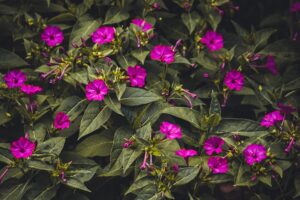
Despite these reported applications, most traditional remedies have not been established as safe and effective human treatments through adequate clinical trials. The roots and seeds are particularly important safety concerns because ingestion can cause poisoning.
In this guide, we explore the medicinal uses of the four o’clock plant, examining its traditional applications, investigated pharmacological properties, and important safety precautions. Understanding the difference between traditional knowledge and proven medical benefits is essential before considering this ornamental plant from a medicinal perspective.
What Are The Medicinal Uses Of The Four O’clock Plant? 13 Best
1. What Is the Four O’Clock Plant?
The four o’clock plant, scientifically known as Mirabilis jalapa, belongs to the Nyctaginaceae family. It is also called Marvel of Peru, beauty-of-the-night, and four o’clock flower because its colorful, trumpet-shaped flowers commonly open in the late afternoon.
The species is native to tropical America but is cultivated and naturalized in many tropical and subtropical regions. It grows as a branching herbaceous perennial, often developing tuberous roots and producing flowers in shades of pink, red, yellow, white, and mixed colors.

- 1. Heirloom Mixed Four O’Clock Seeds (50 pcs) - Grow your own Mirabilis jalapa with a stunning variety of colors, including broken and multi-colored blooms, adding vibrant beauty to any garden.
- 2. Attracts Pollinators Naturally - The fragrant evening-blooming flowers attract hummingbirds, butterflies, and bees, supporting a healthy and lively garden ecosystem.
Its leaves are generally opposite, oval-shaped, and green, while the flowers are produced in clusters. Although it is primarily cultivated as an ornamental plant, different parts have been documented in traditional medicine.
Important identification note: This article concerns Mirabilis jalapa, not other plants that may share the common name four o’clock. Correct botanical identification is important because common names can refer to different species.
2. Traditional Medicinal Uses of the Four O’Clock Plant
Traditional medicinal records describe several uses of Mirabilis jalapa. These applications vary between geographical regions and traditional healthcare systems, and they should not be interpreted as proof that the plant safely treats the conditions concerned.
1. Traditional Treatment of Skin Infections
The leaves of Mirabilis jalapa have traditionally been applied to certain skin complaints, including infected areas and other dermatological conditions. Some ethnobotanical records describe topical preparations made from the leaves for skin infections.
Researchers have investigated extracts of the plant for antimicrobial activity against selected microorganisms. However, laboratory antimicrobial activity does not establish that applying the plant to an infected wound is safe or effective in people.
2. Traditional Wound Care
Traditional medicinal practices in some regions describe using leaf juice or leaf preparations on wounds. Other records mention preparations made from the roots or whole plant for wound-related complaints.
These practices have attracted scientific interest because researchers have investigated the plant’s antimicrobial and anti-inflammatory properties. Nevertheless, there is insufficient clinical evidence to recommend raw plant material or homemade preparations for treating open wounds.
Proper wound cleaning and medical assessment remain important, particularly when wounds are deep, infected, painful, or slow to heal.
3. Traditional Use for Inflammation
Inflammation is another condition associated with the traditional medicinal use of four o’clock plant leaves. Ethnobotanical literature documents applications involving swollen tissues and inflammatory skin complaints.
Experimental investigations have examined extracts for possible anti-inflammatory activity. These findings provide a basis for further research into the plant’s chemical constituents, but they do not establish an effective human dose or demonstrate that the plant can replace approved anti-inflammatory medicines.
4. Traditional Use for Boils and Abscesses
Some traditional medicinal systems describe using leaf preparations for boils, abscesses, and other localized inflammatory skin conditions. Records from different regions mention leaf decoctions or topical applications.
Although laboratory studies have investigated antimicrobial properties, an abscess may contain a collection of pus that requires professional medical assessment and sometimes drainage. Attempting to treat an abscess with an unverified plant preparation can delay appropriate treatment.
5. Traditional Use as a Diuretic
The roots of Mirabilis jalapa have traditionally been described as diuretic, meaning they were used with the intention of increasing urine production. Some traditional records associate this use with conditions involving fluid accumulation.
However, there is no established safe medicinal dose or adequate clinical evidence demonstrating that four o’clock plant preparations effectively treat fluid retention. Unsupervised use of diuretic remedies can also create problems involving hydration, electrolyte balance, and kidney function.
6. Traditional Use as a Purgative
The root has been documented in traditional medicine as a purgative, a substance intended to stimulate bowel evacuation. Other ethnobotanical records describe laxative applications involving different plant parts.
This traditional use should be approached with particular caution. Unverified purgative preparations can cause severe gastrointestinal symptoms, including vomiting and diarrhea, and may contribute to dehydration.
7. Traditional Use for Urinary Complaints
Some medicinal plant databases record the use of Mirabilis jalapa for urinary problems and genitourinary complaints. Its traditional classification as a diuretic is also associated with these applications.
However, there is no reliable clinical basis for using the plant to treat urinary tract infections, kidney disease, or other urinary disorders. Suspected urinary infections require appropriate diagnosis and treatment rather than experimentation with potentially toxic plant preparations.
8. Traditional Use for Digestive Complaints
Traditional records describe the use of four o’clock plant preparations for digestive complaints, including indigestion, abdominal discomfort, and diarrhea. The plant has also been associated with stomachic and purgative applications in ethnomedicinal literature.
These reports describe historical practices rather than established therapeutic effects. Because ingestion can be harmful, the plant should not be consumed as a homemade remedy for digestive problems.
9. Traditional Use for Muscular Pain and Swelling
Some ethnomedicinal reviews describe the use of Mirabilis jalapa in preparations intended for muscular pain and swelling. Such reports reflect traditional applications in different communities.
Researchers have investigated extracts for possible anti-inflammatory and pain-related biological activities. Nevertheless, laboratory results cannot establish that the plant safely relieves muscular pain in humans.
10. Traditional Use for Fever
Four o’clock plant leaves and other preparations appear in some traditional records involving fever and general inflammatory complaints. In certain communities, topical applications have also been associated with fever management.
There is insufficient clinical evidence to recommend the plant as an antipyretic treatment. Fever can result from infections and other medical conditions that require proper assessment, especially when accompanied by severe symptoms.
11. Traditional Use as an Aphrodisiac
The root of Mirabilis jalapa has historically been described as an aphrodisiac in some traditional medicinal systems. This means it was believed to influence sexual desire or performance.
There is no adequate human clinical evidence establishing that the plant improves sexual function. It should not be consumed for this purpose because its roots and seeds have recognized toxicity concerns.
12. Traditional Use for Diarrhea and Dysentery
Some ethnomedicinal records describe the use of four o’clock plant preparations for diarrhea and dysentery. These applications are documented in traditional medicine reviews from different geographical regions.
However, diarrhea and dysentery can result from infections that require specific treatment. Using an unverified purgative or medicinal plant preparation may worsen fluid loss and delay appropriate care.
3. What Does Scientific Research Say About the Medicinal Properties?
Researchers have investigated Mirabilis jalapa for several biological activities. Much of this research involves laboratory experiments, chemical analysis, and animal studies rather than controlled clinical trials involving people.
The following properties have attracted scientific attention.
1. Antimicrobial Activity
Laboratory investigations have examined extracts of Mirabilis jalapa against selected bacteria and other microorganisms. Some studies have reported inhibitory activity, although the results depend on the plant material, extraction method, concentration, and microorganism tested.
A 2020 review of traditional herbal medicine in Mesoamerica discusses antimicrobial investigations involving the aerial parts of the plant. The reported activity was relatively limited in some experiments, emphasizing the need for further research.
These findings do not establish that four o’clock plant extracts can treat bacterial infections in people.
2. Anti-Inflammatory Activity
Anti-inflammatory activity is another area of scientific investigation. Researchers have studied plant extracts and their chemical constituents to understand whether they influence biological pathways involved in inflammation.
Some experimental findings suggest potential activity, but further investigation is required to determine the relevant compounds, effective concentrations, and safety profile. Clinical trials would be necessary before recommending the plant as a treatment for inflammatory disorders.
3. Antioxidant Activity
Four o’clock plant extracts contain several reported phytochemical groups, including flavonoids and phenolic compounds. These substances have attracted research interest because some members of these chemical groups demonstrate antioxidant activity in experimental systems.
Antioxidant assays can help researchers evaluate how extracts interact with oxidative reactions under laboratory conditions. However, a positive laboratory antioxidant result does not automatically mean that consuming the plant provides a health benefit.
4. Antifungal Activity
Some investigations have examined whether extracts of Mirabilis jalapa affect selected fungi. This research is relevant because fungal organisms can cause infections in humans, animals, and plants.
The available evidence is preliminary and depends on the extract and organism tested. It does not establish a safe or effective antifungal treatment derived from the plant.
5. Antidiabetic Potential
Some experimental studies and medicinal plant reviews have investigated the possible effects of Mirabilis jalapa extracts on blood glucose regulation. These investigations have contributed to interest in the plant’s potential antidiabetic properties.
However, there is insufficient clinical evidence to establish that it safely controls blood glucose in people. Anyone managing diabetes should not replace prescribed medicines with four o’clock plant preparations.
6. Pain-Related Pharmacological Activity
Scientific reviews have also discussed experimental investigations into possible antinociceptive activity. Antinociceptive activity refers to an effect that reduces the perception or transmission of pain-related signals in experimental settings.
These findings may help guide further pharmacological research. They do not demonstrate that the plant can safely treat headaches, muscular pain, or other painful conditions in humans.
4. Chemical Constituents Found in the Four O’Clock Plant
Phytochemical investigations have identified several chemical groups in different parts of Mirabilis jalapa. The composition can vary according to the plant part, growing environment, maturity, and extraction method.
Reported constituents and chemical groups include:
- Alkaloids: Nitrogen-containing compounds that occur naturally in plants and can have different biological activities.
- Flavonoids: Plant compounds investigated for antioxidant and other biological properties.
- Phenolic compounds: A broad group of plant chemicals that includes substances studied for antioxidant activity.
- Tannins: Polyphenolic compounds found in many medicinal and non-medicinal plants.
- Saponins: Plant compounds characterized by their ability to produce foam in aqueous solutions.
- Glycosides: Compounds containing a sugar component attached to another chemical group.
- Phytosterols: Plant sterols, including compounds reported in phytochemical investigations of the species.
- Trigonelline: An alkaloid reported in chemical studies of Mirabilis jalapa.
The presence of these compounds provides opportunities for further laboratory investigation. It does not establish that the whole plant is safe to consume or that every isolated compound has a proven therapeutic effect.
5. Which Parts of the Four O’Clock Plant Are Used in Traditional Medicine?
Different parts of Mirabilis jalapa appear in ethnomedicinal records, but their traditional applications and safety considerations differ.
Leaves
Leaves are traditionally associated with topical applications for wounds, boils, abscesses, and inflammatory skin complaints. Some records also describe leaf preparations for other traditional remedies.
Despite these reports, applying raw leaves or homemade extracts to damaged skin is not recommended because their safety and effectiveness have not been established.
Roots
The roots are traditionally associated with purgative, diuretic, and aphrodisiac uses. They have also been mentioned in traditional remedies for different inflammatory and genitourinary complaints.
The roots are a recognized poisoning concern. They should not be eaten, boiled into medicinal drinks, or used to prepare homemade remedies.
Flowers
The flowers have been mentioned in some traditional medicinal systems, including records of their use for respiratory and other complaints. They are also known for producing natural pigments that have historically been used as food coloring.
Their traditional medicinal applications should not be confused with proof of therapeutic effectiveness.
Seeds
Seeds are not recommended for medicinal experimentation because they are among the plant parts associated with poisoning. They should be kept away from children and pets.
6. Is the Four O’Clock Plant Poisonous?
Yes. Mirabilis jalapa has recognized toxicity concerns, particularly involving its roots and seeds. The University of Wisconsin-Madison Division of Extension identifies both parts as poisonous if ingested and also notes that the plant can cause contact dermatitis in susceptible individuals.
The Hong Kong Hospital Authority’s Atlas of Poisonous Plants identifies the roots and seeds as poisonous parts and documents symptoms associated with poisoning.
Potential symptoms reported following ingestion include:
- Nausea and vomiting.
- Diarrhea.
- Headache and dizziness.
- Numbness.
- Mouth irritation.
- Tinnitus or ringing in the ears.
- Other neurological symptoms in serious cases.
The severity of poisoning can depend on the amount ingested and individual circumstances. The exact toxic constituents have not been fully established in the available clinical toxicology reference.
Safety precaution: Do not eat the roots or seeds, prepare medicinal teas from the plant, or apply unverified extracts to wounds. If someone has swallowed any part of the plant, seek medical or poison-control advice promptly rather than waiting for symptoms. Do not induce vomiting unless instructed by a medical professional.
What Are The Medicinal Uses Of The Four O’clock Plant Frequently Asked Questions
1. What are the medicinal uses of the four o’clock plant?
The four o’clock plant (Mirabilis jalapa) has traditionally been used for skin complaints, wounds, boils, inflammation, digestive problems, urinary complaints, and other conditions. Its roots have also been described as diuretic, purgative, and aphrodisiac in traditional medicine. These applications are not established human treatments, and the plant has toxicity concerns.
2. Which part of the four o’clock plant is used medicinally?
Traditional medicinal records describe the use of leaves, roots, and flowers. Leaves are commonly associated with topical applications, while roots have been described in traditional purgative and diuretic preparations. However, roots and seeds have recognized toxicity concerns and should not be consumed.
3. Does the four o’clock plant have antibacterial properties?
Laboratory investigations have reported some antimicrobial activity in extracts of Mirabilis jalapa. However, the results vary according to the extract and microorganism tested. This evidence does not establish that the plant can safely treat bacterial infections in humans.
4. Can the four o’clock plant treat wounds?
Traditional medicine records describe using leaf juice and other plant preparations for wound-related complaints. Researchers have also investigated antimicrobial and anti-inflammatory activities. Nevertheless, there is insufficient clinical evidence to recommend homemade four o’clock plant preparations for wound treatment.
5. Is the four o’clock plant poisonous?
Yes. The roots and seeds are recognized as poisonous if ingested, and susceptible individuals may develop contact dermatitis. Reported poisoning symptoms include vomiting, diarrhea, dizziness, headache, and neurological complaints. Keep the plant parts away from children and pets.
6. Does the four o’clock plant help with diabetes?
Some experimental research has investigated possible antidiabetic properties of Mirabilis jalapa. However, there is insufficient human clinical evidence to establish its safety or effectiveness for controlling diabetes. It should never replace prescribed diabetes medication.
7. Can four o’clock plant leaves be used as herbal tea?
There is no established safe medicinal tea preparation or clinically validated dosage for four o’clock plant leaves. Because the species has recognized toxicity concerns and its medicinal safety is insufficiently established, drinking homemade preparations is not recommended.
Conclusion
The four o’clock plant (Mirabilis jalapa) is an ornamental species with a long history of traditional medicinal applications. Its leaves, roots, and flowers appear in ethnomedicinal records involving skin complaints, wounds, inflammation, digestive problems, and urinary conditions. Researchers have also investigated antimicrobial, antioxidant, anti-inflammatory, and other potential biological activities.
The scientific interest in this species is supported by phytochemical investigations identifying alkaloids, flavonoids, phenolic compounds, tannins, saponins, and other chemical constituents. However, much of the available evidence comes from laboratory experiments, animal studies, and traditional medicinal records rather than well-designed human clinical trials. These findings should therefore be regarded as preliminary rather than proof of established medical benefits.
The safety of the plant is particularly important because its roots and seeds are associated with poisoning. Reported symptoms following ingestion include vomiting, diarrhea, dizziness, headache, numbness, and other neurological complaints. Consequently, traditional medicinal descriptions should not be interpreted as instructions for preparing or consuming the plant.
The four o’clock plant is best appreciated as an ornamental species and a subject of ethnobotanical and pharmacological research, not as a substitute for established medical treatment. Anyone considering medicinal plant use should consult a qualified healthcare professional, avoid ingesting its potentially toxic parts, and seek prompt medical advice following accidental consumption.
Recent Posts
Flowering maples require consistent nutrition, making the best fertilizer for flowering maple essential for maintaining vigorous growth and abundant blooms. These ornamental shrubs produce attractive...
Spring fertilization supports healthy leaf development, root activity, and productive shoot growth when apple trees have insufficient soil nutrients. Selecting an appropriate fertilizer requires...