Several tropical and subtropical trees produce long seed pods containing edible seeds or fleshy material that can be used in traditional foods. These trees are valuable not only for their food production but also for their shade, timber, livestock feed, soil improvement, and ornamental qualities. Their pods vary in size, shape, flavor, and nutritional composition.
Some species produce elongated pods filled with sweet pulp, while others develop long, slender pods containing nutritious seeds. Examples include tamarind, carob, moringa, drumstick tree, and various members of the legume family. The edible portion differs between species, so it is important to identify which part of each pod is suitable for consumption.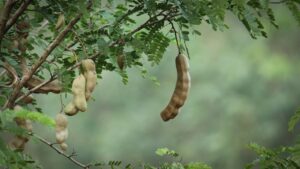
Many pod-producing trees are adapted to warm climates and can tolerate seasonal drought once established. Others require consistent moisture and fertile soil to produce reliable harvests. Their growing requirements also depend on whether they are cultivated for fresh pods, mature seeds, sweet pulp, or processed food ingredients.
In this guide, we explore 20 trees with long edible seed pods, explaining their edible portions, growing characteristics, and practical uses. We also cover important factors to consider when selecting pod-producing trees for home gardens, farms, and agroforestry systems.
Tree With Long Edible Seed Pods :Top 20 Best
1. Tamarind Tree – Best Tree With Long Sweet Edible Pods
Tamarind (Tamarindus indica) is one of the best-known tropical trees producing long, curved seed pods containing edible brown pulp. The mature pods have brittle shells surrounding sticky pulp and several hard seeds. The pulp has a distinctive sweet-and-sour flavor and is widely used in sauces, beverages, chutneys, soups, and traditional foods.

- Produces unique, tangy fruit used in a variety of culinary dishes and beverages
- Hardy and drought-tolerant, making it a low-maintenance tree for warm climates
Tamarind trees perform best in warm tropical and subtropical climates with plenty of sunlight. They tolerate seasonal drought once established and generally prefer deep, well-drained soils. Although mature trees can survive relatively dry conditions, adequate moisture during establishment and flowering supports healthy development and fruit production.
The pods are generally harvested when mature and brown, with the pulp separated from the shell and seeds. Tamarind pulp is rich in organic acids, carbohydrates, and other plant compounds that contribute to its distinctive flavor. The tree is valuable in agroforestry because it provides shade, edible products, and long-term landscape structure.
- Produces edible sweet-and-sour pulp
- Long-lasting perennial tree
- Tolerates seasonal drought
- Provides substantial shade
- Useful for sauces and beverages
- Adapted to many tropical regions
- Produces pods with commercial value
- Takes several years to fruit from seed
- Requires space as it matures
- Seeds are hard and inedible without processing
2. Moringa Tree – Best Long Edible Seed Pods
Moringa (Moringa oleifera) is a fast-growing tropical tree cultivated for its long, slender seed pods, edible leaves, flowers, and seeds. Its young pods are commonly called drumsticks and are used as vegetables in soups, stews, and curries. The immature pods contain tender internal tissues and seeds that can be eaten after suitable cooking.

- 🌿 Premium Quality Moringa Seeds for Planting – Fresh batch of over 100 moringa seeds approx directly collected from small farmers in India. Our moringa plantable seeds are bold, cleaned for purity, Non-GMO, and hand-selected for the highest quality. The cleanest moringa seeds on Amazon, with a 100% germination guarantee.
- 🌱 How to Germinate Moringa Seeds – MOGO’s moringa seeds for planting are high-quality, indigenous variety seeds. For best results, soak the moringa seeds aka semilla de moringa for at least 24 hours, then transfer to a wet cloth or paper towel, keeping it in a warm place. Germination typically occurs in 8-10 days. Full planting instructions are available in the product description.
Moringa grows well in warm climates with full sunlight and well-drained soils. It tolerates drought once established, although adequate moisture and soil fertility improve pod production. Avoid waterlogged growing conditions because the roots are susceptible to deterioration in poorly drained soils.
Harvest the pods while young and tender, before the seeds become excessively hard and fibrous. Mature seeds can also be collected for processing, while the leaves provide an additional edible product. Regular pruning helps control tree height and encourages branching, making pod harvesting more manageable.
- Produces long edible drumstick pods
- Young leaves are also edible
- Fast-growing tropical tree
- Tolerates dry conditions
- Multiple edible plant parts
- Responds well to pruning
- Suitable for small farms and gardens
- Young pods become fibrous with age
- Sensitive to waterlogging
- Requires regular harvesting for tender pods
3. Carob Tree – Best Long Pods With Sweet Edible Pulp
Carob (Ceratonia siliqua) is an evergreen Mediterranean tree that produces long, leathery pods containing sweet, edible pulp and hard seeds. The mature pods are commonly processed into carob powder, syrup, and other food ingredients. Their naturally sweet pulp makes carob an important food crop in dry Mediterranean and subtropical regions.

- A natural chocolate substitute! Contains vitamin A, B, D vitamins, phosphorus, potassium, magnesium, calcium, iron, zinc, manganese, copper and is rich in polyphenols, glutamic acid and arginine. Rich in fiber as it helps prevent constipation.
- GROWING ZONES: Thrives in USDA zones 8-11, perfect for Mediterranean climate conditions with full sun exposure and well-draining soil
Carob trees grow best in warm climates with full sunlight and well-drained soils. Established trees tolerate drought and relatively poor soil conditions, making them suitable for dryland agriculture. They generally perform poorly in waterlogged soils, so drainage should be considered before planting.
The pods are harvested when mature and fully developed, usually after turning dark brown. The pulp can be separated from the seeds and processed into flour or sweet products. Carob trees are generally slow to reach substantial production when grown from seed, so grafted planting material may be preferred where earlier and more predictable fruiting is important.
- Produces long sweet edible pods
- Useful for carob powder production
- Tolerates dry climates
- Evergreen ornamental tree
- Requires relatively little maintenance
- Provides shade and landscape value
- Seeds have commercial uses
- Slow-growing from seed
- Requires suitable warm conditions
- Not ideal for waterlogged soils
4. African Locust Bean Tree – Best Fermented Edible Seeds
African locust bean (Parkia biglobosa) is a valuable West African tree that produces long, hanging pods containing seeds surrounded by yellowish edible pulp. The seeds are widely processed through fermentation to produce a traditional condiment known by names such as dawadawa and iru. The sweet pulp can also be consumed, depending on local food traditions.

- TRADITIONAL WEST AFRICAN FLAVOR - Bring the rich, authentic taste of heritage cooking into your home kitchen. Our whole dried Dawadawa (also known as Iru or Ogiri) delivers the deep, complex, and pungent flavor profile essential for genuine West African cuisine.
- CULINARY ESSENTIAL - The ultimate ingredient for your traditional recipes. Effortlessly elevate the flavor profile of Egusi soup, Okra stew, Jollof variations, native rice dishes, and rich peanut stews with a single flavorful addition.
The tree grows in tropical savanna environments and is adapted to seasonal rainfall and dry periods. It performs best in sunny locations with suitable soil depth and drainage. Young trees benefit from protection against grazing animals and competing vegetation during establishment.
Mature pods are collected when they turn brown and begin to dry. The seeds are processed through boiling and fermentation before being used as a seasoning ingredient. African locust bean is especially valuable in agroforestry because it produces food while providing shade and supporting traditional rural livelihoods.
- Produces long seed-filled pods
- Seeds have important food uses
- Edible pulp is also available
- Adapted to seasonal dry climates
- Provides valuable shade
- Supports traditional food production
- Useful in agroforestry systems
- Takes time to reach maturity
- Seeds require processing
- Less suitable for cold climates
5. Velvet Tamarind – Best Sweet-Sour Edible Pods
Velvet tamarind (Dialium guineense) is a tropical African tree that produces small, rounded fruits enclosed in brittle, dark, velvety-looking pods or shells. Although its fruits are not shaped like the long pods of ordinary tamarind, the species is valued for its edible pulp surrounding a hard seed. The pulp has a sweet-and-sour taste and is commonly eaten fresh.

- PREMIUM SEEDS: A large tree, native to Malaysia, Indonesia and Thailand with small, plum-like, edible fruits that have a hard pit and are similar to tamarind in taste. Due to its durable wood it is also a popular, and for that reason now threatened timber tree.
- EASY TO GROW: Seeds come ready to plant. Instructions are included.
The tree grows naturally in tropical forests and woodland environments, where it benefits from warm temperatures and adequate moisture. It performs best in well-drained soils with sufficient organic matter. Young trees generally require protection from drought and competition while establishing.
The mature fruits are collected when the outer covering darkens and the pulp develops its characteristic flavor. The edible pulp is consumed directly or used in traditional preparations. Because the fruit is relatively small, velvet tamarind is better classified as a tree with edible seed-containing fruits than a producer of long edible pods.
- Produces sweet-and-sour edible pulp
- Important traditional food tree
- Suitable for tropical environments
- Fruits contain edible pulp
- Useful in agroforestry
- Provides shade
- Supports local food traditions
- Fruits are not long pods
- Can be slow to establish
- Availability varies by region
6. Pigeon Pea Tree – Best Small Tree With Edible Pods
Pigeon pea (Cajanus cajan) is a perennial leguminous shrub that can develop into a small woody tree under favorable conditions. It produces elongated pods containing several edible seeds, which are commonly cooked fresh or dried for use in soups, stews, and other dishes. The crop is especially valuable in tropical smallholder farming systems.

- 🌿 Non‑GMO, Heirloom Variety — Pure, untreated seeds with no chemicals, perfect for gardeners who want clean, natural crops.
- 🔥 High Germination Rate — Fresh, viable seeds selected for strong sprouting and vigorous early growth.USDA zones 8–11.
Pigeon pea grows well in warm climates with full sunlight and well-drained soils. It tolerates seasonal drought better than many conventional vegetable crops because of its deep root system. As a legume, it forms root nodules with compatible rhizobia and can contribute to biological nitrogen fixation.
Harvest immature pods when the seeds are still green and tender, or allow them to mature for dry grain production. The crop can also be used as a living hedge, cover crop, and source of livestock fodder. Although it is often grown as a shrub rather than a large tree, its woody structure and long edible pods make it a useful addition to this list.
- Produces edible seed-filled pods
- Seeds can be eaten fresh or dried
- Tolerates seasonal drought
- Fixes atmospheric nitrogen
- Useful for soil improvement
- Provides livestock fodder
- Suitable for smallholder farming
- Generally smaller than shade trees
- Susceptible to some pod pests
- Requires suitable varieties for local conditions
7. Honey Locust – Best Long Sweet-Pulp Pods
Honey locust (Gleditsia triacanthos) is a deciduous tree that produces long, often twisted pods containing sweet pulp surrounding hard seeds. The pods can reach considerable lengths and are sometimes consumed by livestock and wildlife. Selected forms have edible pulp that has historically been used in food preparations.

- 100 Seeds Per Packet - BIG PACK
- Honeylocust makes a good landscape tree because of its toughness, fast growth rate, pleasing form and appearance
Honey locust grows in temperate climates and performs best in full sunlight with well-drained soil. Established trees tolerate a range of soil conditions, including some drought and urban growing environments. Seed-grown plants can be variable, so thornless or improved cultivars are often preferred for landscape use.
The mature pods are harvested after developing their characteristic brown coloration. The sweet pulp is the principal edible portion, while the seeds are hard and should not be treated as an ordinary fresh edible crop. If planting for food, choose an appropriate cultivar and verify the safety and suitability of the harvested material.
- Produces very long pods
- Pods contain sweet pulp
- Large shade-producing tree
- Tolerates varied soil conditions
- Useful for wildlife
- Thornless cultivars are available
- Attractive landscape specimen
- Some forms have sharp thorns
- Pods can create litter
- Not suited to tropical highlands everywhere
8. Indian Bean Tree – Best Long Edible Seed Pods
Indian bean tree (Catalpa bignonioides) is a deciduous ornamental tree known for its very long, narrow seed capsules. The pods can remain attached to the branches after the leaves fall, giving the tree its distinctive appearance. However, the pods and seeds are not generally recognized as a conventional human food crop, so it should not be selected as an edible-pod tree without reliable species-specific food-safety confirmation.

Catalpa grows best in full sunlight and moderately fertile, well-drained soil. It tolerates a range of growing conditions once established and can develop a broad crown that provides substantial shade. Regular watering is beneficial during establishment, while mature trees can tolerate short periods of dry weather.
The tree is primarily cultivated for ornamental value rather than edible pod production. Its long capsules are useful for identifying the species, but their presence should not be confused with food suitability. This distinction is important when selecting trees for edible landscaping or food forests.
- Produces exceptionally long capsules
- Attractive ornamental tree
- Provides substantial shade
- Large decorative leaves
- Suitable for landscape planting
- Adaptable once established
- Interesting seed-pod structure
- Pods are not a recognized food crop
- Requires space to mature
- Not suitable as an edible-pod recommendation
9. Baobab – Best Tree With Edible Seeds and Pulp
Baobab (Adansonia digitata) is an iconic African tree that produces large, elongated or oval fruits containing dry, powdery pulp and numerous seeds. The fruit is not a conventional long legume pod, but its seed-filled structure is important in traditional food systems. The pulp is used in beverages and food preparations, while the seeds can be roasted or processed in certain culinary traditions.

- Distinctive African Baobab Tree: Grow Adansonia digitata, a tropical deciduous tree admired for its naturally thickening trunk, sculptural woody branches, and mature green leaves divided into finger-like leaflets. Its unusual appearance makes it a fascinating long-term ornamental container-growing project.
- Bonsai And Container Growing: Baobab trees can be cultivated in appropriately sized containers and gradually shaped through pruning and long-term bonsai training. Developing a substantial trunk takes time, and young seedlings initially look different from mature trees.
Baobab is adapted to hot, seasonally dry environments and grows well in areas with a distinct wet and dry season. It prefers full sunlight and well-drained soils, particularly where the root system is protected from prolonged waterlogging. Young plants need suitable establishment conditions and protection from browsing animals.
The mature fruits are collected after the outer shell has hardened and the internal pulp has dried. The pulp can be mixed with water to prepare a refreshing drink or incorporated into food products. Baobab is especially valuable in dryland agroforestry because of its long lifespan, edible products, and cultural importance.
- Produces edible fruit pulp
- Seeds have food-processing uses
- Adapted to dry climates
- Long-lived African tree
- Provides shade
- Useful in dryland agroforestry
- Important traditional food resource
- Fruit is not a true long pod
- Slow-growing in some environments
- Young trees need protection
10. Prosopis Cineraria – Best Desert Tree With Edible Pods
Prosopis cineraria, commonly called khejri or the desert tree, is an important arid-zone leguminous tree that produces elongated pods containing edible seeds and nutritious pod material. Its immature pods are traditionally consumed as a vegetable in parts of South Asia. The tree is particularly valued for its ability to grow in dry environments where many food crops struggle.

- Prosopis Cineraria Seeds, Shami Tree Seeds, Prosopis Seeds, Khejri Seeds
Khejri is adapted to hot, arid climates and can grow in sandy and relatively low-fertility soils. Its deep root system helps it access moisture from lower soil layers, while its leguminous nature supports nitrogen fixation under suitable conditions. Young plants benefit from protection against browsing animals.
The pods are harvested at different stages depending on the intended use. Immature pods may be cooked as a vegetable, while mature pods can be processed into traditional foods. The tree also provides fodder, shade, fuelwood, and important ecological benefits in dryland farming systems.
- Produces elongated edible pods
- Tolerates severe dry conditions
- Useful in arid agroforestry
- Provides livestock fodder
- Fixes atmospheric nitrogen
- Produces valuable shade
- Supports traditional food systems
- Slow establishment in difficult sites
- Requires protection when young
- Less suited to wet climates
11. Gliricidia – Best Multipurpose Tree With Edible-Use Pods
Gliricidia sepium is a fast-growing tropical leguminous tree that produces long, flattened seed pods. It is widely planted for live fencing, green manure, shade, and livestock management. Although the pods contain seeds, gliricidia should not be recommended as a general human edible-pod tree because its plant parts are not established as ordinary food and may contain compounds unsuitable for casual consumption.

- Premium quality tropical legume seeds package containing 4 Madre de Cacao (Gliricidia sepium) seeds, a fast-growing nitrogen-fixing tree perfect for hedgerows, windbreaks, and tropical food forests.
- Thrives in warm climates (zones 10-12) in full sun to light shade; give regular water while establishing, then enjoys low-maintenance care and good drought tolerance in frost-free landscapes or large containers.
Gliricidia grows well in warm tropical climates and tolerates regular pruning. It can establish in a range of soils, provided drainage is adequate. Its ability to fix nitrogen makes it useful in agroforestry systems, where pruned leaves can be incorporated into the soil as organic matter.
The pods mature and dry on the tree before releasing their seeds. The species is best included in food-production systems for its soil-improvement and support functions rather than its edible pods. Do not consume the pods or seeds without authoritative species-specific food-safety guidance.
- Produces long seed pods
- Fast-growing tropical tree
- Fixes atmospheric nitrogen
- Useful for live fencing
- Provides green manure
- Responds well to pruning
- Suitable for agroforestry systems
- Pods are not recommended as food
- Some plant parts are toxic
- Requires regular management in hedges
12. Parkia Javanica – Best Long Pods With Edible Seeds
Parkia javanica is a tropical leguminous tree that produces long, hanging pods containing seeds and edible pulp. It is related to other Parkia species used as food in parts of Asia. The seeds and surrounding pod material are used in regional food traditions, although preparation methods and the edible portions differ between communities.

- One of the best sources of color for the cool-season container garden, Fountain Blue offers larger, earlier blooms than most other Lobelia varieties.
- You will love the floriferous nature of this cascading plant, which tumbles over the sides of hanging baskets, window boxes, and other containers!
The tree grows in warm, humid tropical environments and generally performs best in deep soils with adequate moisture. Young trees benefit from protection against drought and competition from aggressive weeds. A suitable tropical climate and sufficient growing space are important for long-term establishment.
Harvesting practices depend on local culinary use and the maturity of the pods. Seeds may require processing before consumption, so local food preparation knowledge should be followed. Parkia javanica is particularly valuable as a multipurpose tree in suitable tropical agroforestry systems.
- Produces long hanging pods
- Seeds have traditional food uses
- Tropical agroforestry value
- Provides shade
- Supports local food systems
- Useful as a multipurpose tree
- Interesting edible-seed species
- Requires suitable humid conditions
- Seeds may need processing
- Less widely cultivated outside its native range
13. Parkia Speciosa – Best Stink Bean Tree
Parkia speciosa, commonly known as stink bean or bitter bean, is a tropical tree that produces long, twisted pods containing large green edible seeds. The seeds have a strong characteristic aroma and are used in traditional Southeast Asian dishes. They are commonly cooked with vegetables, seafood, and other ingredients.

- speciosa - North catalapa
- Bell-shaped, orchid-like white flowers (to 2” long)
The tree prefers warm, humid tropical conditions and deep, well-drained soils. It can grow into a substantial tree, so sufficient space is important when planting it in a home garden or farm. Regular moisture supports growth, although prolonged waterlogging should be avoided.
The pods are harvested when the seeds have developed sufficiently for consumption. The seeds are commonly cooked or prepared according to regional culinary traditions. Parkia speciosa is a valuable food tree in parts of Southeast Asia, although it is less suitable for climates with prolonged cold periods.
- Produces long twisted pods
- Large edible seeds
- Important traditional food tree
- Distinctive culinary flavor
- Suitable for tropical agroforestry
- Provides shade
- High-value specialty food crop
- Strong seed aroma
- Requires humid tropical conditions
- Needs substantial growing space
14. Cassia Fistula – Best Long Ornamental Pods With Sweet Pulp
Cassia fistula, commonly called the golden shower tree, produces long cylindrical pods containing numerous seeds surrounded by dark, sweetish pulp. The pods can remain attached to the tree for extended periods and are one of the species' most recognizable features. The pulp has traditional medicinal and food-processing uses in some regions, but it should not be consumed casually without proper identification and safety guidance.

- Cassia fistula is widely grown as an ornamental plant in tropical and subtropical areas. It blooms in late spring. Flowering is profuse, with trees being covered with yellow flowers, many times with almost no leaf being seen. It will grow well in dry climates. Growth for this tree is best in full sun on well-drained soil; it is relatively drought tolerant and slightly salt tolerant.
- It will tolerate light brief frost, but can get damaged if frost persists. It can be subject to mildew or leaf spot, especially during the second half of the growing season.
The golden shower tree grows best in warm tropical and subtropical climates with full sunlight. It performs well in well-drained soils and can tolerate seasonal dry periods once established. Regular watering during early growth helps develop a healthy root system.
The mature pods are collected when fully developed and darkened. Different traditional preparations use the pulp, but the species has pharmacological activity and may cause adverse effects if consumed inappropriately. It is primarily valued as an ornamental tree and should not be treated as an ordinary edible-pod crop.
- Produces very long cylindrical pods
- Contains sweetish pulp
- Attractive golden flowering display
- Suitable for tropical landscapes
- Provides shade
- Tolerates seasonal dryness
- Important traditional plant
- Not a conventional food crop
- Pulp requires safety guidance
- Can produce substantial pod litter
15. Bael Tree – Best Tree With Edible Fruit and Seeds
Bael (Aegle marmelos) is a tropical and subtropical fruit tree that produces hard-shelled fruits containing aromatic pulp and numerous seeds. Its fruits are not long pods, but the internal seed-filled structure makes it relevant to broader discussions of edible seed-containing tree fruits. The pulp is traditionally used in beverages, preserves, and other food products.

Bael grows well in warm climates and can tolerate relatively dry conditions once established. It performs best in sunny locations with well-drained soil, although young trees require regular moisture for successful establishment. The tree can adapt to a range of soil conditions, making it useful in some dryland farming systems.
The mature fruits are harvested when the shell develops and the pulp becomes suitable for processing. The pulp is commonly mixed with water and sweeteners to prepare traditional drinks. Bael is a valuable food tree, but it should be categorized as a fruit-producing tree rather than a true long-pod tree.
- Produces edible aromatic pulp
- Traditional beverage crop
- Tolerates seasonal dry conditions
- Suitable for tropical gardens
- Provides shade
- Useful in traditional food systems
- Long-lived fruit tree
- Fruit is not a long pod
- Hard shell requires processing
- Takes time to establish
16. Indian Bean Tree (Moringa Oleifera) – Best Vegetable Drumstick Pods
Moringa oleifera, also known as the drumstick tree, produces long, slender pods containing seeds that are harvested while immature for use as a vegetable. The young pods are commonly cooked in soups, stews, and curries. They are valued for their distinctive texture and their ability to absorb flavors during cooking.

- 🌱 200+ PREMIUM PKM1 MORINGA SEEDS — Each 2 oz resealable pouch contains 200+ PKM1 variety Moringa Oleifera seeds (semillas de moringa). Non-GMO, sun-dried, and wingless for easy snacking and planting. Drumstick tree seeds from Garden Haven.
- 🥜 EDIBLE SUPERFOOD SNACK — Moringa seeds for eating are rich in Vitamin C, Vitamin A, Calcium, Potassium, Iron, and plant-based Protein. Eat them raw as a healthy nut-like snack, or toss into smoothies, salads, trail mix, yogurt, and oatmeal. Malunggay seeds the whole family can enjoy daily.
The tree prefers warm climates, full sunlight, and well-drained soil. It grows quickly and responds well to pruning, which can encourage branching and make pod harvesting easier. Avoid excessively wet soils, particularly during establishment, because poor drainage can damage the root system.
Harvest pods while they are still tender and before the seeds become hard and fibrous. Mature seeds can be collected separately for appropriate processing, while leaves provide an additional food product. Moringa is particularly suitable for small farms and home gardens because several parts of the tree can be utilized.
- Produces long edible drumsticks
- Fast-growing tree
- Young leaves are edible
- Responds well to pruning
- Tolerates seasonal drought
- Multiple harvestable plant parts
- Suitable for small gardens
- Pods become fibrous when mature
- Sensitive to waterlogging
- Requires regular harvesting for vegetables
17. Indian Coral Tree – Best Tree With Edible-Use Seeds
Indian coral tree (Erythrina variegata) is a tropical leguminous tree that produces elongated pods containing seeds. It is widely grown as an ornamental, shade, and support tree in tropical agriculture. Although the pods may appear similar to those of other edible-seed legumes, the seeds should not be consumed because Erythrina species contain toxic alkaloids.

- PACKAGE CONTENTS: 10 fresh seeds of Erythrina Variegata (Tiger's Claw Indian Coral Tree), perfect for starting your exotic garden collection
- GROWING CONDITIONS: Thrives in USDA zones 10-12, requires full sun to partial shade exposure, and moderate watering when soil is slightly dry
The tree grows well in warm climates and can tolerate a range of soils, provided drainage is adequate. It develops a spreading crown and is commonly used as a living support for crops such as black pepper and vanilla in suitable agricultural systems. Regular pruning can help control the tree's size and maintain a manageable canopy.
Its long pods make the species visually relevant to searches about pod-producing trees, but it is not an edible-seed recommendation. The seeds and other plant parts may be toxic. Use it for shade, ornamental planting, and agroforestry rather than human food production.
- Produces elongated seed pods
- Attractive flowering tree
- Provides shade
- Useful as a crop support
- Suitable for tropical agroforestry
- Responds well to pruning
- Can improve farm structure
- Seeds are toxic
- Not suitable for edible-pod production
- Requires space for its spreading crown
18. Mesquite Tree – Best Long Pods With Sweet Edible Pulp
Mesquite (Prosopis species) is a group of dryland trees and shrubs that produce elongated pods containing seeds embedded in sweet, fibrous pulp. Certain species, including Prosopis glandulosa and Prosopis velutina, have traditionally been used to produce mesquite flour from the mature pods. The flour is valued for its distinctive sweet flavor and can be incorporated into baked goods and other foods.

- Native Desert Species: Honey Mesquite (Prosopis glandulosa) seeds harvested near Phoenix, Arizona from trees naturally adapted to the harsh conditions of the Sonoran Desert in the southwestern United States
- Drought-Tolerant Landscaping: This hearty tree thrives in arid climates and requires minimal water once established, making it an ideal choice for xeriscaping and water-conscious landscape designs in dry regions
Mesquite species are adapted to hot, dry environments and can survive in relatively low-rainfall regions once established. They generally prefer sunny sites and well-drained soils. Their deep root systems help them access moisture, while their leguminous characteristics contribute to nitrogen cycling.
Mature pods are harvested after drying and processed into flour or other products. Correct species identification is essential because Prosopis includes several species with different growth habits and management concerns. Some mesquite species are invasive in certain regions, so local environmental guidance should be checked before planting.
- Produces long sweet-pulp pods
- Pods can be processed into flour
- Highly adapted to dry conditions
- Useful in dryland agroforestry
- Provides shade and fodder
- Supports wildlife
- Tolerates relatively poor soils
- Some species are invasive
- Requires careful species identification
- Can develop extensive root systems
19. Sea Buckthorn – Best Tree With Edible Seed-Containing Fruits
Sea buckthorn (Hippophae rhamnoides) is a hardy shrub or small tree that produces orange berries containing small seeds. It does not produce long pods, but its seed-containing fruits are valued for their culinary and processing uses. The berries are used in juices, preserves, sauces, and other products.

- Sea Buckthron Berries Taste Like A Mix Between Orange and Passion Fruit!
- Bright Orange Berries Grow Close To The Branch In Clusters and Are Packed Full Of Vitamins
Sea buckthorn is adapted to cool and temperate climates and generally requires full sunlight. It tolerates poor soils and can grow in sandy environments, partly because of its nitrogen-fixing root associations. Male and female plants are generally needed for reliable fruit production.
The berries are harvested when fully colored and ripe. Their flavor is naturally tart, so they are often processed with sweeteners or combined with other fruits. Sea buckthorn is better categorized as a fruit-producing shrub than a tree with long edible pods, but it is valuable in discussions of edible seed-containing woody plants.
- Produces edible seed-containing berries
- Useful for juices and preserves
- Tolerates relatively poor soils
- Nitrogen-fixing root associations
- Hardy in cool climates
- Suitable for hedgerows
- Valuable processed fruit crop
- Does not produce long pods
- Requires male and female plants
- Berries are naturally very tart
20. Carob Tree 'Siliqua' – Best Traditional Pod Crop
Ceratonia siliqua, commonly known as the carob tree, is a long-lived evergreen species that produces elongated pods with sweet edible pulp and hard seeds. The pods are commonly processed into carob flour, syrup, and food ingredients. Its drought tolerance and ability to grow in Mediterranean climates make it a valuable tree for dryland production.
- A natural chocolate substitute! Contains vitamin A, B, D vitamins, phosphorus, potassium, magnesium, calcium, iron, zinc, manganese, copper and is rich in polyphenols, glutamic acid and arginine. Rich in fiber as it helps prevent constipation.
- GROWING ZONES: Thrives in USDA zones 8-11, perfect for Mediterranean climate conditions with full sun exposure and well-draining soil
Carob trees prefer full sunlight and well-drained soil. Established trees tolerate dry conditions, making them suitable for regions with limited rainfall. For commercial production, growers should select appropriate cultivars and consider pollination requirements because tree sex and cultivar characteristics influence pod production.
Harvest the pods when they are fully mature and dark brown. The pulp can be separated from the seeds and processed into sweet food products. Carob is a useful multipurpose tree for growers interested in long edible pods, although its climate requirements must be considered before planting outside Mediterranean and similar subtropical regions.
- Produces long sweet edible pods
- Suitable for flour and syrup
- Tolerates seasonal drought
- Evergreen shade tree
- Long productive lifespan
- Valuable processed food crop
- Useful in dryland landscapes
- Slow to establish from seed
- Requires suitable climate
- Pollination planning may be necessary
7 Important Factors to Consider When Choosing Trees With Long Edible Seed Pods
1. Identify the Edible Portion
Not every tree with long seed pods produces pods that are entirely edible. Some species provide tender immature pods, while others produce edible seeds or sweet pulp surrounding hard seeds. Moringa, pigeon pea, tamarind, and carob illustrate these differences. Confirm which part is consumed before harvesting or preparing any unfamiliar plant.
2. Consider Your Climate
Choose trees adapted to your local temperature and rainfall conditions. Moringa, tamarind, African locust bean, and certain Prosopis species are suitable for warm environments, while carob is better adapted to Mediterranean and similar subtropical climates. A tree that cannot tolerate local temperatures may grow poorly or fail to produce pods.
3. Evaluate Soil Drainage
Most pod-producing trees require adequate root aeration, even when they tolerate dry conditions. Heavy soils that remain saturated can encourage root diseases and reduce plant vigor. Before planting, assess soil texture, drainage, depth, and organic matter content to determine whether amendments or raised planting areas are necessary.
4. Understand Harvesting Stages
The ideal harvesting stage depends on the species and intended use. Moringa pods are generally harvested while young and tender, whereas tamarind and carob are harvested after the pods mature. Pigeon pea can be harvested as fresh green seeds or allowed to dry for grain production.
5. Check Pollination Requirements
Some pod-producing trees may require compatible pollination partners for reliable fruit or seed production. This is particularly important for species with separate male and female plants or cultivars with different reproductive characteristics. Check the pollination requirements before establishing an orchard or planting a single specimen.
6. Consider Tree Size and Root Development
Large pod-producing trees require sufficient space for their crowns and root systems. Tamarind, baobab, African locust bean, and carob can become substantial trees under favorable conditions. Smaller farms and home gardens may benefit from more manageable species such as moringa or pigeon pea.
7. Confirm Food Safety and Local Suitability
Some trees produce attractive long pods that are not suitable for human consumption. Others contain seeds or plant tissues that require specific processing before use. Confirm the botanical identity, edible parts, and safe preparation methods before adding unfamiliar trees to a food garden. Also check local regulations before planting potentially invasive species.
Tree With Long Edible Seed Pods Frequently Asked Questions
1. What Tree Produces Long Edible Seed Pods?
Several trees produce long edible pods, including moringa, tamarind, carob, African locust bean, and Prosopis species. Their edible portions differ: moringa is harvested for young vegetable pods, tamarind for its sweet-and-sour pulp, and carob for its sweet pod pulp. Some species also produce seeds that are consumed after suitable processing.
2. What Is the Tree With Long Green Pods Used in Cooking?
The drumstick tree, Moringa oleifera, is a common example of a tree producing long green pods used in cooking. The immature pods are harvested while tender and added to soups, stews, and curries. The tree also produces edible leaves and flowers.
3. Are Tamarind Pods Edible?
Yes. Tamarind pods contain brown, sticky pulp with a sweet-and-sour flavor. The pulp is widely used in beverages, sauces, chutneys, and traditional dishes. The hard seeds are generally removed during preparation rather than eaten as fresh pulp.
4. Which Trees Produce Sweet Edible Pods?
Carob, tamarind, honey locust, and certain mesquite species produce pods or pod pulp with sweet characteristics. Carob is particularly valued for its naturally sweet pulp, which is processed into flour and syrup. Tamarind has a more complex sweet-and-sour flavor.
5. Can Moringa Pods Be Eaten Raw?
Young moringa pods are commonly cooked before consumption. Their texture becomes increasingly fibrous as they mature, making older pods less suitable for eating as vegetables. Follow established food-preparation practices and avoid consuming unfamiliar mature seeds without confirming appropriate preparation methods.
6. Which Edible-Pod Trees Grow Well in Dry Areas?
Tamarind, moringa, carob, Prosopis species, and khejri are examples of trees adapted to relatively dry environments. Their drought tolerance varies, especially during establishment and flowering. Adequate moisture during early growth and good soil drainage are important for successful cultivation.
7. Are All Long Tree Pods Edible?
No. Many trees produce long pods that are ornamental, contain toxic seeds, or are not recognized as human food. For example, Indian coral tree seeds are toxic, while Catalpa pods are primarily ornamental. Always verify the species and edible portions before harvesting or eating any plant material.
Conclusion
In conclusion, the best trees with long edible seed pods include moringa, tamarind, carob, African locust bean, and selected Prosopis species. These trees provide different edible products, ranging from tender vegetable pods and nutritious seeds to sweet pulp used in beverages and processed foods. Moringa is particularly useful for harvesting young pods, while tamarind and carob are valuable for their mature edible pulp.
For tropical farms, moringa, pigeon pea, and African locust bean are useful choices depending on the available space and intended harvest. The runner-up options include tamarind and Prosopis species for growers interested in dryland production and traditional food products. Each species has different climate, soil, pollination, and harvesting requirements.
Before planting, identify the edible portion and confirm that the selected species is suitable for your local environment. Some trees produce long pods without providing edible seeds or pulp, so appearance alone should never be used to determine food safety. Proper species identification and preparation are essential when working with unfamiliar tree products.
Ultimately, pod-producing trees can contribute to food security, agroforestry, and diversified farm production. By selecting species that match your climate and intended use, you can establish productive trees that provide edible products alongside shade, soil benefits, and other long-term agricultural value.
Recent Posts
Some tropical plants develop naturally occurring holes, openings, and deep splits in their leaves, creating distinctive foliage patterns that stand out in indoor collections and landscape displays....
Distinctive foliage can transform an ordinary indoor or outdoor planting arrangement into an eye-catching display, especially when leaves feature contrasting spots, speckles, freckles, and colorful...