Distinctive foliage can transform an ordinary indoor or outdoor planting arrangement into an eye-catching display, especially when leaves feature contrasting spots, speckles, freckles, and colorful markings. Plants with polka dots offer an unusual decorative quality that works beautifully in containers, garden beds, hanging baskets, and indoor plant collections.
Some varieties produce pink, red, white, or silver markings against green foliage, while others display darker spots, pale speckles, or intricate patterns. These markings may occur naturally across the leaf surface or appear as part of a cultivar’s distinctive ornamental characteristics.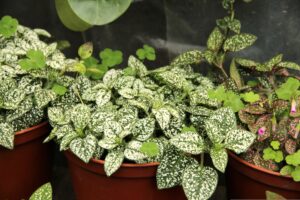
Although the familiar polka dot plant is the most recognizable example, several other tropical foliage plants, begonias, caladiums, and shade-loving perennials provide similarly attractive patterns. Their growing requirements vary, so selecting the right species involves considering available light, humidity, watering needs, mature size, and growing conditions.
In this guide, we explore 50 of the best plants with polka dots, including recognizable spotted houseplants, colorful foliage varieties, and garden plants with naturally speckled leaves. You will also learn how to choose suitable plants and maintain their attractive leaf patterns throughout the growing season.
50 Best Plants With Polka Dots
1. Polka Dot Plant – Best Classic Spotted Foliage
The polka dot plant (Hypoestes phyllostachya) is the classic choice for gardeners who want small, colorful leaves covered in contrasting pink, red, or white spots. Its oval green foliage features naturally occurring pigment patterns that create the appearance of carefully distributed polka dots. Native to Madagascar, this compact tropical perennial is commonly grown as a houseplant or seasonal bedding plant.

- ✨UNIQUE COLLECTION: Our Polka Dot Plants collection includes four starter Hypoestes varieties—red, White, Rose, and Pink. These tiny but amazing live houseplants will add striking color to your home or garden. They are perfect for small spaces and as a gift for plant lovers.
- ✨COLORFUL FOLIAGE: Hypoestes's greenery features vibrant, colorful leaves with striking patterns. Each leaf displays unique spots or splashes of red, white, pink, or rose. It is ideal for creating patterns and highlighted areas in gardens or for adding charm to any space in your home, including small places like tables or desks, while also purifying the air.
Polka dot plants perform best in bright, filtered light, where their foliage develops strong coloration without excessive exposure to direct sunlight. They prefer consistently moist but well-drained growing media, warm temperatures, and moderate to high humidity. Pinching the growing tips encourages branching and helps prevent the stems from becoming excessively elongated.
This plant is particularly suitable for terrariums, mixed containers, shaded garden borders, and indoor foliage arrangements. Several cultivars are available in different color combinations, allowing growers to create coordinated displays. Regular pruning and adequate light are important for maintaining a compact growth habit.
- Distinctive polka-dot foliage
- Available in several colors
- Suitable for indoor cultivation
- Excellent for container arrangements
- Easy to propagate from cuttings
- Responds well to pruning
- Compact growth habit
- Can become leggy
- Requires consistent moisture
- Sensitive to cold temperatures
2. Polka Dot Begonia – Best Silver-Spotted Leaves
Polka dot begonia (Begonia maculata) is one of the most recognizable ornamental houseplants because of its elongated green leaves decorated with silvery-white spots. The foliage has an attractive asymmetrical shape, while the undersides often display reddish coloration. Its upright, cane-like stems create a distinctive architectural appearance.

- Begonia Maculata Polka Dot Begonia Live Potted Houseplants in 4" Pot.
- Moderate, and indirect sunlight / perfect houseplant and great gifts for loved ones
This begonia grows best in bright indirect light and a well-aerated growing medium with good drainage. Water when the upper portion of the substrate begins to dry, avoiding prolonged saturation around the roots. Excessively wet conditions can encourage root problems, while inadequate light may reduce the plant’s overall vigor.
Mature plants can produce attractive clusters of white or pink flowers under favorable conditions. Their spotted leaves make them excellent focal plants for indoor collections and decorative shelves. Provide sufficient space around the foliage to encourage airflow and reduce fungal disease pressure.
- Beautiful silver leaf spots
- Attractive reddish leaf undersides
- Produces ornamental flowers
- Distinctive upright growth
- Excellent indoor focal plant
- Can be propagated from cuttings
- Large decorative foliage
- Sensitive to overwatering
- Requires suitable humidity
- Toxic to pets if ingested
3. Spotted Dracaena – Best Dramatic Speckled Foliage
Spotted dracaena (Dracaena surculosa) is an ornamental foliage plant known for its green leaves marked with yellowish or creamy spots. The species is sometimes sold under the common names gold dust dracaena and Japanese bamboo. Its contrasting leaf markings create a speckled appearance that stands out in indoor plant collections.

- Easily grown as an indoor plant, Dracaena 'Florida Beauty' tolerates a wide range of indoor temperatures. For best results, place in bright indirect light locations protected from direct sun and drafts. Tolerates low light, but foliage loses best color in too much shade.
- Dracaena surculosa is a small plant that can be grown in a bottle garden, though it is tolerant of drier indoors conditions. The bamboo-like canes, is very hardy and accepts both heavy pruning and neglect.
This tropical shrub prefers bright indirect light but can tolerate moderately shaded indoor environments. Use a loose, well-draining potting mixture and water after the upper substrate begins to dry. Excessive watering can cause root deterioration, particularly when the plant is grown in containers without adequate drainage.
Spotted dracaena develops upright stems and can eventually become a substantial foliage specimen. Regular removal of damaged leaves helps maintain its appearance, while occasional pruning controls its size. It is a suitable choice for offices, living rooms, and shaded tropical garden spaces.
- Attractive yellow leaf spots
- Decorative tropical appearance
- Tolerates moderate shade
- Suitable for indoor containers
- Can develop into a shrub
- Responds to pruning
- Distinctive foliage pattern
- Slow-growing under low light
- Sensitive to waterlogging
- Toxic to pets if ingested
4. Rattlesnake Plant – Best Patterned Tropical Leaves
Rattlesnake plant (Goeppertia insignis, formerly Calathea lancifolia) is an ornamental tropical perennial with long, wavy leaves decorated with dark green markings. Its upper leaf surfaces feature alternating patterns that resemble irregular spots and brushstrokes, while the undersides are typically purple. Although its markings are not perfectly circular, the contrasting pattern makes it an attractive option for spotted-foliage collections.

- Rattlesnake plant is a popular houseplant known for its striking foliage.
- Water; Keep the soil consistently moist, but not waterlogged. Water the plant when the top inch of soil feels dry to the touch. Make sure to use room.
The plant prefers bright indirect light, warm temperatures, and consistently moist but well-drained soil. It benefits from higher humidity, particularly when grown indoors in dry environments. Avoid placing it in harsh direct sunlight because excessive exposure can scorch the foliage and reduce its ornamental quality.
Rattlesnake plants work well in decorative containers and tropical indoor displays. Their leaves respond to changing light conditions through a natural movement commonly associated with prayer plants. Consistent watering and protection from cold drafts help maintain healthy foliage.
- Attractive contrasting leaf patterns
- Purple leaf undersides
- Distinctive wavy foliage
- Suitable for indoor cultivation
- Excellent tropical appearance
- Non-climbing growth habit
- Decorative container specimen
- Requires consistent moisture
- Sensitive to dry air
- Can develop brown leaf edges
5. Satin Pothos – Best Silver-Speckled Trailing Plant
Satin pothos (Scindapsus pictus) is a climbing tropical foliage plant with heart-shaped leaves covered in irregular silver spots and patches. Its velvety green leaf surfaces provide a strong contrast against the metallic-looking markings. The plant is particularly attractive in hanging baskets and containers with climbing supports.

- N’joy pothos (Epipremnum aureum 'n'joy') are beautiful, delicate pothos that are beloved for their variegated leaves .
- Light: N'joy Pothos prefers indirect and bright sunlight.
Satin pothos grows best in bright indirect light, although it tolerates moderate indoor lighting. Allow the upper layer of the potting medium to dry before watering again, and use a mixture that drains efficiently. Excessive direct sunlight may scorch the foliage, while prolonged waterlogging can damage the root system.
The plant can trail several feet when provided with suitable growing conditions. Its climbing stems can also be trained along moss poles or other supports to encourage larger foliage. It is important to note that satin pothos is toxic to pets if chewed or ingested.
- Attractive silver leaf markings
- Velvety foliage texture
- Suitable for hanging baskets
- Can climb vertical supports
- Tolerates moderate indoor light
- Easy to shape and train
- Decorative trailing growth
- Toxic to pets
- Sensitive to waterlogged soil
- Growth slows in low light
6. Silver Squill – Best Spotted Succulent
Silver squill (Ledebouria socialis) is a small bulb-forming succulent with narrow leaves displaying silver backgrounds and irregular green spots. Its foliage may also have purple undersides, giving the plant an attractive combination of colors. The distinctive markings make it suitable for growers interested in compact, unusual ornamental plants.

- [CURATED SELECTION] – Hand-selected live decorative houseplants sourced from professional local growers.
- [PREPARED FOR SHIPMENT] – Each plant is prepared for shipment using standard horticultural handling practices and shipped in a nursery container.
Silver squill prefers bright light and a well-drained growing medium designed for bulbs or succulents. Allow the substrate to dry partially between watering sessions because the underground bulbs are susceptible to rot in persistently wet conditions. The plant can tolerate some direct morning sunlight when gradually acclimated.
Its compact growth habit makes it useful for shallow containers, succulent arrangements, and indoor displays. Small bulbs develop around the parent plant and can be separated during repotting. The foliage may become less colorful when the plant receives insufficient light.
- Distinctive silver spotted leaves
- Compact growth habit
- Attractive purple undersides
- Produces offsets for propagation
- Suitable for succulent collections
- Relatively drought tolerant
- Interesting bulb structure
- Sensitive to excessive watering
- Requires well-drained soil
- Not ideal for deep shade
7. Japanese Laurel – Best Outdoor Gold-Spotted Shrub
Japanese laurel (Aucuba japonica ‘Crotonifolia’) is an evergreen shrub valued for its broad green leaves covered with irregular golden-yellow spots. Its dense foliage creates a striking appearance in shaded gardens, particularly where flowering plants struggle with limited sunlight. The cultivar is commonly called gold dust plant because of its speckled leaves.

- ORNAMENTAL SHRUB: Aucuba Hosoba Hoshifu is a stunning Japanese Laurel variety prized for its distinctive variegated foliage
- FOLIAGE PATTERN: Features unique speckled leaves with golden yellow spots against deep green background, creating visual interest year-round
Japanese laurel grows well in partial to full shade and prefers fertile, well-drained soil containing sufficient organic matter. Established plants tolerate relatively dry conditions, although regular watering supports better growth during prolonged dry periods. Avoid exposing the foliage to intense afternoon sunlight in hot climates.
This shrub is useful for foundation planting, woodland gardens, and shaded landscape borders. Female plants can produce decorative red berries when a compatible male plant is available for pollination. The foliage is poisonous if eaten, so keep it away from pets and children who may chew ornamental leaves.
- Attractive golden leaf spots
- Evergreen ornamental foliage
- Performs well in shade
- Suitable for landscape borders
- Tolerates established dry conditions
- Useful for foundation planting
- Can produce ornamental berries
- Toxic if ingested
- Sensitive to excessive sunlight
- Requires space as it matures
8. Common Lungwort – Best Spotted Shade-Garden Perennial
Common lungwort (Pulmonaria officinalis) is a shade-loving perennial recognized for its green leaves covered with conspicuous silvery-white spots. The markings create a decorative appearance throughout the growing season, while clusters of pink and blue flowers add seasonal color. Its foliage is particularly useful in woodland gardens and shaded borders.

- PRETTY IN PINK PULMONARIA – Beautiful shade perennial featuring clusters of bright pink flowers above distinctive green foliage decorated with silvery spots.
- LIVE STARTER PLUGS – Receive healthy young starter plants ready to establish and grow. Plants are shipped as plugs and may vary naturally in size, fullness and appearance throughout the season.
Lungwort grows best in partial to full shade and moisture-retentive soil containing organic matter. It prefers consistent moisture but should not be planted in poorly drained ground where roots remain saturated. Mulching helps maintain soil moisture and reduces competition from weeds.
The plant spreads gradually through clumps and can be divided to establish additional specimens. Its flowers attract early-season pollinators, making it useful in wildlife-friendly gardens. Remove damaged leaves when necessary to maintain good airflow and reduce foliar disease problems.
- Naturally silver-spotted leaves
- Attractive spring flowers
- Suitable for woodland gardens
- Performs well in shade
- Supports early pollinators
- Can be divided for propagation
- Useful as a groundcover
- Needs consistent soil moisture
- Can develop powdery mildew
- Not suited to hot dry sites
9. Ten Commandments Plant – Best Decorative Prayer Plant
Ten commandments plant (Maranta leuconeura) is a tropical foliage plant with broad oval leaves featuring contrasting veins, patches, and darker markings. Some cultivars have rounded dark spots along the central leaf area, creating an attractive patterned appearance. The foliage also folds upward at night, which gives the plant its familiar prayer-plant name.

- All of our listings have very representative pictures of what you would receive.
- This plant comes fully rooted in a 4" pot, ready to grow in and your beautiful home or your office.
Maranta prefers bright indirect light, warm temperatures, and evenly moist growing media. A loose mixture containing organic matter and materials that improve drainage supports healthy root development. Avoid allowing the plant to remain completely dry for extended periods, particularly during active growth.
The plant is suitable for tabletop containers, indoor foliage displays, and shaded tropical arrangements. Its relatively low growth habit makes it a good option for spaces where tall houseplants are unsuitable. Consistent humidity and protection from cold drafts help preserve its attractive leaves.
- Decorative patterned foliage
- Attractive contrasting leaf veins
- Interesting nighttime leaf movement
- Compact growth habit
- Suitable for indoor containers
- Non-climbing plant
- Excellent tropical appearance
- Requires consistent moisture
- Sensitive to dry air
- Can develop brown leaf tips
10. Bromeliad ‘Hallelujah’ – Best Spotted Tropical Rosette
Bromeliad ‘Hallelujah’ is an ornamental bromeliad selected for its unusual foliage markings and colorful appearance. Its leaves display contrasting patterns that may include speckled or spotted areas, depending on the plant’s presentation and growing conditions. The rosette form makes it an interesting addition to tropical foliage collections.

- LIVE INDOOR PLANT: Experience the beauty of the tropics in your own home with a stunning and easy-to-care-for bromeliad plant. Just place it on any tabletop, desk, side table, or windowsill and let it serve as the focal point in any room
- PLANTS MAKE YOU FEEL BETTER: Seeing greenery and nature in our rooms, desks, and offices help us feel more relaxed and calmer. NASA studies show having plants in your home improves your mood, sparks your creativity and reduces stress

Bromeliads generally prefer bright filtered light and a porous growing medium that drains rapidly. Watering requirements vary by genus and cultivar, so it is important to identify the specific plant before adopting a routine. Good airflow and protection from prolonged cold or waterlogged roots help maintain healthy foliage.
This type of bromeliad is suitable for decorative pots, tropical garden displays, and indoor plant collections. Its ornamental value comes primarily from the foliage, although many bromeliads also produce colorful flower structures. Confirm the cultivar identity when purchasing because bromeliad varieties differ substantially in appearance and care requirements.
- Unusual ornamental leaf markings
- Attractive rosette growth
- Suitable for tropical displays
- Works well in containers
- Many bromeliads tolerate indoor conditions
- Distinctive foliage structure
- Interesting collector plant
- Cultivar availability varies
- Requires suitable drainage
- Care differs between bromeliad types
11. Strawberry Star Caladium – Best Pink-Speckled Leaves
Strawberry Star caladium (Caladium bicolor cultivar) is a colorful foliage plant with pale leaves decorated by green margins and scattered pink or reddish speckles. Its delicate markings create a star-like appearance that makes it especially attractive in containers and shaded garden beds. The cultivar is popular among gardeners who prefer light-colored foliage with contrasting spots.

- White Fancy Caladium - Cranberry Star - Large Bulb
- Caladiums are popular because of their attractive, long-lasting foliage. They grow well in full to partial shade. they are also superior indoor plants, excellent in the garden and superb for the water garden.
Caladiums prefer warm temperatures, filtered light, and fertile growing media that retain moisture without becoming waterlogged. Bright indirect light helps maintain attractive leaf coloration, while excessive direct sunlight can scorch delicate foliage. During active growth, maintain even soil moisture and provide balanced nutrition according to the plant’s growth stage.
The plant develops from a tuber and generally grows actively during warm conditions. In climates with a pronounced dry or cool season, tubers may enter dormancy and require reduced watering. Caladiums contain insoluble calcium oxalates and are toxic if chewed or ingested.
- Attractive pink leaf speckles
- Bright ornamental foliage
- Excellent for shaded containers
- Suitable for tropical landscapes
- Strong visual contrast
- Grows from reusable tubers
- Combines well with green foliage plants
- Toxic if ingested
- Sensitive to cold conditions
- Requires moisture during active growth
12. Marie Moir Caladium – Best White Leaves With Red Speckles
Marie Moir caladium is a classic fancy-leaf caladium with pale foliage marked by red or pink speckles and contrasting green areas. Its spotted appearance makes it a suitable choice for gardeners who want a brighter alternative to predominantly green foliage plants. The large leaves also provide a noticeable display in shaded containers and landscape beds.
No products found.
This caladium performs best in warm environments with filtered sunlight and moisture-retentive, well-drained soil. Plant tubers after soil temperatures become consistently warm because cold conditions can delay emergence and damage developing shoots. Regular watering during active growth supports leaf expansion and helps prevent premature wilting.
Marie Moir is particularly effective when planted in groups or combined with darker foliage plants. Its light-colored leaves can brighten shaded areas where flowering ornamentals may struggle. Allow the foliage to complete its seasonal growth cycle before reducing irrigation as the plant enters dormancy.
- Attractive red leaf speckles
- Bright white foliage background
- Excellent container plant
- Suitable for shaded beds
- Strong ornamental contrast
- Can be propagated by tubers
- Combines well with tropical plants
- Toxic if ingested
- Requires warm growing conditions
- Seasonal dormancy may occur
13. Angel Wing Begonia – Best Spotted Cane Begonia
Angel wing begonia (Begonia × corallina and related cane begonias) is grown for its elongated wing-shaped leaves, which frequently carry silver spots or speckles. The foliage is often green above and reddish underneath, creating an attractive contrast when the stems move or leaves are viewed from below. Several cultivars have particularly prominent spotting.

- All of our listings have very representative pictures of what you will receive.
- This plant comes fully rooted in a 4" pot, ready to grow in your beautiful home or office!
Angel wing begonias grow best in bright indirect light and a well-drained potting medium rich in organic matter. Water when the upper layer of the substrate begins to dry, taking care not to leave the container standing in water. Good airflow is important because crowded, persistently damp foliage can encourage fungal diseases.
The plants develop upright cane-like stems and can produce clusters of pink, red, or white flowers. Pruning older stems encourages branching and helps maintain a manageable shape. These begonias are generally considered toxic to pets if ingested.
- Attractive spotted foliage
- Distinctive wing-shaped leaves
- Produces ornamental flowers
- Upright architectural growth
- Suitable for indoor containers
- Easy to propagate from stem cuttings
- Many attractive cultivars available
- Toxic to pets
- Sensitive to overwatering
- Requires adequate airflow
14. Begonia ‘Double Dot’ – Best Dense Silver Spotting
Begonia ‘Double Dot’ is a spotted-leaf begonia selection valued for its prominent pale markings against green foliage. Its decorative leaves create a similar visual effect to polka dot begonia, making it an appealing choice for collectors who want more than one type of spotted begonia. Its precise appearance can vary with cultivar identification and growing conditions.

- Artist: Engelbrecht, Lisa S.
- Title: Begonia Maculata-Polka dot Begonia
Grow this begonia in bright indirect light and a porous substrate that provides adequate root aeration. Water according to the moisture level of the growing medium rather than following a fixed calendar. Avoid wetting the foliage excessively, particularly when ventilation is poor.
Its spotted leaves make it useful as a tabletop specimen or part of a mixed begonia collection. Remove old foliage and monitor the stems for signs of rot or pest infestation. Confirm the plant’s exact cultivar name before purchasing because similar spotted begonias are sometimes marketed under different trade descriptions.
- Decorative spotted foliage
- Attractive begonia leaf texture
- Suitable for indoor collections
- Works well in containers
- Can be propagated from cuttings
- Provides visual variety
- Complements other begonias
- Cultivar identification can vary
- Sensitive to excessive moisture
- Toxicity should be considered around pets
15. Rex Begonia – Best Colorful Spotted Foliage
Rex begonia (Begonia rex-cultorum group) includes numerous cultivars with striking leaves featuring silver spots, pink patches, purple markings, and contrasting bands. Although not every rex begonia has true circular spots, several selections display freckled or speckled patterns that appeal to polka-dot foliage enthusiasts. Their large ornamental leaves make them excellent indoor statement plants.

- Begonia Black Magic is a truly distinctive plant that emerges from a creeping rhizome. Characterized by its strikingly dark leaves adorned with a pebbled texture, it stands out as a captivating addition to any collection of foliage.
- Water; Begonias prefer moist but not soggy soil so make sure the soil and pot are well draining.
Rex begonias prefer bright indirect light, moderate humidity, and well-drained growing media. Their rhizomatous root systems benefit from shallow containers and careful watering because prolonged saturation can cause rot. Avoid placing the foliage in strong midday sunlight, which can damage the delicate leaf surfaces.
These plants are commonly grown for their foliage rather than their flowers. Regular removal of old leaves encourages a cleaner appearance and improves airflow around the plant. The large selection of cultivars makes it possible to find plants with silver, pink, burgundy, and green spotted patterns.
- Wide range of leaf patterns
- Attractive silver and pink markings
- Excellent indoor specimen
- Compact rhizomatous growth
- Suitable for decorative pots
- Many cultivars available
- Strong ornamental foliage value
- Sensitive to overwatering
- Needs protection from harsh sun
- Can be affected by powdery mildew
16. Leopard Plant – Best Large Spotted Garden Leaves
Leopard plant (Farfugium japonicum) is a shade-loving perennial with large, rounded leaves that may carry yellow spots depending on the cultivar. The best-known spotted selection is ‘Aureomaculatum’, which features conspicuous golden-yellow markings across glossy green foliage. Its large leaves provide a bold tropical appearance in shaded landscapes.

- 3 LIVE 2-INCH STARTER PLANTS – Includes three healthy Farfugium japonicum starter plugs ready for transplanting into pots or garden beds.
- BOLD GLOSSY FOLIAGE – Grows distinctive rounded, leathery green leaves that add lush texture and contrast to shaded landscapes.
Leopard plants prefer partial shade, fertile soil, and consistent moisture. They perform particularly well in locations where the soil retains moisture but still drains adequately. In hot environments, protection from intense afternoon sunlight helps prevent leaf scorch.
The plants can form substantial clumps and produce yellow daisy-like flowers on upright stalks. They are useful beside water features, in woodland borders, and in sheltered garden spaces. Divide established clumps when necessary to propagate additional plants and control their spread.
- Large decorative spotted leaves
- Attractive golden markings
- Produces yellow flowers
- Excellent for shaded gardens
- Forms substantial foliage clumps
- Useful near water features
- Can be divided for propagation
- Requires consistent moisture
- Can scorch in harsh sunlight
- Needs space to spread
17. Leopard Plant ‘Aureomaculatum’ – Best Golden-Dotted Selection
Farfugium japonicum ‘Aureomaculatum’ is a particularly attractive leopard plant cultivar because of its rounded leaves decorated with golden-yellow spots. The markings vary in size and distribution, giving individual leaves a naturally speckled appearance. Its glossy foliage provides a striking contrast against darker shade-garden plants.
No products found.
This cultivar performs best in partial shade and fertile, moisture-retentive soil. Water regularly during active growth, especially when plants are grown in containers or exposed to warm weather. Ensure that the soil remains aerated because persistently saturated roots can deteriorate.
Use this plant as a focal point in shaded borders or tropical-style landscape arrangements. Its large foliage is especially effective when planted alongside smaller groundcovers and fine-textured ornamental grasses. Remove damaged leaves periodically to maintain the plant’s appearance.
- Prominent golden leaf spots
- Large glossy foliage
- Excellent shade-garden specimen
- Strong ornamental contrast
- Useful in tropical landscapes
- Can be grown in containers
- Attractive clump-forming habit
- Requires regular moisture
- Sensitive to intense sunlight
- May be difficult to source
18. Watermelon Peperomia – Best Watermelon-Like Leaf Markings
Watermelon peperomia (Peperomia argyreia) is a compact tropical plant with rounded leaves featuring alternating silver and green bands. Although its markings are more striped than dotted, the pattern resembles the surface of a watermelon and provides a decorative alternative for collectors interested in patterned foliage. Its reddish leaf stalks add another layer of visual interest.

- Compact and Vibrant: California Tropicals presents the 4-inch Watermelon Peperomia Plant, perfect for adding lush vibrancy to even the coziest indoor spaces. It's an ideal choice for those seeking greenery without the need for ample room.
- Low-Maintenance Charm: This Peperomia Watermelon Plant is a breeze to care for, thriving in indirect light. It's the perfect low-maintenance houseplant for busy individuals or beginners in plant care.
Watermelon peperomia grows best in bright indirect light and a loose, well-drained growing medium. Allow the upper portion of the substrate to dry slightly before watering again because its fleshy leaves and stems are susceptible to rot. Avoid prolonged exposure to strong direct sunlight.
The plant remains relatively compact and is suitable for desks, shelves, and small indoor containers. It can be propagated through leaf or stem cuttings, depending on the method and cultivar. Good airflow and careful irrigation support healthy foliage development.
- Attractive silver-green patterns
- Compact growth habit
- Decorative reddish stalks
- Suitable for small spaces
- Works well in containers
- Can be propagated from cuttings
- Generally pet-friendly
- Sensitive to overwatering
- Can scorch in direct sunlight
- Requires a well-drained substrate
19. Peperomia ‘Piccolo Banda’ – Best Silver-Striped and Speckled Leaves
Peperomia ‘Piccolo Banda’ is a compact ornamental plant with thick leaves displaying silvery-green markings and darker green veins. Its textured foliage creates a layered pattern that can appear speckled from a distance. The compact form makes it useful for indoor plant collections and small decorative containers.

- Water when on the dry side
- Very easy to grow
This peperomia prefers bright indirect light and a porous growing medium with good drainage. Water after the upper substrate has dried slightly, taking care not to keep the roots continuously wet. Moderate humidity and warm temperatures encourage steady foliage development.
Its small size makes it suitable for windowsills, desks, and mixed indoor displays. The plant can be propagated from stem cuttings and generally requires limited pruning. Avoid excessive fertilizer application because overly rapid growth can reduce the plant’s compact appearance.
- Decorative silver-green foliage
- Compact plant structure
- Textured leaf surfaces
- Suitable for small containers
- Generally easy to maintain
- Can be propagated from cuttings
- Generally pet-friendly
- Sensitive to waterlogged soil
- Growth slows in poor light
- Requires careful irrigation
20. Silver Satin Scindapsus – Best Metallic Leaf Speckles
Silver satin scindapsus (Scindapsus pictus ‘Argyraeus’) is a climbing foliage plant with green leaves covered in irregular silver markings. The smaller silver patches create a speckled effect that is especially noticeable under bright indirect light. Its trailing stems make it a popular choice for hanging baskets and elevated planters.

- All of our listings have very representative pictures of what you would receive.
- This plant comes fully rooted in a 6" pot, ready to grow in and your beautiful home or your office.
Grow the plant in bright indirect light and a loose potting mix that drains efficiently. Water when the upper layer of the substrate begins to dry, avoiding excessive moisture around the roots. A support structure can encourage climbing growth, while hanging containers allow the stems to trail naturally.
The plant is valued for its foliage and generally requires limited maintenance once established. Pruning can encourage branching and provide cuttings for propagation. Like other Scindapsus plants, it contains irritating calcium oxalate crystals and should not be eaten by pets or people.
- Attractive metallic silver spots
- Suitable for hanging baskets
- Can climb supports
- Decorative heart-shaped leaves
- Easy to prune
- Propagates from stem cuttings
- Performs well indoors
- Toxic if chewed
- Sensitive to overwatering
- Needs adequate indirect light
21. Silver Splash Scindapsus – Best Broad Silver Patches
Scindapsus pictus ‘Silver Splash’ is a decorative climbing plant selected for its large silver patches and irregular markings. Compared with some other satin pothos selections, its foliage can display more extensive areas of silver coloration. The contrasting leaf pattern makes it particularly attractive in contemporary indoor arrangements.

- Meet pothos silver splash! This plant is similar to Scindapsus pictus var. 'Argyreus', but whereas 'Argyreus' has more defined spots and edge markings, the Silver Splash features a broader, less defined silver splashing across the leaves.
- Look at this leaf texture! Scindapsus pictus is a slower growing vine that is a member of the Araceae family and native to Thailand and the Philippines. Not as common of a houseplant as Pothos, but it does well in normal household environments but will appreciate higher humidity. This species features rounded-heart-shaped leaves that curve to one side at the tip. In time, it can easily grow to lengths of several feet long.
This cultivar prefers bright indirect light and well-drained potting media. Allow the soil to dry partially between watering sessions, especially when the plant is grown in a cool room or a low-light position. Excessive fertilizer and overwatering should be avoided because both can contribute to poor plant performance.
Silver Splash can be grown in a hanging pot or trained along a vertical support. Its mature appearance depends on light availability, pruning, and the growing conditions provided. The plant is unsuitable for households where pets or children may chew its leaves.
- Large silver leaf patches
- Attractive contrasting foliage
- Suitable for hanging baskets
- Can be trained to climb
- Easy to propagate
- Useful for indoor displays
- Distinctive collector variety
- Toxic if ingested
- Sensitive to saturated soil
- Requires suitable indirect light
22. Spotted Laurel – Best Evergreen Gold-Dust Foliage
Spotted laurel (Aucuba japonica) is an evergreen shrub with cultivars that produce green leaves marked by yellow or gold speckles. The foliage is particularly valuable in shaded landscapes because it provides color and structure throughout the year. Its dense growth makes it suitable for privacy planting, borders, and woodland-style gardens.

- EVERGREEN SHRUB: Beautiful ornamental plant featuring distinctive yellow-speckled dark green foliage that maintains its color and vibrancy throughout all seasons
- SHADE TOLERANT: Thrives in shaded areas, making it perfect for darker corners of gardens, under trees, or along north-facing foundations
The shrub prefers partial to full shade and fertile, well-drained soil. Established specimens tolerate some drought, but regular watering during prolonged dry periods supports better foliage quality. Avoid planting highly variegated selections in intense sunlight because leaf scorch can reduce their ornamental value.
Spotted laurel can be maintained through selective pruning and responds well to being shaped as a landscape shrub. Female plants may produce red berries when pollinated by a compatible male plant. Its leaves and berries should not be eaten because the plant is considered poisonous.
- Attractive gold-speckled leaves
- Evergreen landscape structure
- Performs well in shade
- Suitable for privacy planting
- Tolerates established dry periods
- Can be shaped through pruning
- May produce decorative berries
- Poisonous if ingested
- Requires space to mature
- Can suffer leaf scorch in strong sun
23. Gold Dust Plant – Best Compact Spotted Shrub
Gold dust plant is a common name used for golden-spotted selections of Aucuba japonica, particularly cultivars with dense yellow markings across dark green leaves. Its foliage provides a bright contrast in shaded garden spaces and can remain attractive throughout the year. The shrub is especially useful where gardeners need evergreen structure without relying on flowering plants.
- EVERGREEN SHRUB: Beautiful ornamental plant featuring distinctive yellow-speckled dark green foliage that maintains its color and vibrancy throughout all seasons
- SHADE TOLERANT: Thrives in shaded areas, making it perfect for darker corners of gardens, under trees, or along north-facing foundations
Grow this shrub in a shaded or partially shaded location with fertile, well-drained soil. Water young plants regularly until their root systems become established, then adjust irrigation according to rainfall and soil moisture. Mulching around the base helps conserve moisture and suppress competing weeds.
Gold dust plant can be used in foundation beds, woodland gardens, and sheltered landscape borders. Its growth can be controlled through selective removal of older or unwanted branches. Because the plant is poisonous if consumed, avoid using it in areas where children or animals may chew the foliage or berries.
- Bright golden leaf markings
- Evergreen foliage
- Useful in shaded landscapes
- Suitable for foundation planting
- Relatively low maintenance
- Responds to selective pruning
- Adds color throughout the year
- Poisonous if eaten
- Not suited to intense sunlight
- Can become too large for small spaces
24. Spotted Deadnettle – Best Silver-Marked Groundcover
Spotted deadnettle (Lamium maculatum) is a low-growing perennial groundcover with leaves that commonly display a silvery central marking. Some cultivars have broad silver patches that contrast with green margins, creating a spotted or mottled appearance. Its flowers may be pink, purple, or white depending on the cultivar.

- Hardy Ground Cover with Exceptional Adaptability: This versatile ground cover tolerates poor soils, spreads rapidly, thrives in dry shade sites, handles a range of light conditions, and features lovely green and white variegated foliage that shines in shady areas under trees with soft pink flowers close above the 8" foliage from April to July
- Striking Variegated Foliage: Silver-variegated leaves create a bright, eye-catching display in shaded garden spaces, adding texture and contrast while forming a dense, low-growing mat that helps suppress weeds
Spotted deadnettle grows well in partial shade and moist, well-drained soil. It can tolerate relatively difficult shaded conditions once established, although excessive dryness may cause leaf deterioration. Avoid planting it in permanently waterlogged soil because poor drainage can encourage root and crown problems.
The plant spreads through creeping stems and can quickly cover suitable ground. It is useful beneath trees, along shaded pathways, and in mixed perennial borders. Trim the foliage when necessary to maintain a compact growth habit and prevent unwanted spreading.
- Attractive silver leaf markings
- Excellent shade groundcover
- Produces colorful flowers
- Spreads to cover bare soil
- Suitable for woodland borders
- Several cultivars available
- Useful beneath trees and shrubs
- Can spread aggressively
- Needs moisture during dry weather
- May suffer in poorly drained soil
25. Silver Shield Plectranthus – Best Silver Foliage Accent
Silver shield plectranthus (Plectranthus argentatus) is a foliage plant with soft, silvery leaves that can display subtle mottling and pale surface markings. Although it does not have the sharply defined circular dots of Hypoestes, its reflective foliage creates a similar decorative effect when combined with strongly spotted plants. It is especially useful in mixed ornamental containers.
No products found.
The plant performs well in bright filtered light and well-drained soil. Allow the growing medium to dry slightly between watering sessions, particularly when plants are grown in containers. Pinching the growing tips encourages branching and produces a fuller plant.
Silver shield plectranthus is commonly used as a foliage accent in warm-climate gardens and mixed pots. Its soft leaves provide an attractive contrast to darker, more strongly patterned plants. Protect it from excessive moisture and cold conditions to maintain healthy growth.
- Attractive silver foliage
- Soft ornamental leaf texture
- Useful in mixed containers
- Responds well to pinching
- Suitable for warm climates
- Complements spotted plants
- Can be grown as a foliage accent
- Not a true polka-dot plant
- Sensitive to excessive moisture
- May need protection from cold
26. Fittonia – Best Veined and Speckled-Looking Foliage
Fittonia albivenis, commonly called nerve plant, is a compact tropical plant with green leaves marked by contrasting white, pink, or red veins. Although its markings are primarily net-like rather than circular, some cultivars create a visually speckled effect because of their dense contrasting patterns. Its small size makes it suitable for terrariums and indoor containers.

- VIBRANT VARIETY: This nerve plant comes in various leaf colors like green, pink, white and red to add visual interest to any indoor space.
- LOW MAINTENANCE BEAUTY: Ideal for beginners, it thrives on neglect and indirect sunlight while producing striking foliage.
Fittonia prefers bright indirect light, warm temperatures, high humidity, and evenly moist soil. Its shallow root system can dry out quickly, so regular moisture monitoring is important. However, the growing medium should remain aerated rather than becoming waterlogged.
The plant is useful for terrariums, dish gardens, and shaded indoor displays. Its low spreading growth makes it an effective groundcover in miniature tropical arrangements. Pinch the stems periodically to encourage a dense, compact appearance.
- Colorful contrasting leaf patterns
- Compact growth habit
- Excellent terrarium plant
- Available in several colors
- Suitable for small containers
- Responds to pinching
- Generally pet-friendly
- Requires high humidity
- Wilts quickly when dry
- Not a true circular spotted plant
27. Silver Pothos – Best Speckled Climbing Foliage
Silver pothos (Epipremnum aureum ‘Marble Queen’ is not the same plant; silver pothos commonly refers to Scindapsus pictus) is valued for its green leaves with silvery patches and speckles. Its trailing or climbing growth habit makes it suitable for vertical displays and hanging containers. The silver markings are especially attractive against the darker green leaf background.

- LIVE POTHOS PLANTS: Each order contains one silver satin pothos in a 6 inch plant hanger. This houseplant thrives alongside other popular decorative houseplants, office plants and more. Enjoy live indoor plants for delivery prime — order today, unbox fast.
- EASY INDOOR LIVE PLANTS: This house plant is one of the best indoor plants for clean air. Display with other live house plants like golden pothos and snow queen pothos in a hanging planter for an indoor garden that removes toxins from the air naturally.
Provide bright indirect light and a well-drained potting medium to support healthy growth. Water when the upper substrate begins to dry, avoiding repeated saturation of the root zone. The plant can be trained along a support or allowed to trail from an elevated container.
Silver pothos is useful for indoor foliage collections and decorative shelves. Regular pruning helps control stem length and encourages branching. Confirm the botanical identity when buying because the common name is sometimes used loosely for different silver-variegated climbing plants.
- Decorative silver leaf markings
- Suitable for hanging baskets
- Can be trained to climb
- Attractive trailing stems
- Easy to prune
- Propagates from cuttings
- Useful for indoor displays
- Common name can be confusing
- Toxic if chewed
- Sensitive to waterlogging
28. Hypoestes ‘Carmina’ – Best Red-Spotted Polka Dot Plant
Hypoestes phyllostachya ‘Carmina’ is a cultivar of the traditional polka dot plant with prominent red markings across green leaves. Its strong color contrast makes it a particularly attractive choice for growers who prefer red foliage accents. The compact growth habit also makes it suitable for small containers and mixed tropical arrangements.

- Hypoestes Confetti Series Carmine Rose Annual Seeds
Grow ‘Carmina’ in bright filtered light and a moist, well-drained potting mixture. Adequate light helps maintain strong red coloration, while prolonged low-light conditions can result in weaker growth and reduced visual contrast. Pinch the stems regularly to encourage branching and prevent legginess.
This cultivar works well in indoor pots, terrariums, and shaded outdoor containers in warm climates. It can be propagated from stem cuttings or seed. Remove flower spikes if the objective is to maintain a compact plant with abundant foliage.
- Bright red leaf markings
- Classic polka-dot appearance
- Compact ornamental growth
- Suitable for indoor containers
- Easy to propagate
- Responds well to pruning
- Works in mixed foliage displays
- Can become leggy
- Requires consistent moisture
- Sensitive to cold temperatures
29. Hypoestes ‘Pink Brocade’ – Best Pink-Mottled Leaves
Hypoestes phyllostachya ‘Pink Brocade’ is a popular polka dot plant selection with green leaves heavily mottled by pink spots. The pink markings vary in intensity, creating an attractive freckled appearance across the foliage. It is particularly useful for adding soft color to indoor plant arrangements.
No products found.
The cultivar prefers bright indirect light and a warm growing environment. Maintain consistent moisture while allowing excess water to drain freely from the container. Pinching the growing tips promotes branching and helps preserve the plant’s compact shape.
Pink Brocade is suitable for tabletop pots, terrariums, and mixed container displays. Its relatively small size makes it easy to incorporate into decorative arrangements. Regularly inspect the plant for pests such as aphids, whiteflies, and mealybugs.
- Attractive pink leaf spots
- Soft ornamental color combination
- Compact growth habit
- Suitable for terrariums
- Easy to propagate
- Works in mixed containers
- Responds well to pinching
- Needs bright filtered light
- Can become leggy
- Requires regular watering
30. Hypoestes ‘Pink Dot’ – Best Small Pink-Speckled Plant
Hypoestes phyllostachya ‘Pink Dot’ is a decorative polka dot plant cultivar featuring pink spots on green foliage. Its markings are generally smaller and more delicate than the broad splashes seen in some other selections. The plant is suitable for growers who want a subtle but recognizable spotted appearance.

- [CURATED SELECTION] – Hand-selected live decorative houseplants sourced from professional local growers.
- [PREPARED FOR SHIPMENT] – Each plant is prepared for shipment using standard horticultural handling practices and shipped in a nursery container.
Pink Dot performs best in bright indirect light and a warm environment with moderate humidity. Use a porous growing medium that holds enough moisture for active growth without becoming saturated. Prune the stems periodically to maintain a dense, rounded plant structure.
The cultivar can be grown in small pots, dish gardens, and mixed indoor containers. Its foliage works particularly well alongside green-leaved tropical plants that provide a contrasting background. Stem cuttings offer a convenient way to multiply healthy specimens.
- Delicate pink leaf spots
- Compact decorative growth
- Suitable for small pots
- Attractive in mixed arrangements
- Easy to propagate
- Responds to pruning
- Brightens indoor displays
- Sensitive to cold
- Can become elongated in low light
- Needs consistent moisture
31. Hypoestes ‘Confetti’ – Best Multi-Colored Spotted Foliage
Hypoestes ‘Confetti’ is a group of compact polka dot plant selections available with pink, white, red, rose, and burgundy markings. The small leaves are densely covered with contrasting spots, making the series particularly useful for colorful container arrangements. Different color selections can be combined to create a varied foliage display.

The Confetti series prefers bright filtered light and moist, well-drained growing media. Its compact growth makes it suitable for small pots, but plants still benefit from regular pinching to encourage branching. Avoid prolonged drought because water stress can cause wilting and reduce foliage quality.
These plants are excellent for terrariums, window boxes, and shaded garden containers in warm conditions. Their different color selections provide flexibility when designing mixed foliage displays. Grow them in locations protected from cold temperatures and harsh afternoon sunlight.
- Multiple foliage colors available
- Compact plant structure
- Attractive spotted leaves
- Excellent for mixed containers
- Suitable for terrariums
- Easy to propagate
- Fills small planting spaces quickly
- Requires regular moisture
- Can become leggy
- Sensitive to cold conditions
32. Hypoestes ‘Splash’ – Best Large Colorful Leaf Markings
Hypoestes ‘Splash’ is a polka dot plant series known for larger patches of pink, red, rose, or white across green leaves. Unlike selections with small, evenly distributed dots, Splash plants often have broad contrasting markings. This makes them particularly effective in containers where bold foliage color is desired.

- LIVE PINK SPLASH POLKA DOT PLANT: One Hypoestes Pink Splash in a 3.5" nursery pot, with green leaves boldly speckled in pink
- EASY CARE: Fast growing and beginner friendly; pinch the tips to keep it full and bushy, and it perks up quickly after watering
Grow Splash selections in bright indirect light and fertile, well-drained soil. Maintain even moisture during active growth and avoid allowing the container to remain waterlogged. Regular pinching encourages a fuller growth habit and prevents stems from becoming excessively long.
The plants are suitable for indoor displays, patio containers, and shaded outdoor beds in warm climates. Their foliage patterns can vary among individual plants and color selections. Combining different Splash colors can create a striking display without relying on flowering ornamentals.
- Large contrasting leaf markings
- Available in several colors
- Strong ornamental appearance
- Suitable for container planting
- Easy to prune
- Can be propagated from cuttings
- Excellent for mixed foliage displays
- Requires bright filtered light
- Sensitive to cold
- Needs consistent moisture
33. Hypoestes ‘White Splash’ – Best White-Spotted Foliage
Hypoestes ‘White Splash’ is a white-marked selection of the polka dot plant with pale spots and splashes across green leaves. Its bright coloration makes it especially useful for creating contrast in shaded containers and indoor foliage arrangements. The white markings can vary in size depending on the individual plant and growing conditions.

- LIVE WHITE SPLASH POLKA DOT PLANT: One Hypoestes White Splash in a 3.5" nursery pot, with green leaves boldly speckled in white
- EASY CARE: Fast growing and beginner friendly; pinch the tips to keep it full and bushy, and it perks up quickly after watering
The plant prefers bright indirect light and a warm growing environment. Provide a well-drained potting mix that retains moderate moisture, and water when the substrate begins to dry slightly. Regular pinching helps maintain a compact shape and encourages the development of new spotted leaves.
White Splash works particularly well in combination with dark green foliage plants. It can be grown in small pots, terrariums, and mixed outdoor containers in warm weather. Protect the plant from cold temperatures and prolonged direct sunlight.
- Bright white leaf markings
- Attractive green-white contrast
- Compact growth habit
- Suitable for indoor pots
- Excellent for mixed containers
- Easy to propagate
- Useful in shaded displays
- Sensitive to cold
- Requires adequate indirect light
- Can become leggy without pruning
34. Hypoestes ‘Red Splash’ – Best Red and Green Foliage
Hypoestes ‘Red Splash’ is a colorful polka dot plant selection with red markings distributed across green leaves. Its intense color contrast makes it a useful choice for decorative pots and mixed foliage displays. The plant maintains the compact structure associated with many Hypoestes cultivars.

- LIVE RED SPLASH POLKA DOT PLANT: One Hypoestes Red Splash in a 3.5" nursery pot, with green leaves boldly speckled in deep red
- EASY CARE: Fast growing and beginner friendly; pinch the tips to keep it full and bushy, and it perks up quickly after watering
Provide bright filtered light and a growing medium that combines moisture retention with adequate drainage. Water regularly during active growth, but avoid leaving the roots in standing water. Pinching the stems promotes branching and helps maintain a bushy appearance.
Red Splash can be used as an indoor foliage plant or a warm-season outdoor accent. It combines effectively with white- and pink-spotted Hypoestes selections. Remove weak or damaged stems to encourage healthy new growth.
- Strong red leaf markings
- Attractive green contrast
- Compact growth habit
- Suitable for containers
- Easy to propagate
- Responds to regular pinching
- Works well in colorful displays
- Requires warm temperatures
- Needs consistent moisture
- Can become leggy in poor light
35. Hypoestes ‘Purpuriana’ – Best Purple-Toned Foliage
Hypoestes phyllostachya ‘Purpuriana’ is a polka dot plant selection with purplish foliage and contrasting markings. Its darker coloration creates a different visual effect from the traditional pink- and white-spotted forms. The plant is useful for adding deeper tones to mixed foliage arrangements.
No products found.
The cultivar grows best in bright indirect light and evenly moist, well-drained soil. Consistent warmth supports active growth, while regular pinching helps produce a dense branching structure. Avoid excessive watering and ensure the container has drainage holes.
Purpuriana is suitable for indoor pots, terrariums, and mixed ornamental containers. It can be combined with brighter pink or white Hypoestes cultivars for stronger color contrast. Propagation from stem cuttings allows growers to maintain desirable foliage characteristics.
- Distinctive purple foliage
- Attractive contrasting markings
- Compact ornamental growth
- Suitable for indoor containers
- Easy to propagate
- Works in mixed displays
- Responds to pruning
- Can become leggy
- Sensitive to cold
- Requires careful watering
36. Polka Dot Plant ‘Wit’ – Best White-Marbled Leaves
Hypoestes ‘Wit’ is a light-colored selection with white marbling and pale markings across its foliage. Its pattern is generally more mottled than the clearly defined dots of traditional polka dot plants. The cultivar is useful when a lighter foliage accent is needed in a mixed container.
No products found.
Grow ‘Wit’ in bright filtered light and a warm location. Use a well-drained growing medium and maintain consistent moisture without saturating the root zone. Pinch the growing tips to promote branching and reduce the tendency of older plants to become elongated.
This selection works well in decorative pots and mixed Hypoestes arrangements. Its pale foliage contrasts effectively with dark green plants and colorful flowering ornamentals. Monitor the plant regularly for pests and remove damaged leaves as needed.
- Attractive white marbling
- Bright foliage appearance
- Suitable for small containers
- Works in mixed plant displays
- Easy to propagate
- Responds to pinching
- Contrasts with dark foliage
- Not always strongly spotted
- Requires suitable light
- Sensitive to cold temperatures
37. Caladium ‘Miss Muffet’ – Best Green Leaves With Pink Spots
Caladium ‘Miss Muffet’ is a compact fancy-leaf caladium known for its green foliage, reddish-pink spots, and contrasting veins. The markings create a distinctive speckled appearance that makes it particularly attractive in shaded containers. Its relatively manageable size is useful for smaller ornamental planting spaces.

- MISS MUFFET CALADIUM - LARGE SIZE BULB: This listing features one large size bulb of Miss Muffet Caladium, renowned for its vibrant green and pink foliage, perfect for enhancing your garden or container display.
- HARDY IN ZONES 9-11: Suitable for USDA hardiness zones 9-11, this caladium thrives in warm, humid climates. Plant in shaded or partially shaded areas to ensure the best growth and colorful foliage.
Miss Muffet prefers warm temperatures, filtered sunlight, and fertile soil with good drainage. Maintain consistent moisture during active growth, especially when plants are grown in containers. Avoid planting tubers in cold, saturated soil because this can delay growth and increase the risk of decay.
The plant is excellent for shaded patio displays and tropical garden beds. Its compact form allows it to be combined with larger foliage plants without overwhelming the arrangement. Allow the tubers to complete their growth cycle before reducing watering during dormancy.
- Attractive pink leaf spots
- Compact growth habit
- Excellent for containers
- Suitable for shaded gardens
- Colorful ornamental foliage
- Can be propagated by tubers
- Combines well with tropical plants
- Toxic if ingested
- Requires warm conditions
- May enter seasonal dormancy
38. Caladium ‘Red Flash’ – Best Large Red-Speckled Leaves
Caladium ‘Red Flash’ is a striking foliage cultivar with broad green leaves, vivid red centers, and prominent reddish speckles. Its large foliage makes it suitable for landscape beds and decorative containers where strong color is required. The red markings provide a bold alternative to the softer pink and white patterns of other caladiums.

- Thrives in Heat and Humidity
- All Summer Color for Sun or Shade
The cultivar prefers warm, humid conditions and well-drained soil rich in organic matter. Plant tubers after the soil has warmed sufficiently, and provide filtered sunlight to protect the foliage from scorching. Water regularly during active growth while allowing excess moisture to drain away.
Red Flash works particularly well in tropical borders and large containers. Its foliage can be combined with green ornamental grasses and smaller flowering plants for contrast. Because caladiums are toxic if chewed, avoid placing them where pets or children may ingest the leaves.
- Strong red leaf markings
- Large ornamental foliage
- Excellent tropical appearance
- Suitable for landscape beds
- Performs well in containers
- Can be propagated by tubers
- Provides strong visual contrast
- Toxic if ingested
- Sensitive to cold soil
- Requires consistent moisture during growth
39. Caladium ‘Florida Sweetheart’ – Best Pink Ornamental Foliage
Caladium ‘Florida Sweetheart’ is a decorative cultivar with pink-centered leaves, green margins, and contrasting veins. Its color distribution creates a spotted or mottled appearance in some leaves, particularly where the pink areas are interrupted by green markings. The plant is valued for its bright foliage in shaded garden arrangements.

- Florida Sweetheart Caladium Bulb - Fancy Leaf Caladium - 1 Caladium Root
- Caladiums are popular because of their attractive, long-lasting foliage. They grow well in full to partial shade
Florida Sweetheart performs best in warm conditions and fertile, well-drained soil. It requires regular watering during active growth, but excessive saturation should be avoided. Filtered light helps preserve its attractive leaf coloration and reduces the risk of sun damage.
This cultivar is suitable for containers, shaded landscape borders, and tropical garden displays. Its pink foliage combines well with dark green ornamental plants. Like other caladiums, it grows from tubers and may become dormant under unfavorable seasonal conditions.
- Attractive pink-centered leaves
- Contrasting green margins
- Excellent container specimen
- Suitable for shaded beds
- Bright tropical appearance
- Can be propagated by tubers
- Complements dark green plants
- Toxic if eaten
- Requires warm growing conditions
- Seasonal dormancy may occur
40. Caladium ‘Strawberry Star’ – Best Delicate Speckled Foliage
Caladium ‘Strawberry Star’ is known for pale foliage decorated with small red or pink speckles and green markings. Its delicate pattern gives the leaves a lightly freckled appearance, making it a good option for gardeners who prefer subtle ornamental spotting. The plant is particularly effective in shaded containers and tropical planting arrangements.
- White Fancy Caladium - Cranberry Star - Large Bulb
- Caladiums are popular because of their attractive, long-lasting foliage. They grow well in full to partial shade. they are also superior indoor plants, excellent in the garden and superb for the water garden.
Provide warm growing conditions, filtered light, and a fertile substrate with good moisture retention. Water consistently during active leaf production, but ensure that the root zone drains freely. Avoid excessive exposure to direct midday sunlight because pale caladium foliage can be particularly vulnerable to scorching.
Strawberry Star is suitable for indoor tropical displays and outdoor containers in warm climates. Its pale leaves provide contrast against darker foliage plants. Reduce irrigation when the plant enters dormancy and resume regular watering when new growth emerges.
- Delicate pink leaf speckles
- Attractive pale foliage
- Excellent for containers
- Suitable for shaded displays
- Distinctive tropical appearance
- Grows from tubers
- Combines with darker foliage
- Toxic if ingested
- Sensitive to cold conditions
- Requires moisture during active growth
41. Spotted Orchid – Best Flowers With Polka-Dot Markings
Spotted orchids, including several Phalaenopsis hybrids, are popular ornamental plants with petals decorated by contrasting spots, freckles, or blotches. Their flowers may display purple, pink, burgundy, or reddish markings against lighter backgrounds. These patterns make spotted orchid varieties particularly attractive for indoor flowering displays.

- LIVE ORCHID PLANTS: Elevate your home with a colorful live orchid plant in a 3.5" white and blue orchid planter, measuring approximately 16 inches tall upon arrival.
- PET-FRIENDLY LIVE PLANT: These pet-safe plants breathe life into homes, bedrooms, and offices. The vibrant, long-lasting flowers last 2 to 4 months.
Most commonly cultivated Phalaenopsis orchids prefer bright indirect light and a specialized orchid medium containing bark or other coarse materials. Water when the growing medium approaches dryness, taking care not to leave the roots continuously wet. Adequate airflow and suitable humidity support healthy root development and flowering.
Spotted orchids are suitable for indoor collections, offices, and decorative living spaces. Their flowers can remain attractive for several weeks under favorable conditions. Choose a healthy plant with firm leaves and a well-developed root system rather than selecting only on flower color.
- Beautiful spotted flowers
- Available in many color combinations
- Excellent indoor flowering plant
- Long-lasting floral display
- Suitable for decorative containers
- Numerous hybrid selections
- Attractive gift plant
- Requires specialized growing media
- Sensitive to excessive watering
- Needs suitable indirect light
42. Jewel Orchid – Best Decorative Patterned Leaves
Jewel orchid (Ludisia discolor) is grown primarily for its dark foliage decorated with contrasting reddish or golden veins and fine surface markings. Although its pattern is more reticulated than circular, the leaf surface can create a speckled ornamental effect. Its compact growth and attractive foliage make it a popular choice for specialist indoor collections.

- Unique Foliage: The Black Jewel Orchid (Ludisia discolor) is renowned for its striking dark, almost black leaves with contrasting red or gold veins, making it a popular ornamental plant.
- Humidity Lover: The Black Jewel Orchid requires high humidity to thrive, which can be achieved by regular misting or using a humidity tray, making it ideal for tropical environments.
The plant prefers warm temperatures, moderate humidity, and a loose, moisture-retentive but well-drained substrate. Unlike many epiphytic orchids, Ludisia is commonly grown in a terrestrial orchid mixture. Water when the surface begins to dry, avoiding prolonged saturation around the roots.
Jewel orchids are suitable for terrariums and shaded indoor displays. Their small white flowers may appear on upright spikes under suitable conditions. Handle the stems carefully during propagation because they can be damaged by rough handling.
- Decorative dark foliage
- Attractive contrasting leaf veins
- Suitable for terrariums
- Compact growth habit
- Produces delicate flowers
- Useful for orchid collections
- Grows well in shaded indoor spaces
- Requires controlled moisture
- Sensitive to excessive sunlight
- Can suffer from poor airflow
43. Silver Inch Plant – Best Silver-Mottled Trailing Foliage
Silver inch plant (Tradescantia zebrina) is a trailing ornamental plant with purple-green leaves featuring silver bands and reflective markings. Its leaf pattern is generally striped or mottled rather than circular, but the contrasting silver areas create a speckled visual effect. The plant is useful for hanging baskets and groundcover arrangements in warm climates.

- Five Rooted Cuttings Included: Start your plant display with 5 live Tradescantia zebrina rooted cuttings. Each order contains starter cuttings to grow on, rather than five mature, fully developed plants.
- Naturally Trailing Growth: Tradescantia zebrina develops trailing stems that can extend over container edges, adding a cascading element to your plant arrangements as growth progresses.
Tradescantia zebrina grows well in bright indirect light and a loose, well-drained growing medium. Allow the upper soil to dry slightly between watering sessions, and avoid leaving the roots in saturated conditions. Adequate light helps maintain strong purple and silver coloration.
The plant produces long trailing stems that can be pruned to maintain a compact shape. Stem cuttings root readily in water or moist growing media, making propagation straightforward. It is a useful choice for indoor shelves, hanging pots, and warm outdoor containers.
- Attractive silver leaf bands
- Purple-green foliage
- Fast trailing growth
- Easy to propagate
- Suitable for hanging baskets
- Responds well to pruning
- Useful as groundcover in warm climates
- Can become invasive outdoors
- Sensitive to waterlogged soil
- May lose color in poor light
44. Aluminum Plant – Best Silver-Speckled Indoor Foliage
Aluminum plant (Pilea cadierei) is a compact tropical plant with green leaves decorated by raised silver patches between the veins. The reflective markings create a metallic, spotted appearance that makes the plant particularly attractive in indoor foliage collections. Its small size also makes it suitable for shelves and tabletop containers.

- All of our listings have very representative pictures of what you would receive.
- This plant comes fully rooted in a 4" pot, ready to grow in and your beautiful home!
Aluminum plant prefers bright indirect light, warm temperatures, and a well-drained potting mixture. Water when the upper layer of the growing medium begins to dry, avoiding prolonged saturation. Pinching the stems helps encourage branching and prevents the plant from becoming sparse.
The plant works well in mixed indoor arrangements and decorative pots. It can be propagated through stem cuttings during active growth. Provide sufficient light to preserve the silver markings and maintain compact growth.
- Attractive metallic silver markings
- Compact growth habit
- Suitable for indoor containers
- Easy to propagate from cuttings
- Decorative leaf texture
- Responds to pinching
- Useful in mixed foliage displays
- Sensitive to excessive watering
- Can become leggy in low light
- Requires warm growing conditions
45. Silver Dollar Vine – Best Round Patterned Succulent Leaves
Silver dollar vine (Xerosicyos danguyi) is a succulent climbing plant with rounded, fleshy leaves that have a silvery-green appearance. Its foliage is not typically covered in true polka dots, but the subtle surface markings and rounded shape make it a useful addition to collections focused on unusual patterned leaves. It also provides an interesting contrast to finer-textured foliage plants.

- Hardiness zones: 9-11
- The plant you will receive is growing in a 2.5" pot
The plant requires bright light and a fast-draining succulent substrate. Water thoroughly, then allow the growing medium to dry before watering again. Excessive moisture is particularly damaging because the fleshy leaves and roots are adapted to relatively dry conditions.
Silver dollar vine can be trained along a support or allowed to develop as a trailing succulent. Its distinctive rounded foliage makes it a conversation piece in specialist plant collections. Avoid placing it in poorly drained containers or locations that remain constantly damp.
- Unusual rounded foliage
- Attractive silvery-green leaves
- Suitable for succulent collections
- Can climb a support
- Drought tolerant once established
- Distinctive ornamental appearance
- Requires relatively limited watering
- Not a true polka-dot plant
- Sensitive to waterlogging
- Requires bright growing conditions
46. Silver Squill ‘Violacea’ – Best Purple-Undersided Spotted Leaves
Ledebouria socialis ‘Violacea’ is a decorative silver squill selection with spotted silver-green foliage and more pronounced purple coloration on the leaf undersides. Its compact bulb-forming structure makes it suitable for containers and succulent collections. The combination of surface speckles and purple undersides provides visual interest from several viewing angles.

The plant prefers bright light and a gritty, well-drained growing medium. Allow the substrate to dry partially between watering sessions, particularly during cooler periods or dormancy. Overwatering should be avoided because bulb rot can quickly damage the plant.
Grow this selection in shallow containers where its bulbs and foliage can be appreciated. Offsets can be separated to establish additional plants when the clump becomes crowded. Its unusual markings make it a suitable choice for collectors interested in compact spotted foliage.
- Attractive silver leaf spots
- Purple leaf undersides
- Compact bulb-forming growth
- Suitable for shallow pots
- Produces offsets
- Relatively drought tolerant
- Interesting succulent collection plant
- Sensitive to bulb rot
- Requires bright light
- Not suitable for wet soil
47. Silver Vase Bromeliad – Best Speckled Rosette Foliage
Silver vase bromeliad (Aechmea fasciata) is a tropical plant with broad, arching leaves that display silvery bands and scaly surface markings. These markings give the foliage a speckled or mottled appearance, particularly when viewed closely. Its dramatic pink flower bract also provides an additional ornamental feature.

- Aechmea fasciata [EEK-mee-uh fash-ee-AY-tuh], a member of the Bromeliaceae family (Bromeliad plants), is also known by its common name Silver Vase or the Urn Plant.
- Aechmeas like bright light, like near an east or west window. They need this exposure to bring out the variegation in their foliage & also to flower. They’ll do okay in lower light for a few weeks but if you’re growing 1 for the long haul, bright is best. Just be sure to keep it out of direct, hot sun because it’ll burn.
The plant prefers bright filtered light and a porous growing medium that drains freely. Watering practices should account for the plant’s central rosette, where water may collect naturally. Refresh the water periodically and avoid allowing the growing medium to remain saturated.
Silver vase bromeliads are suitable for indoor tropical displays and sheltered outdoor containers in warm climates. The mother plant generally produces offsets after flowering, allowing the grower to establish new plants. Protect the leaves from excessive direct sunlight and cold temperatures.
- Attractive silvery foliage
- Decorative pink flower bract
- Distinctive rosette structure
- Suitable for tropical containers
- Produces offsets
- Excellent indoor specimen
- Unusual ornamental leaf markings
- Requires suitable drainage
- Sensitive to cold
- Mother plant declines after flowering
48. Silver Vase Bromeliad ‘Variegata’ – Best Variegated Spotted Bromeliad
Aechmea fasciata ‘Variegata’ is a decorative bromeliad selection with pale longitudinal markings combined with the species’ naturally silvery leaf surface. The result is a distinctive mixture of stripes, speckles, and contrasting foliage tones. Its upright rosette structure makes it an excellent focal plant for tropical indoor arrangements.
No products found.
This bromeliad grows best in bright filtered light and a porous substrate. Water the central cup appropriately while ensuring that the roots are not left in saturated growing media. Good airflow and protection from harsh sunlight help preserve the foliage.
The plant is useful in decorative containers and sheltered tropical landscapes. Its variegated foliage provides a striking contrast against solid green plants. Because bromeliad cultivar availability varies, confirm the plant’s identity before purchasing.
- Attractive variegated foliage
- Silvery leaf surface markings
- Distinctive tropical rosette
- Suitable for containers
- Strong ornamental structure
- Useful as a focal plant
- Produces offsets after flowering
- Cultivar availability varies
- Requires careful watering
- Sensitive to cold temperatures
49. Silver Satin Pothos ‘Exotica’ – Best Large Silver-Splashed Leaves
Scindapsus pictus ‘Exotica’ is a climbing foliage cultivar with relatively large leaves displaying extensive silver patches. Its markings create a dramatic speckled appearance, while the green leaf background provides strong contrast. The larger foliage makes it particularly suitable for indoor plant collections where a bold ornamental specimen is desired.
- N’joy pothos (Epipremnum aureum 'n'joy') are beautiful, delicate pothos that are beloved for their variegated leaves .
- Light: N'joy Pothos prefers indirect and bright sunlight.
Grow Exotica in bright indirect light and a well-drained potting medium. Allow the upper portion of the substrate to dry between watering sessions, and avoid excessive fertilizer application. A climbing support can encourage larger leaves as the plant matures.
The cultivar can also be grown in hanging containers where its stems trail naturally. Pruning helps control growth and provides material for propagation. Like other Scindapsus varieties, it should be kept away from pets and children who might chew the foliage.
- Large silver leaf markings
- Attractive climbing growth
- Suitable for indoor collections
- Can be trained vertically
- Decorative trailing stems
- Easy to propagate from cuttings
- Bold foliage appearance
- Toxic if ingested
- Sensitive to waterlogging
- Requires adequate indirect light
50. Hypoestes ‘Hippo Pink’ – Best Modern Pink-Spotted Selection
Hypoestes ‘Hippo Pink’ is a modern ornamental polka dot plant selection with strong pink coloration against green foliage. Its attractive leaf markings make it suitable for growers who want a colorful plant that remains relatively compact. It is particularly effective in mixed containers and shaded outdoor displays.

- Weighted Hippo Stuffed Animal: Our weighted hippo plush, available in two sizes (17.7”and 23.6”), provides the perfect cuddle buddy for both children and adults, weighing 2.2lbs and 4.5lbs respectively
- Soft and Huggable: Crafted from high-quality, ultra-soft materials, this small hippo plush is not only adorable but also offers a soothing, comforting touch that’s perfect for snuggling
The plant prefers bright filtered light and moist, well-drained growing media. Regular pinching encourages branching and helps maintain a rounded shape, while adequate light supports strong foliage coloration. Avoid prolonged exposure to cold temperatures and waterlogged soil.
Hippo Pink works well in decorative indoor pots, patio containers, and warm-climate garden beds. It can be combined with white, red, and green foliage plants to create a colorful arrangement. Stem cuttings can be used to propagate healthy plants and maintain desirable characteristics.
- Strong pink leaf coloration
- Attractive spotted foliage
- Compact ornamental growth
- Suitable for containers
- Works in mixed foliage displays
- Responds well to pinching
- Can be propagated from cuttings
- Sensitive to cold temperatures
- Requires consistent moisture
- Can become leggy without pruning
7 Important Factors to Consider When Choosing Plants With Polka Dots
1. Leaf Pattern and Color
The most important consideration is the appearance of the foliage. Some plants have clearly defined circular spots, while others feature silver speckles, golden markings, pink blotches, or irregular mottling. If you want a traditional polka-dot appearance, Hypoestes phyllostachya and Begonia maculata are among the strongest choices.
2. Indoor or Outdoor Growing Requirements
Not every spotted plant is suitable for the same growing environment. Tropical species such as polka dot plants, begonias, and Scindapsus are commonly grown indoors, while Japanese laurel, spotted deadnettle, and leopard plants are more suitable for outdoor landscaping. Select plants according to your available growing space and local climate.
3. Light Requirements
Light availability influences plant growth, leaf coloration, and the visibility of ornamental markings. Most tropical spotted houseplants prefer bright indirect light, while shade-garden species such as lungwort and leopard plant perform better under partial shade. Excessive sunlight can scorch delicate leaves, whereas insufficient light may reduce growth and weaken coloration.
4. Watering and Drainage
Different spotted plants have different water requirements. Hypoestes and fittonia prefer consistently moist growing media, while silver squill and several peperomias require partial drying between watering sessions. Always use containers with drainage holes and select a growing medium appropriate for the plant’s root structure.
5. Humidity and Temperature
Many tropical foliage plants grow best in warm environments with moderate to high humidity. Polka dot plants, begonias, and rattlesnake plants can struggle when exposed to prolonged cold or excessively dry indoor air. Outdoor shrubs and hardy perennials generally tolerate a wider range of conditions, depending on their species and climate adaptation.
6. Mature Size and Growth Habit
Consider whether you need a compact tabletop plant, a trailing specimen, or a large landscape shrub. Hypoestes, fittonia, and peperomia are useful for smaller spaces, while Aucuba and Farfugium require more room as they mature. Check the expected height and spread before selecting plants for containers or garden beds.
7. Toxicity and Maintenance Requirements
Some spotted plants are toxic to pets and people if ingested, including several begonias, Scindapsus, caladiums, and Japanese laurel. Other species, such as many peperomias and polka dot plants, are generally considered less hazardous. Check reliable plant-safety information before introducing unfamiliar ornamental species into homes with pets or small children.
Plants With Polka Dots Frequently Asked Questions
1. What Is the Name of the Plant With Pink Polka Dots?
The plant most commonly associated with pink polka dots is Hypoestes phyllostachya, also known as the polka dot plant, freckle face, or pink splash plant. Its green leaves are decorated with pink, red, or white spots depending on the cultivar. Popular selections include Pink Brocade, Pink Dot, Carmina, and the Confetti series.
2. What Houseplant Has White Spots on Its Leaves?
Several houseplants have naturally occurring white or silver leaf markings. Begonia maculata is one of the most recognizable examples because of its white-silver spots against green foliage. Other options include satin pothos, spotted dracaena, aluminum plant, and certain polka dot plant cultivars.
3. Are Polka Dot Plants Easy to Grow?
Polka dot plants are relatively straightforward to grow when provided with suitable light, warmth, and moisture. They prefer bright filtered light and a well-drained growing medium that remains moderately moist. Regular pinching is important because mature plants can become leggy when their stems are not pruned.
4. What Is the Difference Between a Polka Dot Plant and a Polka Dot Begonia?
A polka dot plant is Hypoestes phyllostachya, which has small oval leaves with pink, red, or white markings. A polka dot begonia is Begonia maculata, a larger cane-forming plant with elongated leaves covered in silver spots. Both are ornamental foliage plants, but they differ in growth habit, leaf size, and care requirements.
5. Which Plants Have Silver Spots on Their Leaves?
Several ornamental plants have silver-spotted or speckled foliage. Examples include Begonia maculata, Scindapsus pictus, Ledebouria socialis, Dracaena surculosa, and certain peperomia varieties. These plants are useful for creating contrasting foliage arrangements in indoor and shaded garden spaces.
6. Can Plants With Polka Dots Grow Outdoors?
Yes, several spotted foliage plants can grow outdoors when provided with suitable conditions. Polka dot plants can be grown in shaded garden beds in warm climates, while Japanese laurel, lungwort, and leopard plant are useful outdoor ornamental choices. Tropical species may require protection from cold, excessive sunlight, or unsuitable soil moisture.
7. Why Are the Spots on My Polka Dot Plant Fading?
Fading spots can result from insufficient light, unsuitable temperatures, plant stress, or changes in growing conditions. Polka dot plants generally develop stronger foliage coloration when grown in bright filtered light. Check the plant’s watering routine and inspect the leaves for pests before changing its growing environment.
Conclusion
In conclusion, the best plants with polka dots offer a wide selection of decorative foliage patterns, ranging from pink-spotted Hypoestes to silver-marked begonias and golden-speckled Japanese laurels. The classic polka dot plant is an excellent starting choice, while Begonia maculata is a strong alternative for growers who prefer larger leaves with distinctive silver markings.
For indoor collections, satin pothos, spotted dracaena, watermelon peperomia, and rattlesnake plants provide attractive alternatives with different foliage structures. For outdoor landscapes, leopard plants, spotted deadnettle, lungwort, and Japanese laurel offer useful options for shaded planting areas. The runner-up choices depend on whether you prioritize clearly defined spots, unusual leaf colors, compact growth, or landscape performance.
Before purchasing, consider the plant’s light requirements, water needs, mature size, and suitability for your growing environment. Remember that some plants with attractive spotted foliage are toxic if eaten, so check their safety requirements before introducing them into homes with pets or young children.
Ultimately, a successful spotted foliage collection does not need to consist entirely of one species or color combination. Combining pink, silver, white, red, and golden markings with different leaf shapes and growth habits can create a visually balanced display throughout the
Recent Posts
Choosing the best heater for a screened porch in winter requires considering heat output, outdoor suitability, electrical requirements and the amount of cold air entering the space. Unlike enclosed...
What Is The NPK Ratio In Triple Super Phosphate (TSP) Fertilizer?
Triple Super Phosphate (TSP) is a concentrated phosphorus fertilizer used to correct phosphorus deficiencies and support essential plant development processes. The standard NPK ratio in Triple Super...