Some tropical plants develop naturally occurring holes, openings, and deep splits in their leaves, creating distinctive foliage patterns that stand out in indoor collections and landscape displays. These openings are known as fenestrations, and they are particularly characteristic of several climbing aroids in the Monstera, Rhaphidophora, and Epipremnum genera.
Fenestrated foliage varies considerably between species. Some plants develop small oval holes within the leaf blade, while others produce long openings that extend from the leaf margins toward the central midrib. Certain species display both types of openings as their leaves mature.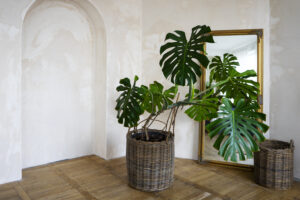
Although Monstera deliciosa is the most familiar example, numerous other tropical climbing plants develop similarly unusual foliage. Their fenestrations may become more pronounced as the plants mature, climb, and receive suitable light and growing conditions.
In this guide, we explore 35 plants with fenestrations, including popular houseplants, unusual tropical aroids, and climbing species with naturally perforated or deeply divided leaves. We also explain how to encourage healthy leaf development and choose plants that suit your growing environment.
35 Best Plants With Fenestrations
1. Monstera Deliciosa – Best Overall Fenestrated Plant
Monstera deliciosa is one of the most recognizable plants with fenestrations because its mature leaves develop both internal holes and deep openings extending from the leaf margins. The large, glossy green leaves create an impressive tropical appearance, making this species a popular choice for indoor collections and sheltered tropical landscapes. Young plants generally produce solid, heart-shaped leaves before developing their characteristic fenestrations as they mature.

- Monstera Deliciosa in a 6" Nursery Pot: Introduce the exotic charm of our Monstera Deliciosa to your indoor space, flourishing in a practical 6" nursery pot. Also known as the Swiss Cheese Plant, this delightful houseplant with its iconic split leaves brings a touch of tropical elegance and air-purifying benefits to your home or office.
- Effortless Indoor Greenery Care: Embrace simplicity with our Monstera Deliciosa. Ideal for both plant enthusiasts and beginners, this adaptable and low-maintenance plant requires minimal attention, thriving in bright, indirect light conditions while maintaining enduring beauty in your indoor environment.

This climbing aroid grows best in bright indirect light, warm temperatures, and a well-aerated growing medium. A mixture containing orchid bark, coco coir, and perlite can provide the drainage and root aeration needed for healthy development. Water when the upper portion of the substrate begins to dry, avoiding prolonged saturation around the roots.
Providing a sturdy moss pole or other climbing support encourages mature growth and helps the plant develop larger leaves. Adequate light, consistent nutrition, and a healthy root system also support normal leaf development. Monstera deliciosa is toxic if ingested because it contains insoluble calcium oxalates.
- Large decorative fenestrated leaves
- Develops internal holes and edge splits
- Popular tropical houseplant
- Can grow into an impressive specimen
- Responds well to climbing supports
- Relatively adaptable indoors
- Easy to propagate from stem cuttings
- Requires considerable space
- Toxic if ingested
- Young leaves may lack fenestrations
2. Monstera Adansonii – Best Small Perforated Leaves
Monstera adansonii is a tropical climbing plant recognized for its relatively small, thin leaves containing numerous oval-shaped holes. Unlike Monstera deliciosa, its leaves typically retain a more compact, perforated appearance rather than developing extensive splits along the margins. The combination of green foliage and internal openings makes it one of the most recognizable fenestrated houseplants.

- [CHARACTERISTICS]- The photo is just a reference. These are the characteristics of the plant: leaf length: 10cm, leaf width: 10cm, plant height: 25cm, leaves per plant 2 or 3.
- [DISTINCTIVE DESIGN]- monstera plant is known for its large, glossy leaves that have natural holes or perforations, giving them a Swiss cheese-like appearance. Its ability to purify the air by removing toxins makes it the perfect fit for household plants.
This species prefers bright indirect light, warm temperatures, and a loose growing medium with good drainage. It benefits from consistent moisture during active growth, although the roots should not remain waterlogged. Providing a climbing support can encourage larger leaves and a more upright growth habit.
Monstera adansonii is suitable for hanging baskets, moss poles, and indoor climbing displays. Its trailing stems can be pruned to maintain a compact shape or trained vertically to create a fuller plant. Like other Monstera species, it contains calcium oxalates and is toxic if eaten.
- Distinctive oval leaf openings
- Compact fenestrated foliage
- Suitable for hanging baskets
- Can climb vertical supports
- Easy to propagate
- Attractive tropical appearance
- Useful for indoor collections
- Toxic if ingested
- Sensitive to waterlogged soil
- Requires adequate indirect light
3. Monstera Obliqua – Best Extremely Perforated Leaves
Monstera obliqua is a rare tropical aroid famous for its exceptionally perforated leaves, which can contain more open space than actual leaf tissue. Its delicate foliage is considerably thinner and more fragile than that of Monstera adansonii. The species is particularly desirable among collectors interested in unusual fenestrated plants.

- **RARE FIND**: Stunning **Monstera Obliqua Peru live plant**! A top **swiss cheese plant** & **tropical plant live** collector pick.
- **RARE FIND**: Stunning **Monstera Obliqua Peru live plant**! A top **swiss cheese plant** & **tropical plant live** collector pick.
This species requires careful attention to humidity, moisture, and growing conditions. It generally performs best in warm environments with high humidity, bright indirect light, and an airy substrate. Avoid exposing the delicate foliage to harsh sunlight, strong drying winds, or prolonged moisture stress.
Monstera obliqua is not the best starting choice for inexperienced houseplant growers because genuine specimens can be difficult to obtain and maintain. It is also frequently confused with highly perforated forms of Monstera adansonii in the plant trade. Confirm the botanical identity before purchasing because the two species are not interchangeable.
- Exceptionally perforated foliage
- Rare collector appeal
- Distinctive delicate leaf structure
- Attractive tropical growth habit
- Suitable for specialist collections
- Unusual compared with common Monsteras
- Strong ornamental value
- Difficult to source genuine plants
- Requires careful humidity management
- Delicate foliage can be damaged
4. Monstera Pinnatipartita – Best Deeply Divided Mature Leaves
Monstera pinnatipartita is a tropical climbing aroid that develops increasingly divided leaves as it matures. Its juvenile foliage is generally entire, while established climbing plants produce larger leaves with deep divisions extending toward the central midrib. These mature leaves create an impressive architectural appearance.

- [CHARACTERISTICS]- The photo is just a reference. These are the characteristics of the plant: leaf length: 10cm, leaf width: 10cm, plant height: 25cm, leaves per plant 2 or 3.
- [UNIQUE SHAPE]- Monstera Subpinnata is a stunning tropical house plant species known for its distinctive split-like leaves and lush green foliage. Ideal for indoor gardening enthusiasts, this easy plant is the perfect way to bring a touch of tropical nature into any indoor space.
The species grows best in bright indirect light, warm temperatures, and a well-drained aroid substrate. Provide a climbing structure to support the stems and encourage mature foliage development. Regular watering during active growth is beneficial, but the substrate should retain adequate air spaces around the roots.
Monstera pinnatipartita is suitable for collectors who want a climbing plant with dramatic mature foliage. Its development can be relatively gradual, so patience is important when growing it from a juvenile specimen. Avoid assuming that a young plant will immediately display the deeply divided leaves associated with mature specimens.
- Develops deeply divided foliage
- Attractive climbing growth
- Large mature leaves
- Suitable for moss-pole displays
- Distinctive tropical appearance
- Can be propagated from cuttings
- Interesting foliage transformation
- Juvenile leaves are not fenestrated
- Requires climbing support
- Toxic if ingested
5. Monstera Lechleriana – Best Narrow Perforated Foliage
Monstera lechleriana is a tropical climbing aroid with elongated leaves that develop characteristic internal fenestrations as the plant matures. Its foliage is generally narrower than that of Monstera deliciosa, giving it a distinctive appearance in collections of climbing tropical plants. The openings become more noticeable as the plant develops mature foliage.

- All of our listings have very representative pictures of what you would receive.
- This plant comes fully rooted in a 4" pot, ready to grow in and your beautiful home or your office.
This species prefers bright indirect light, warm temperatures, and a well-aerated growing medium. A moss pole or rough climbing surface can support the stems and encourage the development of larger leaves. Water when the upper substrate begins to dry, maintaining enough moisture for active growth without saturating the roots.
Monstera lechleriana is a suitable option for collectors who want a species with internal leaf openings but a different growth appearance from common Monstera varieties. It can be maintained in a large indoor container or a sheltered tropical growing area. Keep it away from pets and children because its tissues contain calcium oxalates.
- Develops internal leaf openings
- Attractive elongated foliage
- Suitable for climbing displays
- Distinctive collector species
- Benefits from vertical supports
- Tropical ornamental appearance
- Can be propagated from cuttings
- Juvenile leaves may be solid
- Requires suitable humidity
- Toxic if ingested
6. Monstera Acuminata – Best Compact Fenestrated Monstera
Monstera acuminata is a climbing tropical species with relatively small leaves that develop internal fenestrations as they mature. Its foliage can resemble that of other perforated Monsteras, although leaf shape, size, and opening distribution vary between plants. It is an interesting choice for collectors who prefer smaller climbing aroids.

- 🌿 PREMIUM INGREDIENTS: Our Monstera Acuminata Potting Mix is made from premium natural ingredients, including perlite, peat moss, coco coir, and pine bark, to provide the ideal growing environment for your plant.
- 🍃 OPTIMAL AIR FLOW: Our expertly formulated blend promotes optimal air flow to the roots, ensuring they have access to the oxygen they need for healthy growth and development.
Grow this species in bright filtered light and a loose, well-drained substrate. It benefits from climbing support, which helps the plant develop more mature growth rather than remaining in a sprawling juvenile form. Maintain moderate to high humidity and water when the upper growing medium begins to dry.
Monstera acuminata is suitable for indoor tropical collections and sheltered greenhouse environments. Its relatively compact foliage can make it easier to accommodate than larger Monstera species. However, the plant still requires sufficient vertical space as its climbing stems develop.
- Develops perforated mature leaves
- Relatively compact foliage
- Attractive climbing growth
- Suitable for collector displays
- Can be grown on moss poles
- Distinctive tropical appearance
- Propagates from stem cuttings
- Juvenile leaves may lack openings
- Requires climbing support
- Toxic if ingested
7. Monstera Subpinnata – Best Finely Divided Foliage
Monstera subpinnata is an unusual climbing aroid with mature leaves divided into numerous narrow segments. Its foliage develops a delicate, feather-like appearance that differs significantly from the broad leaves of Monstera deliciosa. The deep divisions create substantial open spaces across the leaf blade.
- [CHARACTERISTICS]- The photo is just a reference. These are the characteristics of the plant: leaf length: 10cm, leaf width: 10cm, plant height: 25cm, leaves per plant 2 or 3.
- [UNIQUE SHAPE]- Monstera Subpinnata is a stunning tropical house plant species known for its distinctive split-like leaves and lush green foliage. Ideal for indoor gardening enthusiasts, this easy plant is the perfect way to bring a touch of tropical nature into any indoor space.
This species prefers warm conditions, bright indirect light, and a well-aerated growing medium. Providing a vertical support helps the plant climb and develop mature foliage. Regular watering is necessary during active growth, but excessive moisture around the roots should be avoided.
Monstera subpinnata is particularly useful for collectors interested in unusual leaf architecture. Its mature foliage provides a dramatic contrast against plants with broad, undivided leaves. Allow sufficient space around the plant because its divided leaves can spread widely as it develops.
- Distinctive finely divided leaves
- Dramatic mature foliage
- Suitable for climbing displays
- Unusual tropical appearance
- Attractive collector species
- Can be propagated from cuttings
- Provides strong foliage contrast
- Requires vertical growing space
- Juvenile foliage is different
- Toxic if ingested
8. Monstera Epipremnoides – Best Large Fenestrated Leaves
Monstera epipremnoides is a climbing aroid with broad mature leaves containing prominent internal openings and deep marginal divisions. Its large foliage creates an impressive appearance, particularly when the plant is grown vertically. It is sometimes confused with other large-leaved Monstera species, so correct identification is important when purchasing.

- TROPICAL BEAUTY: Monstera Epipremnoides features distinctive split leaves that create an exotic, jungle-like atmosphere in any indoor space
- EASY CARE REQUIREMENTS: Thrives in moderate indirect light and regular watering, making it perfect for both novice and experienced plant parents
The plant prefers bright indirect light, warm temperatures, and a loose growing medium containing materials such as bark and perlite. A sturdy climbing support is important because mature leaves can become relatively large and heavy. Water when the substrate begins to dry while ensuring adequate drainage.
Monstera epipremnoides is suitable for experienced collectors and growers with sufficient space. Its mature foliage can become a focal point in a tropical indoor display. Avoid placing the plant in strong direct sunlight because its leaves can develop scorched areas under excessive exposure.
- Large fenestrated leaves
- Attractive climbing growth
- Strong tropical appearance
- Suitable for collector displays
- Develops prominent leaf openings
- Benefits from vertical supports
- Can be propagated from cuttings
- Requires substantial space
- Needs a sturdy climbing support
- Toxic if ingested
9. Monstera Spruceana – Best Unusual Climbing Monstera
Monstera spruceana is a tropical climbing species with juvenile leaves that can attach closely to supporting surfaces before developing more mature foliage. Its leaf development changes considerably as the plant grows, and mature specimens can produce divided leaves with openings. This transformation makes it interesting for collectors who enjoy observing different growth stages.
No products found.
The plant grows best in warm conditions with bright indirect light and a well-drained aroid substrate. Providing a suitable climbing surface encourages its natural growth habit and supports the transition toward mature foliage. Maintain moderate humidity and water according to substrate moisture rather than following a rigid schedule.
Monstera spruceana is less commonly encountered than Monstera deliciosa and adansonii. It is best suited to growers who are comfortable maintaining climbing tropical aroids. Check the plant’s botanical identity carefully because unusual Monstera species are sometimes mislabeled in specialist plant markets.
- Interesting foliage development
- Unusual climbing growth
- Collector-oriented Monstera species
- Develops mature divided leaves
- Suitable for vertical displays
- Attractive tropical foliage
- Can be propagated from cuttings
- Less common in cultivation
- Requires suitable climbing support
- Toxic if ingested
10. Monstera Siltepecana – Best Silver-Patterned Climbing Monstera
Monstera siltepecana is a climbing aroid with juvenile leaves displaying attractive silver markings along their green surfaces. As the plant matures and climbs, its foliage can become larger and develop fenestrations. This change makes it particularly interesting because juvenile and mature specimens can look considerably different.
- All of our listings have very representative pictures of what you would receive.
- This plant comes fully rooted in a 4" pot, ready to grow in and your beautiful home or your office.
The species prefers bright indirect light, warm temperatures, and a well-drained growing medium. Provide a climbing support to encourage mature growth and maintain an upright structure. Water when the upper substrate begins to dry, avoiding excessive irrigation during periods of slow growth.
Monstera siltepecana is suitable for hanging baskets during its juvenile stage and vertical displays as it matures. Its silver-patterned juvenile leaves provide ornamental value even before mature fenestrations develop. Keep the plant away from animals that may chew its leaves because it contains calcium oxalates.
- Attractive silver juvenile foliage
- Develops mature fenestrations
- Suitable for climbing supports
- Can be grown in hanging baskets
- Interesting foliage transformation
- Compact juvenile growth
- Suitable for tropical collections
- Juvenile leaves are not perforated
- Requires climbing support for maturity
- Toxic if ingested
11. Rhaphidophora Tetrasperma – Best Miniature Split-Leaf Aroid
Rhaphidophora tetrasperma is a fast-growing tropical climbing plant with relatively small leaves that develop deep divisions as they mature. It is frequently marketed as mini Monstera because its foliage resembles a smaller version of Monstera deliciosa. However, it belongs to a different genus and is not a true Monstera.

- ATTRACTIVE PLANT: Our Tetrasperma, The Rare Mini Monstera, is a beautiful and unique tropical houseplant with eye-catching foliage that will add a lush touch to any room.
- EASY TO GROW: Despite its appearance, Tetrasperma is easy to care for, making it an excellent choice for those looking for a low-maintenance houseplant.
This species grows well in bright indirect light, warm temperatures, and an airy growing medium. A moss pole or other vertical support encourages climbing and supports the development of larger, more divided leaves. Maintain consistent moisture during active growth while allowing excess water to drain away.
Rhaphidophora tetrasperma is suitable for indoor collections where a smaller alternative to Monstera deliciosa is preferred. Its fast growth makes regular pruning useful for controlling stem length and encouraging branching. The plant contains calcium oxalates and should not be ingested.
- Deeply divided mature leaves
- Smaller than Monstera deliciosa
- Fast-growing climbing habit
- Suitable for moss poles
- Easy to propagate
- Excellent indoor foliage plant
- Attractive tropical appearance
- Requires regular pruning
- Juvenile leaves are less divided
- Toxic if ingested
12. Rhaphidophora Decursiva – Best Large Split-Leaf Climber
Rhaphidophora decursiva is a vigorous climbing aroid that develops large, deeply divided mature leaves. Its leaf segments create an open, fenestrated appearance that becomes increasingly dramatic as the plant climbs. The species is sometimes called dragon tail plant because of the shape of its mature foliage.

- Collector's Series
- Prefers bright, indirect light or artificial light
The plant prefers bright indirect light, warm temperatures, and a well-drained growing medium containing bark and other coarse materials. A sturdy climbing support is particularly useful because mature stems and foliage can become substantial. Water consistently during active growth while avoiding prolonged saturation.
Rhaphidophora decursiva is a good choice for growers who want large divided foliage without choosing a traditional Monstera. It can become a substantial indoor specimen when provided with sufficient vertical space. Its mature leaves are especially attractive when grown against a moss pole or other climbing structure.
- Large divided mature leaves
- Impressive climbing growth
- Strong tropical appearance
- Suitable for vertical displays
- Can become a substantial specimen
- Attractive alternative to Monstera
- Propagates from stem cuttings
- Requires considerable vertical space
- Needs climbing support
- Toxic if ingested
13. Rhaphidophora Foraminifera – Best Naturally Perforated Leaves
Rhaphidophora foraminifera is a tropical climbing aroid known for foliage with distinctive internal openings. Its leaves develop perforations that create an attractive open pattern, making it particularly appealing to collectors interested in naturally fenestrated species. The plant has a different leaf structure from the familiar Monstera varieties commonly sold in garden centers.
No products found.
Grow this species in warm conditions with bright filtered light and a well-aerated substrate. It benefits from climbing support and moderate to high humidity. Water when the growing medium begins to dry slightly, maintaining good drainage to protect the roots.
Rhaphidophora foraminifera is best suited to specialist aroid collections because it may be less readily available than common climbing houseplants. Ensure that the plant is correctly identified before purchasing. Its natural fenestrations provide ornamental interest without requiring the large leaf size of some Monstera species.
- Naturally perforated foliage
- Distinctive tropical leaf structure
- Suitable for specialist collections
- Attractive climbing habit
- Benefits from vertical supports
- Unusual alternative to Monstera
- Decorative mature leaves
- Less commonly available
- Requires suitable humidity
- Toxicity precautions are advisable
14. Rhaphidophora Hayi – Best Shingling Climbing Aroid
Rhaphidophora hayi is a tropical climbing aroid best known for its overlapping juvenile leaves that attach closely to vertical surfaces. Its foliage changes as the plant matures, and mature leaves can become larger and more divided. Although its most familiar appearance is the shingling growth habit, mature specimens can develop more complex leaf structures.
No products found.
The plant grows best in warm, humid conditions with bright indirect light. It benefits from a flat climbing support that allows the stems to attach naturally. Use a well-drained aroid substrate and maintain consistent moisture during active growth without allowing water to accumulate around the roots.
Rhaphidophora hayi is particularly suitable for vertical displays and collectors who enjoy unusual climbing habits. Its juvenile foliage can cover a board or moss-covered surface with overlapping green leaves. Do not expect prominent fenestrations from a small juvenile plant because leaf development changes with maturity.
- Distinctive shingling growth
- Attractive climbing foliage
- Suitable for vertical displays
- Interesting mature leaf development
- Tropical ornamental appearance
- Can cover a flat support
- Suitable for specialist collections
- Juvenile leaves are not fenestrated
- Requires a suitable climbing surface
- Needs warm growing conditions
15. Rhaphidophora Korthalsii – Best Mature Divided Foliage
Rhaphidophora korthalsii is a tropical climbing species with a shingling juvenile growth habit and more developed foliage as it matures. Its mature leaf structure can become more complex, with divisions that create an open appearance. The plant is especially interesting to collectors who enjoy species that change substantially during development.
No products found.
This species prefers warm conditions, bright indirect light, and an airy substrate. A flat board, tree-like support, or suitable climbing surface encourages the plant’s natural attachment habit. Keep the root zone moderately moist during active growth, but avoid excessive watering.
Rhaphidophora korthalsii is best suited to specialist collections and growers with an interest in unusual aroid development. Its juvenile leaves are attractive even before the plant develops mature foliage. Allow sufficient time for the plant to establish and climb before evaluating its mature leaf characteristics.
- Unusual shingling growth habit
- Interesting mature leaf development
- Suitable for vertical displays
- Distinctive tropical appearance
- Useful in specialist collections
- Can be trained on flat supports
- Attractive juvenile foliage
- Requires suitable climbing support
- Juvenile foliage lacks mature divisions
- Less common in ordinary nurseries
16. Epipremnum Pinnatum – Best Long, Deeply Split Leaves
Epipremnum pinnatum is a tropical climbing aroid that develops increasingly divided leaves as it matures. Juvenile plants usually have simple, elongated leaves, while mature climbing specimens can produce long foliage with deep divisions and occasional internal openings. Its changing leaf structure makes it one of the most interesting plants for a fenestrated foliage collection.

- SNOW QUEEN POTHOS LIVE PLANT: Add a beautiful variegated houseplant to your collection with Snow Queen Pothos, known for its striking white-and-green speckled leaves and elegant trailing growth that creates a bright natural display.
- BEAUTIFUL TRAILING HOME & OFFICE DECOR: The vibrant variegated foliage makes this live pothos a stylish choice for hanging baskets, shelves, desks, windowsills and indoor plant displays, adding a fresh decorative touch to any space.
This species grows best in bright indirect light, warm temperatures, and an airy growing medium. A moss pole or rough climbing support encourages mature leaf development. Water when the upper substrate begins to dry, maintaining adequate moisture during active growth.
Epipremnum pinnatum is suitable for indoor vertical displays and tropical greenhouse collections. Its mature leaves can become substantially larger than those of juvenile plants. Some cultivated forms, including variegated selections, are particularly desirable, although variegated plants may require more careful light management.
- Develops deeply divided leaves
- Attractive climbing growth
- Several ornamental forms available
- Suitable for moss poles
- Can produce large mature foliage
- Easy to propagate
- Useful for indoor collections
- Juvenile leaves are entire
- Requires vertical support for maturity
- Toxic if ingested
17. Epipremnum Aureum – Best Common Pothos With Mature Fenestrations
Epipremnum aureum, commonly known as golden pothos, is a familiar trailing houseplant that can develop large, fenestrated leaves when allowed to climb and mature. Most ordinary indoor specimens retain small, entire leaves because they are regularly pruned or grown as trailing plants. Mature climbing plants can develop considerably larger foliage with splits and openings.

- LIVE POTHOS PLANT DELIVERY: Each order includes one fully-rooted golden pothos in a 4" pot. Devil's ivy (Epipremnum aureum) is a beautiful, easy to grow house plant.
- EASY TO GROW HOUSE PLANTS: Brighten up your space with this variegated plant. Bring the beauty of nature inside by growing alongside other office plants and desk plants.
Golden pothos performs well in bright indirect light and a well-drained growing medium. It tolerates a range of indoor conditions, although stronger light generally supports more vigorous growth. To encourage mature foliage, provide a vertical climbing support and avoid repeatedly cutting the plant back before it establishes.
This plant is a practical starting point for growers who want to experiment with mature fenestrated foliage without purchasing an uncommon species. Its growth is relatively vigorous, and stem cuttings root readily. Golden pothos contains calcium oxalates and is toxic if ingested.
- Widely available houseplant
- Can develop mature fenestrations
- Vigorous climbing growth
- Easy to propagate
- Tolerates varied indoor conditions
- Suitable for moss poles
- Several variegated cultivars available
- Most indoor leaves remain entire
- Requires maturity for fenestrations
- Toxic if ingested
18. Epipremnum Pinnatum ‘Cebu Blue’ – Best Blue-Silver Fenestrated Pothos
Epipremnum pinnatum ‘Cebu Blue’ is a climbing pothos selection with elongated blue-green or silvery foliage. Juvenile leaves are generally narrow and entire, while mature climbing plants can develop deep divisions and openings. Its unusual foliage color makes it a particularly attractive alternative to traditional green pothos.

- Epipremnum Pinnatum 'Cebu Blue' in a 6" Nursery Pot: Introduce the exotic charm of our Epipremnum Pinnatum 'Cebu Blue' to your indoor space, thriving in a practical 6" nursery pot. This captivating houseplant, also known as the Cebu Blue Pothos, boasts striking blue-green leaves that bring a touch of tropical elegance and air-purifying benefits to your home or office.
The plant prefers bright indirect light and a well-drained aroid growing medium. A moss pole encourages climbing and provides the support needed for mature leaf development. Water when the upper substrate begins to dry, avoiding excessive moisture around the roots.
Cebu Blue can be grown in hanging containers while young or trained vertically as it matures. Its blue-silver foliage provides a useful contrast against darker green fenestrated plants. Like other Epipremnum varieties, it should be kept away from pets and children who might chew the leaves.
- Attractive blue-silver foliage
- Develops divided mature leaves
- Suitable for climbing supports
- Can be grown in hanging baskets
- Vigorous growth under suitable conditions
- Easy to propagate
- Distinctive foliage color
- Juvenile leaves lack fenestrations
- Requires climbing support
- Toxic if ingested
19. Amydrium Medium – Best Unusual Fenestrated Aroid
Amydrium medium is a climbing tropical aroid known for its unusual leaf development. Depending on the growth stage and form, mature leaves can develop elongated openings and deeply divided structures. Its distinctive foliage makes it a desirable plant for collectors who want alternatives to the more familiar Monstera species.

- We offer WINTER SHIPPING INSURANCE for use during colder months. If temperatures are consistently 44F or below, we strongly advise Winter Shipping Insurance to be ordered along with with your plants. Included are a heat pack, insulated wrap for your plants and a money back guarantee for your plants if they arrive dead due to cold weather.
Amydrium medium grows best in warm, humid conditions with bright indirect light. Use an airy aroid substrate and provide a suitable climbing structure to support the stems. Maintain moderate moisture during active growth, allowing excess water to drain freely.
This species is particularly attractive when trained vertically because mature foliage can become more prominent as the plant climbs. It is less commonly available than standard houseplants, so purchasing from a reputable specialist nursery is advisable. Verify the plant’s identity because different Amydrium species can have noticeably different leaf shapes.
- Unusual mature leaf structure
- Attractive tropical climbing habit
- Suitable for specialist collections
- Can develop leaf openings
- Benefits from vertical supports
- Interesting foliage development
- Distinctive alternative to Monstera
- Less commonly available
- Requires suitable humidity
- Needs climbing support
20. Amydrium Zippelianum – Best Deeply Divided Aroid Foliage
Amydrium zippelianum is a tropical climbing aroid with unusual leaf forms that change as the plant matures. Its mature foliage can develop deep divisions and an open structure, making it an interesting option for collectors of fenestrated and dissected plants. The species is less familiar than common Monstera and Rhaphidophora varieties.

Grow this species in a warm environment with bright filtered light and an airy growing medium. A vertical support encourages climbing and allows the plant to develop more mature foliage. Water according to substrate moisture, ensuring that the roots receive adequate aeration.
Amydrium zippelianum is suitable for experienced growers and specialist aroid collections. Its foliage is best appreciated when the plant is allowed to develop naturally rather than being repeatedly cut back. Confirm the botanical identity when purchasing because uncommon Amydrium species are sometimes confused with other climbing aroids.
- Unusual divided mature foliage
- Interesting climbing habit
- Suitable for specialist collections
- Distinctive tropical appearance
- Benefits from vertical supports
- Attractive mature leaf structure
- Uncommon collector species
- Difficult to source
- Requires warm conditions
- Needs suitable growing support
21. Monstera Acacoyaguensis – Best Unusual Perforated Monstera
Monstera acacoyaguensis is a tropical climbing species with mature leaves that develop internal fenestrations. Its openings create a distinctive perforated appearance, although leaf shape and the number of holes can vary with maturity and growing conditions. It is an interesting alternative for collectors who already grow common Monstera varieties.
No products found.
The species prefers warm temperatures, bright indirect light, and a well-drained aroid substrate. Provide a climbing support to encourage mature foliage development and reduce sprawling growth. Maintain moderate moisture while ensuring that excess water drains freely from the container.
Monstera acacoyaguensis is particularly suitable for specialist plant collections and tropical greenhouse displays. It may be difficult to find in ordinary nurseries, so source plants from sellers who can confirm their botanical identity. Avoid placing it in direct midday sunlight, which can scorch the leaves.
- Develops internal fenestrations
- Unusual Monstera species
- Attractive climbing growth
- Suitable for specialist collections
- Benefits from vertical supports
- Distinctive mature foliage
- Tropical ornamental appearance
- Less common in cultivation
- Requires climbing support
- Toxic if ingested
22. Monstera Standleyana – Best Variegated Climbing Monstera
Monstera standleyana is a climbing aroid valued for its elongated leaves, which may display white, cream, or pale green variegation. It is often included in collections of unusual Monstera plants, although its leaves are generally entire rather than naturally fenestrated. It is useful as a companion plant in a collection focused on unusual tropical foliage, but should not be mistaken for a true perforated-leaf species.

- Monstera Standleyana Aurea Variegata has beautiful green leaves with a creamy white to yellow splashes
- As it matures, the plant will want to climb and will need support from a moss pole or trellis
This plant grows well in bright indirect light and an airy, well-drained substrate. A moss pole or climbing support encourages upright growth and helps the plant develop a more mature appearance. Variegated specimens may require brighter indirect light than fully green plants to maintain their leaf patterns.
Monstera standleyana is suitable for collectors who appreciate climbing aroids with unusual foliage coloration. Its variegated leaves provide contrast alongside true fenestrated species such as Monstera deliciosa and adansonii. Because it does not normally develop characteristic fenestrations, it is better considered a companion foliage plant than a direct substitute.
- Attractive variegated foliage
- Distinctive climbing growth
- Suitable for vertical displays
- Interesting alternative Monstera
- Can be propagated from cuttings
- Complements fenestrated plants
- Useful in collector arrangements
- Does not normally form fenestrations
- Variegated forms can be costly
- Toxic if ingested
23. Monstera Dubia – Best Shingling Monstera With Mature Leaf Changes
Monstera dubia is an unusual climbing species known for its juvenile leaves, which lie flat against supporting surfaces in an overlapping shingling pattern. As the plant matures and climbs higher, its leaves become larger and can develop a more divided structure. This transformation makes it particularly interesting for collectors who want to observe different stages of Monstera development.

- MONSTERA DUBIA LIVE PLANT: Add a rare tropical houseplant to your collection with Monstera Dubia, admired for its distinctive foliage and climbing growth that makes it an appealing choice for plant collectors and enthusiasts.
- UNIQUE HOME & OFFICE DECOR: The attractive foliage and climbing habit make this live Monstera a stylish accent for shelves, plant stands, walls, desks, living rooms and offices, adding natural tropical character to your space.
Monstera dubia prefers warm conditions, bright indirect light, and moderate to high humidity. A flat board or moss-covered support helps the juvenile leaves attach closely to the growing surface. Use an airy substrate and maintain consistent moisture without waterlogging the root zone.
The plant is especially suitable for vertical displays where its shingling growth can be appreciated. Its juvenile foliage is attractive even before mature leaf development occurs. Allow the plant to establish and climb naturally rather than expecting large fenestrated leaves from a small specimen.
- Distinctive shingling foliage
- Interesting mature leaf transformation
- Suitable for vertical displays
- Attractive juvenile leaves
- Unusual collector Monstera
- Can be trained on flat supports
- Strong ornamental value
- Juvenile leaves lack fenestrations
- Requires a suitable climbing surface
- Toxic if ingested
24. Monstera Laniata – Best Narrow-Leaf Fenestrated Monstera
Monstera laniata is a name commonly encountered in the horticultural trade for forms associated with Monstera adansonii. Plants sold under this name generally have elongated foliage with internal openings. Because the name is sometimes used inconsistently, it is important to verify the botanical identity rather than assuming every plant marketed as laniata represents a separate species.

- Commonly Known as the Sweetheart Hoya or Valentine's Hoya
- The plant is non-variegated which simply means it is a solid green color
Plants in the Monstera adansonii group prefer bright indirect light, warm temperatures, and an airy aroid growing medium. They benefit from climbing supports, which encourage larger leaves and a more upright growth habit. Water when the upper substrate begins to dry, avoiding excessive moisture around the roots.
This type of fenestrated Monstera is suitable for hanging containers and vertical indoor displays. Its perforated leaves provide a familiar tropical appearance without requiring the large space needed by mature Monstera deliciosa. Check the seller’s labeling carefully because taxonomic names and horticultural trade names can overlap.
- Attractive perforated foliage
- Suitable for hanging baskets
- Can be trained to climb
- Compact tropical growth
- Easy to propagate
- Useful for indoor displays
- Decorative leaf openings
- Trade naming can be inconsistent
- Requires adequate indirect light
- Toxic if ingested
25. Monstera Deliciosa ‘Thai Constellation’ – Best Variegated Fenestrated Plant
Monstera deliciosa ‘Thai Constellation’ is a variegated cultivar with creamy white and pale yellow markings distributed across its green foliage. Like the standard species, mature leaves develop internal holes and deep marginal splits. Its distinctive variegation makes it one of the most recognizable collector selections in the fenestrated plant market.

- WHAT YOU GET: Two live monstera plants (Monstera deliciosa 'Thai Constellation'), fully rooted, 10-12 inches tall; green leaves speckled with creamy white; real plants, not seeds
- LIGHT, BRIGHT INDIRECT: Grows best near a bright window with filtered light; rotate it every few weeks for even growth; not suited to dark corners, and hot direct sun can burn the leaves
The cultivar prefers bright indirect light, warm temperatures, and a well-drained aroid substrate. It requires adequate light to support growth, but excessive direct sunlight can scorch the lighter areas of the leaves. Provide a climbing support and avoid overwatering because root problems can quickly affect variegated foliage.
Thai Constellation is suitable for collectors who want a fenestrated plant with additional leaf coloration. Its growth may be slower than that of fully green Monstera deliciosa because the pale leaf sections contain less chlorophyll. Purchase from a reputable nursery and check for healthy roots, stable variegation, and signs of pests.
- Attractive cream variegation
- Develops classic Monstera fenestrations
- Highly decorative foliage
- Suitable for collector displays
- Can grow into a large specimen
- Benefits from climbing support
- Strong ornamental appeal
- Often more expensive
- Growth may be slower
- Sensitive to excessive direct sunlight
26. Monstera Deliciosa ‘Albo Borsigiana’ – Best White Variegated Fenestrations
Monstera deliciosa ‘Albo Borsigiana’ is a highly sought-after variegated form with large white patches and green sections across its leaves. Mature foliage develops the familiar fenestrations associated with Monstera deliciosa, creating a combination of dramatic leaf openings and contrasting coloration. Its variegation can vary significantly between individual plants.

- COMPLETE TISSUE CULTURE STARTER KIT – Everything you need to start growing your Monstera Albo in one kit. Includes the live tissue culture plant inside its sealed bag, our TC blend with volcanic soil, a self watering pot, and a humidity dome. No need to search for the right growing supplies separately.
- RARE VARIEGATED MONSTERA DELICIOSA – Grow your own Monstera Albo from its young tissue culture stage. This highly collectible variegated Monstera is loved for its beautiful green foliage with striking white and cream coloring. A great choice for collectors looking for a Monstera live plant, variegated plants live, rare plants live, and exotic plants.
This cultivar requires bright indirect light and a well-aerated growing medium. Stable growing conditions are important because extensive white sections contain less chlorophyll and can be more vulnerable to damage. Provide a sturdy support and avoid excessive watering, particularly when the plant is growing slowly.
Albo Borsigiana is suitable for experienced collectors who want a striking variegated specimen. Its appearance depends heavily on the stability of the variegation and the health of the growing point. Select plants with balanced green and white coloration rather than specimens with excessive white growth that may struggle to sustain themselves.
- Dramatic white leaf variegation
- Develops fenestrated mature foliage
- Highly decorative appearance
- Strong collector appeal
- Suitable for vertical displays
- Large mature leaves
- Distinctive green-white contrast
- Often expensive
- Variegation can be unstable
- White sections can be vulnerable to scorching
27. Monstera Deliciosa ‘Aurea’ – Best Yellow-Variegated Fenestrated Plant
Monstera deliciosa ‘Aurea’ is a variegated cultivar with yellow or golden-green sections across its leaves. Its mature foliage develops the characteristic holes and marginal splits of Monstera deliciosa, while the yellow markings provide an additional ornamental feature. The distribution and intensity of variegation can vary between plants.

- LIGHT REQUIREMENTS: Thrives in bright, indirect light conditions for optimal growth and variegation development.
- WATERING SCHEDULE: Water when the top inch of soil becomes dry to maintain ideal moisture levels without overwatering.
The plant grows best in bright indirect light and a well-drained aroid substrate. Provide a sturdy climbing support to encourage larger mature leaves and maintain an upright structure. Avoid excessive direct sunlight because the lighter portions of the foliage can be more susceptible to scorching.
Aurea is particularly suitable for collectors who want a variegated alternative to standard Monstera deliciosa. Stable growing conditions and appropriate light help maintain healthy foliage. When buying, check that the plant has a healthy growing point and balanced coloration rather than relying on a single attractive leaf.
- Attractive golden leaf variegation
- Develops classic fenestrations
- Large ornamental foliage
- Suitable for collector collections
- Strong visual contrast
- Benefits from climbing supports
- Distinctive tropical appearance
- Often costly
- Variegation may vary
- Sensitive to harsh sunlight
28. Monstera Deliciosa ‘Albo Variegata’ – Best White-and-Green Fenestrated Leaves
Monstera deliciosa ‘Albo Variegata’ is a variegated selection with contrasting white and green leaf sections. Its mature foliage develops the characteristic fenestrations of the species, giving the plant a distinctive combination of perforated leaves and pale coloration. The amount of white variegation differs between leaves and individual specimens.
- COMPLETE TISSUE CULTURE STARTER KIT – Everything you need to start growing your Monstera Albo in one kit. Includes the live tissue culture plant inside its sealed bag, our TC blend with volcanic soil, a self watering pot, and a humidity dome. No need to search for the right growing supplies separately.
- RARE VARIEGATED MONSTERA DELICIOSA – Grow your own Monstera Albo from its young tissue culture stage. This highly collectible variegated Monstera is loved for its beautiful green foliage with striking white and cream coloring. A great choice for collectors looking for a Monstera live plant, variegated plants live, rare plants live, and exotic plants.
Grow the plant in bright indirect light and a loose, well-drained growing medium. A climbing support encourages larger leaves, while careful watering helps prevent root deterioration. Avoid intense direct sunlight because the pale sections may scorch more easily than the green portions.
This cultivar is suitable for collectors who want an ornamental plant with both fenestrations and variegation. It may require more attention than a standard green Monstera because extensive white sections have reduced photosynthetic capacity. Select healthy specimens with a balanced distribution of green and white tissue.
- Attractive white-green foliage
- Develops fenestrated leaves
- Strong ornamental appearance
- Suitable for collector displays
- Large mature foliage
- Benefits from vertical supports
- Distinctive variegation patterns
- Can be expensive
- White tissue is more vulnerable to scorching
- Requires careful growing conditions
29. Monstera Peru – Best Thick Textured Foliage
Monstera karstenianum, commonly sold as Monstera Peru, is a climbing aroid with thick, heavily textured leaves. Unlike Monstera deliciosa and adansonii, it does not normally develop the characteristic fenestrations associated with those species. However, its unusual foliage makes it a useful companion plant in collections focused on tropical climbing aroids.

- All of our listings have very representative pictures of what you will receive.
- This plant comes fully rooted in a 4" pot, ready to grow in your beautiful home or office!
Monstera Peru grows best in bright indirect light and a well-drained substrate. Its thick leaves and stems benefit from careful irrigation because the plant does not tolerate persistently saturated growing media. Provide a climbing support if you want to encourage vertical growth.
This species is suitable for collectors who appreciate unusual foliage textures rather than actual leaf openings. It should not be described as a true fenestrated plant in a botanical sense. Its inclusion is useful for broadening a tropical aroid collection, but it is not a substitute for plants such as Monstera adansonii or Rhaphidophora tetrasperma.
- Distinctive textured leaves
- Attractive climbing habit
- Compact indoor growth
- Suitable for vertical supports
- Unusual tropical appearance
- Easy to propagate
- Complements fenestrated plants
- Does not normally develop fenestrations
- Sensitive to waterlogging
- Toxic if ingested
30. Monstera Dissecta – Best Deeply Divided Tropical Foliage
Monstera dissecta is a tropical climbing species with foliage that can become deeply divided as the plant matures. Its leaf structure is more finely dissected than the broad, heart-shaped leaves of many familiar Monsteras. The resulting appearance is particularly interesting for collectors who prefer narrow segments and unusual leaf architecture.
No products found.
This species requires warm conditions, bright indirect light, and a well-drained aroid substrate. Provide a suitable climbing support and maintain moderate moisture during active growth. Avoid excessive watering because poorly aerated growing media can contribute to root deterioration.
Monstera dissecta is a specialist plant that may be difficult to source through ordinary retailers. Its mature foliage is the main ornamental attraction, making it suitable for collections focused on unusual aroids. Confirm the botanical name with the seller because uncommon Monstera species are sometimes incorrectly labeled.
- Unusual divided foliage
- Attractive tropical climbing habit
- Distinctive mature leaf structure
- Suitable for specialist collections
- Provides strong foliage contrast
- Benefits from vertical supports
- Uncommon ornamental species
- Difficult to source
- Requires suitable growing conditions
- Toxicity precautions are advisable
31. Monstera Adansonii ‘Wide Form’ – Best Broad Perforated Leaves
Monstera adansonii ‘Wide Form’ is a horticultural selection or trade form characterized by broader leaves than some narrow-leaved adansonii types. Its foliage contains internal oval openings that create a classic fenestrated appearance. The wider leaf blades can provide a fuller visual display in hanging baskets and climbing arrangements.

- Physical Characteristics: Features elongated, heart-shaped leaves with natural oval fenestrations and striking mottled variegation. Each leaf displays a unique mix of green and light-toned sections, making every plant visually distinct. The slender stems support a trailing or climbing habit, creating a flowing silhouette that adds dimension and texture to any indoor display.
- Sunlight Requirements: Thrives in bright, indirect light where its variegation can remain vibrant and well-defined. Too little light may result in slower growth and reduced contrast in leaf patterning, while direct sun exposure can cause leaf fading or discoloration. A position near a filtered window or softly lit room encourages steady development and balanced coloration.
Grow this form in bright indirect light and a well-aerated growing medium. A moss pole can encourage larger leaves and more upright development, while hanging baskets allow the stems to trail. Maintain moderate moisture and avoid leaving the roots in saturated soil.
Wide Form is suitable for growers who enjoy the familiar appearance of Monstera adansonii but prefer broader foliage. Its leaf size and shape can vary depending on the source and growing conditions. Confirm the plant’s form with the seller because horticultural trade names are not always standardized.
- Broad perforated leaves
- Attractive tropical appearance
- Suitable for hanging baskets
- Can be trained vertically
- Easy to propagate
- Useful for indoor displays
- Compact compared with large Monsteras
- Trade form identification varies
- Requires suitable indirect light
- Toxic if ingested
32. Monstera Adansonii ‘Narrow Form’ – Best Elongated Perforated Leaves
Monstera adansonii ‘Narrow Form’ is a trade selection associated with elongated leaf blades and internal oval fenestrations. Its narrower foliage creates a different visual effect from broader adansonii forms, particularly when the plant is grown in a hanging container. The leaf openings are a characteristic feature of the species group.

- [CURATED SELECTION] – Hand-selected live decorative houseplants sourced from professional local growers.
- [PREPARED FOR SHIPMENT] – Each plant is prepared for shipment using standard horticultural handling practices and shipped in a nursery container.
The plant prefers bright indirect light and an airy growing medium that retains moderate moisture. Provide a climbing pole if larger foliage and vertical development are desired. Water after the upper layer of the substrate begins to dry, avoiding excessive moisture around the roots.
Narrow Form is suitable for collectors who enjoy comparing leaf shapes within Monstera adansonii. Its trailing stems can be used in hanging displays or trained vertically. Because trade names can vary, purchase from sellers who provide clear photographs of the actual plant rather than relying only on the cultivar label.
- Distinctive elongated foliage
- Internal leaf openings
- Suitable for hanging containers
- Can climb vertical supports
- Easy to propagate
- Attractive tropical appearance
- Useful for cultivar collections
- Trade naming may vary
- Requires adequate light
- Toxic if ingested
33. Epipremnum Pinnatum ‘Marble Variegata’ – Best Variegated Split-Leaf Pothos
Epipremnum pinnatum ‘Marble Variegata’ is a decorative climbing form with pale marbled markings across its foliage. Like other mature Epipremnum pinnatum plants, it can develop deep leaf divisions as it climbs and matures. Its combination of variegation and divided foliage makes it particularly attractive to collectors.

- Striking Variegated Foliage: The Epipremnum Marble is celebrated for its lush, heart-shaped leaves adorned with striking variegation. The marbled patterns feature a mix of creamy-white and deep green, creating an eye-catching display that adds elegance to any indoor setting.
- Air-Purifying Qualities: Like its close relative, the Golden Pothos (Epipremnum aureum), the Epipremnum Marble is an excellent air purifier. It can help remove common indoor air pollutants, making it a beneficial addition to homes and offices.
This selection prefers bright indirect light and an airy, well-drained substrate. Provide a moss pole or rough climbing support to encourage mature growth and larger foliage. Because pale leaf sections contain less chlorophyll, stable light and careful irrigation are particularly important.
Marble Variegata is suitable for specialist aroid collections and vertical indoor displays. Its variegation may differ between individual plants, so inspect the growing point and newest leaves before purchasing. Avoid strong direct sunlight, which can damage the lighter areas of the foliage.
- Attractive marbled variegation
- Can develop divided mature leaves
- Suitable for climbing supports
- Strong ornamental foliage
- Interesting collector selection
- Can be propagated from cuttings
- Provides contrast in tropical displays
- Variegation can be inconsistent
- Requires mature climbing growth
- Toxic if ingested
34. Epipremnum Pinnatum ‘Albo Variegata’ – Best White-Variegated Fenestrated Climber
Epipremnum pinnatum ‘Albo Variegata’ is a climbing selection with white and green variegated foliage that can develop deep divisions as the plant matures. Its pale markings create a striking contrast against the green leaf tissue. The combination of fenestration and variegation makes it an attractive option for collectors of unusual aroids.

- RETURNS WITH CUTTINGS REMOVED WILL NOT BE ACCEPTED. Epipremnum pinnatum 'Albo-Variegata' is a rare and highly valued pothos cultivar with green and white striped leaves that develop holes as the plant matures. Despite its beauty, it is less expensive than Monstera Albo or Thai Constellation, and is easier to care for. This pothos is faster growing and requires less attention.
- Epipremnum pinnatum 'Albo-Variegata' is a variation of the Dragon Tail pothos that occurs naturally. Like its parent, it is a tropical climber that transforms the shape and appearance of its leaves as it grows.
The plant performs best in bright indirect light, warm temperatures, and a well-drained growing medium. A climbing support encourages mature leaf development, while careful watering helps maintain healthy roots. Avoid harsh direct sunlight because white leaf sections can be more susceptible to scorching.
This cultivar is suitable for growers who want a variegated alternative to green Epipremnum pinnatum. Its growth may be slower when leaves contain extensive white sections. Choose a specimen with a healthy growing point and sufficient green tissue to support continued development.
- Attractive white-green variegation
- Develops divided mature foliage
- Suitable for vertical displays
- Strong collector appeal
- Decorative tropical climbing habit
- Can be propagated from cuttings
- Distinctive leaf coloration
- Variegated growth may be slower
- Sensitive to harsh direct sunlight
- Toxic if ingested
35. Monstera Deliciosa ‘Mint’ – Best Mint-Variegated Fenestrated Plant
Monstera deliciosa ‘Mint’ is a desirable variegated form with pale green or mint-colored patterns across its foliage. Mature leaves develop the characteristic fenestrations of Monstera deliciosa, creating a combination of unusual leaf openings and soft variegated coloration. Its appearance varies between plants and individual leaves.

- USDA Zones 10 to 12
- Blooming Season: Spring to summer
The cultivar requires bright indirect light and a well-drained aroid substrate. Provide a climbing support to encourage larger leaves and maintain a stable growth structure. Monitor watering carefully because excessive moisture can damage the roots and reduce the plant’s ability to support new foliage.
Monstera Mint is suitable for specialist collectors who want an unusual variation of the classic fenestrated Monstera. Its variegation and availability can vary, so buying from a reputable source is important. Avoid specimens with unhealthy roots, pest damage, or excessively pale growth that may struggle to develop.
- Attractive mint-green variegation
- Develops mature fenestrations
- Distinctive ornamental foliage
- Suitable for collector displays
- Large mature leaves
- Benefits from climbing support
- Unusual alternative to standard Monstera
- Often difficult to source
- Variegation may vary
- Requires careful growing conditions
7 Important Factors to Consider When Choosing Plants With Fenestrations
1. Type of Fenestration
Not all fenestrated plants develop the same leaf openings. Some species, such as Monstera adansonii, develop internal holes surrounded by leaf tissue, while Monstera deliciosa produces both internal holes and deep marginal splits. Other climbing aroids develop narrow divisions that create an open, dissected appearance. Identify the type of foliage you prefer before selecting a plant.
2. Plant Maturity
Many tropical aroids produce entire leaves during their juvenile growth stages. Fenestrations often develop as the plant matures, climbs, and produces larger leaves. Therefore, a young Monstera deliciosa or Epipremnum pinnatum may not immediately display the openings shown in photographs of mature specimens.
3. Light Requirements
Adequate light supports healthy growth and normal leaf development. Most fenestrated tropical aroids prefer bright indirect light, although their precise requirements vary by species. Insufficient light can result in weak growth and smaller leaves, while excessive direct sunlight may scorch foliage.
4. Climbing Support
Several fenestrated aroids are natural climbers that develop larger mature foliage when attached to suitable supports. Moss poles, wooden boards, and rough vertical surfaces can provide the structure needed for climbing. Supporting the plant also helps prevent long stems from sprawling across the floor or furniture.
5. Growing Medium and Drainage
Most fenestrated aroids require a growing medium that combines moisture retention with good aeration. A suitable mixture may contain coco coir, orchid bark, perlite, and other materials that create air spaces around the roots. Avoid dense substrates that remain saturated for long periods because poor root aeration can cause root deterioration.
6. Humidity and Temperature
Many species in the Monstera, Rhaphidophora, and Epipremnum genera originate from tropical environments. They generally perform best in warm conditions with moderate to high humidity, although established plants can adapt to ordinary indoor conditions. Protect sensitive species from cold drafts, sudden temperature changes, and prolonged dry air.
7. Toxicity and Plant Identification
Many fenestrated aroids contain insoluble calcium oxalates, which can cause irritation if leaves or stems are chewed. Keep these plants away from pets and children who may ingest ornamental foliage. Also verify botanical names before purchasing because uncommon aroid species are frequently confused or incorrectly labeled in the horticultural trade.
Plants With Fenestrations Frequently Asked Questions
1. What Are Plants With Fenestrations?
Plants with fenestrations are plants whose leaves naturally develop holes, openings, or deep divisions. These structures are particularly common among tropical climbing aroids such as Monstera, Rhaphidophora, and Epipremnum. The openings may occur within the leaf blade or extend inward from its margins.
2. Why Do Monstera Plants Have Holes in Their Leaves?
The holes in Monstera leaves are a natural feature of their development and are known as fenestrations. Several explanations have been proposed for their ecological significance, including reducing wind resistance and allowing light and water to pass through the foliage. However, the exact adaptive advantages may differ between species and are not fully established for every type of fenestration.
3. Which Plant Has the Most Holes in Its Leaves?
Monstera obliqua is particularly famous for its exceptionally perforated leaves, which can contain extensive openings. Some leaves have very little solid tissue compared with the amount of open space. However, the extent of perforation varies with the plant’s growth stage and the particular form being cultivated.
4. How Do I Encourage Fenestrations on My Monstera?
Provide adequate bright indirect light, healthy roots, suitable nutrition, and a climbing support. Many Monstera species develop larger and more mature leaves as they climb, which can encourage the development of natural fenestrations. Remember that some species have genetically different leaf structures, so environmental conditions cannot make every plant develop holes.
5. Do All Monstera Plants Develop Fenestrations?
No. Fenestration patterns vary between Monstera species, and some species or cultivated forms produce entire leaves without the familiar openings. Even within species that develop fenestrations, juvenile plants may initially produce solid foliage. Correct botanical identification is important when selecting a plant for its mature leaf characteristics.
6. What Is the Difference Between Fenestrations and Leaf Splits?
Fenestrations are openings within the leaf blade or divisions that extend inward from its margins. Internal holes remain surrounded by leaf tissue, while marginal splits create open spaces between sections of the leaf. Some plants, including Monstera deliciosa, develop both structures as they mature.
7. Can I Grow Fenestrated Plants Indoors?
Yes, many fenestrated aroids can be grown successfully indoors when their basic environmental requirements are met. Monstera deliciosa, Monstera adansonii, Rhaphidophora tetrasperma, and Epipremnum pinnatum are popular examples. Provide suitable light, a well-drained growing medium, adequate humidity, and climbing support where necessary.
Conclusion
In conclusion, plants with fenestrations provide some of the most distinctive foliage in ornamental horticulture, with natural holes, openings, and deep divisions that create attractive tropical displays. Monstera deliciosa remains the best-known example, while Monstera adansonii, Rhaphidophora tetrasperma, and Epipremnum pinnatum offer excellent alternatives for different growing spaces.
For collectors interested in unusual leaf structures, Monstera obliqua, Amydrium medium, Rhaphidophora foraminifera, and Monstera subpinnata provide more specialized options. The runner-up choices depend on whether you prefer small internal holes, large divided leaves, unusual climbing habits, or variegated foliage. Remember that some plants develop their most distinctive openings only after reaching maturity.
Before selecting a species, consider its light requirements, growth habit, mature size, and need for climbing support. Providing an appropriate growing medium and avoiding excessive watering are equally important for maintaining healthy roots and producing strong new leaves.
Ultimately, fenestrated plants are an excellent choice for anyone interested in tropical foliage and unusual leaf development. By selecting species with different opening patterns and growth habits, you can create a diverse collection that showcases the remarkable variation found among climbing aroids.
Recent Posts
Several tropical and subtropical trees produce long seed pods containing edible seeds or fleshy material that can be used in traditional foods. These trees are valuable not only for their food...
Distinctive foliage can transform an ordinary indoor or outdoor planting arrangement into an eye-catching display, especially when leaves feature contrasting spots, speckles, freckles, and colorful...