Keeping bunnies out of garden beds can be challenging because rabbits can move quietly through landscapes and feed on many tender vegetables, flowers, and young plants. The most reliable strategy is to make the growing area physically inaccessible while reducing the shelter and food sources that encourage rabbits to remain nearby.
Garden fencing is generally the most dependable form of rabbit exclusion, particularly when the mesh is small enough to prevent young rabbits from passing through. Extension guidance also recommends keeping the bottom of the fence tight against the ground or burying it slightly to discourage rabbits from pushing underneath.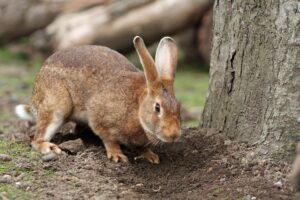
Repellents can provide another layer of protection when fencing an entire garden is impractical. Products containing ingredients such as hot pepper, garlic, dried blood, cloves, cinnamon, or egg solids are among the deterrent ingredients identified by University of Minnesota Extension, although repellents generally require reapplication and performance can vary.
In this guide , we cover 10 practical methods for keeping bunnies out of garden areas, from small-mesh fencing and hardware cloth to repellents, raised beds, plant guards, and landscape management. Each method addresses a different part of rabbit exclusion so you can build a more reliable protection system.
10 Practical Methods For Keeping Bunnies Out Of Garden
1. Chicken Wire Garden Fence – Best Fence for Keeping Bunnies Out of Garden
A properly installed chicken-wire barrier can be the best fence for keeping bunnies out of garden beds because it creates a continuous physical barrier between rabbits and vulnerable crops. Penn State Extension recommends a fence about 2 feet high with the bottom tight to the ground or buried a few inches, while mesh openings of 1 inch or smaller can prevent young rabbits from passing through.

The fence should completely surround the growing area rather than leaving convenient gaps at gates or corners. A small opening at ground level can undermine an otherwise well-built enclosure because rabbits are capable of squeezing through surprisingly narrow spaces.
For vegetable gardens, chicken wire can also be attached to stakes or a simple frame to create a lightweight removable barrier. This makes it practical for seasonal gardens where access is needed for planting, harvesting, and cultivation.
Pros
- Effective exclusion
- Affordable material
- Lightweight construction
- Easy installation
- Small mesh
- Reusable
- Garden friendly
Cons
- Requires installation
- Can bend
- Needs inspection
2. Hardware Cloth – Best Small-Mesh Barrier for Garden Rabbits
Hardware cloth can be the best small-mesh barrier for garden rabbits when greater durability is needed than lightweight poultry wire can provide. Its rigid construction makes it particularly useful around raised beds, young plants, garden edges, and individual shrubs.

A narrow mesh helps prevent small rabbits from pushing through the barrier. Hardware cloth can also be bent into cylinders around individual plants, providing protection without requiring an entire garden enclosure.
University of Minnesota Extension recommends hardware-cloth protection for young trees and shrubs where rabbit browsing is a concern.
Pros
- Durable material
- Small openings
- Resists chewing
- Useful for plants
- Long service life
- Versatile installation
- Good structural support
Cons
- More expensive
- Difficult to cut
- Requires fastening
3. Rabbit-Proof Garden Fence – Best Permanent Fence for Keeping Rabbits Out
A dedicated rabbit-proof fence can be the best permanent fence for keeping rabbits out when rabbit pressure is consistently high. The key is not simply fence height but also mesh size and proper contact with the ground.

Penn State Extension notes that a 2-foot chicken-wire fence can protect a backyard garden when the lower edge is tight against or slightly buried in the soil. More substantial welded wire or similar fencing can provide additional durability and can also keep pets and other animals away from crops.
Permanent fencing becomes especially valuable when rabbits repeatedly damage vegetables, berries, ornamental plants, or newly established shrubs. Inspect the perimeter regularly for lifted edges, damaged mesh, and openings created by digging or garden maintenance.
Pros
- Long-term protection
- Reliable exclusion
- Durable structure
- Protects entire garden
- Low daily maintenance
- Reusable
- Multi-pest protection
Cons
- Higher installation cost
- Requires space
- Needs periodic inspection
4. Raised Garden Bed With Mesh – Best Raised Bed for Keeping Rabbits Out
A raised bed equipped with mesh can be the best raised bed for keeping rabbits out when you want both organized growing space and easier pest exclusion. Raised beds make it relatively straightforward to add fencing or netting around the growing area.

University of Minnesota Extension specifically notes that raised beds can make it easier to add fencing or netting to keep pests such as rabbits away from crops.
The mesh enclosure should extend around the sides rather than simply covering the top. For crops that rabbits can reach from outside the bed, the lower portion of the enclosure is particularly important.
Pros
- Organized garden
- Easy access
- Simple enclosure
- Good crop protection
- Durable options
- Space efficient
- Easy maintenance
Cons
- Initial cost
- Requires assembly
- Limited bed size
5. Plant Guard or Tree Guard – Best Rabbit Protection for Young Plants
A plant or tree guard can be the best rabbit protection for young plants when rabbits are targeting individual shrubs, fruit trees, seedlings, or newly planted landscape specimens. Instead of fencing an entire property, you protect the specific plants that are most vulnerable.

Rabbit browsing is particularly problematic on young woody plants because rabbits can remove bark and clip smaller stems. University of Minnesota Extension recommends physical protection around young trees and shrubs, while noting that rabbit protection may need to extend roughly 1 to 2 feet above the expected snow level in snowy regions.
The guard should be firmly anchored and positioned so rabbits cannot easily reach through to the plant. Leave adequate space between the guard and growing stems so the protection does not interfere with plant development.
Pros
- Protects individual plants
- Easy installation
- Reusable
- Low maintenance
- Good for seedlings
- Protects bark
- Cost efficient
Cons
- Limited coverage
- Requires anchoring
- Needs plant adjustment
6. Rabbit Repellent Spray – Best Rabbit Repellent for Garden Plants
A rabbit repellent spray can be the best rabbit repellent for garden plants when physical fencing is impractical or when additional protection is needed around an existing barrier. Repellent products work primarily through unpleasant tastes or odors rather than physically preventing access.

University of Minnesota Extension identifies hot pepper wax, dried blood, cinnamon, cloves, garlic, and putrescent whole egg solids among ingredients used in animal repellents. The extension guidance also notes that repellents generally need reapplication every few weeks and after heavy rain, depending on the situation.
Repellents should therefore be treated as part of an integrated approach rather than a permanent replacement for exclusion. Always verify that the product is labeled for the intended plants and use it according to the manufacturer’s directions.
Pros
- Easy application
- No fence installation
- Useful for ornamentals
- Portable solution
- Quick deployment
- Multiple formulations
- Useful as backup
Cons
- Needs reapplication
- Rain reduces persistence
- Variable effectiveness
7. Rabbit Repellent Granules – Best Granular Rabbit Deterrent for Gardens
Granular repellents can be the best granular rabbit deterrent for gardens when you want to establish a treated perimeter without spraying plant foliage. They can be particularly convenient around flower beds, ornamental borders, and areas where spraying individual plants would be inconvenient.


Extension guidance identifies granular formulations as one of the common forms of animal repellents and recommends rotating deterrent approaches when repeated animal pressure reduces effectiveness.
Apply granules only according to the product label and keep them away from edible plant parts unless the label specifically permits the application. Reapplication may be necessary following heavy rainfall.
Pros
- Easy application
- No spraying
- Good perimeter use
- Convenient storage
- Quick deployment
- Useful around beds
- Simple maintenance
Cons
- Rain affects performance
- Requires reapplication
- Product dependent
8. Garden Netting – Best Lightweight Rabbit Barrier for Vegetable Gardens
Garden netting can be the best lightweight rabbit barrier for vegetable gardens when you need a flexible material that can cover beds or create temporary exclusion around vulnerable crops. It works particularly well when supported by hoops, stakes, or a simple frame.

The lower edges must be secured carefully because an unsecured section can create an easy entrance underneath. Mesh size should also be small enough to prevent rabbits from passing through.
Netting is particularly useful for seasonal vegetable gardens because it can be removed during cultivation or harvesting and stored between growing periods.
Pros
- Lightweight
- Easy installation
- Flexible material
- Reusable
- Good crop access
- Easy storage
- Seasonal solution
Cons
- Requires support
- Can tear
- Needs secure edges
9. Rabbit-Resistant Garden Plants – Best Plants for Deterring Rabbits Naturally
Selecting less-preferred plants can be the best plants for deterring rabbits naturally when landscape design is part of your long-term pest-management strategy. No plant should be considered universally rabbit-proof because feeding preferences vary with available food, season, and local rabbit pressure.

Using less-preferred ornamental species around the perimeter while protecting highly attractive vegetables and young plants can reduce the amount of vulnerable vegetation immediately available to rabbits. University of Minnesota Extension notes that some plants are less desirable to animals and can be useful in landscapes experiencing recurring animal damage.
Plant selection works best as a supporting method rather than a substitute for fencing when rabbit pressure is substantial. Protect particularly valuable plants individually until they become established.
Pros
- Natural approach
- Improves landscape
- Low equipment needs
- Long-term strategy
- Adds plant diversity
- Attractive garden design
- Supports integrated control
Cons
- Not rabbit-proof
- Requires plant selection
- Takes establishment time
10. Combined Fence and Repellent System – Best Overall Method for Keeping Bunnies Out of Garden
A combined exclusion and deterrent system can be the best overall method for keeping bunnies out of garden areas when rabbit pressure is persistent. Physical fencing provides the primary barrier while repellents and plant protection add another layer around particularly vulnerable areas.

This approach follows the integrated strategy recommended by extension guidance: physical barriers are the primary defense, while repellents can supplement protection when fencing alone is difficult or when additional deterrence is needed.
For a productive vegetable garden, a practical system can include small-mesh fencing around the perimeter, protected gates, individual guards for vulnerable shrubs, and a labeled rabbit repellent where appropriate. Regular inspection is important because even a small gap can eventually become an entry point.
Pros
- Multiple barriers
- Strong exclusion
- Flexible strategy
- Protects crops
- Protects shrubs
- Adaptable system
- Long-term approach
Cons
- Higher initial effort
- More maintenance
- Requires planning
7 Essential Features for Keeping Bunnies Out of Garden
1. Small Mesh
Use mesh openings small enough to prevent young rabbits from passing through. Penn State Extension recommends mesh of about 1 inch or smaller for excluding young rabbits.
2. Secure Ground Contact
The bottom of the fence should sit tightly against the soil or be buried slightly to reduce opportunities for rabbits to push underneath.
3. Adequate Fence Height
A garden barrier around 2 feet high can be effective for rabbits when properly installed.
4. Protected Gates
Do not leave a gap beneath the garden gate. The gate should meet the surrounding fence closely.
5. Strong Anchoring
Use stakes, posts, clips, or other suitable fasteners to keep mesh from being pushed away from the soil.
6. Individual Plant Protection
Use hardware cloth or guards around young trees and shrubs that need protection even when the broader garden is fenced.
7. Regular Inspection
Check for holes, lifted edges, damaged mesh, and vegetation pushing against the fence. Repair openings promptly.
Keeping Bunnies Out Of Garden FAQs
1. What is the best way to keep bunnies out of a garden?
A properly installed physical fence is generally the most reliable method. Small-mesh fencing with the lower edge secured tightly against the ground provides direct exclusion.
2. How high should a rabbit garden fence be?
A fence around 2 feet high can be sufficient for many backyard garden situations when the mesh is appropriately small and the bottom is secured.
3. What size mesh keeps rabbits out?
Mesh openings of about 1 inch or smaller can prevent young rabbits from passing through. Smaller mesh can provide additional exclusion but may cost more.
4. Will chicken wire keep rabbits out of my garden?
Yes, properly installed chicken wire can provide effective rabbit exclusion. The bottom should be tight against the soil or buried slightly, and openings should be small enough to prevent rabbits from squeezing through.
5. Do rabbit repellents work?
Repellents can reduce rabbit damage, but effectiveness varies and they generally require reapplication. University of Minnesota Extension recommends repellents as a supplementary strategy when fencing is not practical or when additional protection is needed.
6. How do I protect young fruit trees from rabbits?
Use a cylindrical guard made from suitable small-mesh hardware cloth around the trunk or plant. The protection should extend high enough to prevent rabbits from reaching the vulnerable bark.
7. What does rabbit damage look like?
Rabbit feeding commonly produces clean, sharp cuts on small stems, often at approximately a 45-degree angle, along with bark removal on young woody plants. Small round rabbit droppings near damaged plants can also help confirm rabbit activity.
Conclusion
In conclusion, keeping bunnies out of garden areas is most reliable when physical exclusion is the foundation of the management program. A properly installed small-mesh fence can protect an entire garden while individual guards provide additional protection for young trees and shrubs.
The best overall approach is a secure garden fence combined with targeted protection for vulnerable plants, while the runner-up is a repellent-based strategy when fencing is impractical. Repellents are most useful as supplementary protection because weather and repeated exposure can reduce their effectiveness.
For vegetable gardens, pay particular attention to the fence bottom, gate openings, and mesh size because these details determine whether rabbits can enter. For young woody plants, protect the stems and bark before rabbits establish a regular feeding pattern.
Ultimately, successful rabbit management comes down to exclusion, inspection, and consistency. Install the barrier correctly, repair openings promptly, and use labeled repellents or individual plant guards when additional protection is needed.
Recent Posts
Spring fertilization supports healthy leaf development, root activity, and productive shoot growth when apple trees have insufficient soil nutrients. Selecting an appropriate fertilizer requires...
Cucumbers (Cucumis sativus) are vigorous, fast-growing vines that can produce abundant harvests when their roots receive enough water, warmth, and balanced nutrition. The best fertilizer for cukes in...