Knowing how to tell if a watermelon is sweet or not can save you from cutting open a bland, underripe melon. The most reliable clues include the field spot, weight, shape, stem condition, webbing, and overall appearance of the fruit.
A sweet watermelon should generally feel heavy for its size because mature fruit contains substantial water. The yellow field spot is also useful because it shows where the watermelon rested against the ground while developing.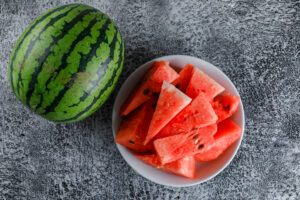
Other external characteristics can provide additional clues, although no single sign guarantees sweetness. Variety, growing conditions, pollination, maturity, weather, and harvest timing all influence the final flavor and sugar concentration.
In this guide , we explain 10 of the best ways to tell if a watermelon is sweet or not before buying it. By combining several physical indicators instead of relying on one characteristic, you can make a more informed selection at the market or grocery store.
How Can I Tell If A Watermelon Is Sweet Or Not? 10 Best Ways
1. Look for a Large Creamy-Yellow Field Spot – Best Way to Pick a Sweet Watermelon
Looking for a large creamy-yellow field spot is the best way to pick a sweet watermelon when you are selecting fruit without cutting it open. The field spot is the area of the rind that rested against the ground while the watermelon developed, and a mature fruit commonly develops a noticeable yellow or creamy-colored patch.
A pale white or very light field spot can indicate that the fruit spent less time developing on the ground or was harvested at a different maturity stage. A deeper creamy-yellow spot is generally considered a useful maturity indicator when combined with other signs.
The spot does not need to be perfectly circular or uniform. Its size and color can vary according to the watermelon variety and how the fruit rested during development.
However, the field spot should be treated as one clue rather than a guarantee of sweetness. A watermelon can have a good field spot and still vary in flavor because sweetness depends on cultivar and growing conditions.
Pros
- Easy to inspect
- No cutting required
- Useful maturity clue
- Works at markets
- Quick selection method
- Simple for beginners
- No equipment needed
Cons
- Not a sweetness guarantee
- Color varies by variety
- Appearance can be misleading
2. Choose a Heavy Watermelon – Best Way to Find a Sweet Watermelon by Weight
Choosing a heavy watermelon for its size is the best way to find a sweet watermelon by weight when comparing several fruits of similar dimensions. A watermelon contains a large amount of water, so a mature fruit that feels unusually heavy can be a useful sign of good hydration and substantial flesh.
Place two similarly sized watermelons in your hands and compare their weight. The heavier fruit is often the more attractive choice when other maturity characteristics are similar.
Weight alone, however, does not directly measure sugar concentration. A heavy watermelon can still be bland if the cultivar, growing conditions, or harvest maturity were unfavorable.
Use weight together with the field spot, rind appearance, shape, and stem condition. Combining multiple indicators gives you a better assessment than relying on weight alone.
Pros
- Very easy method
- Works before cutting
- Requires no equipment
- Useful at grocery stores
- Quick comparison
- Suitable for beginners
- Helps assess maturity
Cons
- Does not measure sugar
- Large fruit naturally weighs more
- Water content varies
3. Check the Stem – Best Way to Tell If a Watermelon Is Ripe and Sweet
Checking the stem is the best way to tell if a watermelon is ripe and sweet when the fruit still has a visible stem attached. A dry, brownish stem can indicate that the fruit has reached a later stage of maturity, while a very green stem may suggest that it was harvested relatively recently.
Watermelons do not continue ripening in the same way as climacteric fruits such as bananas or pears. Consequently, harvest maturity is particularly important when evaluating watermelon quality.
A dried stem can therefore provide useful information about when the fruit was detached from the plant. It should not, however, be interpreted as proof that the watermelon has a high sugar concentration.
Stem appearance is most useful when combined with the field spot and overall rind characteristics. If the stem is unavailable because it was removed during harvesting or handling, use the other indicators instead.
Pros
- Easy to inspect
- Indicates harvest condition
- No cutting required
- Useful maturity clue
- Quick assessment
- Works with other indicators
- Requires no equipment
Cons
- Stem may be removed
- Does not directly measure sweetness
- Appearance changes after harvest
4. Look for Brown Webbing – Best Way to Pick a Sweet Watermelon Without Cutting It
Looking for prominent brown webbing is the best way to pick a sweet watermelon without cutting it when you want another visual maturity clue. Webbing refers to brown, rough, or net-like markings on the rind that can develop as the fruit grows.
These markings are sometimes associated with pollination and fruit development, although they should not be treated as a direct measurement of sugar content. Their presence can vary considerably among cultivars.
A watermelon with noticeable webbing may be worth considering when other characteristics also suggest good maturity. The markings can be especially useful when comparing fruits that otherwise appear similar.
Avoid assuming that the watermelon with the most webbing will always be the sweetest. Variety, growing environment, and harvest maturity have a much greater influence on final eating quality than any single external marking.
Pros
- Easy visual clue
- No cutting required
- Useful for comparison
- Quick inspection
- Works at markets
- No equipment needed
- Can support other indicators
Cons
- Not a direct sweetness test
- Variety affects markings
- Not always present
5. Examine the Rind Color – Best Way to Choose a Sweet Ripe Watermelon
Examining the rind is the best way to choose a sweet ripe watermelon when you want to assess overall maturity from the outside. A mature watermelon generally develops a more established contrast between its lighter and darker rind areas, although the exact appearance depends heavily on cultivar.
The rind should generally look healthy and well developed rather than unusually pale, damaged, or prematurely green. On striped varieties, clear contrast between the stripes can make the fruit appear more mature.
A duller, less shiny surface is sometimes considered a useful maturity clue compared with a very glossy immature-looking rind. However, rind appearance varies significantly among watermelon types.
Because color is cultivar-dependent, never judge sweetness using rind color alone. Use it alongside weight, field spot, shape, and stem condition for a more reliable selection.
Pros
- Easy to inspect
- No cutting required
- Works on whole fruit
- Useful maturity clue
- Quick method
- No equipment needed
- Suitable for beginners
Cons
- Cultivar affects color
- Not a sweetness measurement
- Visual judgment varies
6. Choose a Uniformly Shaped Fruit – Best Way to Select a Sweet Watermelon
Choosing a uniformly shaped fruit is the best way to select a sweet watermelon when you want to avoid fruit that may have experienced uneven development. A symmetrical watermelon with consistent shape can indicate relatively uniform growth conditions during fruit development.
Look for a fruit that is reasonably symmetrical for its variety without pronounced indentations, irregular swelling, or major deformities. Different watermelon cultivars naturally have different shapes, so a long watermelon should not automatically be considered inferior to a round one.
Uneven fruit development can result from environmental conditions, pollination problems, or other factors. Shape therefore provides useful information about general fruit development rather than directly indicating sugar concentration.
When comparing two fruits of the same variety, a well-formed watermelon with good weight and a strong field spot can be a sensible choice.
Pros
- Easy to inspect
- No cutting required
- Indicates uniform growth
- Quick comparison
- Works with other clues
- No equipment needed
- Useful for beginners
Cons
- Shape varies by cultivar
- Does not measure sweetness
- Irregularity has multiple causes
7. Listen for a Deep Hollow Sound – Best Way to Check Watermelon Sweetness by Tapping
Listening for a deep hollow sound is the best way to check watermelon sweetness by tapping when other external clues are inconclusive. Gently tapping the rind is traditionally used to assess watermelon maturity, with a mature fruit often producing a deeper, more resonant sound.
An immature or overly firm fruit may produce a different sound, although interpreting the difference requires practice. The sound is affected by the fruit’s internal structure, rind thickness, flesh condition, and water content.
Because sound is highly subjective, tapping should never be treated as a scientific sweetness test. Two people can tap the same watermelon and interpret the sound differently.
If you use this method, compare several fruits of similar size and variety rather than trying to judge one watermelon in isolation. Combine the sound with weight and field-spot color for a more informed selection.
Pros
- No cutting required
- Quick method
- Requires no equipment
- Useful comparison tool
- Easy to perform
- Works at markets
- Non-destructive
Cons
- Subjective
- Requires experience
- Does not measure sugar
8. Check for a Dry Tendril – Best Way to Tell If a Watermelon Is Mature
Checking the tendril is the best way to tell if a watermelon is mature when a portion of the vine remains attached and the tendril is visible. On watermelon plants, the tendril closest to the fruit can dry and turn brown as the fruit approaches maturity.
A green, actively growing tendril may indicate that the plant is still actively developing the fruit. A dry or brown tendril can therefore provide a useful field-level maturity clue.
This method is particularly valuable for gardeners harvesting watermelons directly from their own plants because they can inspect the fruit and surrounding vine before picking. It is much less useful when buying commercially harvested fruit because the vine and tendrils are usually removed.
Even when the tendril has dried, harvest timing can vary according to variety and growing conditions. Use it alongside the fruit’s field spot and overall appearance.
Pros
- Excellent for home growers
- Indicates maturity
- Easy field inspection
- No equipment needed
- Non-destructive
- Useful before harvest
- Works with other clues
Cons
- Usually absent at stores
- Not a direct sweetness test
- Variety affects maturity timing
9. Look for a Well-Developed Yellow Belly – Best Way to Choose a Sweet Watermelon at the Store
Looking for a well-developed yellow belly is the best way to choose a sweet watermelon at the store when you want to combine the field-spot method with overall fruit appearance. The underside should show a noticeable creamy or yellow area where the fruit rested against the soil.
The color can range from pale yellow to a deeper creamy-yellow depending on variety and growing conditions. A developed yellow belly generally provides more useful maturity information than a completely white ground spot.
Inspect the entire underside rather than focusing only on a tiny patch. A substantial, clearly visible field spot is generally easier to interpret than a very small discoloration.
Remember that the yellow belly indicates fruit development conditions rather than directly measuring sugar. Pair it with weight and other maturity clues before making your final choice.
Pros
- Easy store inspection
- No cutting required
- Useful maturity clue
- Quick comparison
- No equipment needed
- Works across many varieties
- Beginner friendly
Cons
- Color varies
- Not a sugar measurement
- Can be confused with damage
10. Combine Several Signs – Best Overall Way to Tell If a Watermelon Is Sweet
Combining several maturity indicators is the best overall way to tell if a watermelon is sweet because no external characteristic can guarantee the sugar level inside the fruit. A strong selection can combine a substantial creamy-yellow field spot, heavy weight for its size, mature-looking rind, appropriate shape, and a dry stem or tendril when available.
Start by comparing watermelons of similar size and variety. Choose one that feels heavy, has a well-developed field spot, appears healthy and mature, and does not show significant bruising, cuts, soft areas, or other damage.
You can also use tapping as an additional clue, but it should receive less importance than observable characteristics such as weight and field-spot development. When several independent signs point toward maturity, the likelihood of selecting a well-developed fruit improves.
Ultimately, sweetness depends on genetics and growing conditions as well as harvest maturity. External inspection can improve your odds, but there is no reliable way to determine the exact sugar concentration of an intact watermelon simply by looking at or tapping it.
Pros
- Most comprehensive method
- Uses multiple clues
- No cutting required
- Works for store shopping
- Easy to learn
- Reduces guesswork
- No equipment needed
Cons
- Not guaranteed
- Requires several observations
- Sugar level remains unknown
7 Essential Features to Consider When Choosing a Sweet Watermelon
1. Field Spot
Look for a substantial creamy-yellow or yellow field spot rather than relying on a completely white ground spot. The field spot is one of the most useful visual clues for assessing watermelon maturity.
2. Weight
Choose a watermelon that feels heavy for its size. Comparing similarly sized fruits can make this characteristic easier to evaluate.
3. Stem
When a stem remains attached, a dry or brown stem can provide useful information about harvest maturity. A green stem may indicate a more recently harvested fruit, although neither condition guarantees sweetness.
4. Shape
Select a well-developed fruit with a shape appropriate for its cultivar. Avoid making assumptions based solely on whether the fruit is round, oval, or elongated.
5. Rind
Examine the overall rind for healthy coloration, strong pattern development, and the absence of serious damage. Rind characteristics vary among varieties, so use them as supporting evidence.
6. Webbing and Markings
Brown webbing and other surface markings can provide additional clues about fruit development. However, these characteristics should never outweigh more useful indicators such as maturity and weight.
7. Overall Condition
Avoid watermelons with soft spots, deep bruises, cracks, leaking areas, mold, or other signs of deterioration. A mature watermelon still needs to be sound and properly handled to provide good eating quality.
How Can I Tell If A Watermelon Is Sweet Or Not FAQ’S
1. How can I tell if a watermelon is sweet before cutting it?
Look for a large creamy-yellow field spot, choose a fruit that feels heavy for its size, examine the stem when available, and select a healthy, well-developed watermelon. Combining several indicators is more useful than relying on one sign.
2. What color field spot means a watermelon is sweet?
A creamy-yellow to yellow field spot is generally a useful sign of maturity. A very pale or white field spot may indicate that the fruit has a different maturity history, but field-spot color alone cannot guarantee sweetness.
3. Should a watermelon be heavy or light?
A watermelon should generally feel heavy for its size. Comparing similarly sized fruits can help you identify one with substantial water content and good development.
4. Does tapping a watermelon tell you if it is sweet?
Tapping can provide a traditional maturity clue, but it does not directly measure sugar content. A deep, resonant sound is commonly associated with a mature watermelon, but the technique is subjective and should be combined with other indicators.
5. What does webbing on a watermelon mean?
Brown webbing consists of rough or net-like markings that can develop on the rind during fruit growth. It may provide a useful visual clue, but webbing does not directly determine the sugar concentration of the flesh.
6. Is a yellow belly better than a white belly on a watermelon?
A developed creamy-yellow or yellow belly is generally considered a more useful maturity indicator than a very pale white field spot. However, variety and growing conditions influence the appearance of the field spot.
7. Can you tell exactly how sweet a watermelon is without cutting it?
No. External characteristics can help identify a mature, well-developed watermelon, but they cannot reliably determine its exact sugar concentration. Sweetness is influenced by cultivar, growing conditions, maturity, and harvest timing.
Conclusion
In conclusion, learning how to tell if a watermelon is sweet or not involves examining several characteristics instead of depending on a single trick. A heavy fruit with a well-developed creamy-yellow field spot, healthy rind, appropriate shape, and other signs of maturity is generally a more informed selection.
The best approach is to combine weight, field-spot color, stem condition, rind appearance, shape, and other maturity clues. Tapping can be used as an additional observation, but it should not be treated as a definitive sweetness test.
When buying watermelon, compare fruits of similar size and variety whenever possible. Avoid damaged or deteriorating fruit, and remember that external appearance cannot reveal the exact sugar concentration inside the flesh.
For home growers, the presence of a dry tendril near the fruit can provide an additional harvest-maturity clue. By combining field observations with fruit appearance, gardeners can improve their chances of harvesting watermelon at an appropriate stage and enjoying better flavor.
Recent Posts
Spring fertilization supports healthy leaf development, root activity, and productive shoot growth when apple trees have insufficient soil nutrients. Selecting an appropriate fertilizer requires...
Cucumbers (Cucumis sativus) are vigorous, fast-growing vines that can produce abundant harvests when their roots receive enough water, warmth, and balanced nutrition. The best fertilizer for cukes in...