Creating a comfortable entrance starts with choosing the right roof structure, and Front Porch Cover Ideas can help turn an exposed doorway into a practical outdoor living space. A well-designed porch cover provides protection from rain and intense sunlight while improving the architectural character of the home’s exterior.
The most effective designs consider more than appearance because roof pitch, drainage, structural support, ventilation, and material durability all affect performance. Timber, metal, polycarbonate, glass, and traditional roofing materials can each create a different appearance while offering distinct advantages in different climates.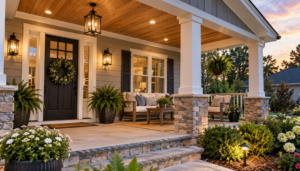
A porch cover should also complement the proportions and architectural style of the house rather than appearing like an afterthought. Small canopies work well for compact entrances, while larger covered porches can accommodate seating, lighting, plants, and other outdoor features.
In this guide , we explore 10 Front Porch Cover Ideas that combine practical weather protection with attractive architectural design, covering different materials, roof styles, space requirements, and maintenance considerations.
10 Best Front Porch Cover Ideas
1. Lean-To Porch Roof – Best simple front porch cover idea for rain protection
A lean-to porch roof is one of the most practical front porch cover ideas because its single slope provides straightforward protection while keeping the structure relatively simple. The inclined roof plane uses gravity to move rainwater toward the outer edge, where gutters can collect and redirect runoff away from the entrance.
The design works particularly well against existing exterior walls because the rear portion can connect to the house while the front is supported by posts or suitable structural framing. Moreover, the relatively simple geometry reduces complicated roof intersections that can become potential leakage points.
A lean-to roof can accommodate metal sheets, shingles, tiles, or polycarbonate depending on the desired appearance and climate. Therefore, it is an excellent choice for homeowners seeking a simple covered porch that improves weather protection without dramatically changing the home’s architecture.
Pros:
- Simple structure
- Effective drainage
- Easy integration
- Versatile roofing
- Affordable construction
- Good protection
- Space efficient
Cons:
- Basic appearance
- Limited headroom
- Requires flashing
2. Gable Porch Roof – Best front porch cover idea for traditional homes
A gable porch roof is the best front porch cover idea for traditional homes because its pitched profile creates a strong architectural focal point above the entrance. Two sloping roof planes distribute rainwater toward opposite sides, while the central ridge provides additional vertical volume beneath the structure.
The increased height can improve air circulation and make the porch feel more spacious than a low canopy. In addition, the triangular gable face provides an opportunity for timber detailing, decorative brackets, vents, or contrasting exterior materials.
The roof can be matched to the home’s existing roofing system for a cohesive appearance. Consequently, this design is particularly effective where the objective is to create a substantial entrance with traditional architectural character.
Pros:
- Strong character
- Excellent drainage
- Spacious feel
- Good ventilation
- Traditional styling
- Flexible detailing
- Weather protection
Cons:
- Higher cost
- Complex framing
- More materials
3. Polycarbonate Porch Canopy – Best front porch cover idea for natural light
A polycarbonate porch canopy is the best front porch cover idea for natural light because its translucent or transparent panels allow daylight to pass through while shielding the entrance from precipitation. The polymer structure provides impact resistance while the panel geometry creates channels that direct water toward the drainage edge.
Unlike opaque roofing, polycarbonate minimizes the amount of daylight lost beneath the porch. Additionally, UV-resistant formulations can reduce material degradation caused by prolonged solar exposure, making panel specification important for long-term outdoor performance.
The lightweight nature of polycarbonate can simplify the structural requirements of smaller canopy systems. Therefore, it is particularly useful for dark entrances, narrow porches, and contemporary homes where maintaining daylight is a priority.
Pros:
- Natural daylight
- Lightweight panels
- Rain protection
- Modern appearance
- Easy cleaning
- UV options
- Flexible design
Cons:
- Can yellow
- Heat buildup
- Scratches easily
4. Timber Pergola Cover – Best front porch cover idea for natural aesthetics
A timber pergola is the best front porch cover idea for natural aesthetics because exposed wood introduces warmth and texture around the entrance. Its open rafters filter solar radiation rather than completely blocking it, creating partial shade while maintaining airflow through the structure.
Timber beams can be arranged according to the desired shading density and architectural proportions. Furthermore, climbing plants can eventually use the structure as a support system, creating additional shade through foliage while integrating the porch with surrounding landscaping.
Exterior timber must be properly selected and protected because repeated wetting and drying can cause dimensional movement, while moisture can encourage fungal deterioration. As a result, appropriate treatment, drainage, and periodic maintenance are essential for a durable natural-looking porch structure.
Pros:
- Natural appearance
- Excellent airflow
- Partial shading
- Garden integration
- Customizable design
- Warm character
- Repairable material
Cons:
- Needs sealing
- Moisture sensitive
- Regular maintenance
5. Metal Porch Canopy – Best front porch cover idea for modern durability
A metal porch canopy is the best front porch cover idea for modern durability because steel or aluminum can provide substantial structural strength with relatively slim profiles. Metal transfers roof loads efficiently through beams and posts, while protective coatings can reduce corrosion caused by moisture and environmental exposure.
Steel is particularly useful where structural rigidity is important, whereas aluminum offers lower weight and strong corrosion resistance. In addition, powder-coated finishes allow the frame and roof components to coordinate with doors, windows, gutters, and exterior trim.
The clean geometry of metal works especially well with contemporary architecture. Therefore, a properly detailed metal canopy can provide long-term weather protection with a minimalist architectural appearance.
Pros:
- Strong structure
- Slim profiles
- Modern appearance
- Weather resistant
- Low maintenance
- Custom finishes
- Long lifespan
Cons:
- Can corrode
- Heat transfer
- Installation costs
6. Tiled Porch Extension – Best front porch cover idea for matching existing roofs
A tiled porch extension is the best front porch cover idea for matching existing roofs because the same roofing material can visually connect the new structure to the original building. The overlapping tiles form a weather-resistant surface that sheds water through gravity while the roof underlayment provides an additional moisture barrier.
The heavier construction can produce a substantial, permanent appearance that suits traditional houses particularly well. Moreover, matching tile profiles and colors can make the extension appear integrated rather than visually separate from the main structure.
Because roofing tiles impose significant dead load compared with lightweight canopy materials, structural design is critical. Consequently, this option is best suited to homeowners seeking a permanent porch extension with strong architectural continuity.
Pros:
- Excellent continuity
- Durable roofing
- Traditional appearance
- Strong weather protection
- Long service
- Multiple styles
- Solid construction
Cons:
- Heavy structure
- Higher installation
- Structural planning
7. Retractable Awning – Best front porch cover idea for flexible shade
A retractable awning is the best front porch cover idea for flexible shade because its fabric or membrane can be extended when protection is required and retracted when an open view is preferred. The adjustable geometry allows homeowners to control solar exposure without permanently covering the entire entrance.
Fabric selection affects performance because tightly woven exterior materials can reduce solar transmission while specialized coatings improve resistance to water and ultraviolet radiation. In addition, the retractable mechanism allows the system to be stored during severe weather when appropriate.
This solution requires less permanent structural intervention than a full roof extension. Therefore, it works particularly well for homeowners who want adjustable shade and occasional rain protection without constructing a fixed porch roof.
Pros:
- Adjustable coverage
- Flexible shading
- Space efficient
- Many colors
- Easy operation
- Minimal structure
- Modern options
Cons:
- Wind sensitive
- Fabric maintenance
- Limited rain protection
8. Glass Porch Roof – Best front porch cover idea for premium modern entrances
A glass porch roof is the best front porch cover idea for premium modern entrances because it provides overhead weather protection while preserving visual openness and daylight. Laminated or appropriately specified safety glass can provide a transparent barrier without creating the opaque appearance associated with conventional roofing.
The frame must transfer the glass load and environmental forces safely into the supporting structure. Furthermore, drainage and flashing around the wall connection are essential because transparent roofing does not eliminate the need for conventional weatherproofing principles.
Solar-control glazing can help manage heat where the porch receives intense sunlight. As a result, glass works particularly well for contemporary homes where natural light and architectural sophistication are major priorities.
Pros:
- Maximum daylight
- Premium appearance
- Weather protection
- Open visual feel
- Easy cleaning
- Modern styling
- Long service
Cons:
- Expensive
- Heavy material
- Requires expertise
9. Corrugated Metal Porch Roof – Best front porch cover idea for budget durability
A corrugated metal roof is the best front porch cover idea for budget durability because its profiled sheet structure provides rigidity while using relatively little material. The raised ribs increase resistance to bending, allowing lightweight sheets to span greater distances than a completely flat sheet of comparable thickness.
Modern coated roofing sheets can provide strong resistance to moisture and ultraviolet exposure. Additionally, the corrugated profile creates channels that move rainwater efficiently toward the lower roof edge when installed with an appropriate pitch.
The material is available in numerous finishes and colors, making it adaptable to different exterior styles. Therefore, corrugated metal is a practical solution for homeowners prioritizing affordability, weather resistance, and straightforward construction.
Pros:
- Affordable roofing
- Lightweight sheets
- Strong profile
- Fast installation
- Good drainage
- Many finishes
- Durable coating
Cons:
- Rain noise
- Can dent
- Needs insulation
10. Timber-and-Metal Porch – Best front porch cover idea for modern natural style
A timber-and-metal porch is the best front porch cover idea for modern natural style because it combines the structural efficiency of metal with the visual warmth of wood. Metal framing can provide rigid support, while timber posts, beams, or soffits introduce natural texture around the entrance.
The combination also creates useful material contrast without requiring complicated ornamentation. Moreover, protective metal coatings and properly treated timber can give the structure strong resistance to ordinary outdoor exposure when drainage and connections are correctly detailed.
This hybrid approach suits contemporary homes particularly well because it balances industrial precision with natural materials. Overall, it is an excellent option for homeowners wanting a distinctive porch that feels modern without appearing cold or overly commercial.
Pros:
- Material contrast
- Modern styling
- Strong framing
- Natural warmth
- Customizable design
- Durable structure
- Premium appearance
Cons:
- Higher cost
- Timber upkeep
- Complex detailing
How to Choose the Right Front Porch Cover
The right porch cover should be selected according to function first and appearance second. A beautiful structure will still be disappointing if it fails to protect the entrance from the weather or creates drainage problems.
Consider the Roof Pitch
Roof pitch affects how quickly water leaves the roof surface.
A steeper roof generally sheds rainfall efficiently, while low-slope systems require carefully designed waterproofing and drainage.
Consider Sun Exposure
The orientation of the front entrance affects how much direct sunlight reaches the porch.
A deep roof overhang can provide useful shade, while pergolas and retractable systems allow more flexible solar control.
Think About Drainage
Every roof needs a deliberate water-management strategy.
Gutters, downspouts, flashing, and appropriate roof falls prevent water from being discharged directly against walls, pathways, and foundations.
Match the Architecture
A porch cover should complement the existing building.
Traditional houses often work well with gable roofs and tiles, while modern homes can accommodate flat canopies, metal frames, glass, and minimalist structures.
Consider Maintenance
Timber may require periodic sealing or staining, while metal needs inspection for corrosion and polycarbonate may require cleaning to maintain clarity.
Choosing a material based solely on appearance can result in unnecessary maintenance later.
Small Front Porch Cover Ideas
A small entrance does not require a large roof extension.
A compact canopy can provide substantial protection when correctly positioned above the doorway. Lean-to roofs, small gable canopies, polycarbonate panels, and retractable awnings are particularly useful where space is limited.
Keep the structure proportional to the façade. Oversized roofs can make a small entrance appear crowded, while a carefully scaled canopy can make the doorway look more intentional.
Front Porch Covers for Rain
Rain protection depends on roof depth, pitch, drainage, and wind exposure.
A roof that is too shallow or narrow may allow wind-driven rain to reach the door even though the canopy technically covers it.
For areas receiving heavy rainfall, consider a permanent pitched roof with gutters and downspouts. Side screens can also help where rainfall commonly arrives from the side.
Front Porch Covers for Shade
Shade is particularly important where the entrance receives strong afternoon or midday sunlight.
Solid roofs provide the strongest shade, while pergolas filter sunlight and maintain greater visual openness.
Retractable awnings offer another option because their coverage can be adjusted throughout the day.
For transparent roofs, solar-control materials can help reduce excessive heat beneath the structure.
Front Porch Cover Materials Compared
| Material | Best For | Maintenance | Appearance |
|---|---|---|---|
| Timber | Natural designs | Moderate | Warm |
| Steel | Modern structures | Low–Moderate | Contemporary |
| Aluminum | Lightweight canopies | Low | Modern |
| Polycarbonate | Natural light | Low | Contemporary |
| Glass | Premium entrances | Moderate | High-end |
| Tiles | Traditional homes | Moderate | Classic |
| Fabric | Flexible shade | Moderate | Versatile |
No single material is ideal for every property.
The best choice depends on the combination of weather exposure, architectural style, budget, structural requirements, and maintenance expectations.
Common Mistakes to Avoid When Choosing Front Porch Cover Ideas
Making the Porch Too Small
A roof that barely extends beyond the door may provide insufficient weather protection.
Ignoring Drainage
Roof water should never simply fall against the house foundation.
Choosing Style Over Function
A visually attractive canopy still needs appropriate structural and weatherproofing details.
Blocking Too Much Light
Large opaque structures can make an entrance unnecessarily dark.
Using Untreated Timber
Exterior timber needs protection appropriate to its exposure and species.
Forgetting Wind
Lightweight structures and retractable systems need to be appropriate for local wind conditions.
Poor Wall Connections
The point where the porch roof meets the building is particularly important for preventing water penetration.
Front Porch Cover Ideas FAQ’S
1. What is the best material for a front porch cover?
The best material depends on the home’s architecture and environmental conditions. Timber offers warmth, metal provides durability, polycarbonate preserves daylight, and glass creates a premium contemporary appearance.
2. What is the cheapest way to cover a front porch?
A simple lean-to canopy or basic metal awning is often less complicated than a full porch extension. Actual costs depend on size, structural requirements, roofing material, labor, and drainage.
3. How far should a front porch roof extend?
The roof should extend far enough to protect the doorway and immediate standing area from normal rainfall and direct sunlight. Local wind conditions and the roof’s pitch also influence the required projection.
4. Can a front porch cover be attached directly to the house?
Yes, some porch covers can be attached directly to suitable structural elements of the building. The wall and connection must be capable of safely carrying the additional loads.
5. Are polycarbonate porch roofs good?
Yes, polycarbonate is particularly useful when you want rain protection without sacrificing natural light. UV-resistant grades and appropriate installation details can improve long-term performance.
6. Which porch roof is best for heavy rain?
A properly pitched permanent roof with effective flashing, gutters, and downspouts generally provides excellent rain protection. Greater roof projection and side protection can further improve performance in exposed locations.
7. Do front porch covers need planning permission?
Requirements vary according to location, size, construction method, property type, and local regulations. Check applicable planning and building requirements before constructing a permanent porch structure.
Conclusion
In conclusion, the best front porch cover idea is the gable porch roof because it combines strong weather protection, effective drainage, generous overhead space, and architectural character, while the runner-up is the timber-and-metal porch because it balances structural durability with natural warmth and contemporary styling. Both designs stand out because they can transform an ordinary entrance into a more functional and visually cohesive part of the home.
Choosing between these designs depends on the available space, architectural style, climate, maintenance requirements, and the way the porch will be used. A compact entrance may benefit from a simple lean-to or polycarbonate canopy, while a larger home can accommodate a more substantial roof extension.
The most successful porch projects also pay close attention to drainage, roof pitch, structural connections, ventilation, sunlight, and material durability. These details determine whether the finished structure remains attractive and reliable long after installation.
Start planning your porch by measuring the available space and identifying the type of protection your entrance needs most. Choose a design and material that complement your home, then invest in proper structural and drainage detailing to create a durable, comfortable, and attractive covered entrance.
Recent Posts
Spring fertilization supports healthy leaf development, root activity, and productive shoot growth when apple trees have insufficient soil nutrients. Selecting an appropriate fertilizer requires...
Cucumbers (Cucumis sativus) are vigorous, fast-growing vines that can produce abundant harvests when their roots receive enough water, warmth, and balanced nutrition. The best fertilizer for cukes in...