Choosing the best herbicide for Scotch Thistle is essential for effective weed management in agricultural systems and grazing lands. Scotch Thistle (Onopordum acanthium) is a highly invasive species that rapidly colonizes disturbed soils and outcompetes desirable vegetation.
Scotch Thistle (Onopordum acanthium) is an aggressive weed produces thousands of seeds per plant, which remain viable in soil for years and contribute to persistent infestations. Its spiny foliage also reduces pasture usability, limiting livestock grazing efficiency and overall land productivity.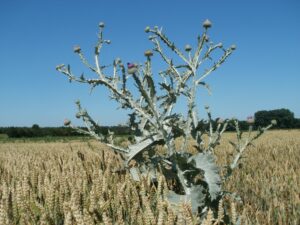
Effective Scotch Thistle control requires a strategic approach that combines correct herbicide selection with proper timing and application techniques. Without a targeted solution, infestations can escalate quickly and become significantly more difficult to manage.
In this guide , we will explore the 10 Best Herbicide For Scotch Thistle and most effective solutions , focusing on their active ingredients, application methods, and suitability for different environments. Whether you are managing large agricultural fields or small infested areas, this article will help you choose the right herbicide for Scotch Thistle control.
10 Best Herbicide For Scotch Thistle
1. 2,4-D Amine – Best selective broadleaf herbicide for Scotch Thistle in pastures
2,4-D Amine is the best selective broadleaf herbicide for Scotch Thistle in pastures, designed to target dicot weeds without harming grasses. It functions by mimicking plant growth hormones, specifically auxins, which disrupt normal cell division. As a result, the plant undergoes uncontrolled growth leading to vascular collapse. Therefore, it effectively eliminates Scotch Thistle while preserving pasture integrity.
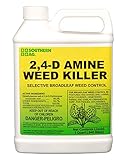
The herbicide is absorbed through foliage and translocated via the phloem to the root system, ensuring systemic action. Apply 2,4-D Amine at a rate of 1–2 quarts per acre during the rosette stage for optimal effectiveness. Additionally, using a non-ionic surfactant enhances leaf penetration and improves uptake efficiency. Avoid application during extreme heat or drought because plant metabolism slows, reducing herbicide movement.
University trials have shown that 2,4-D Amine achieves 85–90% control when applied correctly at early growth stages. This makes it highly reliable for large-scale infestations across pastures and rangelands. Furthermore, its affordability increases accessibility for farmers managing extensive acreage. Overall, it remains a foundational herbicide in integrated weed management programs.
Pros:
- Selective action
- Affordable
- Systemic control
- Grass safe
- Widely available
- Proven results
- Easy mixing
Cons:
- Timing sensitive
- Repeat needed
- Drift risk
2. Milestone – Best systemic herbicide for Scotch Thistle long-term control
Milestone is the best systemic herbicide for Scotch Thistle long-term control due to its aminopyralid active ingredient. This compound disrupts plant growth by interfering with auxin regulation, causing abnormal cell elongation. Consequently, the weed loses structural integrity and collapses internally. It is highly effective even at low application rates.
Milestone provides both foliar absorption and soil residual activity, which prevents new seedling establishment. Apply at 5–7 fluid ounces per acre during the rosette to early bolting stage for maximum efficacy. Additionally, the herbicide becomes rainfast within two hours, ensuring consistent performance. Its residual activity allows continued control for several months after application.
Field data demonstrates up to 95% control of Scotch Thistle, even in dense infestations. This high level of effectiveness reduces the need for repeated applications. Furthermore, its low use rate improves cost efficiency over time. Therefore, Milestone is ideal for land managers seeking long-term suppression.
Pros:
- Residual control
- Low rate
- Highly effective
- Rainfast quick
- Long-lasting
- Systemic action
- Broad spectrum
Cons:
- Soil persistence
- Grazing limits
- Sensitive plants
3. Tordon 22K – Best herbicide for severe Scotch Thistle infestations
Tordon 22K is the best herbicide for severe Scotch Thistle infestations because it contains picloram, a potent systemic compound. Picloram disrupts plant hormone balance, leading to uncontrolled growth and eventual death. As a result, the entire plant including roots is eliminated. It is particularly effective in non-crop areas.
The herbicide moves through both xylem and phloem, ensuring complete distribution within the plant system. Apply at 1–2 pints per acre during the rosette to early bolting stage for optimal results. Additionally, it provides soil residual control that prevents new growth. However, caution is required due to its persistence in soil.
Research indicates up to 98% control when used correctly, making it one of the most powerful options available. This high efficacy makes it suitable for large-scale infestations. Furthermore, it reduces long-term weed pressure significantly. Therefore, it is often used in rangeland management programs.
Pros:
- Extremely potent
- Residual effect
- Systemic kill
- Long control
- High efficacy
- Reliable results
- Large area use
Cons:
- Soil persistence
- Non-selective risk
- Environmental caution
4. GrazonNext HL – Best dual-action herbicide for Scotch Thistle control
GrazonNext HL is the best dual-action herbicide for Scotch Thistle control, combining aminopyralid and 2,4-D. This combination enhances both foliar and root uptake. As a result, it provides a more comprehensive control strategy. It targets multiple growth pathways simultaneously.
The herbicide disrupts auxin regulation while also providing residual soil activity. Apply at 19–34 fluid ounces per acre during early growth stages for best performance. Additionally, it becomes rainfast within two hours, ensuring reliability. This makes it suitable for unpredictable weather conditions.
Field trials show 90–95% control, making it highly dependable. It is widely used in pasture and rangeland management. Furthermore, its dual chemistry reduces resistance development. Therefore, it is an excellent option for integrated weed management.
Pros:
- Dual action
- Strong control
- Residual effect
- Fast rainfast
- Versatile use
- Reliable results
- Broad spectrum
Cons:
- Cost higher
- Sensitive plants
- Application care
5. Transline – Best selective herbicide for Scotch Thistle in sensitive areas
Transline is the best selective herbicide for Scotch Thistle in sensitive areas due to its clopyralid formulation. It targets broadleaf weeds while leaving grasses largely unaffected. The chemical disrupts growth hormones, leading to abnormal development. Consequently, the plant fails to reproduce.
It is absorbed through foliage and transported to roots, ensuring complete kill. Apply at 0.5–1.33 pints per acre during early growth stages. Additionally, it provides moderate residual activity for extended control. This makes it effective in environmentally sensitive zones.
Field trials show approximately 90% control under proper conditions. Its selectivity reduces damage to desirable vegetation. Furthermore, it works well in conservation areas. Therefore, it is ideal for targeted applications.
Pros:
- Selective
- Root control
- Moderate residual
- Grass safe
- Low rate
- Effective
- Reliable
Cons:
- Slower action
- Limited spectrum
- Cost moderate
6. Curtail – Best combination herbicide for Scotch Thistle in crops
Curtail is the best combination herbicide for Scotch Thistle in crop systems due to clopyralid and 2,4-D synergy. This dual mechanism enhances systemic absorption and disrupts plant growth. As a result, it provides consistent control across varying conditions. It is particularly useful in cereal crops.
Apply at 2–4 quarts per acre during early growth stages for best results. Additionally, the herbicide is rainfast within two hours, ensuring performance stability. Its formulation allows both foliar and root targeting. Therefore, it effectively prevents regrowth.
Studies show 85–90% control, making it reliable for agricultural use. It integrates well into crop management programs. Furthermore, it reduces competition from invasive weeds. Overall, it supports crop yield improvement.
Pros:
- Crop safe
- Dual action
- Reliable control
- Easy use
- Fast rainfast
- Proven results
- Versatile
Cons:
- Rate higher
- Repeat needed
- Drift risk
7. Escort XP – Best low-rate herbicide for Scotch Thistle management
Escort XP is the best low-rate herbicide for Scotch Thistle management due to metsulfuron-methyl. This compound inhibits amino acid synthesis, preventing plant growth at the cellular level. As a result, the weed stops developing and eventually dies. It is highly efficient at minimal doses.
Apply at 0.5–1 ounce per acre during early growth stages. Additionally, it provides residual control that limits new weed emergence. The herbicide is absorbed quickly and translocated internally. Therefore, it ensures effective systemic action.
Field trials show around 90% control when used properly. Its low application rate reduces environmental impact. Furthermore, it is cost-effective for large areas. Therefore, it is widely used in rangeland management.
Pros:
- Low rate
- Cost effective
- Systemic action
- Residual effect
- Efficient
- Reliable
- Easy handling
Cons:
- Soil persistence
- Sensitive plants
- Slow visible
8. Roundup Pro Max – Best non-selective herbicide for Scotch Thistle spot treatment
Roundup Pro Max is the best non-selective herbicide for Scotch Thistle spot treatment due to glyphosate. It inhibits the EPSP synthase enzyme, blocking amino acid production. Consequently, the plant cannot produce essential proteins and dies completely. It is effective on all vegetation.
Apply at 22–44 fluid ounces per acre depending on infestation density. Additionally, it is absorbed through foliage and moves to roots. This ensures total plant kill. However, care must be taken to avoid desirable plants.
Field trials show up to 95% control in spot treatments. Its fast action makes it ideal for targeted applications. Furthermore, it is widely available and easy to use. Therefore, it remains a popular option.
Pros:
- Non-selective
- Fast action
- Complete kill
- Easy use
- Widely available
- Reliable
- Effective
Cons:
- Kills all
- Drift risk
- No residual
9. Plateau – Best pre and post-emergent herbicide for Scotch Thistle
Plateau is the best pre and post-emergent herbicide for Scotch Thistle because it contains imazapic. It inhibits acetolactate synthase, stopping amino acid production. As a result, plant growth ceases rapidly. It works on both emerging and established weeds.
Apply at 4–12 fluid ounces per acre depending on severity. Additionally, it provides residual soil activity. This prevents new seedlings from establishing. Therefore, it offers extended control.
Studies show 85–90% control with proper application. Its dual action increases effectiveness. Furthermore, it works well in rangelands. Overall, it is a flexible option.
Pros:
- Dual action
- Residual control
- Flexible use
- Effective
- Reliable
- Systemic
- Long-lasting
Cons:
- Soil persistence
- Rate variable
- Cost moderate
10. Weedmaster – Best broad-spectrum herbicide for Scotch Thistle control
Weedmaster is the best broad-spectrum herbicide for Scotch Thistle control due to dicamba and 2,4-D. This combination disrupts multiple growth pathways. As a result, it enhances weed control efficiency. It is suitable for large-scale applications.
Apply at 1–2 quarts per acre during early growth stages. Additionally, it is rapidly absorbed and translocated. This ensures complete plant control. Therefore, it is highly effective.
Field results show 85–90% control under proper conditions. It is widely used in pasture management. Furthermore, it supports integrated weed control strategies. Overall, it is a dependable option.
Pros:
- Broad spectrum
- Dual action
- Reliable
- Effective
- Systemic
- Easy use
- Proven
Cons:
- Drift risk
- Repeat needed
- Crop caution
Buyer’s Tips for Scotch Thistle Herbicides
Identify Growth Stage
Apply Scotch Thistle Herbicide during the rosette to early bolting stage for best results.
Choose the Right Herbicide
Select Scotch Thistle Herbicide based on the application site – pasture, rangeland, or non-crop areas.
Use Proper Adjuvants
Add non-ionic surfactant to Scotch Thistle Herbicide sprays for better leaf absorption.
Follow Label Rates
Measure Scotch Thistle Herbicide carefully – over-application can harm desirable plants.
Consider Soil Residual
Choose Scotch Thistle Herbicide with soil residual activity for long-term control.
Rotate Modes of Action
Alternate Scotch Thistle Herbicide chemistry to prevent resistance development.
Monitor for Regrowth
Follow up with additional Scotch Thistle Herbicide applications if regrowth occurs.
FAQs – Best Herbicide For Scotch Thistle
1. What is the best herbicide for Scotch Thistle control in pastures?
The best herbicide for Scotch Thistle control in pastures is typically 2,4-D Amine or GrazonNext HL because they selectively target broadleaf weeds without harming grasses.
These herbicides work by disrupting plant growth hormones, leading to systemic death of the weed. For long-term control, products like Milestone provide additional residual activity. Choosing the right herbicide depends on infestation size and management goals.
2. When should I apply herbicide for Scotch Thistle for best results?
The best time to apply herbicide for Scotch Thistle is during the rosette to early bolting stage. At this stage, the plant actively transports nutrients to its roots, which improves herbicide translocation.
Applying too late reduces effectiveness because mature plants are harder to kill. Early application ensures maximum absorption and long-term control.
3. How does systemic herbicide kill Scotch Thistle?
Systemic herbicides for Scotch Thistle are absorbed through the leaves and transported through the plant’s vascular system. They disrupt critical processes such as amino acid synthesis or hormone regulation.
As a result, the plant experiences uncontrolled growth or metabolic failure. This ensures both foliage and root systems are eliminated.
4. What is the best herbicide for large Scotch Thistle infestations?
For large infestations, the best herbicide for Scotch Thistle is Milestone or Tordon 22K due to their high efficacy and soil residual activity. These herbicides provide long-term suppression by preventing new seedlings from emerging.
Additionally, they require fewer repeat applications, making them cost-effective. Proper coverage and timing are essential for maximum results.
5. Can Scotch Thistle become resistant to herbicides?
Yes, Scotch Thistle can develop resistance if the same herbicide mode of action is used repeatedly. Resistance occurs when surviving plants pass on tolerant traits to new generations.
To prevent this, rotate herbicides with different active ingredients. Integrated weed management strategies significantly reduce resistance risks.
6. Do I need a surfactant when applying Scotch Thistle herbicides?
Using a non-ionic surfactant improves herbicide performance by increasing leaf coverage and absorption. Scotch Thistle has waxy, spiny leaves that can repel spray droplets.
A surfactant helps the herbicide penetrate the leaf surface more effectively. This leads to faster and more consistent results.
7. What is the best non-selective herbicide for Scotch Thistle spot treatment?
The best non-selective herbicide for Scotch Thistle spot treatment is glyphosate-based products like Roundup Pro Max. These herbicides kill all vegetation by inhibiting essential enzyme pathways.
They are ideal for targeted applications in non-crop areas. However, careful application is necessary to avoid damage to desirable plants.
Conclusion
In conclusion, choosing the best herbicide for Scotch Thistle depends on infestation severity, land use, and desired selectivity. Milestone stands out as the best option due to its strong systemic action and long-lasting residual control.
Tordon 22K is the runner-up Scotch Thistle herbicide because of its exceptional effectiveness in severe infestations and long-term suppression capabilities. Both options deliver high control percentages and reduce regrowth significantly.
For selective Scotch Thistle herbicide applications, Transline and 2,4-D Amine provide excellent control while protecting grasses. Meanwhile, Roundup Pro Max remains ideal for spot treatments and non-crop areas.
To achieve the best results, always apply herbicides at the correct growth stage and follow recommended rates carefully. Take action today and choose the right herbicide to eliminate Scotch Thistle and restore your land’s productivity.
Recent Posts
Spring fertilization supports healthy leaf development, root activity, and productive shoot growth when apple trees have insufficient soil nutrients. Selecting an appropriate fertilizer requires...
Cucumbers (Cucumis sativus) are vigorous, fast-growing vines that can produce abundant harvests when their roots receive enough water, warmth, and balanced nutrition. The best fertilizer for cukes in...