Choosing the best grass for high traffic requires considering wear tolerance, recovery speed, sunlight, drought resistance, soil conditions, irrigation, mowing, and the amount of daily activity the lawn receives. Turfgrass with spreading rhizomes or stolons can often recover more effectively from repeated foot traffic, pets, recreation, and other physical stress.
High-traffic lawns can quickly develop thin areas, compacted soil, bare patches, and weed invasion when the turf cannot recover as quickly as it is damaged. Bermudagrass is particularly recognized for superior traffic tolerance and rapid recuperative ability, while zoysiagrass can provide strong wear resistance with a denser growth habit.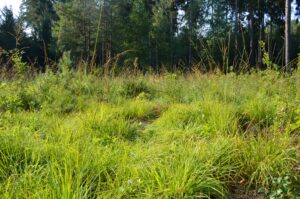
The right grass also depends on climate and sunlight because no turfgrass performs equally well under every condition. A sunny athletic lawn can favor bermudagrass, while a residential yard with moderate shade may benefit from suitable zoysiagrass or another turfgrass with greater shade tolerance.
In this guide , we compare 10 of the best grass for high traffic options based on wear tolerance, recovery ability, drought performance, shade tolerance, establishment, appearance, mowing requirements, and maintenance needs.
10 Best Grass For High Traffic
1. Bermudagrass – Best Grass for High Traffic Lawns
Bermudagrass is the best grass for high traffic lawns when rapid recovery, durability, and resistance to repeated wear are the primary requirements. Texas A&M AgriLife describes bermudagrass as extremely durable, highly traffic tolerant, and capable of recovering quickly from injury because it spreads through both rhizomes and stolons.


Bermudagrass is widely used for athletic fields, golf courses, recreational areas, and home lawns where turf must withstand substantial physical activity. Its aggressive lateral growth allows healthy plants to spread into damaged areas and rebuild turf density after traffic.
The grass performs best in full sunlight, so it is not an ideal solution for heavily shaded yards. It also requires regular mowing and appropriate fertility when homeowners want maximum density and recovery.
For sunny lawns used by children, pets, athletes, or large groups, bermudagrass provides an especially durable warm-season turf. Its combination of traffic tolerance and recuperative ability is difficult to match among common warm-season lawn grasses.
Pros
- Excellent traffic tolerance
- Very fast recovery
- Spreads through rhizomes
- Spreads through stolons
- Strong drought tolerance
- Excellent heat tolerance
- Suitable for athletic fields
Cons
- Poor shade tolerance
- Requires regular mowing
- Can spread aggressively
2. Zoysia Grass – Best Durable Grass for High Traffic
Zoysia grass is the best durable grass for high traffic when homeowners want a dense lawn capable of handling regular wear while also providing better shade tolerance than bermudagrass. Texas A&M rates zoysiagrass from moderate to high for traffic tolerance depending on species and cultivar, while newer extension guidance highlights its dense canopy and suitability for residential and public landscapes.

Zoysia spreads through rhizomes and stolons, helping established turf withstand and recover from physical stress. Its dense growth can also make the lawn more resistant to weed colonization when properly maintained.
Compared with bermudagrass, zoysia generally grows more slowly. That slower growth can reduce mowing requirements, but heavily damaged areas may take longer to recover.
For residential lawns receiving frequent family activity, pets, and moderate recreational use, zoysia can provide an effective balance between durability and appearance.
Pros
- Good traffic tolerance
- Dense turf formation
- Rhizomatous growth
- Stolons aid recovery
- Good drought tolerance
- Better shade tolerance than bermudagrass
- Attractive appearance
Cons
- Slower recovery
- Establishment can be slow
- Cultivar performance varies
3. Hybrid Bermudagrass – Best High-Performance Grass for Heavy Traffic
Hybrid bermudagrass is the best high-performance grass for heavy traffic when maximum turf density, wear resistance, and rapid recovery are required. Texas A&M notes that hybrid bermudagrasses are commonly preferred for athletic fields and other demanding turf situations because of their fine texture and high-density growth.

Hybrid bermudagrasses are particularly useful where the lawn receives repeated traffic and is managed intensively. Their dense canopy can produce a high-quality playing or recreational surface when mowing, irrigation, fertility, and thatch management are handled correctly.
Many hybrid varieties are sterile or have limited seed production and therefore must be established using sod or sprigs. This makes establishment more involved than using seeded common bermudagrass.
For athletic surfaces and premium high-use lawns, hybrid bermudagrass provides excellent performance when the site receives sufficient sunlight and professional-level maintenance.
Pros
- Excellent traffic tolerance
- Rapid recovery
- Very dense turf
- Fine texture
- Strong heat tolerance
- Excellent drought tolerance
- Suitable for athletic fields
Cons
- Higher maintenance
- Many cultivars require sod or sprigs
- Poor shade tolerance
4. Tall Fescue – Best Cool-Season Grass for High Traffic
Tall fescue is the best cool-season grass for high traffic when a lawn requires a cool-season turf that can tolerate regular activity. Its bunch-type growth habit means it does not spread aggressively through rhizomes or stolons, so damaged areas may require reseeding rather than naturally filling from surrounding plants.

Tall fescue can provide a durable lawn when properly established and managed, particularly where summer heat is moderate and irrigation is available. It is useful for homeowners who want a cool-season lawn but still expect regular family or pet traffic.
One major consideration is recovery. Because tall fescue is primarily bunch-forming, concentrated traffic can create bare areas more readily than in spreading grasses such as bermudagrass.
For cooler climates and transition-zone locations, however, tall fescue can provide a practical compromise between year-round seasonal performance and reasonable wear tolerance.
Pros
- Good residential durability
- Cool-season growth
- Good heat tolerance for a cool-season grass
- Good drought tolerance
- Suitable for seeded lawns
- Useful for family yards
- Attractive texture
Cons
- Slower traffic recovery
- Bare areas may require reseeding
- Summer stress can occur
5. Kentucky Bluegrass – Best Self-Repairing Cool-Season Grass for High Traffic
Kentucky bluegrass is the best self-repairing cool-season grass for high traffic when homeowners want a cool-season turf capable of spreading into damaged areas. Its rhizomatous growth habit allows established plants to produce underground stems that can help the turf recover after injury.

This characteristic gives Kentucky bluegrass an advantage over bunch-type cool-season grasses when repeated wear causes localized damage. It can gradually fill thin areas under favorable growing conditions.
However, Kentucky bluegrass is less suited to hot, drought-prone environments than bermudagrass. It generally performs best where cooler temperatures and adequate moisture support active growth.
For northern and transition-zone lawns where cool-season turf is required, Kentucky bluegrass can provide useful recovery ability combined with an attractive traditional lawn appearance.
Pros
- Rhizomatous growth
- Good recovery ability
- Attractive appearance
- Cool-season performance
- Good wear tolerance
- Dense turf
- Suitable for recreational lawns
Cons
- Lower drought tolerance
- Summer heat stress
- Requires suitable moisture
6. Perennial Ryegrass – Best Fast-Establishing Grass for High Traffic
Perennial ryegrass is the best fast-establishing grass for high traffic when rapid germination and early turf coverage are important. Its quick establishment can be useful for temporary or seasonal high-use areas where fast ground coverage is required.

Perennial ryegrass produces a fine-textured lawn and can provide useful wear resistance under appropriate conditions. It is commonly considered for recreational areas and overseeding situations where rapid establishment is valuable.
Its major weakness is prolonged heat and drought. Perennial ryegrass is a cool-season species and can decline when subjected to sustained high temperatures without adequate moisture.
It therefore works best in climates where summer stress is manageable or where it is being used strategically for seasonal coverage.
Pros
- Fast germination
- Rapid establishment
- Fine texture
- Good wear tolerance
- Useful for recreational areas
- Good cool-season growth
- Excellent early coverage
Cons
- Poor prolonged heat tolerance
- Requires moisture
- Recovery varies with conditions
7. Kikuyu Grass – Best Fast-Recovering Grass for Heavy Foot Traffic
Kikuyu grass is the best fast-recovering grass for heavy foot traffic in warm climates where vigorous spreading growth is desirable. Its aggressive growth habit allows it to recover from repeated use and rapidly occupy damaged areas.

Kikuyu develops through runners and can produce a thick turf when supplied with adequate sunlight, moisture, and fertility. This makes it useful for active lawns and recreational areas.
Its vigorous growth is also its principal management challenge. Kikuyu can spread into garden beds and other landscape areas, while frequent mowing may be necessary to maintain a controlled lawn.
In warm climates where aggressive recovery is more important than a fine-textured appearance, kikuyu can provide a highly functional high-traffic lawn.
Pros
- Vigorous spreading growth
- Fast recovery
- Dense turf
- Strong warm-season performance
- Good wear tolerance
- Suitable for active lawns
- Good establishment
Cons
- Aggressive spreading
- Requires frequent mowing
- Can become difficult to control
8. Seashore Paspalum – Best Salt-Tolerant Grass for High Traffic
Seashore paspalum is the best salt-tolerant grass for high traffic when a heavily used lawn or recreational surface is also exposed to saline conditions. Texas A&M rates seashore paspalum from moderate to high for traffic tolerance while also recognizing its usefulness in coastal environments.

Seashore paspalum spreads through rhizomes and stolons, characteristics that contribute to its ability to tolerate and recover from physical stress. It can therefore be considered where traffic and salinity occur together.
The grass is more specialized than bermudagrass and is unnecessary for most inland high-traffic lawns. Its value becomes greater when saline irrigation water, coastal exposure, or salt-affected soil is a significant concern.
For coastal recreational areas, golf environments, and selected residential properties, seashore paspalum can combine useful wear tolerance with exceptional salt adaptation.
Pros
- Good to high traffic tolerance
- Excellent salt tolerance
- Spreads through rhizomes
- Spreads through stolons
- Useful for coastal sites
- Warm-season growth
- Suitable for recreational areas
Cons
- Specialized turfgrass
- Not necessary for most inland lawns
- Requires appropriate management
9. Zoysia Matrella – Best Dense Grass for High Traffic Residential Lawns
Zoysia matrella is the best dense grass for high traffic residential lawns when homeowners want a fine-textured turf that combines durability with an attractive appearance. Zoysia matrella produces particularly dense turf and is used in residential and recreational settings.

Its dense canopy gives the lawn a uniform appearance and can help the turf withstand regular foot traffic. The species also spreads through rhizomes and stolons, providing structural advantages for recovery after moderate wear.
The principal limitation is growth speed. Homeowners should not expect zoysia matrella to repair severe damage as quickly as aggressive bermudagrass.
For a residential property where appearance is almost as important as durability, this zoysia type can provide a useful combination of density, texture, and wear resistance.
Pros
- Very dense turf
- Fine texture
- Good traffic tolerance
- Rhizomatous growth
- Stolons aid spread
- Attractive residential appearance
- Good drought performance
Cons
- Slower establishment
- Slower recovery than bermudagrass
- Can require close mowing
10. Bermudagrass and Zoysiagrass – Best Grass Combination for High Traffic
A carefully planned bermudagrass and zoysiagrass combination can be the best grass combination for high traffic when different sections of a property have different sunlight and use patterns. Bermudagrass provides particularly strong traffic tolerance and rapid recovery, while zoysiagrass offers dense turf and greater shade tolerance depending on cultivar.
Bermudagrass can be allocated to open recreational areas where heavy wear is expected, while zoysiagrass can be used in residential sections receiving moderate traffic or some shade. This approach is generally more practical when each species occupies a defined area rather than being randomly mixed throughout the same lawn.
The main consideration is maintenance complexity. Different grasses may require different mowing heights, establishment methods, and management schedules.
For larger properties with varying site conditions, separating turfgrass species according to use and sunlight can provide greater flexibility than relying on a single grass everywhere.
Pros
- Combines complementary traits
- Excellent bermudagrass recovery
- Dense zoysia growth
- Useful for varied sunlight
- Flexible landscape planning
- Suitable for larger properties
- Strong warm-season performance
Cons
- More complex management
- Different growth rates
- Requires defined planting areas
7 Essential Features to Consider When Choosing Grass for High Traffic
1. Traffic Tolerance
Traffic tolerance should be the first consideration because repeated walking, running, pets, sports, and recreation physically damage turf. Bermudagrass is particularly notable for superior traffic tolerance and rapid recuperative potential.
2. Recovery Ability
A grass that tolerates traffic but recovers slowly may still develop bare patches under heavy use. Spreading grasses such as bermudagrass, zoysiagrass, and seashore paspalum have rhizomes and stolons that help them spread laterally and recover from injury.
3. Sunlight
High-traffic lawns often require substantial sunlight because heavy use places additional stress on turf. Bermudagrass performs best in full sun, while zoysiagrass offers greater shade tolerance depending on cultivar.
4. Soil Compaction
Repeated foot traffic compresses soil and reduces pore space available for air and water. High-traffic lawns can therefore benefit from periodic core aeration, particularly when compaction becomes evident. UGA Extension specifically identifies core aerification as an important practice for high-traffic lawns prone to compaction.
5. Mowing
Correct mowing helps maintain turf density and recovery capacity. Extension guidance recommends avoiding removal of more than one-third of the leaf blade at a time, while mowing heights should be adjusted according to grass species and stress conditions.
6. Irrigation
Traffic-stressed turf requires adequate moisture for recovery, but overwatering can encourage disease and weak growth. Irrigation should be based on turfgrass needs, rainfall, soil conditions, and visible moisture stress rather than simply watering every day.
7. Grass Type and Climate
The most traffic-tolerant grass in one climate may not be the best choice elsewhere. Bermudagrass is particularly strong in warm climates, while zoysia and Kentucky bluegrass provide alternatives where their respective climate and growing-season requirements are appropriate.
Best Grass For High Traffic FAQ’S
1. What is the best grass for high traffic?
Bermudagrass is one of the strongest choices for high-traffic lawns because it combines superior traffic tolerance with rapid recovery from injury. Its rhizomes and stolons allow established turf to spread and recuperate after repeated wear.
2. What is the best grass for a yard with dogs?
Bermudagrass and suitable zoysiagrass are strong options for yards receiving regular pet activity. Bermudagrass generally provides faster recovery, while zoysia offers dense turf and better shade tolerance depending on cultivar.
3. Is Bermuda grass good for high traffic?
Yes. Bermudagrass is particularly well suited to high traffic because of its excellent wear tolerance, aggressive spreading growth, and rapid recuperative ability. Texas A&M identifies it as suitable for athletic fields and other heavily trafficked areas.
4. Is zoysia good for high traffic?
Yes. Zoysia can tolerate moderate to high traffic depending on the species and cultivar. Its dense growth and combination of rhizomes and stolons contribute to its durability, although recovery is generally slower than bermudagrass.
5. What grass recovers fastest from foot traffic?
Bermudagrass is particularly known for rapid recuperative ability after traffic and injury. Its aggressive lateral growth allows it to spread into damaged areas when growing conditions are favorable.
6. Can tall fescue handle high traffic?
Tall fescue can tolerate regular residential use, but its bunch-type growth means it does not spread laterally like bermudagrass or zoysiagrass. Areas damaged by concentrated traffic may therefore need reseeding to restore turf density.
7. How do I keep high-traffic grass healthy?
Use a turfgrass suited to the climate, maintain an appropriate mowing height, irrigate according to need, avoid excessive fertilization, and address soil compaction through aeration when necessary. Rotating heavily used areas when possible can also reduce repeated stress on the same turf.
Conclusion
In conclusion, the best grass for high traffic needs to withstand repeated wear while recovering quickly enough to maintain a dense turf surface. Bermudagrass provides particularly strong performance because of its traffic tolerance, rapid recuperation, and spreading growth habit.
Zoysiagrass provides another durable option where homeowners want dense turf combined with greater shade tolerance, while hybrid bermudagrasses are suited to high-performance lawns and athletic surfaces that can support intensive maintenance. Other choices become relevant when climate, salinity, or seasonal requirements change.
The best selection should therefore be matched to both traffic intensity and the growing environment rather than choosing a grass based on wear tolerance alone. The runner-up options become more useful when shade, climate, appearance, water availability, or maintenance requirements place additional limitations on the lawn.
Before installing a high-traffic lawn, evaluate sunlight, soil compaction, drainage, irrigation, expected foot traffic, and recovery requirements. Choosing a turfgrass with the right combination of wear tolerance and recuperative ability can help maintain a dense, functional lawn even under repeated use.
Recent Posts
Spring fertilization supports healthy leaf development, root activity, and productive shoot growth when apple trees have insufficient soil nutrients. Selecting an appropriate fertilizer requires...
Cucumbers (Cucumis sativus) are vigorous, fast-growing vines that can produce abundant harvests when their roots receive enough water, warmth, and balanced nutrition. The best fertilizer for cukes in...