Choosing the Best Fertilizer For Zinnias And Dahlias is essential for producing vigorous plants, abundant flower buds, and longer-lasting blooms throughout the growing season. Although both flowers benefit from adequate nutrition, their fertilizer requirements are not identical because excessive nitrogen can push dahlias toward foliage while balanced feeding helps zinnias maintain continuous flowering.
Zinnias (Zinnia spp.) are warm-season annuals that perform best in full sun and well-drained soil, while dahlias (Dahlia × hybrida) develop substantial stems, foliage, flowers, and storage tubers. Both crops therefore require sufficient nutrients, but the correct NPK balance is more important than simply applying the highest-analysis fertilizer available.
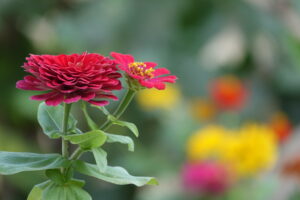
Nitrogen drives chlorophyll production and vegetative growth, phosphorus participates in root development and energy transfer, while potassium regulates water movement, enzyme activity, and carbohydrate transport. Extension recommendations for dahlias specifically caution against excessive nitrogen because it can produce weak stems, abundant foliage, and fewer flowers, while zinnias can benefit from supplemental feeding during a long flowering season.
In this guide , we will review the top 10 Best Fertilizer For Zinnias And Dahlias, comparing NPK ratios, nutrient-release technology, organic ingredients, bloom support, soil biology, and application flexibility to help you choose a fertilizer that encourages strong growth without sacrificing flower production.
Top 10 Best Fertilizer For Zinnias And Dahlias
1. Espoma Flower-tone 3-4-5 – Best organic fertilizer for zinnias and dahlias
Espoma Flower-tone 3-4-5 is the best organic fertilizer for zinnias and dahlias for gardeners who want gradual feeding with an NPK ratio designed specifically for flowering plants. Additionally, its 3% nitrogen, 4% available phosphate, and 5% soluble potash provide a lower-nitrogen profile that supports flowering without making nitrogen the dominant nutrient.

- Use on annuals, perennials, and hanging baskets
- Complex blend of 100-percent natural and organic approved ingredients to provide complete and balanced feeding
Espoma also incorporates calcium, magnesium, sulfur, humic acids, and beneficial microorganisms, creating a broader nutritional package than NPK alone. The manufacturer recommends Flower-tone for annuals and perennials and specifies monthly feeding during the growing season.
The fertilizer contains both water-soluble and slow-release nitrogen, so microbial activity and decomposition gradually convert organic nitrogen into plant-available forms while a smaller fraction is immediately accessible. Moreover, phosphorus supports energy-transfer reactions and root activity, while potassium regulates cellular water balance and helps move carbohydrates toward actively developing tissues and flowers. For dahlias, this restrained nitrogen approach is particularly relevant because extension guidance recommends low-nitrogen fertilizers to avoid excessive leafy growth and poor flowering.
Flower-tone can be incorporated into prepared beds or applied around established plants without placing fertilizer directly against stems or foliage. Furthermore, Espoma recommends watering thoroughly after application, allowing the nutrient particles and soil biology to become active around the root zone. Overall, this is an excellent choice for gardeners growing both zinnias and dahlias in the same flower bed because one formulation can support annual flowering and heavy-feeding dahlias while maintaining a comparatively conservative nitrogen supply.
Pros
- Organic formula
- 3-4-5 NPK
- Slow release
- Beneficial microbes
- Calcium included
- Magnesium included
- Long lasting
Cons
- Mild odor
- Slower response
- Monthly feeding
2. Jobe’s Organics Rose & Flower Granular 3-5-3 – Best slow-release fertilizer for zinnias and dahlias
Jobe’s Organics Rose & Flower Granular is the best slow-release fertilizer for zinnias and dahlias for gardeners who want a dedicated flower fertilizer with a relatively low nitrogen concentration. Additionally, its 3-5-3 analysis supplies more phosphorus than nitrogen while maintaining enough nitrogen for foliage and stem development. The formulation includes bone meal, feather meal, processed manure, and potash, providing organic sources that release nutrients through biological and chemical processes in the soil. Jobe’s recommends applying the product at planting and every six weeks for flowers.
Bone meal supplies phosphorus and calcium, while feather meal contributes organic nitrogen that becomes available as microorganisms break down proteins into simpler nitrogen compounds. Moreover, potassium from potash participates in osmotic regulation, enzyme activation, and carbohydrate transport, which supports vigorous flower production and plant resilience. This combination fits the nutritional direction recommended for dahlias because excessive nitrogen can encourage foliage and weak stems rather than desirable blooms.
Jobe’s Biozome blend contains beneficial bacteria, mycorrhizal fungi, and archaea that can increase biological activity around plant roots. Furthermore, the manufacturer states that these microorganisms support soil quality and plant growth while improving resistance to environmental stresses. Overall, the fertilizer is a strong option for gardeners who want one organic granular product for mixed beds containing zinnias, dahlias, and other flowering plants.
Pros
- Organic formula
- 3-5-3 NPK
- Biozome microbes
- Slow feeding
- Root support
- Flower focused
- Easy application
Cons
- Six-week feeding
- Organic odor
- Granular only
3. Espoma Plant-tone 5-3-3 – Best balanced organic fertilizer for zinnias and dahlias
Espoma Plant-tone 5-3-3 is the best balanced organic fertilizer for zinnias and dahlias when the primary goal is steady overall plant development rather than a dedicated bloom-booster formulation. Additionally, its 5-3-3 analysis supplies more nitrogen than Flower-tone, making it particularly useful during early establishment when zinnias and dahlias need foliage and stems before producing their full flowering display. Espoma describes Plant-tone as an all-purpose organic fertilizer for flowers, vegetables, trees, and shrubs. The manufacturer recommends monthly feeding for flowers and vegetables during the growing season.
The higher nitrogen proportion supports amino-acid synthesis, chlorophyll formation, and new vegetative tissue, while phosphorus contributes to root metabolism and potassium supports water regulation and enzyme activity. Moreover, Plant-tone contains organic ingredients and beneficial microbes, so nutrient availability develops progressively rather than behaving like a highly soluble fertilizer applied all at once. This can help establish a strong plant framework before the crop enters its heaviest flowering period. However, dahlias should not receive unnecessary nitrogen when soil tests already show sufficient fertility because excessive nutrients can reduce flowering performance.
Plant-tone is particularly convenient when zinnias and dahlias are grown alongside vegetables, shrubs, or other ornamental plants requiring general organic nutrition. Furthermore, its broad application range makes it useful for gardeners who prefer maintaining one multipurpose fertilizer rather than purchasing separate products for every crop. Overall, it is a dependable establishment fertilizer for mixed ornamental beds, although a lower-nitrogen bloom formula may be preferable once dahlias are actively producing buds.
Pros
- Organic nutrients
- 5-3-3 NPK
- Broad application
- Beneficial microbes
- Slow release
- Soil building
- Versatile
Cons
- Higher nitrogen
- Less bloom focused
- Monthly feeding
4. Down to Earth Rose & Flower Mix 4-8-4 – Best high-phosphorus fertilizer for zinnias and dahlias
Down to Earth Rose & Flower Mix 4-8-4 is the best high-phosphorus fertilizer for zinnias and dahlias when soil conditions indicate that additional phosphorus is appropriate for flowering plants. Additionally, its 4-8-4 analysis provides twice as much phosphate as nitrogen, creating a nutrient ratio more aligned with bloom-focused feeding than a high-nitrogen general-purpose fertilizer. The moderate nitrogen content still supplies the raw materials required for chlorophyll, proteins, and new tissues while the higher phosphorus concentration supports root metabolism and energy transfer. This type of low-nitrogen approach is consistent with extension recommendations for flowering dahlias.
Phosphorus is incorporated into ATP and other molecules involved in cellular energy transfer, allowing actively growing tissues to power biochemical processes associated with roots and reproductive development. Moreover, potassium supports osmotic regulation and enzyme activation, helping plants manage water and carbohydrates as flowers and stems develop. The chemistry therefore involves more than simply “adding phosphorus for blooms,” because the plant still requires nitrogen and potassium to convert photosynthetic products into new tissues. Soil testing remains important because phosphorus can accumulate when repeatedly applied to already fertile soil.
A phosphorus-rich fertilizer should be used because the soil or crop requirement justifies it rather than because a higher middle number automatically guarantees more flowers. Furthermore, university guidance recommends using soil-test results to determine fertilizer analysis and warns against adding nutrients when existing levels are already adequate. Overall, Down to Earth Rose & Flower Mix is an excellent bloom-oriented fertilizer for zinnias and dahlias when used as part of a soil-test-based nutrition program.
Pros
- 4-8-4 NPK
- Bloom focused
- Moderate nitrogen
- Organic ingredients
- Root support
- Flower support
- Soil friendly
Cons
- Phosphorus sensitive
- Slower release
- Soil testing needed
5. FoxFarm Happy Frog Organic Fertilizer 4-9-3 – Best bloom fertilizer for zinnias and dahlias
FoxFarm Happy Frog Organic Fertilizer 4-9-3 is the best bloom fertilizer for zinnias and dahlias for gardeners seeking a relatively phosphorus-forward organic formula for flowering plants. Additionally, its 4-9-3 NPK ratio supplies moderate nitrogen while providing substantially more phosphorus, which can support root development and energy-transfer processes without making vegetative growth the dominant objective. The formula also contains beneficial soil microorganisms that help convert organic nutrients into forms plant roots can absorb. As a result, it can provide a useful nutritional foundation for established flowering plants when soil fertility is properly managed.
The organic nitrogen sources must be decomposed by soil microorganisms before much of their nitrogen becomes available as plant-usable ammonium or nitrate. Moreover, phosphorus participates in ATP-mediated energy transfer and nucleic-acid metabolism, while potassium regulates water movement, enzyme activation, and carbohydrate transport throughout the plant. This chemistry allows the fertilizer to support both vegetative maintenance and reproductive development rather than functioning as a simple instant bloom stimulant. For dahlias in particular, maintaining moderate nitrogen is important because excessive nitrogen can encourage foliage at the expense of desirable flowering.
Apply the fertilizer around the root zone rather than directly against stems, and incorporate it into the soil according to the manufacturer’s directions. Furthermore, watering after application helps initiate nutrient release and microbial activity within the root zone. Overall, FoxFarm Happy Frog is a strong choice for gardeners who want organic bloom-oriented nutrition for established zinnias and dahlias while maintaining a biologically active growing medium.
Pros
- Organic formula
- 4-9-3 NPK
- Bloom focused
- Microbial activity
- Moderate nitrogen
- Root support
- Soil friendly
Cons
- Slow availability
- Higher phosphorus
- Odor possible
6. Miracle-Gro Water Soluble Bloom Booster 15-30-15 – Best water-soluble fertilizer for zinnias and dahlias
Miracle-Gro Water Soluble Bloom Booster 15-30-15 is the best water-soluble fertilizer for zinnias and dahlias when rapid nutrient availability and convenient application are priorities. Additionally, its 15-30-15 analysis supplies substantial amounts of nitrogen, phosphorus, and potassium in a readily soluble form that can enter the soil solution quickly after mixing with water. This makes it useful when flowering plants require readily available nutrients during active growth, particularly in containers or nutrient-poor growing media. However, the high analysis means application rates should be followed carefully rather than assuming stronger concentrations will produce more flowers.
Nitrogen supports chlorophyll and protein synthesis, while phosphorus participates in ATP formation and cellular energy transfer required for active growth. Moreover, potassium regulates stomatal function, osmotic balance, and carbohydrate movement, helping plants manage water and allocate photosynthetic products throughout developing tissues. Because all three nutrients are immediately soluble, roots can encounter a relatively concentrated nutrient solution soon after application, which explains why correct dilution is important. Excess fertilizer salts can increase osmotic pressure around roots and make water uptake more difficult.
Use this fertilizer according to the label and avoid repeated heavy applications when the soil already contains adequate nutrients. Furthermore, zinnias and dahlias should still receive sufficient sunlight, water, and well-drained soil because fertilizer cannot compensate for poor cultural conditions. Overall, Miracle-Gro Bloom Booster is a convenient fast-acting fertilizer for flowering zinnias and dahlias, particularly when growers want a soluble product that can be incorporated into an existing feeding schedule.
Pros
- Fast availability
- 15-30-15 NPK
- Easy mixing
- Water soluble
- Convenient application
- Bloom focused
- Widely available
Cons
- High analysis
- Overfeeding risk
- Synthetic formula
7. Jobe’s Organics Flower & Rose Fertilizer Spikes – Best fertilizer spikes for zinnias and dahlias
Jobe’s Organics Flower & Rose Fertilizer Spikes are the best fertilizer spikes for zinnias and dahlias for gardeners who prefer a measured, low-mess feeding method. Additionally, fertilizer spikes place nutrients below the soil surface where moisture gradually interacts with the fertilizer and releases nutrients near the active root zone. This approach reduces the need for repeated surface applications and can be convenient for container-grown dahlias or established ornamental beds. The controlled placement also helps keep fertilizer away from foliage, where concentrated fertilizer particles could cause injury.
As moisture enters the spike, soluble components gradually move into the surrounding soil while less-soluble organic components become available through microbial decomposition. Moreover, nitrogen released from organic materials supports chlorophyll and protein production, phosphorus participates in energy metabolism, and potassium helps regulate water balance and enzyme activity. The gradual release mechanism can therefore provide continuing nutrition rather than delivering the entire nutrient load immediately. However, the effectiveness depends on adequate soil moisture because microorganisms and nutrient diffusion require water.
Insert spikes according to the manufacturer’s recommended spacing and application instructions, keeping them positioned safely within the root zone. Furthermore, avoid placing multiple spikes too close together because concentrated nutrient release in a small area can increase local salt levels. Overall, these spikes are a practical low-maintenance feeding option for gardeners who want consistent nutrition without measuring liquid fertilizer.
Pros
- Easy placement
- Low mess
- Measured feeding
- Slow release
- Root-zone delivery
- Convenient
- Organic option
Cons
- Fixed placement
- Spacing required
- Local concentration
8. Neptune’s Harvest Fish & Seaweed Fertilizer – Best organic liquid fertilizer for zinnias and dahlias
Neptune’s Harvest Fish & Seaweed Fertilizer is the best organic liquid fertilizer for zinnias and dahlias for gardeners who prefer a biologically active liquid feed derived from fish and seaweed materials. Additionally, the product supplies nutrients in an organic matrix that can support plant growth while also contributing organic compounds to the growing environment. Liquid application allows gardeners to distribute diluted fertilizer evenly around the root zone or apply it according to the manufacturer’s approved directions. This makes it particularly useful for gardeners managing multiple flowering beds throughout the season.
Fish-derived nutrients provide organic nitrogen and other compounds that microorganisms can break down into plant-available forms, while seaweed contributes minerals and biologically active compounds. Moreover, nitrogen supports chlorophyll and protein formation, whereas potassium participates in water regulation and enzyme activation needed for healthy plant metabolism. The fertilizer therefore works through both nutrient supply and biological decomposition rather than functioning solely as an immediately soluble mineral fertilizer. For dahlias, maintaining a moderate feeding rate remains important because excessive nitrogen can encourage vegetative growth at the expense of flowering.
Dilute the fertilizer according to the manufacturer’s instructions and apply it during periods of active growth. Furthermore, adequate moisture and microbial activity help organic nutrients move through the soil and become available to roots. Overall, Neptune’s Harvest is an excellent organic liquid fertilizer for gardeners seeking gentle, biologically based nutrition for flowering zinnias and dahlias.
Pros
- Organic formula
- Liquid application
- Fish nutrients
- Seaweed included
- Soil biology
- Easy dilution
- Versatile
Cons
- Strong odor
- Frequent feeding
- Slower response
9. Jack’s Classic Blossom Booster 10-30-20 – Best fertilizer for abundant blooms on zinnias and dahlias
Jack’s Classic Blossom Booster 10-30-20 is the best fertilizer for abundant blooms on zinnias and dahlias for growers seeking a soluble fertilizer with a strong phosphorus component. Additionally, its 10-30-20 NPK ratio provides considerably more phosphorus than nitrogen, making it attractive for flowering plants where growers want to avoid relying on a high-nitrogen formulation. The water-soluble nutrients become available quickly after application, which allows plants to access the fertilizer during periods of active growth. Because the product is concentrated, accurate measurement and proper dilution are essential.
Nitrogen supports new leaves and stems, while phosphorus participates in ATP and nucleic-acid metabolism that powers cellular processes throughout actively growing tissues. Moreover, potassium helps regulate water movement and enzyme activity while supporting the transport of carbohydrates generated through photosynthesis. These nutrients work as an integrated system, so the high phosphorus concentration should not be interpreted as a guarantee of increased flowers when other nutrients or environmental factors are limiting. Soil fertility, sunlight, temperature, and moisture all influence flowering more strongly than fertilizer analysis alone.
Apply Jack’s according to its label instructions and avoid excessive applications when soil tests indicate adequate fertility. Furthermore, dahlias benefit from restrained nitrogen management because excessive nitrogen can promote foliage and weak stems rather than the desired flower display. Overall, Jack’s Blossom Booster is a strong high-phosphorus soluble fertilizer for established flowering plants, particularly when used as part of a broader, evidence-based nutrition program.
Pros
- 10-30-20 NPK
- Fast availability
- High phosphorus
- Easy mixing
- Precise feeding
- Bloom focused
- Widely available
Cons
- Concentrated formula
- Overfeeding risk
- Synthetic fertilizer
10. Dr. Earth Flower Garden Fertilizer 4-8-4 – Best slow-release fertilizer for flowering zinnias and dahlias
Dr. Earth Flower Garden Fertilizer 4-8-4 is the best slow-release fertilizer for flowering zinnias and dahlias for gardeners who want organic nutrients combined with a bloom-oriented NPK profile. Additionally, the 4-8-4 ratio provides moderate nitrogen and comparatively higher phosphorus, making it suitable for established ornamental plants where excessive vegetative growth is undesirable. The formulation contains organic nutrient sources that become available gradually as microorganisms decompose them in the soil. This creates a slower nutrient-release pathway than highly soluble synthetic fertilizers.
Organic nitrogen is converted through microbial mineralization before roots can absorb the resulting inorganic forms, while phosphorus participates in energy transfer and root metabolism. Moreover, potassium contributes to cellular osmotic regulation, enzyme activation, and movement of carbohydrates from photosynthetic tissues to growing structures. The result is a nutrient system that supports continued plant metabolism rather than acting as a single-purpose flowering chemical. Because nutrient release depends partly on soil moisture and biological activity, results may appear more gradually than with water-soluble fertilizers.
Apply the fertilizer according to the manufacturer’s directions and incorporate it into the soil around the plant’s root zone. Furthermore, maintaining consistent moisture without waterlogging allows microorganisms to remain active and helps nutrients move toward developing roots. Overall, Dr. Earth provides a strong organic slow-release option for gardeners who want long-term nutrition for zinnias, dahlias, and other flowering ornamentals.
Pros
- Organic nutrients
- 4-8-4 NPK
- Slow release
- Bloom oriented
- Soil microbes
- Root support
- Long lasting
Cons
- Slow response
- Organic odor
- Costly
Best Fertilizer For Zinnias And Dahlias FAQ’S
1. What is the best fertilizer for zinnias and dahlias?
The best fertilizer for zinnias and dahlias is generally a balanced or bloom-oriented fertilizer that provides adequate nitrogen without excessive vegetative stimulation. Espoma Flower-tone 3-4-5 is an excellent overall organic option because it supplies moderate nitrogen, phosphorus, potassium, calcium, magnesium, sulfur, and beneficial microorganisms.
2. What NPK ratio is best for zinnias and dahlias?
There is no single NPK ratio that is ideal for every soil and growth stage. Formulations such as 3-4-5, 3-5-3, 4-8-4, and 4-9-3 provide moderate nitrogen with additional phosphorus and potassium and can work well for established flowering plants, provided soil fertility supports their use.
3. Should I use high-nitrogen fertilizer on dahlias?
Generally, avoid excessive nitrogen once dahlias are established and approaching flowering. Too much nitrogen can encourage excessive foliage and weak stems instead of producing the strong flowering performance gardeners want.
4. How often should I fertilize zinnias?
Zinnias can benefit from periodic feeding during their active growing and flowering period, particularly when grown in nutrient-poor soil. The exact frequency depends on the fertilizer formulation, because slow-release granular products require fewer applications than water-soluble fertilizers.
5. How often should I fertilize dahlias?
Established dahlias generally benefit from feeding during active growth, but the frequency should follow the fertilizer’s label and the nutrient status of the soil. Avoid excessive applications because continuously adding nutrients can create imbalances and encourage unwanted vegetative growth.
6. Is organic fertilizer better for zinnias and dahlias?
Organic fertilizer can be an excellent choice because many organic formulations release nutrients gradually while supporting soil microbial activity. However, organic fertilizer still needs to be applied at the appropriate rate because excessive nutrients can damage plants or contribute to nutrient accumulation.
7. Can I use the same fertilizer for zinnias and dahlias?
Yes, you can use the same fertilizer for both plants when the formulation provides an appropriate nutrient balance. A moderate-nitrogen flower fertilizer such as 3-4-5 or 4-8-4 can be a practical choice for mixed beds, although soil conditions and plant growth stage should determine the final feeding program.
Conclusion
In conclusion, the best fertilizer for zinnias and dahlias should provide sufficient nitrogen for healthy stems and foliage while supplying phosphorus and potassium for root function, energy metabolism, water regulation, and sustained flowering. Espoma Flower-tone 3-4-5 earns the best overall position because its moderate NPK ratio, organic nutrient sources, micronutrients, and beneficial microorganisms provide a versatile feeding option for both annual zinnias and flowering dahlias, while Jobe’s Organics Rose & Flower 3-5-3 is the runner-up for gardeners who prefer a slower-release organic formula.
The most suitable fertilizer ultimately depends on your soil fertility, plant age, growing conditions, and preferred application method. Liquid products such as Miracle-Gro Bloom Booster and Jack’s Blossom Booster provide rapidly available nutrients, while organic granular products such as Espoma, Jobe’s, FoxFarm, and Dr. Earth provide slower nutrient release and can support a biologically active soil environment.
Avoid assuming that more fertilizer means more flowers because excessive nitrogen can produce lush foliage while reducing the desired flowering response, particularly in dahlias. Soil testing, appropriate NPK selection, adequate sunlight, consistent moisture, and good drainage should form the foundation of a successful feeding program.
Choose a fertilizer that matches your soil and flowering stage, apply it according to the manufacturer’s directions, and monitor how your plants respond throughout the season. Start feeding your zinnias and dahlias with a carefully selected fertilizer today, and give your flower garden the nutritional foundation it needs for vigorous growth and an impressive display of blooms.
Recent Posts
Spring fertilization supports healthy leaf development, root activity, and productive shoot growth when apple trees have insufficient soil nutrients. Selecting an appropriate fertilizer requires...
Cucumbers (Cucumis sativus) are vigorous, fast-growing vines that can produce abundant harvests when their roots receive enough water, warmth, and balanced nutrition. The best fertilizer for cukes in...