Choosing the best fertilizer for Rose of Sharon tree requires nutrition that supports strong roots, healthy foliage, and abundant summer flowers without forcing excessive leafy growth. Rose of Sharon (Hibiscus syriacus) is a deciduous flowering shrub commonly trained as a small tree, producing flowers on current-season growth.
Nitrogen supports chlorophyll, proteins, and new shoots, while phosphorus participates in energy-transfer reactions and potassium supports enzyme activity and water regulation. Excess nitrogen can produce vigorous foliage while reducing flowering quality, making moderate or flowering-oriented nutrition preferable to indiscriminate high-nitrogen feeding.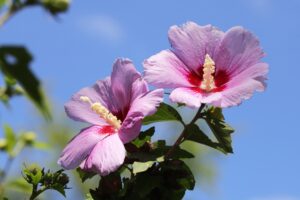
Rose of Sharon tree fertilizer should also match soil fertility, plant age, moisture availability, sunlight, and flowering performance. Rose of Sharon performs best in full sun and moist, well-drained soil, while inadequate sunlight, drought, poor drainage, and inappropriate pruning can also reduce flowering.
In this guide , we compare 15 different fertilizer brands for Rose of Sharon trees, focusing on NPK chemistry, nitrogen-release characteristics, flowering support, potassium availability, root development, micronutrients, and application methods. Each selection uses a different brand so you can compare genuinely distinct formulations without repeated manufacturers.
15 Best Fertilizer For Rose Of Sharon Tree
1. Espoma Rose-Tone 4-3-2 – Best overall fertilizer for Rose of Sharon tree
Espoma Rose-Tone 4-3-2 is the best overall fertilizer for Rose of Sharon tree because its moderate nitrogen level supports healthy foliage and new growth without relying on an aggressive nitrogen concentration. The 4-3-2 analysis provides nitrogen for chlorophyll and protein production, phosphorus for energy-transfer processes, and potassium for enzyme activation and water regulation. Its organic nutrient profile also makes it suitable for gardeners who prefer gradual feeding around established flowering shrubs.

Organic nitrogen requires microbial decomposition before much of it becomes available as mineral nitrogen that roots can absorb. This creates a slower nutrient-release pattern than highly soluble fertilizers and can reduce the likelihood of a sudden nitrogen surge. The moderate analysis is useful for Rose of Sharon because excessive nitrogen can favor foliage over flowers.
Apply the granules around the root zone rather than directly against the trunk or stems. Water thoroughly after application and use soil testing to determine whether additional phosphorus or potassium is actually necessary before repeated applications.
Pros:
- 4-3-2 NPK
- Organic formula
- Moderate nitrogen
- Slow release
- Rose focused
- Root support
- Easy spreading
Cons:
- Slow response
- Lower potassium
- Odor possible
2. Jobe’s Organics Rose & Flower Fertilizer 3-5-3 – Best organic fertilizer for Rose of Sharon tree
Jobe’s Organics Rose & Flower Fertilizer 3-5-3 is the best organic fertilizer for Rose of Sharon tree when flowering support and gradual nutrient availability are priorities. Its 3-5-3 analysis supplies relatively little nitrogen while providing more phosphorus and potassium, making it appropriate for established flowering plants. The organic nutrient sources provide a slower feeding pattern than highly soluble synthetic formulations.


Nitrogen supports leaf and shoot development, phosphorus participates in ATP-related energy transfer, and potassium regulates water balance and activates enzymes. Organic materials must be decomposed and mineralized by microorganisms before much of their nitrogen becomes available to roots. This gradual process can help avoid the excessive vegetative response associated with repeated high-nitrogen applications.
Apply the fertilizer evenly around the root zone according to the manufacturer’s directions. The lower nitrogen ratio makes it particularly useful when the Rose of Sharon has vigorous foliage but needs nutritional support for flowering.
Pros:
- 3-5-3 NPK
- Organic nutrients
- Flower focused
- Lower nitrogen
- Slow feeding
- Root support
- Granular format
Cons:
- Slow response
- Phosphorus buildup
- Odor possible
3. Dr. Earth Flower Girl Bud & Bloom Booster 3-9-4 – Best bloom fertilizer for Rose of Sharon tree
Dr. Earth Flower Girl Bud & Bloom Booster 3-9-4 is the best bloom fertilizer for Rose of Sharon tree when flowering is the primary nutritional objective. Its 3-9-4 analysis keeps nitrogen relatively low while supplying considerably more phosphorus and potassium. This makes it useful for established plants where excessive vegetative growth is undesirable.

Phosphorus participates in cellular energy transfer and root metabolism, while potassium supports enzyme activation and water regulation. Nitrogen remains necessary for leaves and new shoots, but its lower concentration reduces the amount available for rapid vegetative expansion. Organic nutrient sources also depend on microbial activity, so release is influenced by moisture and soil temperature.
Use this formulation only when its nutrient analysis matches the soil’s needs. High-phosphorus feeding should not be repeated automatically because existing soil phosphorus may already be adequate.
Pros:
- 3-9-4 NPK
- Bloom focused
- Low nitrogen
- Organic nutrients
- Root support
- Slow release
- Flower support
Cons:
- High phosphorus
- Slow response
- Soil testing
4. Down to Earth Rose & Flower Mix 4-8-4 – Best flowering fertilizer for Rose of Sharon
Down to Earth Rose & Flower Mix 4-8-4 is the best flowering fertilizer for Rose of Sharon when moderate nitrogen and elevated phosphorus are preferred. The 4-8-4 analysis provides enough nitrogen for foliage while placing greater emphasis on phosphorus and potassium. This nutrient balance is suitable for gardeners prioritizing flowers without using a high-nitrogen general lawn fertilizer.

Nitrogen supports chlorophyll and protein production, phosphorus contributes to energy-transfer chemistry, and potassium supports water regulation and enzyme activity. The three nutrients therefore perform different physiological functions and should be supplied according to actual soil availability. The organic formulation provides gradual nutrient release rather than an immediate soluble nutrient pulse.
Apply evenly beneath the canopy and avoid concentrating fertilizer around the trunk. Soil testing is particularly valuable because repeated high-phosphorus applications can be unnecessary when soil reserves are already sufficient.
Pros:
- 4-8-4 NPK
- Flower focused
- Moderate nitrogen
- Organic formula
- Granular feeding
- Root support
- Slow nutrition
Cons:
- Phosphorus heavy
- Slow response
- Soil test needed
5. Espoma Flower-Tone 3-4-5 – Best low nitrogen fertilizer for Rose of Sharon
Espoma Flower-Tone 3-4-5 is the best low nitrogen fertilizer for Rose of Sharon when flowering support is more important than rapid vegetative growth. Its 3-4-5 analysis supplies modest nitrogen with a higher potassium concentration, providing a nutrient balance suited to flowering plants. The organic formulation provides gradual nutrition rather than an aggressive soluble nitrogen response.

The lower nitrogen concentration can reduce excessive shoot stimulation while still providing nitrogen for chlorophyll and protein synthesis. Phosphorus participates in energy transfer, while potassium helps regulate water movement and activates enzymes involved in plant metabolism. Organic nutrient sources require microbial processing, so nutrient availability depends partly on soil moisture and biological activity.
Apply around the root zone according to the label rather than placing fertilizer against the trunk. This approach is especially useful when the Rose of Sharon already has healthy foliage but needs sustained nutritional support for flowering.
Pros:
- 3-4-5 NPK
- Low nitrogen
- Higher potassium
- Flower focused
- Organic formula
- Slow release
- Easy application
Cons:
- Not tree specific
- Slow response
- Moderate phosphorus
6. Osmocote Smart-Release Flower & Vegetable Plant Food 14-14-14 – Best slow release fertilizer for Rose of Sharon
Osmocote Smart-Release Flower & Vegetable Plant Food 14-14-14 is the best slow release fertilizer for Rose of Sharon when extended nutrient availability is the main priority. Its balanced 14-14-14 analysis supplies all three primary macronutrients while the coated granules regulate nutrient release. This can reduce the need for frequent applications compared with conventional water-soluble feeding.

Nitrogen supports new leaves and shoots, phosphorus participates in energy transfer and root metabolism, and potassium supports enzyme activation and cellular water regulation. Moisture interacts with the controlled-release coating, allowing nutrients to become available progressively. The delivery system therefore differs from organic fertilizer, where microbial decomposition controls much of the nutrient release.
Apply according to the specific label rate because release periods and nutrient concentrations vary between controlled-release formulations. For established Rose of Sharon, controlled feeding can provide consistent nutrition while reducing the risk of repeated heavy applications.
Pros:
- 14-14-14 NPK
- Controlled release
- Long feeding
- Balanced nutrition
- Easy application
- Reduced frequency
- Consistent feeding
Cons:
- Higher cost
- Nitrogen heavy
- Rate sensitive
7. Miracle-Gro Water Soluble Bloom Booster 15-30-15 – Best water soluble fertilizer for Rose of Sharon
Miracle-Gro Water Soluble Bloom Booster 15-30-15 is the best water soluble fertilizer for Rose of Sharon when rapid nutrient availability and flowering support are priorities. Its 15-30-15 analysis provides substantially more phosphorus than nitrogen while retaining enough nitrogen for active foliage growth. The water-soluble format allows nutrients to enter the soil solution quickly after proper dilution.

Nitrogen supports chlorophyll and protein production, phosphorus contributes to ATP-related energy transfer, and potassium supports water regulation and enzyme activation. Because the nutrients dissolve readily, the plant can access them faster than nutrients locked within slowly decomposing organic materials. This makes accurate dilution particularly important.
Use the recommended dilution rather than increasing concentration to force flowering. If the soil already contains adequate phosphorus, a high-phosphorus formulation may provide little additional benefit and can contribute to unnecessary nutrient accumulation.
Pros:
- 15-30-15 NPK
- Fast availability
- Bloom support
- Easy mixing
- Rapid response
- Convenient feeding
- Widely available
Cons:
- High phosphorus
- Overdose risk
- Frequent feeding
8. Pennington UltraGreen All Purpose Plant Food 10-10-10 – Best balanced fertilizer for Rose of Sharon
Pennington UltraGreen All Purpose Plant Food 10-10-10 is the best balanced fertilizer for Rose of Sharon when the soil requires broad supplementation of the three primary macronutrients. Its 10-10-10 analysis provides equal percentages of nitrogen, phosphorus, and potassium. This makes it a practical option where soil testing does not indicate a need for a specialized nutrient ratio.
No products found.
Nitrogen supports foliage and shoot production, phosphorus participates in energy transfer, and potassium regulates water movement and activates enzymes. Equal NPK percentages do not mean the plant absorbs equal amounts because nutrient demand varies throughout the growing season. The fertilizer should therefore be selected according to soil fertility rather than the assumption that a balanced label is always ideal.
Spring feeding is generally more appropriate than heavy late-season fertilization. Apply evenly around the root zone and water after application to help dissolve nutrients and move them into the soil.
Pros:
- 10-10-10 NPK
- Balanced formula
- Broad nutrition
- Granular format
- Easy spreading
- Spring feeding
- Established brand
Cons:
- Generic formula
- Excess phosphorus
- Rate sensitive
9. Miracle-Gro Shake ‘N Feed Rose & Flower Plant Food 10-18-9 – Best continuous release fertilizer for Rose of Sharon
Miracle-Gro Shake ‘N Feed Rose & Flower Plant Food 10-18-9 is the best continuous release fertilizer for Rose of Sharon when extended feeding and flowering support are desired. Its 10-18-9 analysis supplies moderate nitrogen with a higher phosphorus level and useful potassium. The formulation is designed around flowering plants rather than high-nitrogen turf growth.

Nitrogen supports new foliage, phosphorus participates in energy-transfer reactions, and potassium supports water regulation and enzyme activity. The extended-release approach allows nutrients to become available over time rather than arriving entirely in one soluble application. This can reduce the frequency of feeding while maintaining a continuing nutrient supply.
Apply according to the label around the root zone and avoid placing concentrated granules against the stems. Repeated use should be based on soil fertility because phosphorus can accumulate when supplied unnecessarily.
Pros:
- 10-18-9 NPK
- Flower focused
- Continuous feeding
- Moderate nitrogen
- Granular formula
- Easy application
- Extended nutrition
Cons:
- High phosphorus
- Soil testing
- Rate dependent
10. Scotts Super Bloom Water Soluble Plant Food 12-55-6 – Best high phosphorus fertilizer for Rose of Sharon
Scotts Super Bloom Water Soluble Plant Food 12-55-6 is the best high phosphorus fertilizer for Rose of Sharon when a soil deficiency or specific flowering requirement justifies additional phosphorus. Its 12-55-6 analysis contains substantially more phosphorus than nitrogen and potassium. The formulation is therefore a specialized option rather than a general maintenance fertilizer.

Phosphorus participates in ATP formation and energy transfer, while nitrogen supports proteins, chlorophyll, and new growth. Potassium contributes to enzyme activation and cellular water regulation, although its concentration is comparatively low. The water-soluble format provides rapid nutrient availability after dilution.
High phosphorus does not automatically produce more flowers when soil phosphorus is already adequate. Use this formulation only when its analysis fits the plant’s nutritional requirements and follow the dilution instructions precisely.
Pros:
- 12-55-6 NPK
- High phosphorus
- Fast availability
- Bloom focused
- Easy mixing
- Rapid feeding
- Precise dilution
Cons:
- Extreme phosphorus
- Overuse risk
- Soil testing
11. Alaska Morbloom 0-10-10 – Best low nitrogen bloom fertilizer for Rose of Sharon
Alaska Morbloom 0-10-10 is the best low nitrogen bloom fertilizer for Rose of Sharon when additional nitrogen is undesirable. Its zero-nitrogen analysis supplies phosphorus and potassium without increasing nitrogen-driven vegetative growth. This makes it a specialized choice for established plants rather than a complete nutritional program.

Phosphorus participates in energy transfer and root metabolism, while potassium supports enzyme activation and water regulation. Removing nitrogen can prevent additional vegetative stimulation, but it does not force flowering by itself. Flower production also depends on sunlight, moisture, pruning, plant maturity, and healthy current-season growth.
Use this formulation only when soil conditions justify phosphorus and potassium supplementation. Applying nutrients that are already abundant can create unnecessary buildup and will not correct non-nutritional causes of poor flowering.
Pros:
- 0-10-10 NPK
- Zero nitrogen
- Bloom support
- Potassium included
- Liquid formula
- Easy dilution
- Specialized feeding
Cons:
- Not complete
- Phosphorus dependent
- Overuse risk
12. Neptune’s Harvest Fish & Seaweed Fertilizer 2-3-1 – Best liquid organic fertilizer for Rose of Sharon
Neptune’s Harvest Fish & Seaweed Fertilizer 2-3-1 is the best liquid organic fertilizer for Rose of Sharon when gentle organic supplementation is preferred. Its low NPK analysis provides modest nitrogen, phosphorus, and potassium while fish and seaweed ingredients provide organic nutrient sources. This makes it more suitable for supplemental feeding than aggressive correction of severe nutrient deficiencies.

Organic nitrogen requires microbial decomposition and mineralization before roots can absorb substantial amounts as mineral nitrogen. Phosphorus participates in energy transfer, while potassium supports water regulation and enzyme activity. Because biological processing influences availability, temperature and soil moisture can affect the speed of the nutritional response.
Apply according to the manufacturer’s dilution instructions and maintain adequate moisture around the root zone. The lower nutrient concentration makes it less likely to create an abrupt nitrogen surge, but it also means it may not provide enough nutrition for a severely deficient plant by itself.
Pros:
- 2-3-1 NPK
- Organic formula
- Fish based
- Seaweed included
- Liquid application
- Gentle feeding
- Soil biology
Cons:
- Low nutrients
- Strong odor
- Slow release
13. Jobe’s Organics Fertilizer Spikes for Roses & Flowering Shrubs 3-5-3 – Best fertilizer spikes for Rose of Sharon
Jobe’s Organics Fertilizer Spikes for Roses & Flowering Shrubs are the best fertilizer spikes for Rose of Sharon when simple placement and localized feeding are priorities. The 3-5-3 analysis supplies moderate nitrogen with comparatively higher phosphorus and potassium. The spike format eliminates the need for a broadcast spreader and provides a convenient way to place nutrients around established flowering shrubs.
No products found.
The organic nutrient sources require microbial activity before much of the nitrogen becomes plant available. Phosphorus supports energy-transfer reactions, while potassium helps regulate water status and activates enzymes. Because the fertilizer is concentrated into individual spikes, correct spacing is important to prevent uneven nutrient distribution.
Insert the spikes according to the manufacturer’s spacing and depth instructions. Keep them away from the trunk and distribute them throughout the active root zone rather than placing several close together.
Pros:
- 3-5-3 NPK
- Flowering shrub use
- Organic formula
- Easy placement
- No spreader
- Localized feeding
- Slow nutrition
Cons:
- Uneven distribution
- Placement sensitive
- More frequent
14. FoxFarm Tiger Bloom 2-8-4 – Best bloom booster for Rose of Sharon
FoxFarm Tiger Bloom 2-8-4 is the best bloom booster for Rose of Sharon when a low-nitrogen fertilizer with elevated phosphorus and potassium is preferred. Its 2-8-4 analysis provides little nitrogen while supplying substantially more phosphorus and potassium. This makes it suitable as a specialized flowering supplement rather than a complete maintenance fertilizer.

The low nitrogen concentration limits the amount of nitrogen available for vigorous shoot expansion. Phosphorus contributes to energy transfer and root metabolism, while potassium supports enzyme activation and water regulation. The liquid formulation provides relatively rapid nutrient availability when properly diluted.
A bloom booster should not be used to compensate for inadequate sunlight, drought, poor drainage, or incorrect pruning. Rose of Sharon flowers on current-season growth, so proper early-spring pruning and active growth are also important to flowering performance.
Pros:
- 2-8-4 NPK
- Low nitrogen
- Bloom support
- Liquid formula
- Fast availability
- Easy mixing
- Potassium included
Cons:
- Not complete
- Overuse risk
- Soil test needed
15. TPS Plant Foods Hibiscus Fertilizer – Best hibiscus fertilizer for Rose of Sharon
TPS Plant Foods Hibiscus Fertilizer is the best hibiscus fertilizer for Rose of Sharon when a formulation specifically designed for both tropical hibiscus and in-ground Rose of Sharon is preferred. The manufacturer states that its formulation is intended for Hibiscus syriacus and emphasizes potassium for flowering along with calcium, magnesium, iron, manganese, zinc, boron, and copper. This broader nutrient profile makes it particularly interesting when micronutrient support is also important.
The formulation supplies more than the three primary macronutrients, allowing calcium and magnesium to support structural and photosynthetic functions while iron and other micronutrients participate in enzyme and chlorophyll-related processes. Potassium is emphasized for flowering, while moderate nitrogen supports healthy foliage without making nitrogen the sole nutritional focus. The liquid format also allows concentration and application frequency to be adjusted according to the label.
TPS Plant Foods recommends feeding during the growing season and specifically lists in-ground Rose of Sharon among its intended plants. Follow the manufacturer’s dilution instructions and reduce feeding when the plant is dormant rather than applying fertilizer to inactive roots.
Pros:
- Hibiscus specific
- Rose of Sharon
- Potassium focused
- Micronutrients included
- Calcium included
- Magnesium included
- Liquid formula
Cons:
- Liquid feeding
- Higher cost
- Label dependent
Best Fertilizer For Rose Of Sharon Tree Buying Guide
Choose moderate nitrogen
Nitrogen is essential for healthy leaves and new shoots, but excessive nitrogen can encourage foliage at the expense of flowers. Rose of Sharon produces flowers on current-season growth, so the goal is healthy new growth rather than maximum vegetative growth.
Consider potassium
Potassium supports enzyme activation, cellular water regulation, and general plant function. Flowering-oriented fertilizers with useful potassium can be appropriate when soil conditions support their use.
Do not automatically choose high phosphorus
Phosphorus participates in energy-transfer reactions and root development, but adding large quantities does not automatically increase flowering. If the soil already contains adequate phosphorus, repeated high-phosphorus feeding is unnecessary.
Fertilize during active growth
Spring is the most logical time to begin feeding because Rose of Sharon produces its new flowering wood during the growing season. Avoid late-season nitrogen applications that can encourage tender growth approaching dormancy.
Use slow-release fertilizer
Controlled-release and organic fertilizers can provide a steadier nutrient supply than repeated high-dose soluble feeding. This is useful for established landscape plants because it reduces the need for frequent applications.
Test the soil
A soil test can identify nutrient deficiencies and excessive phosphorus or potassium before fertilizer is applied. Testing prevents unnecessary nutrient additions and helps determine whether a balanced or specialized analysis is appropriate.
Maintain proper moisture
Rose of Sharon performs best with adequate moisture and well-drained soil. Drought stress can interfere with flowering, while poorly drained soil can damage roots and also reduce bloom performance.
Prune at the correct time
Rose of Sharon blooms on current-season growth, so pruning in late winter or early spring is recommended before new growth begins. Late pruning can remove developing growth and interfere with flowering.
7 FAQs
1. What is the best fertilizer for Rose of Sharon tree?
Espoma Rose-Tone 4-3-2 is the best overall choice from this guide because it provides moderate nitrogen and a gradual organic nutrient supply suitable for an established flowering shrub. Its balanced but restrained analysis helps support growth without relying on excessive nitrogen.
2. What NPK ratio is best for Rose of Sharon?
A moderate nitrogen formulation is generally preferable for established Rose of Sharon. Balanced fertilizers can work well when soil fertility is adequate, while lower-nitrogen flowering formulas can be useful when the plant produces excessive foliage but limited flowers.
3. When should I fertilize Rose of Sharon?
Early spring is the primary feeding period because Rose of Sharon begins producing new growth that will carry its flowers. A second feeding may be appropriate during active growth when soil fertility and the fertilizer label support it, but heavy late-season feeding should be avoided.
4. Does Rose of Sharon need high phosphorus fertilizer?
Not automatically. Phosphorus is important for plant metabolism, but high-phosphorus fertilizer should be used when soil conditions or a confirmed deficiency justify it rather than simply because Rose of Sharon produces flowers.
5. Can too much nitrogen stop Rose of Sharon from flowering?
Excessive nitrogen can encourage vigorous foliage and shoot growth while reducing the plant’s emphasis on flowering. This is why moderate nitrogen is preferable to repeatedly applying high-nitrogen fertilizer to an established Rose of Sharon.
6. Why is my Rose of Sharon not blooming even after fertilizing?
Poor flowering can result from inadequate sunlight, drought, poor drainage, inappropriate pruning, disease, or nutrient deficiencies. Rose of Sharon needs adequate light and moisture, and it flowers on current-season growth, so fertilizer alone cannot correct every flowering problem.
7. Can I use hibiscus fertilizer on Rose of Sharon?
Yes, if the formulation is labeled for Rose of Sharon or its nutrient profile is appropriate for Hibiscus syriacus. Some hibiscus fertilizers are specifically marketed for both tropical hibiscus and in-ground Rose of Sharon, but always follow the product’s label rate and application instructions.
Conclusion
In conclusion, Espoma Rose-Tone 4-3-2 is the best fertilizer for Rose of Sharon tree because its moderate nutrient analysis provides steady support for foliage, roots, and flowering without relying on excessive nitrogen. Its organic nutrient sources also provide gradual feeding that suits established flowering shrubs.
Jobe’s Organics Rose & Flower Fertilizer 3-5-3 is the runner-up fertilizer for Rose of Sharon tree because its lower nitrogen and higher phosphorus analysis provides a strong flowering-oriented nutrient balance. Its organic nutrient sources make it suitable for gardeners seeking gradual nutrition while maintaining a restrained nitrogen program.
The remaining selections provide alternatives for specific needs, including controlled-release feeding, liquid nutrition, low-nitrogen supplementation, bloom-focused nutrition, fertilizer spikes, and micronutrient support. The correct choice depends on soil fertility, plant age, moisture, sunlight, existing nutrient levels, and flowering performance.
Before applying fertilizer, test the soil when possible and avoid adding excessive nitrogen or phosphorus simply to increase flowers. Apply the selected fertilizer around the root zone at the recommended rate, maintain adequate moisture, and prune in late winter or early spring so new growth can develop properly and support the summer flowering cycle.
Recent Posts
Spring fertilization supports healthy leaf development, root activity, and productive shoot growth when apple trees have insufficient soil nutrients. Selecting an appropriate fertilizer requires...
Cucumbers (Cucumis sativus) are vigorous, fast-growing vines that can produce abundant harvests when their roots receive enough water, warmth, and balanced nutrition. The best fertilizer for cukes in...