Annual flowers such as petunias, marigolds, zinnias, begonias, and impatiens grow and need nutrition for flowering. Choosing the best fertilizer for annual flowers requires enough nitrogen for foliage without sacrificing nutrients that support roots and flower quality.
Fertilizer analysis, nutrient release, and application method influence performance. Water-soluble products provide nutrition, while granular formulas release nutrients gradually.
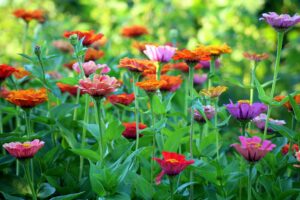
Container-grown annuals need feeding because watering can move nutrients beyond the root zone. Annuals may need less fertilizer when fertility and organic matter are adequate.
In this guide , we compare 15 fertilizers for annual flowers, focusing on NPK ratios, flowering, root development, micronutrients, slow-release nutrition, liquid feeding, and container use. Each selection uses a brand so you can compare formulations without repeating manufacturers.
15 Best Fertilizer For Annual Flowers
1. Espoma Flower-tone 3-4-5 – Best fertilizer for annual flowers
Espoma Flower-tone 3-4-5 is the best fertilizer for annual flowers in this guide because it is specifically formulated for annuals, perennials, and hanging baskets. Espoma describes Flower-tone as a natural and organic fertilizer designed to promote and prolong abundant blooming through slow-release nutrition.

- Use on annuals, perennials, and hanging baskets
- Complex blend of 100-percent natural and organic approved ingredients to provide complete and balanced feeding
The 3-4-5 NPK analysis provides moderate nitrogen for vegetative growth, phosphorus for root and reproductive development, and a slightly higher potassium level for plant strength and water regulation. The formulation also contains calcium, magnesium, sulfur, humic acids, and beneficial microorganisms, giving annual flowers a broader nutrient profile than a simple NPK fertilizer.
Its slow-release characteristics make it particularly useful for gardeners who want consistent nutrition instead of repeated high-concentration feeding. Espoma recommends monthly feeding for established annuals throughout the growing season, including landscape beds, raised beds, containers, and hanging baskets.
Pros:
- 3-4-5 NPK
- Organic formula
- Slow release
- Bloom focused
- Beneficial microbes
- Container friendly
- Long lasting
Cons:
- Slow response
- Monthly feeding
- Lower nitrogen
2. Miracle-Gro Water Soluble Bloom Booster 15-30-15 – Runner-up for annual flowers
Miracle-Gro Water Soluble Bloom Booster 15-30-15 takes the runner-up position because it provides a concentrated water-soluble formulation specifically intended to increase flowering in annual and perennial plants. The manufacturer states that it feeds plants instantly and can be used in flower gardens and containers.

- Miracle-Gro Water Soluble Bloom Booster Flower Food promotes more blooms for greater color! (vs unfed plants)
- This plant food for flowers feeds plants instantly and may be reapplied every 7-14 days

Its 15-30-15 analysis provides substantial nitrogen for foliage, a high phosphate percentage for flowering and root development, and potassium for plant strength and physiological regulation. The high phosphorus analysis makes it more bloom-focused than balanced formulas, although existing soil fertility should be considered before repeatedly applying high-phosphorus fertilizer.
The water-soluble format is particularly useful when annual flowers need readily available nutrients during active growth. Miracle-Gro states that the product may be reapplied every 7–14 days according to label directions, making it suitable for intensive flowering programs.
Pros:
- 15-30-15 NPK
- Fast feeding
- Bloom focused
- Water soluble
- Container use
- Easy mixing
- Rapid availability
Cons:
- High phosphorus
- Frequent feeding
- Rate sensitive
3. Jack’s Classic Blossom Booster 10-30-20 – Best bloom fertilizer for annual flowers
Jack’s Classic Blossom Booster 10-30-20 is the best bloom fertilizer for annual flowers when the primary objective is encouraging abundant flowers and maintaining strong color. The 10-30-20 formulation is designed as a professional-style blossom booster for indoor and outdoor flowering plants.

- 10-30-20 Analysis - Great for producing brighter, more plentiful flowers in flowering plants.
- Water-Soluble Powder – Powdered concentrates go further than liquid fertilizers. Simply mix your measured powder with water and you are ready to feed with multiple gallons of liquid fertilizer!
The 10% nitrogen supports foliage without making the formula overwhelmingly vegetative, while 30% phosphate provides a concentrated phosphorus source for root and reproductive functions. Potassium at 20% supports water regulation, enzyme activation, and overall plant resilience during heavy flowering.
The water-soluble format allows nutrients to reach roots quickly and can also be used for foliar feeding when the label permits. This makes Jack’s particularly useful for annuals such as geraniums, impatiens, begonias, and marigolds that can produce flowers continuously during favorable growing conditions.
Pros:
- 10-30-20 NPK
- Bloom focused
- Water soluble
- Micronutrients
- Fast feeding
- Professional formula
- Versatile use
Cons:
- High phosphorus
- Rate sensitive
- Synthetic formula
4. Osmocote Plus Smart-Release 15-9-12 – Best slow-release fertilizer for annual flowers
Osmocote Plus Smart-Release 15-9-12 is the best slow-release fertilizer for annual flowers when steady nutrition is more important than immediate feeding. Its controlled-release approach makes it useful for gardeners who want to reduce the frequency of fertilizer applications during the growing season.
The 15-9-12 analysis provides substantially more nitrogen than phosphorus, supporting vigorous leaf and stem development while supplying phosphorus for roots and potassium for plant strength. Annual flowers need enough foliage to support photosynthesis, but excessive nitrogen can encourage vegetative growth at the expense of flowering, so application rate remains important.
Controlled-release granules are especially convenient for containers because repeated watering can remove soluble nutrients from the root zone. A slow-release formulation can provide a more consistent nutrient supply while reducing the risk associated with repeated concentrated applications.
Pros:
- 15-9-12 NPK
- Slow release
- Long feeding
- Container friendly
- Less frequent
- Balanced nutrition
- Easy application
Cons:
- Higher cost
- Slower response
- Rate sensitive
5. Down To Earth Rose & Flower Mix 4-8-4 – Best organic fertilizer for annual flowers
Down To Earth Rose & Flower Mix 4-8-4 is the best organic fertilizer for annual flowers when gardeners want a granular formulation with organic nutrient sources. The manufacturer specifically lists annuals among the plants that benefit from this fertilizer and recommends it for vigorous growth and flowering.
The 4-8-4 analysis supplies moderate nitrogen, elevated phosphate, and potassium for overall plant performance. Its ingredients include fish bone meal, langbeinite, alfalfa meal, rock phosphate, blood meal, feather meal, and seaweed meal, while the product also contains humic acids.
The slow-release portion of its nitrogen supply makes it appropriate for gardeners who prefer gradual nutrition rather than frequent soluble feeding. Down To Earth recommends applying it at planting and throughout the growing season, including side-dressing established plants.
Pros:
- 4-8-4 NPK
- Organic inputs
- Humic acids
- Slow nitrogen
- Bloom support
- Granular formula
- Annual friendly
Cons:
- Slow response
- Organic odor
- Higher phosphorus
6. Dr. Earth Flower Garden Fertilizer 4-8-4 – Best natural fertilizer for annual flowers
Dr. Earth Flower Garden Fertilizer 4-8-4 is the best natural fertilizer for annual flowers when a gardener wants organic nutrition designed around flowering plants. Its moderate nitrogen and higher phosphorus analysis can support the transition from vegetative growth into reproductive development.
Nitrogen remains important because annual flowers need enough leaf area to capture sunlight and manufacture carbohydrates. Phosphorus participates in energy-transfer reactions and reproductive development, while potassium supports cellular water balance, enzyme activity, and plant stress tolerance.
The granular organic approach can provide nutrients over a longer period than many water-soluble products. This makes it suitable for flower beds where the goal is to establish nutrition at planting and maintain fertility through the growing season.
Pros:
- 4-8-4 NPK
- Organic formula
- Flower focused
- Slow nutrition
- Root support
- Granular form
- Soil friendly
Cons:
- Slow response
- Lower nitrogen
- Needs moisture
7. FoxFarm Tiger Bloom 2-8-4 – Best liquid fertilizer for annual flowers
FoxFarm Tiger Bloom 2-8-4 is the best liquid fertilizer for annual flowers when gardeners want a concentrated bloom-oriented product that can be applied through irrigation. FoxFarm describes it as a phosphorus fertilizer containing nitrogen and designed to encourage abundant flowers, fruit, and multiple bud development.
The 2-8-4 analysis keeps nitrogen relatively low while providing more phosphorus and potassium, making it particularly appropriate when annuals have already developed adequate foliage. It also supplies magnesium and several micronutrients, including boron, copper, iron, manganese, and zinc.
Liquid feeding provides rapid nutrient availability compared with many dry organic fertilizers. FoxFarm recommends using Tiger Bloom at the first signs of flowering, making it a specialized option for the reproductive stage rather than necessarily the only fertilizer used throughout an annual’s life cycle.
Pros:
- 2-8-4 NPK
- Liquid formula
- Bloom focused
- Micronutrients
- Fast availability
- Bud support
- Easy mixing
Cons:
- Low nitrogen
- Rate sensitive
- Specialized use
8. Neptune’s Harvest Rose & Flowering Fertilizer 2-6-4 – Best fish-based fertilizer for annual flowers
Neptune’s Harvest Rose & Flowering Fertilizer 2-6-4 is the best fish-based fertilizer for annual flowers when gardeners prefer a liquid organic-style feeding program. The product is formulated specifically as a rose and flowering fertilizer and is available as a concentrated liquid.
The 2-6-4 analysis supplies relatively low nitrogen with higher phosphorus and potassium, which can complement annuals entering their flowering phase. Phosphorus contributes to energy-transfer reactions and reproductive growth, while potassium supports water regulation and structural strength.
Neptune’s Harvest recommends its Rose & Flowering formula for flowers and provides outdoor feeding directions at regular intervals. Its guidance also describes a two-stage approach in which a more vegetative fertilizer can be used early before switching to the flowering formula when blooming begins.
Pros:
- 2-6-4 NPK
- Liquid feeding
- Flower focused
- Fish based
- Easy dilution
- Outdoor friendly
- Flexible feeding
Cons:
- Fish odor
- Low nitrogen
- Frequent feeding
9. FoxFarm Happy Frog All-Purpose 6-4-5 – Best microbial fertilizer for annual flowers
FoxFarm Happy Frog All-Purpose 6-4-5 is the best microbial fertilizer for annual flowers when gardeners want conventional NPK nutrition combined with beneficial soil microorganisms. FoxFarm specifically recommends the formulation for annual and perennial flower gardens, ornamental plantings, and container gardening.
The 6-4-5 analysis provides moderate nitrogen, phosphorus, and potassium, with additional calcium and magnesium. The nitrogen is water-insoluble and derived from materials including feather meal, alfalfa meal, fish bone meal, and fish meal, while the product also contains mycorrhizal fungi intended to support root efficiency and nutrient and water uptake.
Its gradual feeding characteristics make it suitable for annuals that need consistent nutrition rather than a short-term nutrient spike. FoxFarm recommends monthly top-dressing for established plants during the growing season, including annual flowers grown in containers and beds.
Pros:
- 6-4-5 NPK
- Mycorrhizal fungi
- Organic listed
- Slow nitrogen
- Root support
- Container use
- Monthly feeding
Cons:
- Slow response
- Moderate phosphorus
- Needs watering
10. Schultz Bloom Plus 10-54-10 – Best high-phosphorus fertilizer for annual flowers
Schultz Bloom Plus 10-54-10 is the best high-phosphorus fertilizer for annual flowers when a concentrated bloom formulation is required. The manufacturer identifies it as a water-soluble plant food designed to support large, attractive blooms and provide micronutrients.
The 10-54-10 analysis contains a very high phosphate percentage compared with the nitrogen and potassium levels. Such a formulation may be useful during specific flowering situations, but high-phosphorus fertilizer should not be applied automatically when a soil test already indicates adequate phosphorus.
Its water-soluble nature allows nutrients to become available rapidly after mixing with water. This makes it useful for gardeners managing annual flowers in containers or beds where precise liquid feeding is preferred.
Pros:
- 10-54-10 NPK
- High phosphorus
- Water soluble
- Fast acting
- Bloom support
- Micronutrients
- Easy mixing
Cons:
- Very high phosphorus
- Rate sensitive
- Soil testing
11. Jobe’s Organics Annuals & Perennials 3-5-4 – Best granular organic fertilizer for annual flowers
Jobe’s Organics Annuals & Perennials 3-5-4 is the best granular organic fertilizer for annual flowers when gardeners want a product specifically associated with annual and perennial flowering plants. The formulation is listed with a 3-5-4 fertilizer analysis in an official fertilizer database.
The 3-5-4 ratio supplies modest nitrogen for vegetative development, additional phosphate for roots and flowering, and potassium for overall plant strength. The relatively moderate analysis makes it more appropriate for routine garden feeding than extremely concentrated bloom boosters.
Granular organic fertilizer can work well in flower beds because nutrients are released through biological and soil processes rather than being delivered all at once. It is a practical choice for gardeners who want to build fertility around annuals while avoiding frequent liquid applications.
Pros:
- 3-5-4 NPK
- Organic formula
- Flower focused
- Granular form
- Moderate analysis
- Slow nutrition
- Garden friendly
Cons:
- Slow release
- Lower nitrogen
- Needs moisture
12. Ferti-Lome Blooming & Rooting 9-58-8 – Best rooting fertilizer for annual flowers
Ferti-Lome Blooming & Rooting 9-58-8 is the best rooting fertilizer for annual flowers when the goal is supplying concentrated phosphorus alongside nitrogen for active growth. Ferti-Lome lists its Blooming & Rooting soluble plant food at 9-58-8 and recommends it as a supplement for flowers and vegetables during the growing season.
The 9% nitrogen supports foliage while the 58% phosphate makes this a highly concentrated phosphorus formulation. Phosphorus is involved in ATP-based energy transfer and root development, but its use should be based on actual plant and soil requirements rather than assuming more phosphorus always means more flowers.
The water-soluble format allows precise dilution and rapid nutrient availability. It can therefore be useful when annuals require targeted supplemental nutrition, particularly during periods of vigorous growth and flowering.
Pros:
- 9-58-8 NPK
- Root support
- Bloom support
- Water soluble
- Fast availability
- Concentrated formula
- Easy dilution
Cons:
- Very high phosphorus
- Rate sensitive
- Soil testing
13. FoxFarm Marine Cuisine 10-7-7 – Best slow-release organic fertilizer for annual flowers
FoxFarm Marine Cuisine 10-7-7 is the best slow-release organic fertilizer for annual flowers when gardeners want a broader nutrient profile from marine-derived ingredients. FoxFarm describes it as an all-purpose fertilizer designed for flowers, vegetables, ornamental plants, roses, and container plants.
Its 10-7-7 analysis provides stronger nitrogen than many bloom-specific formulas, making it useful when annual flowers need to build foliage and stems before reaching their full flowering potential. The formulation includes crab meal, shrimp meal, seabird guano, kelp, and mineral plant foods, combining relatively quick nutrition with slower nutrient availability.
The product is particularly useful when annuals need both vegetative development and continued flowering rather than a narrow bloom-booster approach. FoxFarm recommends feeding twice per growing season for established gardens, which can simplify fertilizer management compared with products requiring frequent application.
Pros:
- 10-7-7 NPK
- Marine ingredients
- Slow nutrition
- Flower compatible
- Container use
- Broad feeding
- Fewer applications
Cons:
- Marine odor
- Higher nitrogen
- Less bloom focused
14. Ferti-Lome African Violet & Blooming Plant Food 8-10-8 – Best balanced liquid fertilizer for annual flowers
Ferti-Lome African Violet & Blooming Plant Food 8-10-8 is the best balanced liquid fertilizer for annual flowers when gardeners want moderate nitrogen combined with slightly higher phosphorus. Ferti-Lome lists the product among its blooming plant fertilizers, with an 8-10-8 analysis.
The 8-10-8 ratio gives annuals a reasonable supply of nitrogen for foliage while providing phosphorus for roots and reproductive development and potassium for physiological strength. This makes the formula less concentrated than high-phosphorus bloom boosters and potentially more appropriate for routine supplemental feeding.
Liquid fertilizer is convenient for container-grown annuals because it can be distributed evenly through irrigation water. It can also be useful when plants show active nutrient demand and the gardener wants nutrients available faster than many granular organic products provide.
Pros:
- 8-10-8 NPK
- Balanced feeding
- Liquid formula
- Bloom support
- Root support
- Container friendly
- Easy dilution
Cons:
- Frequent feeding
- Rate sensitive
- Not organic
15. Bonide Fertilizer – Best supplemental fertilizer approach for annual flowers
Bonide fertilizer products provide a useful supplemental fertilizer option for annual flowers when the selected formulation matches the plant’s nutrient requirements. Bonide explains that fertilizer NPK numbers represent nitrogen, phosphate, and potash, with nitrogen supporting vegetative growth, phosphorus contributing to roots and flowering, and potassium supporting plant strength and disease resistance.
The important consideration is selecting the appropriate Bonide formulation rather than assuming every fertilizer carrying the brand is identical. Annual flowers can have different nutritional requirements depending on whether they are grown in containers, raised beds, landscape soil, or nutrient-rich potting media.
A supplemental fertilizer can be particularly useful when annual flowers are actively growing and soil nutrients are becoming depleted. Soil testing and careful observation of foliage, flowering, and growth should guide the choice and rate instead of relying exclusively on fertilizer marketing.
Pros:
- NPK options
- Flower support
- Nutrient flexibility
- Root support
- Potassium support
- Broad selection
- Easy application
Cons:
- Formula varies
- Rate dependent
- Soil testing
Best Fertilizer For Annual Flowers Buying Guide
Choose the right NPK ratio
The ideal NPK ratio for annual flowers depends on the plant’s growth stage and existing soil fertility. A moderate formulation such as 3-4-5, 6-4-5, or 4-8-4 can support general growth, while higher-phosphorus formulas such as 10-30-20 or 15-30-15 are more specialized bloom fertilizers.
Nitrogen supports chlorophyll production, leaf development, and vegetative growth. Phosphorus participates in energy transfer and root development, while potassium supports water regulation, enzyme activity, and plant strength.
Use higher nitrogen during establishment
Young annual flowers need enough nitrogen to develop leaves, stems, and a functional canopy. A fertilizer with moderate nitrogen can therefore be useful during the early vegetative stage before plants enter heavy flowering.
Excessive nitrogen can encourage leafy growth and delay or reduce flowering in some plants. The objective is adequate nitrogen rather than the highest possible nitrogen concentration.
Increase bloom-focused nutrition when flowering begins
Once annuals have developed sufficient foliage, a bloom-oriented fertilizer can become more useful. Products such as Miracle-Gro Bloom Booster 15-30-15, Jack’s Classic Blossom Booster 10-30-20, and FoxFarm Tiger Bloom 2-8-4 are designed around flowering-stage nutrition.
However, high phosphorus does not automatically produce more flowers when phosphorus is already sufficient in the soil. Soil testing should determine whether additional phosphorus is justified.
Consider slow-release fertilizer
Slow-release fertilizers are useful for gardeners who want fewer applications throughout the growing season. Granular products can gradually supply nutrients while reducing the frequency of concentrated feeding.
This approach is particularly useful for annual flower beds and containers where consistent nutrition is preferred. Products such as Espoma Flower-tone and other granular organic fertilizers can fit this type of feeding program.
Choose liquid fertilizer for rapid feeding
Water-soluble fertilizers are useful when annual flowers need readily available nutrients. They are particularly convenient for container-grown annuals because the fertilizer can be incorporated directly into irrigation water.
Liquid fertilizers also allow gardeners to adjust the concentration and frequency of feeding. The main disadvantage is that soluble nutrients can move through the container or soil profile with repeated watering.
Consider container-grown annuals
Annual flowers in containers generally have a smaller root zone than plants growing in the ground. Frequent irrigation can also reduce available nutrients, making regular feeding important.
Slow-release granules can simplify container nutrition, while water-soluble fertilizer provides more control over the feeding schedule. Always follow the product label because fertilizer concentration varies considerably between formulations.
Avoid excessive phosphorus
A common misconception is that every flowering plant needs a fertilizer with extremely high phosphorus. Phosphorus is important for plant metabolism and reproductive development, but applying excessive amounts when soil phosphorus is already adequate does not necessarily improve flowering.
A soil test is the most reliable way to determine whether phosphorus needs to be increased. Choose a bloom fertilizer because its complete formulation fits the plant’s needs, not simply because it has the largest middle NPK number.
Consider organic fertilizer
Organic fertilizers can provide nutrients through materials that depend partly on microbial decomposition and soil biological activity. They may be useful for gardeners who want gradual nutrition and organic inputs.
Products such as Espoma Flower-tone, Down To Earth Rose & Flower Mix, Jobe’s Organics Annuals & Perennials, and FoxFarm Happy Frog provide alternatives to conventional soluble fertilizers. Their slower nutrient release means they should be incorporated into the feeding plan before plants become severely nutrient deficient.
Match fertilizer to the growth stage
Annual flowers have changing nutritional requirements during their relatively short life cycle. Early feeding should support roots, leaves, and stems, while later feeding should maintain healthy foliage and flower production.
A complete fertilizer program may therefore use one moderate fertilizer during establishment and a bloom-oriented product later if soil and plant conditions justify it. This approach is more precise than using a single high-phosphorus fertilizer throughout the entire growing season.
Apply fertilizer correctly
Fertilizer should be kept away from direct contact with stems and foliage unless the product is specifically labeled for foliar application. Granular fertilizers should be distributed evenly and watered according to label instructions.
Water-soluble products should always be diluted according to the manufacturer’s directions. Overfertilization can increase soluble salts around roots and may cause leaf-edge burn, root injury, or excessive vegetative growth.
Best Fertilizer For Annual Flowers FAQs
1. What is the best fertilizer for annual flowers?
Espoma Flower-tone 3-4-5 is the best selection in this guide because it is specifically formulated for annuals, perennials, and hanging baskets and provides slow-release organic nutrition. Espoma also recommends monthly feeding of established annual flowers throughout the growing season.
2. What is the runner-up fertilizer for annual flowers?
Miracle-Gro Water Soluble Bloom Booster 15-30-15 is the runner-up because it provides fast, water-soluble nutrition specifically designed to encourage more blooms. It can be used on annual flowering plants in both gardens and containers.
3. What NPK ratio is best for annual flowers?
There is no single NPK ratio that is best for every annual flower. Moderate formulas can support general growth, while bloom-focused ratios such as 10-30-20 or 15-30-15 can be useful when plants are entering flowering and additional phosphorus is actually required.
4. Is 10-10-10 fertilizer good for annual flowers?
Yes, 10-10-10 can provide balanced nitrogen, phosphorus, and potassium for annual flowers when soil testing and plant requirements support that analysis. It is more appropriate as a general-purpose fertilizer than as a specialized bloom booster.
5. Is high phosphorus fertilizer good for annual flowers?
High-phosphorus fertilizer can be useful in situations where phosphorus is needed and the product is appropriate for the plant’s growth stage. It should not be assumed that more phosphorus automatically produces more flowers when the soil already contains sufficient phosphorus.
6. How often should you fertilize annual flowers?
The correct frequency depends on the fertilizer formulation, soil, container size, plant growth, and label directions. Slow-release fertilizers may require only occasional applications, while water-soluble products may be used every one to two weeks or according to the specific manufacturer’s instructions.
7. Is organic fertilizer good for annual flowers?
Yes, organic fertilizer can provide gradual nutrition and contribute organic nutrient sources to flower beds and containers. Espoma Flower-tone, for example, is specifically formulated for annuals and uses slow-release organic nutrition with beneficial microbes.
Conclusion
In conclusion, Espoma Flower-tone 3-4-5 is the best fertilizer for annual flowers in this guide because it is specifically formulated for annuals and combines moderate NPK nutrition with slow-release organic ingredients and beneficial microbes. Its ability to support flowering in garden beds, containers, and hanging baskets makes it a versatile choice for gardeners seeking consistent nutrition.
Miracle-Gro Water Soluble Bloom Booster 15-30-15 is the runner-up because it provides rapidly available nutrients and is specifically marketed for flowering annuals and other ornamental plants. Its water-soluble formulation makes it particularly convenient when annual flowers need immediate supplemental nutrition during active flowering.
The remaining selections provide different approaches to annual-flower nutrition, including high-phosphorus bloom boosters, slow-release fertilizers, organic formulas, microbial fertilizers, marine-based nutrition, and specialized liquid feeds. The most appropriate choice depends on the annual species, growing medium, soil fertility, container size, growth stage, and whether the plants actually require additional phosphorus or other nutrients.
Before applying fertilizer, test the soil and evaluate the plant’s growth stage and growing environment. Annual flowers perform best when fertilizer supplies the nutrients they actually need without excessive nitrogen, phosphorus, salts, or unnecessary applications.
Recent Posts
Spring fertilization supports healthy leaf development, root activity, and productive shoot growth when apple trees have insufficient soil nutrients. Selecting an appropriate fertilizer requires...
Cucumbers (Cucumis sativus) are vigorous, fast-growing vines that can produce abundant harvests when their roots receive enough water, warmth, and balanced nutrition. The best fertilizer for cukes in...