Pairing Forsythia shrubs effectively requires selecting the Best Companion Plants For Forsythia (Forsythia × intermedia) that enhance seasonal structure, soil compatibility, and bloom synchronization. Forsythia × intermedia is a deciduous flowering shrub widely valued for its early spring yellow blossoms.
Successful companion Forsythia planting depends on ecological compatibility, including root depth, nutrient uptake, and water efficiency. These biological interactions determine whether surrounding Companion plants support or compete with Forsythia growth.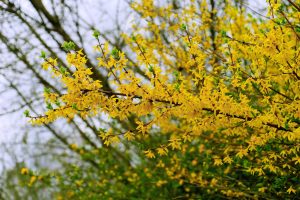
Landscape biodiversity improves when compatible species are combined, supporting pollinators and stabilizing soil ecosystems. Proper Companion Plants pairing also enhances year-round Forsythia garden structure and visual continuity.
In this guide , we will explore the top 10 Best Companion Plants For Forsythia, focusing on scientifically matched species, including Spiraea japonica, Syringa vulgaris, and other compatible ornamentals for optimal landscape performance.
10 Best Companion Plants For Forsythia
1. Spirea (Spiraea japonica) – best flowering shrub companion for Forsythia seasonal balance
Spirea (Spiraea japonica) is the best flowering shrub companion for Forsythia seasonal balance because it extends bloom cycles after Forsythia × intermedia flowers fade. Additionally, both shrubs thrive in similar temperate soil conditions. As a result, seasonal garden continuity improves significantly.
The fibrous root system of Spiraea japonica does not aggressively compete with Forsythia × intermedia. Moreover, both species tolerate pruning and shaping effectively. Therefore, structured landscape design becomes easier to maintain.
Spirea also supports pollinator populations after Forsythia bloom decline. Furthermore, its late-season flowers extend ecological activity. Consequently, biodiversity in ornamental gardens increases.
Pros:
• Long bloom
• Easy care
• Pollinator friendly
• Soil compatible
• Low maintenance
• Pruning tolerant
• Seasonal color
Cons:
• Moderate spread
• Sun needed
• Seasonal drop
2. Lilac (Syringa vulgaris) – best fragrant companion plant for Forsythia spring gardens
Lilac (Syringa vulgaris) is the best fragrant companion plant for Forsythia spring gardens because it complements early blooming cycles of Forsythia × intermedia. Additionally, both species thrive in full sunlight conditions. As a result, spring landscapes become visually and aromatically enhanced.
Syringa vulgaris develops deeper root systems than Forsythia × intermedia, reducing direct competition. Moreover, both tolerate slightly alkaline soils. Therefore, nutrient distribution remains balanced.
Lilac improves pollinator attraction during overlapping bloom periods. Furthermore, its fragrance enhances sensory garden value. Consequently, ecological interaction increases significantly.
Pros:
• Strong fragrance
• Spring bloom
• Pollinator boost
• Deep roots
• Sun tolerant
• Soil adaptable
• Ornamental
Cons:
• Large size
• Needs pruning
• Seasonal bloom
3. Daffodil (Narcissus pseudonarcissus) – best bulb companion for Forsythia early color contrast
Daffodil (Narcissus pseudonarcissus) is the best bulb companion for Forsythia early color contrast because it blooms simultaneously with Forsythia × intermedia in early spring. Additionally, both thrive in full sun exposure. As a result, early-season color impact increases dramatically.
Narcissus pseudonarcissus stores energy in underground bulbs, reducing surface-level competition with Forsythia roots. Moreover, it naturalizes easily in garden soil. Therefore, long-term planting stability improves.
Daffodils enhance early pollinator activity before peak flowering season begins. Furthermore, they add layered visual depth. Consequently, landscape aesthetics improve significantly.
Pros:
• Early bloom
• Low care
• Naturalizing
• Bright color
• Sun tolerant
• Bulb storage
• Easy planting
Cons:
• Short bloom
• Toxic bulbs
• Seasonal fade
4. Peony (Paeonia lactiflora) – best perennial companion for Forsythia ornamental layering
Peony (Paeonia lactiflora) is the best perennial companion for Forsythia ornamental layering because it produces large blooms after Forsythia × intermedia flowering ends. Additionally, both prefer well-drained soils. As a result, seasonal continuity is maintained.
Paeonia lactiflora develops tuberous roots that grow deep underground, reducing competition with Forsythia × intermedia. Moreover, nutrient absorption occurs at different soil levels. Therefore, resource sharing remains efficient.
Peonies enhance ornamental value with large, high-impact flowers. Furthermore, they extend seasonal visual appeal. Consequently, garden design becomes more dynamic.
Pros:
• Large blooms
• Long lifespan
• Deep roots
• Ornamental
• Soil friendly
• Seasonal layering
• Strong structure
Cons:
• Slow growth
• Needs support
• Short bloom
5. Hydrangea (Hydrangea macrophylla) – best shade-tolerant companion for Forsythia garden depth
Hydrangea (Hydrangea macrophylla) is the best shade-tolerant companion for Forsythia garden depth because it thrives in partial shade near Forsythia × intermedia. Additionally, both species tolerate moderate moisture levels. As a result, garden layering improves.
Hydrangea macrophylla adjusts flower color based on soil pH chemistry. Moreover, it contrasts visually with Forsythia’s yellow blooms. Therefore, landscape diversity increases.
Hydrangea roots are moderately spreading but non-invasive. Furthermore, consistent irrigation supports healthy flowering. Consequently, maintenance becomes manageable.
Pros:
• Color variety
• Shade tolerant
• Moderate roots
• Long bloom
• Moisture balance
• Ornamental
• Visual contrast
Cons:
• Water needed
• Sensitive soil
• Pruning required
6. Boxwood (Buxus sempervirens) – best evergreen structural companion for Forsythia borders
Boxwood (Buxus sempervirens) is the best evergreen structural companion for Forsythia borders because it provides year-round structure around Forsythia × intermedia. Additionally, its dense foliage enhances visual framing. As a result, landscape design becomes more stable.
Buxus sempervirens grows slowly, reducing competition for nutrients. Moreover, it tolerates frequent trimming. Therefore, formal garden shaping becomes easier.
Boxwood maintains consistent structure across seasons. Furthermore, it enhances garden symmetry. Consequently, landscape architecture improves.
Pros:
• Evergreen
• Dense foliage
• Easy shaping
• Slow growth
• Year-round use
• Strong structure
• Low competition
Cons:
• Slow growth
• Needs trimming
• Pest risk
7. Lavender (Lavandula angustifolia) – best aromatic companion for Forsythia pest resistance
Lavender (Lavandula angustifolia) is the best aromatic companion for Forsythia pest resistance because it produces essential oils that repel insects naturally. Additionally, it thrives in dry soils similar to Forsythia × intermedia. As a result, compatibility remains high.
Lavandula angustifolia attracts pollinators while reducing pest pressure. Moreover, it has a non-invasive root system. Therefore, soil competition is minimal.
Lavender enhances sensory garden value through fragrance. Furthermore, it improves biodiversity. Consequently, ecosystem health increases.
Pros:
• Pest control
• Aromatic
• Drought tolerant
• Pollinator friendly
• Low maintenance
• Color contrast
• Soil friendly
Cons:
• Woody stems
• Needs sun
• Slow start
8. Iris (Iris germanica) – best perennial transition companion for Forsythia bloom cycle
Iris (Iris germanica) is the best perennial transition companion for Forsythia bloom cycle because it blooms immediately after Forsythia × intermedia. Additionally, both prefer sunny conditions. As a result, seasonal continuity improves.
Iris germanica grows from rhizomes that store nutrients underground. Moreover, this reduces competition with Forsythia roots. Therefore, stability improves.
Iris adds vertical structure and color diversity. Furthermore, it enhances garden layering. Consequently, landscape depth increases.
Pros:
• Spring bloom
• Color variety
• Easy care
• Rhizome growth
• Sun tolerant
• Seasonal shift
• Decorative
Cons:
• Short bloom
• Needs space
• Dividing needed
9. Ornamental Grass (Miscanthus sinensis) – best texture companion for Forsythia landscape flow
Ornamental grass (Miscanthus sinensis) is the best texture companion for Forsythia landscape flow because it adds movement and contrast. Additionally, it thrives in similar soil conditions. As a result, garden structure improves.
Miscanthus sinensis stabilizes soil through fibrous root systems. Moreover, it improves drainage efficiency. Therefore, plant health increases.
Ornamental grasses enhance wind movement effects. Furthermore, they provide year-round texture. Consequently, landscape aesthetics improve.
Pros:
• Texture contrast
• Soil stability
• Low care
• Wind movement
• Year-round use
• Fast growth
• Easy planting
Cons:
• Spreads fast
• Needs trimming
• Seasonal browning
10. Azalea (Rhododendron spp.) – best flowering companion for Forsythia color layering
Azalea (Rhododendron spp.) is the best flowering companion for Forsythia color layering because it produces vibrant blooms in overlapping seasonal windows. Additionally, it prefers acidic soils similar to some Forsythia environments. As a result, compatibility improves.
Rhododendron spp. has shallow roots, reducing deep soil competition. Moreover, it enhances color contrast with Forsythia × intermedia. Therefore, visual diversity increases.
Azalea improves ornamental value with dense floral clusters. Furthermore, it extends seasonal interest. Consequently, landscape appeal improves.
Pros:
• Vibrant blooms
• Acid soil
• Shade tolerant
• Seasonal overlap
• Ornamental
• Color contrast
• Dense flowers
Cons:
• Water needed
• Acid soil
• Sensitive roots
FAQs – Best Companion Plants For Forsythia
1. What are the best companion plants for Forsythia (Forsythia × intermedia)?
The best companion plants for Forsythia × intermedia include Spiraea japonica, Syringa vulgaris, and Narcissus pseudonarcissus because they share similar sunlight and soil requirements while extending seasonal garden interest.
2. Which shrubs grow well next to Forsythia without competing for nutrients?
Shrubs like Spiraea japonica and Buxus sempervirens grow well with Forsythia because they have non-aggressive root systems that reduce nutrient and water competition.
3. Can perennials be planted with Forsythia for year-round color?
Yes, perennials such as Paeonia lactiflora and Iris germanica are ideal because they bloom after Forsythia and maintain visual interest throughout the growing season.
4. What soil conditions are best for Forsythia companion planting?
Forsythia companion plants perform best in well-drained, moderately fertile soil with neutral to slightly alkaline pH, which supports balanced root development and nutrient uptake.
5. Do companion plants improve Forsythia flowering performance?
Yes, compatible plants like Lavandula angustifolia improve pollinator activity and reduce pest pressure, indirectly supporting healthier and more consistent Forsythia flowering.
6. Which plants should not be planted near Forsythia?
Avoid moisture-demanding plants such as hydrangea varieties that require constant wet soil, as they conflict with Forsythia’s moderate drought tolerance and can stress root systems.
7. How far should companion plants be spaced from Forsythia shrubs?
Companion plants should be spaced 60–120 cm away from Forsythia × intermedia to prevent root crowding while allowing adequate airflow and nutrient distribution.
Conclusion
In conclusion, the best companion plant for Forsythia × intermedia is Spiraea japonica because this Forsythia companion plant extends bloom cycles while maintaining strong soil and sunlight compatibility for healthy Forsythia growth. The runner-up Forsythia companion plant is Syringa vulgaris because it supports Forsythia landscapes by adding fragrance, pollinator attraction, and complementary spring flowering performance.
Forsythia companion plant selection depends on bloom timing, root competition, and environmental matching with Forsythia. Proper Forsythia companion planting ensures Forsythia maintains strong flowering without nutrient stress or reduced seasonal performance.
Well-matched Forsythia companion plants like Paeonia lactiflora and Lavandula angustifolia improve Forsythia garden biodiversity and structural balance around Forsythia shrubs. This creates a healthier, more stable, and visually dynamic Forsythia landscape.
Apply these Forsythia companion plant combinations in your garden design to maximize Forsythia seasonal impact and long-term Forsythia plant performance. Start implementing the best Forsythia companion planting strategy today for a more vibrant Forsythia display.
Recent Posts
Yard weeds can quickly compete with desirable grass and landscape plants for water, nutrients, sunlight, and growing space. Choosing the best herbicide for yard weeds therefore depends on the weed...
Mallow can be a stubborn broadleaf weed because mature plants develop a strong taproot and can continue producing seed if they are left uncontrolled. Choosing the best herbicide for mallow therefore...