Designing productive Kiwi orchards requires selecting the best companion plants for kiwi vines (Actinidia deliciosa) that enhance pollination, soil fertility, and vine vigor. Kiwi vines are fast-growing climbers that depend heavily on structural support and ecological balance.
Successful companion planting for kiwi vines depends on nutrient cycling, root competition, and pollinator attraction. These factors directly influence fruit set, yield quality, and vine health.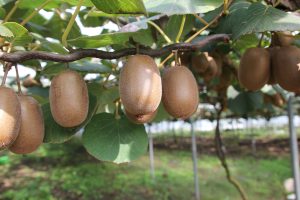
Kiwi Vine Companion plants also improve microclimate conditions by reducing wind stress and maintaining soil moisture stability. This creates a more favorable growing environment for consistent kiwi production.
In this guide , we will explore the top 10 best companion plants for kiwi vines, focusing on scientifically relevant species such as Trifolium repens, Lavandula angustifolia, and Allium schoenoprasum for optimal orchard performance.
10 Best Companion Plants For Kiwi Vines
1. Clover (Trifolium repens) – best nitrogen-fixing companion for kiwi vine soil fertility
Clover (Trifolium repens) is the best nitrogen-fixing companion for kiwi vine soil fertility because it converts atmospheric nitrogen into plant-usable nutrients through root nodule bacteria. Additionally, this improves soil fertility for kiwi vine growth. As a result, vine vigor increases naturally.
The symbiotic relationship between Trifolium repens and soil microbes enhances nitrogen availability without chemical fertilizers. Moreover, kiwi vines benefit from steady nutrient release. Therefore, fruit production becomes more consistent.
Clover also acts as living ground cover, reducing weed competition around kiwi vines. Furthermore, it stabilizes soil moisture levels. Consequently, orchard efficiency improves significantly.
Pros:
• Nitrogen boost
• Soil cover
• Weed control
• Low maintenance
• Moisture balance
• Eco friendly
• Fast growth
Cons:
• Spreads quickly
• Needs control
• Low height
2. Lavender (Lavandula angustifolia) – best aromatic companion for kiwi vine pollination support
Lavender (Lavandula angustifolia) is the best aromatic companion for kiwi vine pollination support because its essential oils attract bees and beneficial insects. Additionally, kiwi vines depend heavily on insect pollination. As a result, fruit set improves significantly.
Lavandula angustifolia thrives in well-drained soil similar to kiwi vines. Moreover, it requires low water input. Therefore, irrigation compatibility is maintained.
Lavender also reduces pest pressure through natural aromatic compounds. Furthermore, it enhances orchard biodiversity. Consequently, kiwi vine health improves.
Pros:
• Pollinator boost
• Pest resistance
• Aromatic
• Drought tolerant
• Low care
• Soil compatible
• Biodiversity
Cons:
• Needs sun
• Woody stems
• Slow start
3. Chives (Allium schoenoprasum) – best pest-repelling companion for kiwi vines
Chives (Allium schoenoprasum) is the best pest-repelling companion for kiwi vines because it releases sulfur compounds that deter aphids and mites. Additionally, this protects young kiwi vine shoots. As a result, plant damage is reduced.
The root system of Allium schoenoprasum is shallow and non-invasive. Moreover, it does not compete strongly with kiwi vine roots. Therefore, nutrient balance remains stable.
Chives also improve nearby pollinator activity during flowering. Furthermore, they enhance orchard resilience. Consequently, pest management becomes more natural.
Pros:
• Pest control
• Easy grow
• Compact size
• Non invasive
• Edible herb
• Pollinator friendly
• Low water
Cons:
• Limited spread
• Seasonal bloom
• Needs trimming
4. Comfrey (Symphytum officinale) – best dynamic accumulator for kiwi vine nutrient cycling
Comfrey (Symphytum officinale) is the best dynamic accumulator for kiwi vine nutrient cycling because it absorbs deep soil minerals and returns them through leaf decomposition. Additionally, this enriches soil around kiwi vines. As a result, nutrient availability improves.
Symphytum officinale has deep taproots that access minerals unavailable to shallow-rooted plants. Moreover, these nutrients cycle back into the soil organically. Therefore, soil fertility increases naturally.
Comfrey leaves decompose rapidly, improving soil organic matter. Furthermore, this supports microbial activity. Consequently, kiwi vine growth becomes more vigorous.
Pros:
• Deep roots
• Soil enrichment
• Fast decay
• Nutrient cycling
• Low care
• Organic boost
• Strong growth
Cons:
• Spreads fast
• Large leaves
• Needs control
5. Nasturtium (Tropaeolum majus) – best trap crop companion for kiwi vine pest management
Nasturtium (Tropaeolum majus) is the best trap crop companion for kiwi vine pest management because it attracts aphids away from kiwi vines. Additionally, this reduces direct pest pressure. As a result, vine damage decreases.
Tropaeolum majus grows quickly and covers soil effectively. Moreover, it does not compete heavily with kiwi vines. Therefore, spatial balance is maintained.
Nasturtium also attracts beneficial insects that feed on pests. Furthermore, it improves orchard biodiversity. Consequently, ecological balance improves.
Pros:
• Pest trap
• Fast growth
• Edible flowers
• Low care
• Soil cover
• Pollinator boost
• Easy planting
Cons:
• Seasonal
• Spreads wide
• Needs pruning
6. Borage (Borago officinalis) – best pollinator magnet for kiwi vine fruiting
Borage (Borago officinalis) is the best pollinator magnet for kiwi vine fruiting because it produces nectar-rich flowers that attract bees. Additionally, kiwi vines require strong pollination for fruit development. As a result, yield improves.
Borago officinalis grows well in similar soil conditions as kiwi vines. Moreover, it self-seeds easily. Therefore, long-term planting stability increases.
Borage also improves soil mineral cycling after decomposition. Furthermore, it enhances ecosystem health. Consequently, orchard productivity increases.
Pros:
• Bee magnet
• High nectar
• Easy grow
• Soil boost
• Self seeding
• Edible plant
• Strong bloom
Cons:
• Spreads easily
• Rough leaves
• Seasonal plant
7. Marigold (Tagetes erecta) – best nematode-repelling companion for kiwi vines
Marigold (Tagetes erecta) is the best nematode-repelling companion for kiwi vines because it releases bioactive compounds that suppress soil pests. Additionally, this protects kiwi vine roots. As a result, root health improves.
Tagetes erecta thrives in warm conditions similar to kiwi vines. Moreover, it requires minimal maintenance. Therefore, compatibility is high.
Marigold also attracts beneficial insects. Furthermore, it improves orchard aesthetics. Consequently, garden health improves.
Pros:
• Pest control
• Bright flowers
• Easy grow
• Soil protection
• Low care
• Pollinator friendly
• Strong scent
Cons:
• Seasonal
• Needs sun
• Moderate water
8. Beans (Phaseolus vulgaris) – best nitrogen-support companion for kiwi vines
Beans (Phaseolus vulgaris) is the best nitrogen-support companion for kiwi vines because it improves soil nitrogen through root symbiosis. Additionally, this benefits kiwi vine growth. As a result, foliage becomes healthier.
Phaseolus vulgaris improves soil structure through root activity. Moreover, it reduces soil compaction. Therefore, root penetration improves.
Beans also provide edible yield while supporting kiwi vines. Furthermore, they increase garden efficiency. Consequently, productivity improves.
Pros:
• Nitrogen boost
• Edible crop
• Fast growth
• Soil structure
• Dual purpose
• Low cost
• Easy planting
Cons:
• Needs support
• Seasonal
• Pest risk
9. Sunflower (Helianthus annuus) – best structural support companion for kiwi vines
Sunflower (Helianthus annuus) is the best structural support companion for kiwi vines because it provides temporary vertical support. Additionally, this helps young kiwi vines climb. As a result, growth direction improves.
Helianthus annuus grows quickly and reaches tall heights. Moreover, it does not compete heavily for nutrients. Therefore, coexistence is effective.
Sunflowers attract pollinators essential for kiwi vine fruiting. Furthermore, they enhance biodiversity. Consequently, orchard performance increases.
Pros:
• Tall support
• Pollinator boost
• Fast growth
• Easy care
• Visual appeal
• Soil friendly
• Dual benefit
Cons:
• Short lifespan
• Needs sun
• Large space
10. Mint (Mentha spicata) – best aromatic ground companion for kiwi vines
Mint (Mentha spicata) is the best aromatic ground companion for kiwi vines because it deters pests through strong volatile oils. Additionally, it spreads as ground cover. As a result, weed suppression improves.
Mentha spicata thrives in moist soil conditions near kiwi vine irrigation zones. Moreover, it grows aggressively. Therefore, it must be managed carefully.
Mint also improves biodiversity and attracts pollinators. Furthermore, it enhances garden aroma. Consequently, ecosystem quality increases.
Pros:
• Pest control
• Fast spread
• Aromatic
• Ground cover
• Low care
• Edible herb
• Pollinator friendly
Cons:
• Invasive
• Needs control
• Spreads fast
FAQs – Best Companion Plants for Kiwi Vines
1. What are the best companion plants for kiwi vines (Actinidia deliciosa)?
The best companions include clover (Trifolium repens), borage (Borago officinalis), and marigold (Tagetes erecta) for soil fertility and pollination.
2. Which plants improve kiwi vine pollination?
Lavender (Lavandula angustifolia) and borage attract bees that significantly improve kiwi fruit set.
3. Can nitrogen-fixing plants help kiwi vines grow?
Yes, clover and beans (Phaseolus vulgaris) improve soil nitrogen naturally.
4. What plants repel pests from kiwi vines?
Chives (Allium schoenoprasum) and marigolds (Tagetes erecta) help deter common pests.
5. Can kiwi vines grow with ground cover plants?
Yes, mint (Mentha spicata) and clover are effective ground covers.
6. Do companion plants increase kiwi yield?
Yes, improved pollination and soil fertility increase fruit production.
7. What plants should be avoided near kiwi vines?
Avoid deep-rooted, high-water plants that compete heavily for nutrients.
Conclusion
In conclusion, the best companion plant for kiwi vines is clover (Trifolium repens) because it enhances soil nitrogen levels and supports vigorous vine growth. The runner-up is lavender (Lavandula angustifolia) because it improves pollination efficiency and pest resistance around kiwi vines.
Kiwi vines thrive when paired with plants that improve soil fertility and pollinator activity. Proper companion selection enhances fruit production and vine health.
Balanced ecosystems reduce pest pressure and improve orchard sustainability. This leads to stronger long-term productivity.
Apply these kiwi vine companion strategies to maximize yield and garden efficiency. Start integrating the best combinations today for a healthier orchard system.
Recent Posts
What Is The Prettiest Flower Name For A Girl? 10 Best Options
Choosing the prettiest flower name for a girl can be a beautiful way to connect a girl's name with nature, elegance, color, fragrance, and timeless beauty. Flower-inspired names range from short and...
Finding plants that are dog urine resistant can make landscaping easier for households where dogs regularly use the yard. Some plants tolerate occasional exposure to diluted urine better than others...