Native flowers can bring colour, seasonal interest, and ecological value to gardens across western Pennsylvania while fitting naturally into the region’s growing conditions. These plants can support bees, butterflies, hummingbirds, and other wildlife while reducing the need to rely on non-native ornamentals.
Western Pennsylvania contains a mixture of woodland, meadow, wetland, and open sunny habitats, so plant selection should begin with the conditions of the planting site. Sun exposure, soil moisture, drainage, soil texture, mature plant height, and flowering period all influence how successfully a native wildflower establishes.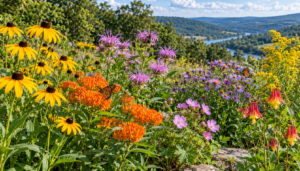
Many native species are especially useful because they contribute more than attractive blooms, providing pollen, nectar, seeds, or foliage used by local wildlife. Pennsylvania’s DCNR recommends matching native plants to site conditions and using nursery-propagated plants rather than removing specimens from natural habitats.
In this guide, we explore 15 flowers native to western Pennsylvania, including colourful wildflowers suited to sunny borders, meadows, woodland edges, and moist areas. We also examine their growing requirements, flowering characteristics, wildlife value, and practical considerations for establishing a productive native flower garden.
15 Best Flowers Native To Western Pennsylvania
1. Black-Eyed Susan (Rudbeckia hirta) — Best Native Black-Eyed Susan for Western Pennsylvania Gardens
Black-eyed Susan is one of the most recognizable native wildflowers for a sunny Pennsylvania landscape. Its golden-yellow petals surrounding a dark central cone provide a strong summer display, making it particularly useful for meadow plantings, pollinator borders, cottage-style gardens, and naturalized areas.

- High-Value Wildflower: 10,000 Black eyed susan seeds perennial (tender) deliver masses of yellow daisy blooms for pollinator gardens. Great wildflower seeds for beds, borders, containers, and meadows, USDA 1-12.
- Many Sowing Options: 1. Sow blackeyed susan flower seeds Directly in late Fall. 2. Or, For spring, cold stratify rudbeckia seeds 4 wks with moist sand, 3. Or start indoors 6–8 wks early. Versatile flower seed packets and gardening seeds. Surface-sow; needs light.
Pennsylvania DCNR lists Rudbeckia hirta among its native wildflowers, and the species is well suited to open areas receiving substantial sunlight. It performs particularly well in reasonably well-drained soil where competing vegetation is controlled during establishment.
One of its greatest advantages is the combination of ornamental and ecological value. The flowers attract pollinating insects, while mature seed heads can remain standing into autumn and provide food for birds.
Pros
- Bright yellow flowers
- Long summer display
- Native species
- Supports pollinators
- Excellent meadow plant
- Handles sunny sites
- Attractive seed heads
Cons
- Needs sunlight
- Can self-seed
- May need support
2. Butterfly Milkweed (Asclepias tuberosa) — Best Native Butterfly Milkweed for Western Pennsylvania Pollinator Gardens
Butterfly milkweed is an excellent native perennial for gardeners who want vivid orange flowers combined with substantial wildlife value. Its upright stems and bright flower clusters fit naturally into sunny borders, prairie-style plantings, pollinator gardens, and dry meadow areas.

- MONARCH BUTTERFLY HABITAT: Common milkweed (Asclepias syriaca) is a host plant for monarch butterfly larvae. Planting this native wildflower helps support monarch populations by providing a food source for caterpillars. Suitable for USDA Zones 3–9.
- FRAGRANT BLOOMS: This variety grows 3–5 ft. tall and produces scented pink to mauve flower clusters, 2–4 inches wide. Grows best in full sun to partial shade. The flowers attract various pollinators, including native bees, honeybees, hummingbirds, and hoverflies.
Unlike moisture-loving woodland flowers, butterfly milkweed prefers well-drained soil and performs particularly well in sunny locations. Its deep-rooted growth also gives established plants useful tolerance of periods of summer dryness.
Butterfly milkweed is especially valuable because milkweeds serve as host plants for monarch caterpillars while their flowers provide nectar for numerous pollinators. Gardeners should purchase responsibly propagated plants or seed rather than removing plants from natural populations.
Pros
- Brilliant orange flowers
- Monarch host plant
- Supports pollinators
- Drought tolerant
- Native perennial
- Excellent meadow choice
- Low maintenance
Cons
- Needs good drainage
- Slow to establish
- Dislikes wet soil
3. Wild Bergamot (Monarda fistulosa) — Best Native Wild Bergamot for Western Pennsylvania Pollinator Gardens
Wild bergamot brings lavender-pink flowers and aromatic foliage to a native Pennsylvania planting. Its upright flower clusters create an attractive middle layer in meadow gardens, pollinator borders, and naturalized landscapes.

- NATIVE PERENNIAL POLLINATOR FAVORITE: Grow Monarda fistulosa, commonly known as wild bergamot or bee balm, featuring tall, showy pink-purple blooms that add vibrant color and texture to natural landscapes, wildflower meadows, and garden beds.
- EASY SEED SOWING & GERMINATION TIPS: Direct sow wild bergamot seeds outdoors in early spring or start indoors 6–8 weeks before the last frost. Germination occurs in 10–20 days in well-drained soil at 60–70°F for strong, healthy seedlings.
The plant prefers a sunny position and reasonably well-drained soil, although established specimens can tolerate some variation in moisture. Good air circulation is helpful because crowded conditions can encourage powdery mildew on the foliage.
Wild bergamot is particularly valuable to pollinators, with its tubular flowers providing nectar for bees, butterflies, and other insects. Its fragrance and natural growth habit also make it a useful companion to black-eyed Susan, asters, and native grasses.
Pros
- Fragrant foliage
- Lavender flowers
- Supports pollinators
- Native Pennsylvania plant
- Good meadow choice
- Attractive natural habit
- Seasonal interest
Cons
- Can develop mildew
- Needs airflow
- Can spread gradually
4. Cardinal Flower (Lobelia cardinalis) — Best Native Red Flower for Moist Western Pennsylvania Gardens
Cardinal flower is one of the most dramatic native perennials for moist garden locations. Its intense red flowers rise on upright stems and create a strong vertical accent beside ponds, streams, rain gardens, and moist woodland edges.

- First Quality Native Wildflower Seeds – Current Lab Test Data Shown on Packet
- Exclusive Gold Vault Packaging – Provides 3X Longer Storage than Paper or Plastic with Triple Layer Mylar Gold Foil.
This species is best suited to consistently moist soil rather than dry, exposed borders. Partial shade can also be useful where summer conditions become hot, although sufficient light remains important for strong flowering.
The brilliant flowers are particularly attractive to hummingbirds and butterflies. When planted in an appropriate moist location, cardinal flower can provide a valuable burst of colour during the summer season.
Pros
- Brilliant red flowers
- Hummingbird friendly
- Native perennial
- Excellent wet-site plant
- Strong vertical form
- Attractive summer display
- Wildlife value
Cons
- Needs moisture
- Short-lived perennial
- Requires careful siting
5. Wild Columbine (Aquilegia canadensis) — Best Native Columbine for Western Pennsylvania Shade Gardens
Wild columbine is particularly valuable for woodland edges and partially shaded gardens. Its distinctive red-and-yellow flowers appear early in the growing season, providing colour before many summer-flowering native plants reach their peak.

- 1. Generous Seed Count: Includes 2000+ wild columbine seeds for planting, offering plenty of seeds for flower beds, borders, pollinator gardens, woodland landscapes, and naturalized planting areas.
- 2. Attractive Native Flower: Wild columbine produces unique red and yellow nodding blooms that add color and texture to gardens from spring through early summer.
This adaptable perennial can tolerate partial shade as well as sunnier conditions when adequate moisture is available. Its relatively airy form allows it to fit naturally among rocks, woodland perennials, shrubs, and other native flowers.
Allowing mature plants to produce seed can encourage natural regeneration in suitable parts of the garden. This makes wild columbine particularly useful for gardeners creating a less formal woodland-style landscape.
Pros
- Early spring flowers
- Red-yellow blooms
- Tolerates partial shade
- Native species
- Supports pollinators
- Self-seeds naturally
- Woodland friendly
Cons
- Short flowering period
- Can self-seed
- Foliage declines later
6. Wild Geranium (Geranium maculatum) — Best Native Geranium for Western Pennsylvania Woodland Gardens
Wild geranium is a dependable native perennial for woodland edges and partly shaded borders. Its delicate pink to rose-coloured flowers appear above attractive divided foliage, giving gardens useful spring and early-summer interest.
- First Quality Native Wildflower Seeds – Current Lab Test Data Shown on Packet
- Exclusive Gold Vault Packaging – Provides 3X Longer Storage than Paper or Plastic with Triple Layer Mylar Gold Foil.
The plant can tolerate a range of light conditions, although partial shade and adequate soil moisture provide particularly suitable conditions. Its moderate size also allows it to function as an effective middle or front-layer plant within a woodland border.
Wild geranium works especially well when combined with other native perennials rather than planted as a solitary specimen. Its foliage, flowers, and natural growth habit help create a layered landscape with greater visual depth.
Pros
- Attractive pink flowers
- Woodland suitable
- Spring flowering
- Native perennial
- Adaptable light needs
- Attractive foliage
- Natural garden habit
Cons
- Seasonal flowering
- Can become dormant
- Needs suitable moisture
7. Wild Blue Phlox (Phlox divaricata) — Best Native Phlox for Western Pennsylvania Woodland Edges
Wild blue phlox is a low-growing native perennial that works particularly well along woodland edges, partly shaded borders, and naturalized areas. Its soft blue to lavender flowers provide an attractive spring display beneath taller plants.

Its relatively low stature makes it useful near paths, at the front of borders, or beneath larger woodland species. A site with suitable moisture and partial shade can help the plant maintain healthier growth during warmer weather.
Wild blue phlox also contributes to a layered planting structure by occupying the lower portion of the garden. Combining it with later-flowering native perennials helps maintain colour after its primary flowering period has ended.
Pros
- Soft blue flowers
- Spring colour
- Woodland friendly
- Native perennial
- Low-growing habit
- Good border plant
- Supports pollinators
Cons
- May go dormant
- Needs suitable moisture
- Less dramatic alone
8. Oxeye Sunflower (Heliopsis helianthoides) — Best Native Sunflower for Western Pennsylvania Gardens
Oxeye sunflower brings a strong yellow display to sunny native gardens and meadow plantings. Its daisy-like flowers rise above sturdy stems and can provide an effective middle-to-background layer in a mixed perennial border.

- NATIVE OXEYE SUNFLOWER – HELIOPSIS HELIANTHOIDES: Grow a beautiful North American native perennial also known as False Sunflower. Oxeye Sunflower produces abundant golden-yellow, daisy-like flowers and is an excellent choice for native gardens, perennial beds, meadows and naturalized landscapes.
- 2 OZ COVERS UP TO 250 SQ FT: Our 2-ounce package provides enough pure Oxeye Sunflower seed to cover up to approximately 250 square feet at our recommended planting rate. Larger sizes are available for meadow plantings, pollinator habitat and landscape projects.
This perennial prefers good sunlight and can become a substantial plant when growing conditions are favourable. Because it can reach considerable height, position it toward the back or middle of a border where it will not shade shorter species.
Oxeye sunflower also contributes to wildlife-friendly gardening through its flowers and seeds. Its long flowering period makes it useful for maintaining colour after some earlier native flowers have finished.
Pros
- Long summer bloom
- Bright yellow flowers
- Supports bees
- Attracts butterflies
- Bird seed source
- Native species
- Strong garden presence
Cons
- Can grow tall
- Needs sunlight
- Requires spacing
9. Wild Ginger (Asarum canadense) — Best Native Ground Cover for Western Pennsylvania Shade
Wild ginger offers a different kind of beauty from colourful meadow flowers, making it particularly valuable for shaded woodland gardens. Its broad foliage creates a low-growing carpet while its small maroon flowers remain close to the ground.

- WILD GINGER SEEDS FOR PLANTING – Includes 30+ Asarum canadense seeds for growing this distinctive perennial woodland plant in your home garden, shade garden, or naturalized landscape.
- BEAUTIFUL NATIVE GROUNDCOVER – Wild ginger develops attractive heart-shaped green foliage that spreads gradually to create a lush, low-growing ground cover, making it an excellent addition beneath trees and in woodland-style gardens.
Wild ginger prefers moist, shaded conditions and can be useful beneath deciduous trees or around larger woodland perennials. Its foliage is generally more important ornamentally than its relatively inconspicuous flowers.
This plant demonstrates why native gardening should consider structure and habitat as well as showy blooms. Once established in a suitable woodland setting, it can help soften bare soil and create a more natural understory appearance.
Pros
- Excellent ground cover
- Thrives in shade
- Native Pennsylvania plant
- Attractive foliage
- Woodland adapted
- Low-growing habit
- Fills bare soil
Cons
- Flowers are subtle
- Needs moist soil
- Slow establishment
10. New England Aster (Symphyotrichum novae-angliae) — Best Native Fall Flower for Western Pennsylvania
New England aster is particularly valuable for extending a native garden’s flowering season into late summer and autumn. Its purple, violet, or pinkish flowers can create a substantial display after many spring and early-summer wildflowers have finished.

- High Germination Rate: aster seeds and asters perennial seeds sprout after 8-week cold stratification, thrive heirloom seeds in USDA 2–8 gardens. These starry blossoms of aster plant kicking purple symbolize elegance or daintiness.
- Easy Fall or Spring Sowing: These wildflower seeds bulk need just under 1/8 inch depth, moist soil, asters perennial live plants perfect for containers, pods, or outdoor beds. These wildflowers attract bees and butterflies. Perfect butterfly garden seeds.
It is well suited to sunny borders and meadow-style plantings where its mature height can be accommodated. Providing enough space around the plant can also improve airflow and prevent the border from becoming excessively crowded.
New England aster is especially useful for wildlife-conscious gardeners because late-season asters provide important floral resources when fewer plants remain in bloom. Combining asters with goldenrods creates an attractive autumn planting with complementary flower colours.
Pros
- Excellent fall colour
- Supports late pollinators
- Native perennial
- Long bloom period
- Purple flowers
- Meadow compatible
- Pairs with goldenrod
Cons
- Can become tall
- Needs sunlight
- Requires spacing
11. Goldenrod (Solidago spp.) — Best Native Goldenrod for Western Pennsylvania Pollinator Gardens
Goldenrod is one of the most useful late-season native plants for a wildlife-focused Pennsylvania garden. Its clusters of yellow flowers brighten the landscape during late summer and autumn while providing nectar for numerous pollinating insects.

- 🌼 8000+ SEEDS PER PACKET Each packet contains approximately 8000+ premium goldenrod seeds, providing excellent coverage for wildflower gardens, pollinator habitats, prairie plantings, and natural landscapes.
- 🐝 ATTRACTS BEES, BUTTERFLIES & POLLINATORS Goldenrod flowers are highly valued by bees, butterflies, and other beneficial pollinators, helping support biodiversity while adding vibrant late-season color.
There are multiple goldenrod species, and they do not all have identical growing requirements or mature forms. Gardeners should therefore select a species appropriate for the available soil, sunlight, moisture, and garden size rather than treating all goldenrods as interchangeable.
Goldenrod works particularly well alongside native asters, grasses, and other late-season perennials. The combination can produce a naturalistic autumn display while providing valuable habitat and food resources for wildlife.
Pros
- Excellent fall flowers
- Strong pollinator value
- Native species
- Multiple species available
- Meadow friendly
- Pairs with asters
- Late-season interest
Cons
- Some spread vigorously
- Species vary
- Requires careful selection
12. Shooting Star (Dodecatheon meadia) — Best Native Shooting Star for Western Pennsylvania Woodland Gardens
Shooting star is a distinctive native wildflower that brings unusual downward-facing flowers to woodland and open native plantings. Its swept-back petals give the flowers a star-like appearance and make the plant particularly interesting when grown among lower native perennials.
- First Quality Native Wildflower Seeds – Current Lab Test Data Shown on Packet
- Exclusive Gold Vault Packaging – Provides 3X Longer Storage than Paper or Plastic with Triple Layer Mylar Gold Foil.
The plant benefits from conditions that resemble its natural habitat, including suitable moisture and good drainage depending on the site. It is better treated as a specialized native perennial than as a universally adaptable garden flower.
Its unusual form makes it especially useful when the goal is to create a native planting with diversity in flower shape rather than simply filling the garden with conventional daisy-like blooms. Combining it with other spring and early-summer natives can create a more layered seasonal display.
Pros
- Unusual flowers
- Native wildflower
- Woodland compatible
- Spring interest
- Attractive natural form
- Good companion plant
- Unique garden character
Cons
- Specialized conditions
- Can go dormant
- Less commonly available
13. Joe-Pye Weed (Eutrochium purpureum) — Best Native Tall Flower for Western Pennsylvania Gardens
Joe-Pye weed provides height, structure, and late-season colour in larger native gardens. Its clusters of pinkish-purple flowers rise above substantial stems and can become a focal point in meadow borders, rain gardens, and naturalized landscapes.

- Native Perennial Color: joe pye weed seeds for planting grow a 5 ft pink wildflowers for USDA zones 2-7; ideal native wildflower seeds for moist garden beds and wetlands.
- Pollinator Magnet: 1500 heirloom seeds of joe pye weed draw butterflies and honeybees with aromatic late-summer to early-fall blooms; great pollinator flowers seeds for planting outdoors and butterfly garden seeds for borders.
The plant is particularly useful where gardeners have enough space to accommodate a tall perennial without allowing it to overwhelm shorter species. Moist to average soil and adequate sunlight can support vigorous growth, although the exact requirements vary among species in the group.
Its tall flower heads are highly valuable to pollinators and can remain visually interesting after flowering. Planting it toward the rear of a border allows shorter native flowers to occupy the foreground while Joe-Pye weed supplies vertical structure.
Pros
- Tall architectural form
- Pink-purple flowers
- Excellent pollinator value
- Native perennial
- Late-season interest
- Meadow suitable
- Strong border structure
Cons
- Requires space
- Can grow very tall
- Needs careful placement
14. Great Blue Lobelia (Lobelia siphilitica) — Best Native Blue Flower for Western Pennsylvania Moist Gardens
Great blue lobelia provides a valuable blue-to-purple colour that can be difficult to achieve with native perennials in consistently moist locations. Its upright flower spikes work especially well beside ponds, rain gardens, wet woodland edges, and moist borders.

- First Quality Native Wildflower Seeds – Current Lab Test Data Shown on Packet
- Exclusive Gold Vault Packaging – Provides 3X Longer Storage than Paper or Plastic with Triple Layer Mylar Gold Foil.
This plant prefers moisture and should not be treated as a drought-tolerant perennial for dry, exposed beds. Where soil remains suitably moist, its upright growth provides useful vertical interest without requiring a large amount of horizontal space.
Great blue lobelia can also help extend the garden’s flowering season into late summer and early autumn. Pairing it with cardinal flower creates an especially strong native combination of blue and red flowers in a moisture-rich planting.
Pros
- Blue flower spikes
- Long flowering season
- Native species
- Excellent wet-site plant
- Pollinator value
- Strong vertical interest
- Rain-garden choice
Cons
- Needs moisture
- Can self-seed
- Poor dry-soil choice
15. Wild Sweet William (Phlox maculata) — Best Native Summer Phlox for Western Pennsylvania Gardens
Wild sweet William provides upright clusters of pink, purple, or white flowers during the summer and works well in native perennial borders. Its vertical flowering stems create a useful transition between low-growing woodland plants and taller meadow species.

- First Quality Native Wildflower Seeds – Current Lab Test Data Shown on Packet
- Exclusive Gold Vault Packaging – Provides 3X Longer Storage than Paper or Plastic with Triple Layer Mylar Gold Foil.
A sunny position with suitable soil moisture can encourage stronger flowering and more compact growth. Good spacing is also useful because dense plantings can restrict air movement around the foliage.
As part of a mixed native border, wild sweet William can bridge the gap between spring-flowering species and later summer or autumn plants. Its flower clusters also add a different shape to the planting, preventing the garden from becoming visually repetitive.
Pros
- Summer flowers
- Attractive flower clusters
- Native perennial
- Good border plant
- Multiple flower colours
- Supports pollinators
- Strong vertical interest
Cons
- Needs good airflow
- Can develop mildew
- Requires suitable moisture
7 Factors to Consider When Choosing Native Flowers
1. Match the Plant to Sunlight
Begin by determining how much direct sunlight the planting area receives during the growing season. Full-sun meadow plants should not be expected to perform like woodland flowers planted beneath dense tree canopies.
2. Examine Soil Moisture
Moisture is one of the most important considerations when selecting native flowers. Cardinal flower and great blue lobelia are much better suited to moist conditions, while butterfly milkweed performs particularly well in drier, well-drained locations.
3. Check Drainage
Poor drainage can quickly undermine a planting that otherwise receives suitable sunlight. Before planting, observe whether water remains on the surface after heavy rainfall and choose species whose natural habitat corresponds with those conditions.
4. Consider Mature Height
Native flowers vary considerably in size. Short woodland species can disappear behind tall meadow plants, while species such as Joe-Pye weed, New England aster, and oxeye sunflower can become important structural components toward the rear of a border.
5. Plan for Different Bloom Periods
A strong native garden should not depend on a single month of colour. Combining spring species such as wild columbine with summer flowers such as butterfly milkweed and late-season plants such as asters and goldenrods can create a much longer flowering sequence.
6. Consider Wildlife Value
If your objective is to create a pollinator or wildlife garden, examine what each plant offers beyond its flowers. Milkweeds provide host-plant value for monarch caterpillars, while asters and goldenrods can provide important late-season floral resources.
7. Buy Responsibly
Choose plants and seeds from reputable native-plant nurseries rather than collecting native specimens from natural habitats. Responsibly propagated material helps protect wild populations while giving gardeners plants intended for establishment in cultivated landscapes.
Flowers Native To Western Pennsylvania FAQ’S
1. What flowers are native to western Pennsylvania?
Examples include black-eyed Susan, butterfly milkweed, wild bergamot, cardinal flower, wild columbine, wild geranium, wild blue phlox, oxeye sunflower, New England aster, goldenrod, Joe-Pye weed, and great blue lobelia.
2. What native flowers grow well in western Pennsylvania?
The best choice depends on the growing site rather than simply the region. Sunny, dry areas can accommodate plants such as butterfly milkweed, while moist or shaded locations may be better suited to cardinal flower, wild ginger, or woodland species.
3. What native flowers attract pollinators in Pennsylvania?
Many native flowers attract pollinators, including butterfly milkweed, wild bergamot, goldenrod, asters, oxeye sunflower, and black-eyed Susan. A mixture of plants flowering at different times can provide more consistent resources throughout the growing season.
4. What native flowers grow in shade in Pennsylvania?
Wild columbine, wild geranium, wild blue phlox, and wild ginger are among the native choices suitable for shaded or partially shaded areas. Their performance still depends on soil moisture, canopy density, and available light.
5. Which Pennsylvania native flowers tolerate dry soil?
Butterfly milkweed is one of the strongest choices for dry, sunny locations. Some goldenrods and other prairie or meadow species can also tolerate dry conditions, although individual species differ in their moisture requirements.
6. What native flowers bloom in fall in western Pennsylvania?
New England aster and many goldenrod species provide valuable late-season colour. These plants can also support pollinators when many spring and summer flowers have already finished blooming.
7. Should native wildflowers be collected from the wild?
Gardeners should generally avoid removing native plants from natural habitats. Purchasing nursery-propagated plants or responsibly sourced seed is a better approach because it protects wild populations and provides material intended for garden establishment.
Final Thoughts
In conclusion, Black-Eyed Susan (Rudbeckia hirta) earns the top position among these flowers because it combines attractive summer colour, practical garden performance, wildlife value, and suitability for sunny Pennsylvania landscapes. Its ability to fit naturally into meadow borders, pollinator gardens, and informal perennial plantings makes it a particularly useful starting point for gardeners developing a native landscape.
New England Aster (Symphyotrichum novae-angliae) is the runner-up because it brings valuable late-season colour while helping extend floral resources into autumn. Its purple flowers also combine naturally with goldenrods, grasses, and other native plants, creating a planting that remains productive after many early-season species have finished.
The most successful native flower garden, however, is not determined by flower colour alone. Sunlight, soil moisture, drainage, mature size, flowering period, wildlife value, and the natural habitat of each species should all be considered before planting.
Ultimately, western Pennsylvania gardeners have an impressive range of native flowers available for almost every landscape situation, from dry sunny meadows to shaded woodland borders and moisture-rich rain gardens. By matching each plant to the conditions where it naturally performs well and using responsibly sourced planting material, you can
Recent Posts
Spring fertilization supports healthy leaf development, root activity, and productive shoot growth when apple trees have insufficient soil nutrients. Selecting an appropriate fertilizer requires...
Cucumbers (Cucumis sativus) are vigorous, fast-growing vines that can produce abundant harvests when their roots receive enough water, warmth, and balanced nutrition. The best fertilizer for cukes in...