Repotting orchids is essential for maintaining healthy roots and ensuring vibrant blooms. Choosing the right mix for repotting orchids directly affects moisture retention, aeration, and overall plant health.
Different orchid species require specific potting media, such as bark, sphagnum moss, or semi-hydro systems. Using an unsuitable mix can lead to root rot, stunted growth, and poor flowering.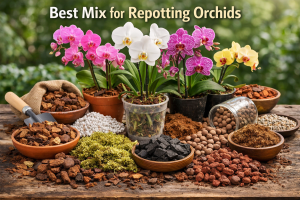
The ideal mix supports long-term growth while reducing the frequency of repotting. Proper aeration, drainage, and moisture control mimic the orchid’s natural epiphytic environment.
In this guide, we highlight the 10 best mixes for repotting orchids, explaining their benefits, drawbacks, and optimal uses. Following these recommendations will help your orchids thrive and produce more consistent, healthy blooms.
10 Best Mix For Repotting Orchids
1. Bark-Based Orchid Mix – Best Overall Choice
Bark-based mixes are the most widely used option for repotting orchids. They provide excellent air circulation around the roots, preventing rot and fungal infections. Coarse bark also mimics orchids’ natural epiphytic environment.
Bark decomposes slowly, ensuring long-term stability and aeration. It is especially effective for phalaenopsis, cattleyas, and dendrobiums. Regular watering is necessary to maintain adequate moisture without waterlogging.
This mix is ideal for both beginners and experienced growers due to its versatility. It supports strong root development and healthy growth. Monitoring moisture ensures consistent orchid health.
Pros:
• Excellent airflow
• Prevents rot
• Natural texture
• Long lasting
• Easy drainage
• Root friendly
• Versatile
Cons:
• Dries quickly
• Needs soaking
• Periodic replacement
2. Sphagnum Moss Mix – Best Moisture Retention
Sphagnum moss retains water efficiently while still allowing adequate air circulation. It is excellent for orchids that require higher humidity or for young seedlings. Care must be taken to avoid compacting the moss.
The moss encourages root growth by maintaining consistent moisture levels. Overwatering can lead to decay, so light, frequent watering is recommended. Sphagnum moss is lightweight and easy to handle.
This mix is ideal for orchids in dry indoor climates. It provides stable moisture for optimal root health. Proper monitoring prevents suffocation of roots.
Pros:
• High moisture
• Lightweight
• Root support
• Seedling friendly
• Easy handling
• Humidity control
• Nutrient retention
Cons:
• Overwatering risk
• Compacts easily
• Breaks down fast
3. Coconut Husk Chips – Sustainable Alternative
Coconut husk chips offer eco-friendly potting media for orchids. They retain moderate moisture while ensuring good drainage. The fibrous texture supports root anchoring and aeration.
Coconut husk decomposes more slowly than sphagnum moss, providing longer-lasting structure. It is suitable for growers seeking low-maintenance options. Pre-soaking before use removes excess salts.
This mix balances water retention and aeration effectively. It is ideal for indoor and greenhouse orchids. Regular rinsing improves longevity and prevents salt accumulation.
Pros:
• Eco-friendly
• Moisture balance
• Good drainage
• Root aeration
• Slow decomposition
• Lightweight
• Reusable
Cons:
• Salt buildup
• Needs soaking
• Limited availability
4. Perlite-Based Mix – Best for Aeration
Perlite is commonly added to orchid mixes to improve airflow and drainage. It creates air pockets, reducing the risk of root suffocation. Perlite is sterile and lightweight.
This component prevents compaction, especially in mixed media. It complements bark, moss, or coconut husk effectively. Excess perlite should be avoided to maintain moisture balance.
Perlite enhances oxygen availability for roots. It is ideal in humid indoor climates. Proper mixing ensures optimal orchid growth.
Pros:
• Improves airflow
• Lightweight
• Sterile medium
• Prevents compaction
• Enhances drainage
• Easy mixing
• Root safe
Cons:
• Dusty
• Floats in water
• Needs blending
5. Charcoal Mix – Odor and Toxin Control
Charcoal helps absorb toxins and prevent root rot. It also stabilizes pH and maintains drainage in orchid pots. Charcoal is particularly effective when combined with bark or moss.
It prevents fungal growth by keeping the potting medium fresh. Charcoal does not decompose quickly, offering long-term stability. Care must be taken not to overuse it, as it can dry out the roots.
Charcoal improves overall pot hygiene and reduces odor. It promotes healthier root systems. It is suitable for indoor orchid setups.
Pros:
• Absorbs toxins
• Improves drainage
• Odor control
• Long lasting
• Root protection
• Sterile
• Fungal resistance
Cons:
• Dries roots
• Not standalone
• Limited nutrients
6. Lava Rock Mix – Heavy Stability Option
Lava rock is used to add weight and structure to orchid pots. Its porous nature provides excellent aeration and prevents waterlogging. Lava rock is ideal for top-heavy orchids.
This mix improves drainage while maintaining root aeration. It does not decompose, making it long-lasting. Lava rock works well for outdoor and greenhouse orchids.
The addition of lava rock ensures pot stability. It reduces tipping in large containers. Roots remain healthy due to improved airflow.
Pros:
• Excellent drainage
• Long lasting
• Pot stability
• Porous
• Root aeration
• Outdoor friendly
• Disease resistant
Cons:
• Heavy weight
• Hard handling
• Low moisture
7. Tree Fern Fiber – Premium Root Support
Tree fern fiber is a natural option that mimics orchids’ natural epiphytic environment. It balances moisture retention with excellent airflow. Roots easily attach to its fibrous surface.
This mix supports strong root anchoring and long-term growth. It is often used by professional growers and collectors. Availability may be limited depending on the region.
Tree fern fiber ensures stable and healthy orchid growth. Proper hydration maintains root health. It is a premium option for delicate species.
Pros:
• Natural texture
• Excellent airflow
• Root anchoring
• Moisture balance
• Long lasting
• Professional grade
• Stable structure
Cons:
• Expensive
• Limited supply
• Environmental concerns
8. Gravel-Based Mix – Maximum Drainage
Gravel improves drainage in orchid pots and prevents waterlogging. It creates air pockets that enhance root aeration. Gravel is especially suitable for orchids that require rapid drying.
This mix adds weight to pots, stabilizing them. It is best combined with organic media such as bark or moss. Gravel is inert and does not decompose.
Gravel-based mixes reduce the risk of fungal infections. They provide excellent stability for tall orchids. Proper combination ensures balanced hydration.
Pros:
• Rapid drainage
• Stable pots
• Prevents rot
• Long lasting
• Reusable
• Air pockets
• Low maintenance
Cons:
• Heavy
• Low moisture
• Needs blending
9. LECA Clay Pellets – Semi-Hydro Choice
LECA (Lightweight Expanded Clay Aggregate) is ideal for semi-hydroponic orchid cultivation. It retains moisture while allowing free air circulation. LECA supports strong, healthy roots in controlled watering systems.
This mix reduces root rot and fungal issues. LECA is reusable and easy to sterilize. It requires careful water level management.
LECA allows for precise moisture control. Roots are visible for monitoring. It is excellent for advanced growers.
Pros:
• Reusable
• Excellent airflow
• Controlled moisture
• Clean system
• Root visibility
• Durable
• Modern method
Cons:
• Learning curve
• Setup cost
• Not universal
10. Custom Orchid Mix – Best Personalized Option
Custom orchid mixes combine multiple components such as bark, moss, perlite, and charcoal. Ratios are adjusted based on orchid type, climate, and pot size. Custom mixes provide tailored conditions for optimal growth.
Growers can adjust moisture retention, drainage, and aeration levels. This approach maximizes root health and flowering potential. Experience allows refinement over time.
Custom mixes offer flexibility for all orchid species. They provide long-term growth benefits. Experimentation leads to the most successful outcomes.
Pros:
• Fully customizable
• Climate adaptable
• Optimal balance
• Scalable
• Long-term success
• Root focused
• Flexible ratios
Cons:
• Requires knowledge
• Trial needed
• Mixing effort
Best Mix For Repotting Orchids Frequently Asked Questions
Q1: How often should orchids be repotted?
Every 1–2 years or when media decomposes.
Q2: Can regular potting soil be used?
No, it retains too much moisture and suffocates roots.
Q3: Should old roots be trimmed during repotting?
Yes, remove dead or rotting roots only.
Q4: Which mix is best for beginners?
Bark-based mixes are ideal for beginners.
Q5: Can orchids grow without soil?
Yes, orchids naturally grow as epiphytes.
Q6: Is drainage more important than moisture?
Yes, proper aeration prevents root rot.
Q7: Can potting mixes be reused?
Some components can be sterilized and reused carefully.
Conclusion
The best mix for repotting orchids is a bark-based blend because it provides excellent drainage, airflow, and long-lasting structure. It is suitable for most orchid species and ensures healthy root growth.
The runner-up is sphagnum moss, which retains moisture effectively and supports young orchids or seedlings. It works well in dry climates but requires careful monitoring to prevent compaction and overwatering.
Using the right mix improves orchid health, reduces the risk of root rot, and encourages consistent flowering. Both the best and runner-up options provide balanced conditions for strong, thriving plants.
In this guide, we encourage you to choose the most suitable mix based on your orchid type and environment. Repot your orchids carefully today to ensure vibrant blooms, healthy roots, and long-term growth success.
Recent Posts
Choosing the Best Fertilizer For Salvias is essential for achieving vibrant blooms, lush foliage, and strong root systems. Proper nutrient management ensures salvias receive the right balance of...
Choosing the best fertilizer for ginger plant is essential for achieving strong rhizome development, vigorous foliage, and high yields. Proper nutrient management ensures ginger plants receive the...