Mallow can be a stubborn broadleaf weed because mature plants develop a strong taproot and can continue producing seed if they are left uncontrolled. Choosing the best herbicide for mallow therefore depends on the species involved, its growth stage, the surrounding crop or turf, and whether selective or non-selective control is required.
Young mallow is generally easier to manage than established plants, making early identification and treatment particularly important. In turf, selective broadleaf herbicides containing combinations such as 2,4-D, dicamba, and MCPP can provide useful control, while landscape and agricultural situations require different considerations.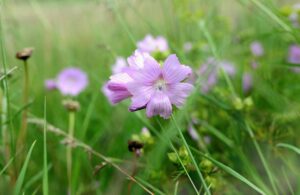
Mallow species can also respond differently to herbicides, and some extension guidance notes that glyphosate may provide only partial control, particularly on mature little mallow. Mechanical removal and preventing seed production remain important parts of an integrated approach, especially where herbicide options are limited.
In this guide, we examine 10 herbicide options and active-ingredient combinations used for mallow management, with attention to turf, landscape, and agricultural situations. We also explain what to consider before treatment, how growth stage affects control, and why following the current product label is essential.
10 Best Herbicide For Mallow
1. Trimec Southern Broadleaf Herbicide — Best Herbicide For Mallow In Sensitive Warm-Season Turf
Trimec Southern combines 2,4-D, dicamba, and MCPP and is formulated for broadleaf weed control in sensitive southern grasses. Its three-way combination provides multiple auxin-type herbicide ingredients and is registered for lawn, ornamental, golf-course, and agricultural service uses.

- High degree of tolerance in sensitive warm-season turfgrasses
- Wide spectrum broadleaf weed control
The combination is particularly relevant to mallow management because Pennsylvania State University Extension identifies mixtures containing 2,4-D, dicamba, MCPP, or MCPA as post-emergence options for mallow in turf. Always confirm that the specific turf species and application site appear on the current label before treatment.
Mallow should be targeted while it is actively growing and relatively young rather than waiting until large, mature plants have developed a substantial taproot. Spray drift should also be avoided because these broadleaf herbicides can injure desirable broadleaf plants.
- Three active ingredients
- Turf selective
- Broadleaf weed control
- Useful on young mallow
- Warm-season turf option
- Multiple labeled uses
- Established formulation
- Turf restrictions apply
- Can injure broadleaf plants
- Label varies by site
2. Trimec Classic Broadleaf Herbicide — Best Three-Way Herbicide For Mallow In Turf
Trimec Classic is a three-way broadleaf herbicide formulation intended for ornamental lawns, turfgrass, and sod-farm situations. Its label identifies 2,4-D, MCPP-p, and dicamba as the active ingredients in the formulation.

Penn State Extension specifically notes that turf herbicides containing combinations of 2,4-D, dicamba, MCPP, or MCPA can provide adequate control of common mallow. This makes a three-way turf formulation a practical category to consider when mallow is growing among labeled turfgrass.
The most important consideration is turf tolerance. The current product label should always be checked for the particular grass species, application site, maximum annual use, and other restrictions before spraying.
- Three-way formulation
- Broadleaf activity
- Turfgrass applications
- Post-emergence option
- Useful on young weeds
- Multiple labeled sites
- Established product
- Turf limitations
- Drift can injure plants
- Label must be followed
3. Trimec 992 Broadleaf Herbicide — Best Broadleaf Herbicide Combination For Mallow
Trimec 992 contains 2,4-D, MCPP-p, and dicamba and is designed for turfgrass, non-crop, and industrial vegetation-management applications. The manufacturer-label information describes the three active ingredients as providing broad-spectrum control of susceptible broadleaf weeds.

- Dimethylamine salt of 2,4-dichlorophenoxyacetic acid - 30.56% Dimethylamine salt of (+)-(R)-2-(2 methyl-4-chlorophenoxy) propionic acid - 8.17% Dimethylamine salt of dicamba: 3,6-dichloro-o-anisic acid - 2.77%
- A cost effective choice for control of a wide range of broadleaf weeds.
This type of three-way formulation is relevant to mallow because mallow is a broadleaf weed and extension guidance identifies these active-ingredient combinations for turf management. The formulation also illustrates why selecting a product according to its labeled use site is more important than simply choosing the strongest-sounding herbicide.
Avoid applying it around desirable ornamental broadleaf plants unless the label specifically permits the application. Drift management is particularly important with 2,4-D-containing products.
- Three active ingredients
- Broadleaf weed activity
- Turf applications
- Non-crop applications
- Multiple modes of action
- Post-emergence use
- Professional formulation
- Broadleaf injury risk
- Application restrictions
- Requires label review
4. Trimec Bentgrass Formula — Best Herbicide For Mallow Around Sensitive Turf
Trimec Bentgrass Formula combines 2,4-D, dicamba, and MCPP-p in a formulation intended for selected sensitive turf situations. Its current product information lists uses involving bentgrass and other specified turf sites.

This type of formulation can be useful where the turf itself limits which broadleaf herbicides can safely be considered. Mallow control should still be approached when plants are young and actively growing, because mature plants can be more difficult to suppress.
The major advantage here is not simply the active ingredients but the product’s labeled turf positioning. Always identify the grass species before application and follow the current label rather than assuming a product safe on one turf type will be safe on another.
- Sensitive turf formulation
- Three active ingredients
- Broadleaf control
- Turf-specific labeling
- Post-emergence option
- Professional formulation
- Multiple turf uses
- Limited turf sites
- Requires grass identification
- Broadleaf injury possible
5. Southern Ag Lawn Weed Killer With Trimec — Best Mallow Herbicide For Lawn Broadleaf Control
Southern Ag Lawn Weed Killer With Trimec combines 2,4-D, dicamba, and mecoprop for broadleaf weed control in lawn and ornamental turf. Its label information lists several common broadleaf weeds and specifies restrictions for certain turf types, including St. Augustinegrass.

- For use on 9 turf types
- Controls a wide range of lawn weeds
The three-way combination fits the general turf strategy recommended by extension sources for common mallow. Because turf tolerance differs among grasses, however, the label should be consulted before application.
This product is most appropriate to consider when mallow is growing within an approved lawn or ornamental turf setting. It should not be treated as a universal mallow solution for garden beds, crops, or areas containing desirable broadleaf plants.
- Three active ingredients
- Lawn formulation
- Broadleaf weed control
- Post-emergence option
- Useful on young weeds
- Ornamental turf use
- Established formulation
- Turf restrictions
- Not for all grasses
- Broadleaf injury risk
6. LESCO Eliminate LO Herbicide — Best Professional Three-Way Herbicide For Mallow
LESCO Eliminate LO is a selective broadleaf herbicide containing 2,4-D, dicamba, and MCPP-p. Its product information lists ornamental turf, golf courses, sod farms, rights-of-way, and several other labeled sites.

- DUAL ACTION: Professional-grade fertilizer plus herbicide combination that feeds your lawn while controlling common broadleaf weeds
- NUTRIENT RATIO: Features an 18-2-3 NPK formula to promote healthy grass growth and development throughout the season. 30% PolyPlus OPTI45 45 Slow-release Nitrogen
The formulation is relevant to mallow because it uses the same broadleaf-herbicide combination identified by extension guidance as useful for turf mallow control. Its broader professional-use positioning can make it relevant to larger turf-management programs where the site is appropriately labeled.
As with other 2,4-D-containing products, protecting nearby ornamental broadleaf plants is essential. Do not assume that a product labeled for turf can be used around every grass species or landscape planting.
- Three active ingredients
- Selective broadleaf control
- Professional turf use
- Golf-course applications
- Sod-farm applications
- Broad site labeling
- Post-emergence activity
- Professional-use restrictions
- Broadleaf injury risk
- Label-specific application
7. Flumioxazin — Best Pre-Emergent And Burndown Option For Mallow Management
Flumioxazin is an active ingredient used in some pre-emergence and post-emergence weed-management programs. Pennsylvania State University Extension lists flumioxazin among pre-emergence and post-emergence options for common mallow in landscape management.

- THE PRO CHOICE FOR SEASON-LONG WEED CONTROL: Semera 51.0% WDG contains 51% flumioxazin; the same active ingredient as the Leading Brand, the herbicide pros trust for season-long weed control.
- AQUATIC WEED CONTROL: Semera 51.0% WDG is a fast-acting contact herbicide that controls selected submersed, emergent and floating aquatic weeds. Controls Duckweed, Alligator Weed, Coontail, Frog's-bit, Hydrilla, Pondweed, Water Fern, Water Lettuce, Watermilfoil.
The value of flumioxazin depends heavily on the crop, landscape site, timing, and specific formulation. It is not appropriate to assume that any flumioxazin product can be applied anywhere mallow occurs.
For agricultural or ornamental applications, the current label determines the permitted crop or site, rate, timing, and other restrictions. Where labeled, it can form part of an integrated program rather than being viewed as a stand-alone answer to every mallow infestation.
- Pre-emergence activity
- Burndown activity
- Landscape applications
- Agricultural applications
- Multiple use patterns
- Useful integrated option
- Residual activity
- Label dependent
- Crop restrictions
- Requires precise timing
8. Oxyfluorfen — Best Residual Herbicide Option For Mallow In Labeled Sites
Oxyfluorfen is another active ingredient used for mallow management in certain agricultural and nursery situations. UC IPM identifies oxyfluorfen as an option for mallow management in particular landscape and agricultural settings.
No products found.
Its primary value is in situations where the product is specifically labeled for the crop or site and where pre-emergence or early post-emergence management is part of the weed-control program. The timing of mallow emergence matters because established plants become more difficult to manage.
\Oxyfluorfen should never be selected solely because it is listed as active against mallow somewhere else. Formulation, crop registration, application timing, and local label requirements determine whether it is an appropriate option for a particular situation.
- Residual activity
- Early weed control
- Mallow management option
- Nursery applications
- Agricultural applications
- Useful program component
- Multiple formulations
- Site restrictions
- Crop injury possible
- Timing matters
9. Glufosinate — Best Non-Selective Option For Mallow In Bare Areas
Glufosinate is a non-selective post-emergence herbicide that can be considered where mallow is growing in areas without desirable vegetation that must be preserved. Penn State Extension identifies glufosinate-ammonium as a post-emergence possibility when mallow is not surrounded by non-target plants.

- NON-SELECTIVE BROAD-SPECTRUM CONTROL Provides post-emergence control of a wide range of broadleaf and grassy weeds, including tough and resistant species such as marestail (horseweed).
- EFFECTIVE ON RESISTANT WEEDS Ideal for managing weeds resistant to glyphosate and multiple herbicide modes of action, making it a powerful rotational or rescue treatment.
Its non-selective nature is both its strength and its limitation. It can damage desirable plants contacted by the spray, so it is much more appropriate for appropriately labeled bare-ground or non-crop situations than for a lawn containing desirable turf.
Because mallow can become more difficult to control as it matures, applications should be made according to the product label when plants are actively growing and susceptible. Avoid allowing surviving plants to mature and produce additional seed.
- Non-selective control
- Post-emergence activity
- Useful bare-ground option
- Rapid foliar activity
- Agricultural applications
- Landscape applications
- Useful integrated tool
- Damages green plants
- Not lawn selective
- Requires careful spraying
10. Glyphosate — Best Targeted Option For Young Mallow In Certain Non-Selective Sites
Glyphosate is widely used as a non-selective post-emergence herbicide, but mallow deserves special attention because extension sources report inconsistent control. UC IPM specifically states that glyphosate is ineffective against mallow in some landscape situations, while other agricultural guidance reports better results on young seedlings than mature plants.

- Powerful Weed Control:Effectively kills over 130 types of weeds and grasses, reaching down to the roots to prevent regrowth. Perfect for driveways, sidewalks, fences, and garden areas.
- Covers Up To 26,000 Square Feet
This makes glyphosate a poor choice to describe as a guaranteed solution for established mallow. Where a particular product is labeled and young mallow is actively growing, it may contribute to control, but expectations should remain realistic.
Mature plants can be considerably more difficult to control, which reinforces the importance of early intervention and preventing seed production. In a landscape bed, physical removal of young plants and maintaining mulch may provide a more dependable strategy than repeatedly relying on glyphosate.
- Non-selective herbicide
- Broad weed spectrum
- Young-weed activity
- Widely available
- Simple application
- Useful bare-ground tool
- Multiple labeled uses
- Weak on mature mallow
- Damages desirable plants
- Control can be inconsistent
7 Factors To Consider When Choosing A Herbicide For Mallow
1. Identify The Mallow Species
Several species are commonly referred to as mallow, including common mallow (Malva neglecta) and little mallow (Malva parviflora). These plants can look similar, but their response to management can differ, making accurate identification useful before selecting a treatment.
2. Consider The Growth Stage
Young mallow is generally easier to manage than large, established plants. UC IPM recommends removing young plants while they have four or fewer true leaves because the taproot becomes tougher and more difficult to remove as the plant matures.
3. Know Your Growing Site
A herbicide appropriate for turf may be completely unsuitable for an ornamental border or agricultural crop. Always select a product registered for the specific site and crop or turf species.
4. Choose Selective Or Non-Selective Control
Selective products can target broadleaf weeds while preserving labeled turfgrass, whereas non-selective herbicides can damage almost any green plant they contact. The choice should therefore be based on what is growing around the mallow.
5. Consider Herbicide Resistance
Repeated reliance on the same herbicide mode of action can contribute to resistance problems. Using integrated weed management, rotating appropriate modes of action, and preventing surviving plants from producing seed can reduce selection pressure.
6. Check The Current Label
Product registrations and labels can change. UC IPM specifically warns that pesticide information can become outdated as products and active ingredients change, so the current product label should always take precedence.
7. Think Beyond Herbicides
Mallow management is more effective when chemical control is combined with cultural and mechanical methods. Young plants can be pulled or hoed, while maintaining mulch at an adequate depth can suppress new seedlings in landscape beds.
Frequently Asked Questions
1. What is the best herbicide for mallow?
For mallow growing in labeled turfgrass, three-way broadleaf formulations containing 2,4-D, dicamba, and MCPP/MCPP-p are an important category to consider because extension guidance specifically identifies these combinations for mallow control in turf. The best choice still depends on the turf species and product label.
2. Will 2,4-D kill mallow?
2,4-D products can provide limited control of young mallow in some landscape and turf situations. UC IPM specifically notes that 2,4-D provides limited control when applied to young plants and warns that it can injure desirable broadleaf plants.
3. Does glyphosate kill mallow?
Glyphosate can provide inconsistent control of mallow. UC IPM reports that glyphosate may be ineffective against mallow, while other agricultural guidance indicates that it can control young seedlings but is less effective against mature little mallow.
4. Why is mallow difficult to control?
Mallow develops a strong taproot, and mature plants become increasingly difficult to remove mechanically. The plants also produce persistent seed, meaning that preventing seed production is important for reducing future infestations.
5. Can I use herbicide on mallow in my lawn?
Some selective broadleaf herbicides are labeled for mallow in turf. Penn State Extension identifies mixtures containing 2,4-D, dicamba, MCPP, or MCPA as options for turf, but the specific product must be labeled for your grass species and application site.
6. What kills mallow but not grass?
A selective broadleaf herbicide labeled for the specific turfgrass can control susceptible mallow while preserving the turf when used correctly. Three-way products containing 2,4-D, dicamba, and MCPP/MCPP-p are one category identified by extension guidance for turf broadleaf control.
7. How do I prevent mallow from coming back?
Preventing seed production is one of the most effective long-term strategies. Pull or hoe young plants, maintain healthy competitive turf or desirable plantings, and use adequate mulch in landscape beds to reduce opportunities for new seedlings to establish.
Conclusion
In conclusion, Trimec Southern Broadleaf Herbicide stands out as the leading choice in this list for mallow management where its label permits use on the particular turf or site. Its combination of 2,4-D, dicamba, and MCPP fits the three-way broadleaf-herbicide approach identified by extension guidance for mallow in turf, while its formulation is specifically positioned for sensitive southern grasses and multiple professional use sites.
Trimec Classic Broadleaf Herbicide is the runner-up because it provides another three-way broadleaf formulation based on 2,4-D, MCPP-p, and dicamba for labeled turf situations. Its usefulness depends on matching the product’s current label to the grass species, application site, and mallow growth stage rather than assuming that every turf can tolerate the same herbicide.
The most important lesson from mallow control is that product selection is only one part of successful management. Young plants are easier to suppress than mature plants, while accurate identification, appropriate timing, selective chemistry, prevention of seed production, and mechanical or cultural control can all contribute to a more reliable program.
Ultimately, gardeners and professional applicators should choose a mallow treatment according to the weed species, growth stage, turf or crop, application site, and current product label. Where herbicides are unnecessary, early hand removal and adequate mulch can be highly practical alternatives, while larger infestations may require an integrated program rather than repeated applications of a single herbicide.
Recent Posts
Spring fertilization supports healthy leaf development, root activity, and productive shoot growth when apple trees have insufficient soil nutrients. Selecting an appropriate fertilizer requires...
Cucumbers (Cucumis sativus) are vigorous, fast-growing vines that can produce abundant harvests when their roots receive enough water, warmth, and balanced nutrition. The best fertilizer for cukes in...