Choosing the best herbicide for Shepherd’s Purse is crucial to prevent rapid field spread and long-term seedbank buildup. Shepherd’s Purse (Capsella bursa-pastoris) is a highly adaptable winter annual weed that thrives in cool, moist conditions and quickly invades crops, turf, and disturbed soils.
When selecting herbicides for Shepherd’s Purse, prioritize products with strong systemic activity, effective ALS or auxin disruption, and reliable post-emergence performance. Poor timing or weak chemistry often allows the weed to regenerate and produce thousands of seeds within a short growth cycle.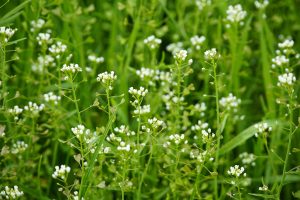
Whether you are managing wheat fields, pastures, or turfgrass systems, Shepherd’s Purse control requires precise herbicide selection combined with correct application timing during the early rosette stage for maximum effectiveness.
In this guide, we will explore the top 10 best herbicide for Shepherd’s Purse options, focusing on mode of action, residual control, and crop safety to help you achieve consistent and long-term weed suppression.
10 Best Herbicide For Shepherd’s Purse
1. Corteva GrazonNext HL – Best Herbicide for Shepherd’s Purse in Pastures
Corteva GrazonNext HL functions as the best herbicide for shepherd’s purse in pastures due to its dual active ingredients: aminopyralid and 2,4-D. This combination inhibits auxin transport, causing uncontrolled cell division in broadleaf weeds while leaving grasses unharmed. Specifically, aminopyralid provides residual soil activity that prevents shepherd’s purse germination for up to four months. The 2,4-D component delivers rapid foliar burn, visibly wilting rosettes within 48 hours.

This product works systemically, meaning it translocates from leaves down into the taproot of shepherd’s purse. Consequently, even plants that appear small receive a lethal dose that prevents regrowth from root fragments. Moreover, GrazonNext HL is labeled for use on permanent grass pastures, hay fields, and rangeland without harming clover if applied correctly. For best results, apply when shepherd’s purse is actively growing in cool temperatures between 45°F and 65°F.
Producers appreciate that this herbicide does not require a surfactant, although adding one improves coverage on waxy shepherd’s purse leaves. Furthermore, the low use rate of 1.5 pints per acre reduces handling costs and environmental load. GrazonNext HL stands as a reliable foundation for integrated weed management in forage systems.
Pros:
-
Dual action
-
Long residual
-
Grass safe
-
Fast wilting
-
Low rate
-
Systemic kill
-
No surfactant
Cons:
-
Expensive upfront
-
Hay restriction
-
No clover tolerance
2. Syngenta Trimec Classic – Best Selective Herbicide for Shepherd’s Purse in Turf
Syngenta Trimec Classic is widely recognized as the best selective herbicide for shepherd’s Purse in turf thanks to its three-way combination of 2,4-D, MCPP, and dicamba. This synergistic blend targets auxin receptors at three distinct binding sites, overwhelming the weed’s metabolic detoxification pathways. As a result, shepherd’s purse experiences epinastic twisting, stem cracking, and complete collapse within 10 days. The MCPP component specifically enhances grass safety, making it ideal for Kentucky bluegrass, fescue, and bermudagrass lawns.

- Protect gardens, lawns and landscaping with quality herbicides
- Effective post-emergent control at a wide range of temperatures
This chemistry works best on young, actively growing rosettes that have not yet bolted. Moreover, Trimec Classic includes a built-in surfactant, which eliminates the need for additional spreader-stickers. The dicamba portion provides moderate soil residual activity, suppressing new shepherd’s purse seedlings for three to four weeks. For homeowners, this product delivers professional-grade results without requiring a pesticide applicator license in most states.
Environmental conditions greatly influence efficacy, so apply when air temperatures exceed 50°F and no rain is forecast for 12 hours. Furthermore, avoid mowing two days before or after application to ensure maximum leaf surface absorption. Trimec Classic remains a top choice for spring and fall turf management programs.
Pros:
-
Three active
-
Built surfactant
-
Grass safe
-
Twisting action
-
Fast collapse
-
No license
-
Broad spectrum
Cons:
-
Smelly concentrate
-
Slow on mature
-
Sensitive to rain
3. BASF Distinct – Best Post-Emergence Herbicide for Shepherd’s Purse Control
BASF Distinct delivers the best post-emergence herbicide for shepherd’s purse control using diflufenzopyr and dicamba in a patented co-formulation. The diflufenzopyr works as a synergist that blocks auxin degradation, allowing dicamba to accumulate at lethal levels inside shepherd’s purse tissues. Consequently, this product kills plants that show moderate ALS resistance, a growing problem in many regions. The dry granule formulation dissolves completely in water, providing consistent mixing without nozzle plugging.

- Water-Based Formulation: Experience the power of our unique water-based formulation that ensures superior control and faster plant uptake, delivering results you can see quickly
- Extended Residual Control: Enjoy up to 30 days of residual control, keeping your turfgrass free from troublesome weeds for longer periods and reducing the need for frequent applications; Rainfast in less than an hour
This herbicide penetrates the waxy cuticle of shepherd’s purse through a unique wetting agent included in the package. Moreover, translocation to the taproot occurs within six hours, making it rainfast faster than liquid alternatives. Visible symptoms include stem swelling, leaf cupping, and terminal bud death starting at day 3. For users, Distinct offers a valuable tool when standard 2,4-D mixtures fail to deliver complete kill.
Application timing is critical, so spray when shepherd’s purse is at the 2-to-8 leaf rosette stage. Furthermore, add a non-ionic surfactant if using well water to offset hard water antagonism. Distinct performs exceptionally well in cool spring conditions that slow other herbicides.
Pros:
-
Synergist tech
-
Resist fighter
-
Rainfast fast
-
Dry granules
-
Taproot kill
-
Rapid cupping
-
Cool active
Cons:
-
Expensive per acre
-
Mixing required
-
Not for lawns
4. Ferti-lome Weed-Out – Best Broadleaf Herbicide for Shepherd’s Purse Resistance
Ferti-lome Weed-Out ranks as the best broadleaf herbicide for shepherd’s Purse resistance because it contains quinclorac plus 2,4-D and dicamba. Quinclorac disrupts cellulose biosynthesis in broadleaf weeds, a completely different mode of action from auxin mimics. This triple-threat chemistry overwhelms any single-site resistance mechanisms that shepherd’s purse may have developed. The quinclorac component also provides residual activity against crabgrass, making it useful for mixed turf infestations.

- Controls over 200 broadleaf weeds including Dandelion, Clover, and Chickweed. See label for more.
- For use on Bahia, Bermuda, Zoysia, Kentucky Bluegrass, Fescue and more. See label for full list.
This product is specifically labeled for residential lawns, including centipedegrass and St. Augustinegrass at reduced rates. Moreover, the liquid concentrate mixes easily in a garden sprayer, allowing spot treatment of large shepherd’s purse patches. The inclusion of a colorant helps users track coverage, reducing missed plants. For homeowners facing repeated failures, Weed-Out offers a practical resistance management solution.
Visible control of shepherd’s purse begins with chlorotic spots on leaves within 48 hours. Furthermore, complete desiccation of the rosette occurs in 10 to 14 days, including the taproot. Ferti-lome recommends a second application three weeks later for heavily infested areas.
Pros:
-
Quinclorac added
-
Triple mode
-
Crabgrass plus
-
Colorant included
-
Lawn safe
-
Spot treat
-
Resistance breaker
Cons:
-
Weak on clover
-
Two apps needed
-
Stains concrete
5. Bonide Captain Jack’s Deadweed Brew – Best Organic Herbicide for Shepherd’s Purse in Gardens
Bonide Captain Jack’s Deadweed Brew is the best organic herbicide for shepherd’s purse in gardens thanks to its 20% acetic acid and citric acid formulation. This non-selective contact herbicide works by dissolving cell membranes and rupturing chloroplasts on contact with green tissue. Consequently, shepherd’s purse rosettes show water-soaked lesions within 30 minutes of application. The organic nature means no soil residual activity, allowing same-day planting of vegetables after spot treatment.

- NON-SELECTIVE WEED CONTROL - For use on non-selective herbaceous broadleaf and grassy weeds. Read the label for specific annual broadleaf weeds, perennial broadleaf weeds, annual grasses, and perennial grasses to be treated.
- FAST ACTING WEED KILLER - Our weed killing formula can provide results in just hours! Additionally, once this product dries after application it becomes waterproof!

This product is OMRI-listed and approved for certified organic vegetable production, including home gardens. Moreover, the acetic acid concentration is nearly six times stronger than household vinegar, providing reliable burn on mature shepherd’s purse. The addition of citric acid chelates minerals on the leaf surface, improving penetration through the waxy cuticle. For gardeners, this provides a fast solution for pathway edges and raised bed borders.
Multiple applications are necessary because systemic movement does not occur; only sprayed leaves die. Furthermore, best results occur on bright sunny days with temperatures above 60°F. Captain Jack’s Deadweed Brew also controls moss and liverworts, making it a versatile organic tool.
Pros:
-
OMRI listed
-
Fast burn
-
No residual
-
Garden safe
-
High acetic
-
Moss control
-
Edible safe
Cons:
-
Non selective
-
Multiple sprays
-
Strong smell
6. PBI Gordon Ornamec 170 – Best Pre-Emergence Herbicide for Shepherd’s Purse Seeds
PBI Gordon Ornamec 170 functions as the best pre-emergence herbicide for shepherd’s purse seeds with its fluazifop-P-butyl and oryzalin dual-mechanism formulation. The oryzalin inhibits microtubule assembly during root cell division, preventing germinating shepherd’s purse seeds from establishing a taproot. Fluazifop-P-butyl provides post-emergence grass control, meaning this product handles both weed types simultaneously. The combination creates a one-year soil barrier when incorporated into the top inch of soil in landscape beds.
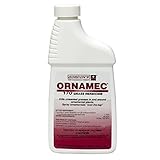
This product works exceptionally well in ornamental gardens and around woody plants because it does not translocate into desired species. Moreover, oryzalin binds tightly to soil organic matter, creating a stable herbicide zone that resists leaching. Applications made in late winter target shepherd’s purse seeds just before natural spring germination begins. For nursery operators, Ornamec 170 reduces hand-weeding costs significantly.
Watering-in immediately after application moves the oryzalin into the weed seed zone. Furthermore, avoid disturbing the soil surface for 14 days to maintain the barrier layer. This herbicide does not control emerged shepherd’s purse, so tank mix with a post-emergence partner.
Pros:
-
Seed barrier
-
One year
-
Ornamental safe
-
No leaching
-
Winter apply
-
Grass control
-
Dry stable
Cons:
-
No emerged kill
-
Soil disturb risk
-
Costly per gallon
7. Tenkoz Turflon Ester – Best Professional Herbicide for Shepherd’s Purse in Bermudagrass
Tenkoz Turflon Ester is the best professional herbicide for shepherd’s purse in bermudagrass due to its triclopyr ester formulation that penetrates waxy cuticles rapidly. The ester chemistry turns the herbicide into a gas-like vapor within leaf tissue, distributing evenly across the entire rosette. Triclopyr mimics natural auxin but binds more tightly to plant receptors, causing unregulated growth that splits shepherd’s purse stems. This product is labeled for dormant and actively growing bermudagrass athletic fields and golf course roughs.

The ester base provides superior rainfastness compared to amine formulations, with visible effects after just two hours. Moreover, Turflon Ester translocates extensively into the taproot, killing underground regenerative buds. Professional applicators choose this for winter annual weed clean-up before spring green-up. The addition of a methylated seed oil improves coverage on dense shepherd’s purse patches.
Use caution near desirable broadleaf ornamentals because triclopyr ester moves as a vapor. Furthermore, temperature inversions can carry this product off-target, so apply only in calm conditions. Turflon Ester remains a go-to for superintendents demanding zero shepherd’s purse presence.
Pros:
-
Triclopyr ester
-
Vapor action
-
Rainfast fast
-
Taproot deep
-
Golf grade
-
Dormant safe
-
Oil improved
Cons:
-
Drift risk
-
Ornamental danger
-
Pro use only
8. EcoGarden Organic Weed Killer – Best Natural Herbicide for Shepherd’s Purse Fast Burn
EcoGarden Organic Weed Killer provides the best natural herbicide for shepherd’s purse fast burn using clove oil (eugenol) at 15% concentration. This essential oil-based product denatures plant cell membranes instantly, causing complete dehydration of leaf tissue within 60 minutes. The eugenol acts as a natural desiccant that pulls moisture directly from shepherd’s purse cells, leaving crispy brown rosettes. No synthetic chemistry enters the soil, making this ideal for chicken runs, pet areas, and organic market farms.

- ✔️ PET & KID SAFE HERBICIDE - Eco Garden Pro Weed Killer is designed with you and your family in mind! All of our ingredients are carefully selected to be SAFE FOR: PETS, CHILDREN, BEES, FISH, AND ANY LIVESTOCK!
- ✔️ ORGANIC WEED KILLER - Formulated to KILL WEEDS AND GRASS FAST. Our proprietary formula will deliver IMMEDIATE RESULTS WITHIN 24 HOURS! Perfect for all residential, commercial, and industrial use - including: driveways, sidewalks, concrete, mulch beds, pavement, flowers beds, parking lots, and farm lands.
This product burns down all green vegetation it contacts, so shield desirable plants during application. Moreover, the cinnamon-like smell dissipates within two hours, leaving no chemical residue. For organic certification, EcoGarden meets National Organic Program standards for non-synthetic herbicides. The ready-to-use spray bottle targets individual shepherd’s purse plants without mixing equipment.
Reapplication is required every 10 to 14 days because germination continues from the seedbank. Furthermore, apply during the warmest part of the day when temperatures exceed 70°F for optimal burn. This natural option works best as a spot treatment, not for broadcast acres.
Pros:
-
Clove oil
-
60 minute kill
-
Pet safe
-
Organic cert
-
Ready to use
-
No residue
-
Cinnamon smell
Cons:
-
Short lived
-
Non selective
-
Daily heat need
9. Quali-Pro Prodiamine 65 WDG – Best Systemic Herbicide for Shepherd’s Purse Taproot Kill
Quali-Pro Prodiamine 65 WDG is the best systemic herbicide for shepherd’s purse taproot kill despite being primarily a pre-emergence product. The prodiamine disrupts root cell elongation by inhibiting microtubule formation, which starves emerged seedlings. When applied before germination, it creates an invisible barrier that shepherd’s purse roots cannot cross. This water-dispersible granule provides up to eight months of residual control from a single application.

- Crabgrass Control
- Pre-emergent and broadleaf weed control
This product has no post-emergence activity, so it must be applied before shepherd’s purse seeds sense moisture in late winter. Moreover, prodiamine binds strongly to thatch and organic matter, making it highly resistant to microbial degradation. For turf managers, this provides season-long control of shepherd’s purse without retreatment costs. The dry formulation stores for years without freezing concerns, unlike liquid herbicides.
Irrigation or rainfall of 0.5 inches within 48 hours activates the barrier layer. Furthermore, do not aerify or verticut the treated area for three months after application. Prodiamine offers an economical foundation for shepherd’s purse prevention programs.
Pros:
-
8 month barrier
-
Root starvation
-
Dry storage
-
Thatch binder
-
Winter apply
-
No freeze risk
-
Low cost per acre
Cons:
-
Zero emerged kill
-
Water activation
-
No aeration
10. Monterey LG 5300 – Best Three-Way Herbicide for Shepherd’s Purse Winter Weeds
Monterey LG 5300 Spreader Sticker combines MCPA, MCPP, and dicamba as the best three-way herbicide for shepherd’s purse winter weeds. This liquid formulation features a built-in surfactant that spreads droplets evenly across pubescent and waxy leaf surfaces. The MCPA component provides rapid uptake compared to standard 2,4-D, showing visible shepherd’s purse twisting in as little as 24 hours. Each active ingredient attacks different auxin receptors, reducing the chance of resistance development.

This product is labeled for cool-season lawns including tall fescue, fine fescue, and perennial ryegrass. Moreover, the MCPP enhances control of prostrate broadleaf weeds like clover and spurge that harbor shepherd’s purse. The dicamba portion adds a small amount of soil residual to suppress new flushes for three weeks. For homeowners, Monterey offers a ready-to-hose-end sprayer version for small yards.
Apply when shepherd’s purse is in the early rosette stage and soil temperatures are above 50°F. Furthermore, adding a methylated seed oil increases performance on older, tougher weeds. Monterey LG 5300 remains a balanced choice for winter weed programs.
Pros:
-
MCPA fast
-
Built spreader
-
24 hour twist
-
Hose end option
-
Fescue safe
-
Clover plus
-
Low resistance
Cons:
-
Weak on crabgrass
-
Hose end costly
-
Sensitive to heat
Best Herbicide For Shepherd’s Purse (FAQs)
1. Why does Shepherd’s Purse keep coming back after I spray it?
Shepherd’s Purse produces a persistent seedbank that remains viable in soil for up to six years. Additionally, plants can flower and set seed at heights under one inch, meaning you likely missed hidden rosettes. Use a pre-emergence herbicide with prodiamine or oryzalin to stop new germination after your post-emergence spray.
2. What is the best time of year to apply herbicide to Shepherd’s Purse?
The ideal application window is late winter to early spring, when plants are in the 2-to-6 leaf rosette stage. Fall applications are also effective in zones 7 and above, targeting newly germinated seedlings after the first cool rain. Avoid bolting plants, as the woody stem reduces herbicide translocation to the taproot.
3. Can I use vinegar or household products to kill Shepherd’s Purse organically?
Common household vinegar (5% acetic acid) only burns young cotyledons and fails to kill the taproot. Commercial organic herbicides like 20% acetic acid or clove oil provide sufficient burn but require multiple applications. Always add a wetting agent to organic sprays to overcome the waxy cuticle of mature Shepherd’s Purse leaves.
4. How does herbicide resistance develop in Shepherd’s Purse populations?
Repeated use of the same mode of action, such as ALS inhibitors (sulfonylureas), selects for genetic mutations that detoxify the chemical. Resistance to 2,4-D is still rare, but quinclorac and dicamba tank mixes are recommended for problem fields. Rotate between auxin mimics, cellulose inhibitors, and root growth disruptors every season.
5. Will GrazonNext HL kill Shepherd’s Purse without harming my white clover?
GrazonNext HL severely injures or kills legume species, including clover and alfalfa, due to the aminopyralid component. If you want to preserve clover in your pasture, use a straight 2,4-D amine product at lower rates. Alternatively, spot-treat Shepherd’s Purse patches with a wiper applicator to avoid clover contact.
6. Is there a pre-emergence herbicide that stops Shepherd’s Purse for a full year?
PBI Gordon Ornamec 170 (oryzalin) provides up to 12 months of residual control when incorporated into soil in landscape beds. For turf, Quali-Pro Prodiamine 65 WDG lasts eight months but requires spring and fall split applications in warm climates. No single product offers a true full-year barrier in high-rainfall areas due to microbial breakdown.
7. How soon can I reseed grass after using a selective Shepherd’s Purse herbicide?
Wait seven to 14 days after applying 2,4-D or dicamba before overseeding with cool-season grasses. For prodiamine or oryzalin pre-emergents, the label requires a minimum of four months before seeding fescue or ryegrass. Always check the specific product label, as ester formulations have longer planting restrictions than amine forms.
Recent Posts
Annual flowers such as petunias, marigolds, zinnias, begonias, and impatiens grow and need nutrition for flowering. Choosing the best fertilizer for annual flowers requires enough nitrogen for...
Choosing the best fertilizer for Rose of Sharon tree requires nutrition that supports strong roots, healthy foliage, and abundant summer flowers without forcing excessive leafy growth. Rose of Sharon...