Autumn Olive is a fast-growing, invasive shrub that can quickly take over landscapes, outcompeting native plants. The best herbicide for Autumn Olive helps manage and control this invasive species, ensuring your yard remains healthy and beautiful. Early control of Autumn Olive can prevent dense growth and reduce its spread.
Autumn Olive infestations can range from a few scattered shrubs to dense thickets covering large areas. The most suitable treatment depends on plant size, growth density, surrounding vegetation, and whether the goal is to protect desirable plants or remove unwanted vegetation.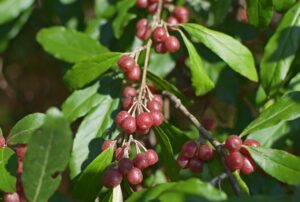
Landowners, landscapers, and vegetation managers may encounter Autumn Olive along woodland edges, roadsides, fence lines, property boundaries, and unmanaged areas. Managing Autumn Olive requires careful consideration of herbicide selectivity, formulation, application technique, timing, weather, and nearby desirable plants.
In this guide, we examine 10 Best herbicides for Autumn Olive across several practical treatment situations, including woody shrub control, invasive vegetation management, foliar spraying, basal-bark treatment, cut-stump applications, and targeted control. We also consider factors that influence treatment success, safety, and long-term Autumn Olive management.
10 Best Herbicides for Autumn Olive
1. Roundup Ready-To-Use Weed & Grass Killer III – Best Non-Selective Herbicide for Autumn Olive Spot Treatment
Roundup Ready-To-Use Weed & Grass Killer III is the best non-selective herbicide for Autumn Olive spot treatment, because its glyphosate-based systemic action is suited to targeted vegetation control where desirable plants can be protected from spray contact. Its ready-to-use formulation eliminates the need for measuring or mixing a concentrate before a targeted application. Because glyphosate is non-selective, however, spray contact with desirable green vegetation should be avoided.

Roundup Ready-To-Use Weed & Grass Killer III can be considered for isolated Autumn Olive plants growing in suitable non-lawn areas where precise spot treatment is possible. The systemic nature of glyphosate allows the active ingredient to move within susceptible treated vegetation rather than simply acting as a contact spray. Always verify that the specific formulation and intended use are permitted by the current product label.
For Autumn Olive management, careful targeting is particularly important when shrubs are growing near lawns, ornamental plants, native vegetation, or garden areas. Avoid spraying desirable plants and prevent drift onto vegetation that should remain. Follow the label for application conditions, protective equipment, and any required restrictions.
2. Triclopyr Herbicide – Best Selective Herbicide for Autumn Olive Woody Shrub Control
Triclopyr Herbicide is the best selective herbicide for Autumn Olive woody shrub control, because triclopyr is specifically identified as very effective for controlling Autumn Olive and is widely used for woody invasive plant management. Triclopyr is available in different formulations, so the appropriate product can be selected according to the intended application technique. Its relevance to woody vegetation makes it particularly useful when Autumn Olive is growing among vegetation that needs to be protected.

Triclopyr formulations may be used for appropriate foliar, basal-bark, or cut-stump treatments when the product label permits the intended application. For foliar treatment, thorough coverage of the target foliage is important, while basal-bark and cut-stump applications require the formulation to be suitable for those methods. Application timing should also account for plant growth stage and weather conditions.
Triclopyr does not mean that all nearby plants are automatically protected, because susceptible non-target vegetation can still be injured. Use particular care around desirable broadleaf plants and confirm the exact formulation, rate, site, and application method on the label. Follow-up monitoring is also important because treated Autumn Olive can resprout or new seedlings can appear.
3. Garlon 4 – Best Herbicide for Autumn Olive Basal Bark Treatment
Garlon 4 is the best herbicide for Autumn Olive basal bark treatment, because its triclopyr ester formulation is particularly suited to woody vegetation treatments involving the lower stems of susceptible shrubs. This type of formulation is associated with basal-bark applications in woody vegetation management. The exact use, concentration, carrier, and application method must always follow the current product label.
Basal-bark treatment can be useful when Autumn Olive has established woody stems and the lower portion of each stem can be treated without cutting the entire shrub down. Penn State Extension identifies triclopyr ester products such as Garlon 4 Ultra as options for Autumn Olive basal-bark treatment. The treatment should be applied carefully to the appropriate lower stem area while avoiding runoff.
Garlon 4 can also be relevant to other woody-plant treatment approaches when the specific formulation and label permit them. Dense infestations require careful planning because nearby desirable shrubs and trees may be susceptible to herbicide contact. Inspect treated areas afterward and address surviving stems or resprouts as necessary.
4. Crossbow Herbicide – Best Selective Herbicide for Autumn Olive Brush Control
Crossbow Herbicide is the best selective herbicide for Autumn Olive brush control, because its combination of triclopyr and 2,4-D provides activity against woody and broadleaf vegetation. This combination makes Crossbow relevant to brush-management situations where multiple types of unwanted vegetation occur together. However, its suitability for a particular Autumn Olive site depends on the current label and application conditions.
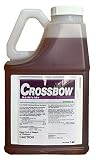
Crossbow can be considered for appropriate foliar vegetation-management applications when the target and site are listed on the label. Its active ingredients can affect susceptible broadleaf plants, making precise application important around desirable vegetation. Use during suitable plant-growth conditions and avoid spray drift onto plants that need to be preserved.
For Autumn Olive growing in mixed brush, careful coverage of the target can help direct treatment toward unwanted vegetation. The application method should match the product label rather than assuming that every Crossbow formulation is suitable for every treatment technique. Continued inspection can help identify surviving shrubs and resprouts after treatment.
5. Cimarron Plus Herbicide – Best Herbicide for Autumn Olive Invasive Vegetation Management
Cimarron Plus Herbicide is the best herbicide for Autumn Olive invasive vegetation management where the current label permits the intended application, because its active ingredients provide a broad vegetation-management approach for susceptible plants. Its combination of metsulfuron methyl and chlorsulfuron makes it a herbicide designed for specific vegetation-management situations. Autumn Olive users should verify that the current label specifically supports the target, site, and intended application before use.

Cimarron Plus should not be treated as automatically proven for established Autumn Olive simply because it is effective against other vegetation. Target species, application rates, site restrictions, and compatible application methods must be checked against the current label. Where the label permits the intended use, careful application can form part of a broader invasive-vegetation management program.
Dense vegetation can make uniform treatment difficult, particularly where untreated foliage remains within a thicket. Protect desirable plants from spray contact and avoid applications under conditions that increase drift or runoff. Follow-up inspection is useful for determining whether additional control is required.
6. Tordon RTU – Best Herbicide for Autumn Olive Cut Stump Treatment
Tordon RTU is the best herbicide for Autumn Olive cut stump treatment where the current label permits the intended use, because a ready-to-use woody-plant treatment can provide a convenient approach for treating freshly cut stems and reducing unwanted regrowth. Cut-stump treatment is particularly useful after Autumn Olive shrubs have been cut down. The specific product label must be checked before using Tordon RTU on Autumn Olive.

A cut-stump approach concentrates treatment on the remaining plant rather than requiring widespread spraying across surrounding vegetation. This can be useful where mature shrubs have already been cut and nearby desirable plants make broad foliar spraying undesirable. Treatment should be performed according to the formulation's specific directions and timing requirements.
Autumn Olive can resprout after cutting, which is why simply removing the above-ground portion may not provide lasting control. Inspect the stump and surrounding area for new shoots after treatment. Any follow-up application should be performed only when permitted by the product label.
7. Krenite S Herbicide – Best Non-Residual Herbicide for Autumn Olive Woody Vegetation
Krenite S Herbicide is the best non-residual herbicide for Autumn Olive woody vegetation management, because its non-residual positioning makes it relevant to vegetation-management situations where prolonged soil activity is an important consideration. Krenite S is used in woody vegetation-management programs, but its suitability for Autumn Olive must be confirmed against the current label. This distinction is important because not every herbicide registered for woody vegetation is automatically appropriate for every target species or site.
No products found.
A non-residual approach may be useful where managers want to avoid prolonged soil activity associated with some other herbicide programs. Application timing, target growth stage, weather, and spray coverage can influence treatment performance. Follow the product label for application rates, restrictions, and approved uses.
Autumn Olive infestations should be monitored after treatment because surviving stems can continue growing or resprout. New seedlings can also establish independently of the original treated plants. Long-term management therefore requires more than a single application when the infestation is extensive.
8. Plexx Herbicide – Best Granular Herbicide for Autumn Olive Vegetation Management
Plexx Herbicide is the best granular herbicide for Autumn Olive vegetation management where the current label permits the intended application, because its formulation provides a different weed-management approach from conventional foliar woody-plant treatments. A granular formulation should not automatically be assumed to provide effective control of established Autumn Olive. The target species, application site, and intended use must be confirmed on the current label.


Granular products can provide different application characteristics from liquid foliar treatments, but their suitability depends heavily on how the active ingredient is intended to work. For established woody shrubs, a granular approach should not replace a proven foliar, basal-bark, or cut-stump treatment unless the product specifically permits that use. Avoid unnecessary runoff and follow all application restrictions.
Autumn Olive managers should consider whether the product is intended for established plants, emerging vegetation, or another weed-management purpose. Application timing and environmental conditions should also be considered before treatment. Where the label does not support Autumn Olive control, choose an herbicide and method specifically permitted for the target.
9. Milestone Herbicide – Best Herbicide for Autumn Olive Invasive Plant Management
Milestone is the best herbicide for Autumn Olive invasive plant management where the label supports the intended target and site, because aminopyralid-based vegetation management provides another selective herbicide category for susceptible invasive plants. Milestone is designed for specific invasive and broadleaf vegetation-management situations. Its suitability for Autumn Olive should therefore be confirmed using the current product label rather than assumed from its performance on other invasive species.

Selective herbicides can be useful where managers need to distinguish target vegetation from certain non-target plants, but selectivity is always dependent on the active ingredient and susceptible species. Avoid spray contact with desirable vegetation and carefully consider site restrictions. Application timing should also follow the label and the growth stage of the target.
For Autumn Olive infestations, treatment should form part of a broader management strategy rather than being viewed as a guaranteed one-time solution. Inspect treated areas for surviving shrubs, resprouts, and newly established seedlings. Additional control should be based on the observed response and the applicable label directions.
10. Escort XP Herbicide – Best Herbicide for Autumn Olive Woody Vegetation Management
Escort XP Herbicide is the best herbicide for Autumn Olive woody vegetation management where the current label permits the intended use, because metsulfuron methyl is used in professional vegetation-management programs for susceptible vegetation. Its systemic activity makes it relevant to certain post-emergent vegetation-management applications. However, Autumn Olive-specific use must be verified against the current label before application.

Escort XP should be applied according to the approved application method, rate, target species, and site restrictions. Careful spraying is especially important where desirable broadleaf vegetation is growing close to Autumn Olive. Weather conditions and plant growth stage should also be considered before treatment.
A professional vegetation-management program may require inspection after the initial application to determine whether surviving stems remain. Autumn Olive can resprout, while birds and other natural seed-dispersal processes can contribute to new seedlings. Continued monitoring therefore remains an important part of long-term invasive-shrub management.
Tips Buyers Guide for the Best Herbicide for Autumn Olive
1. Herbicide Selectivity
A selective herbicide for Autumn Olive can be useful when desirable vegetation is growing close to the target shrub. A non-selective herbicide may be appropriate where surrounding vegetation can be protected from spray contact or where unwanted vegetation is being removed completely.
2. Herbicide Formulation
Consider whether a liquid, ready-to-use, granular, or other formulation matches your intended application. Formulation affects how the active ingredient is delivered, so the product should be selected according to the treatment method rather than simply the brand name.
3. Application Method
Foliar spraying, basal-bark treatment, and cut-stump treatment are different approaches to Autumn Olive management. Choose the method according to plant size, stem characteristics, infestation density, nearby desirable vegetation, and the product label.
4. Active Ingredient
Look beyond the product name and identify the active ingredient. Triclopyr is particularly relevant to Autumn Olive because extension guidance identifies triclopyr as effective for this woody invasive shrub and supports appropriate foliar, basal-bark, and cut-stump approaches with suitable formulations.
5. Infestation Density
Small numbers of Autumn Olive shrubs can often be approached with targeted treatment, while dense thickets may require a broader vegetation-management strategy. Dense infestations can also require multiple treatment stages and follow-up inspections.
6. Application Timing
Timing can influence herbicide performance on woody plants. Autumn Olive retains foliage for a relatively long period, while fall treatment can be useful for some systemic woody-plant applications when plants are moving resources toward their roots.
7. Re-Sprouting and Follow-Up
Cutting or mowing Autumn Olive alone can result in vigorous regrowth. Monitor treated plants and address surviving shoots or newly established seedlings as part of an ongoing management program.
By following these tips, you can manage Autumn Olive more effectively while reducing unnecessary damage to desirable vegetation.
Best Herbicide for Autumn Olive Frequently Asked Questions
1. What is the best herbicide for Autumn Olive?
Triclopyr is one of the most relevant active ingredients for Autumn Olive because extension guidance specifically identifies it as effective against this woody invasive shrub. The appropriate product depends on the infestation, formulation, application method, surrounding vegetation, and label requirements.
2. What is the best selective herbicide for Autumn Olive?
Triclopyr-based herbicides are an important option when looking for the best selective herbicide for Autumn Olive. They are particularly relevant to woody shrub management, although nearby susceptible vegetation can still be injured.
3. What is the best non-selective herbicide for Autumn Olive?
Glyphosate-based herbicides provide non-selective vegetation control and may be considered for targeted Autumn Olive treatment where the formulation and label permit the intended use. Glyphosate can injure desirable vegetation that receives spray, so careful spot application is important.
4. What is the best liquid herbicide for Autumn Olive?
A suitable liquid triclopyr formulation is an important option for the best liquid herbicide for Autumn Olive, particularly where foliar, basal-bark, or cut-stump treatment is permitted. The formulation must match the application method and label directions.
5. What is the best granular herbicide for Autumn Olive?
The best granular herbicide for Autumn Olive depends on the product label, formulation, site, and target vegetation. Granular products should not automatically be substituted for foliar, basal-bark, or cut-stump treatments unless the label specifically supports the intended use.
6. What is the best herbicide for Autumn Olive stump treatment?
Triclopyr and glyphosate formulations are commonly associated with cut-stump treatment of woody invasive plants. For Autumn Olive, the selected formulation should specifically permit cut-stump treatment and should be applied according to the product label.
7. What is the best herbicide for Autumn Olive basal bark treatment?
A suitable triclopyr ester formulation is particularly relevant to the best herbicide for Autumn Olive basal bark treatment. Basal-bark applications require treatment of the appropriate lower stem area while avoiding runoff and contact with desirable vegetation.
Conclusion
In conclusion, the best herbicide for Autumn Olive depends on infestation size, plant maturity, surrounding vegetation, application method, and timing. Roundup Ready-To-Use Weed & Grass Killer III is the best choice for targeted, non-selective treatment in appropriate non-lawn areas because of its ready-to-use systemic formulation.
Triclopyr Herbicide is the runner-up because it provides a more targeted approach to woody shrub management and is particularly relevant to Autumn Olive control. Its different formulations also allow it to be used for various treatment methods where the label permits.
Always follow the herbicide label and safety precautions when applying any treatment. Continued monitoring is important because Autumn Olive can resprout or establish from new seedlings.
Proper application, timely follow-up, and selecting a treatment suited to the site are essential for effective long-term Autumn Olive management.
Recent Posts
What Are Some Good Headphones With Radio For Mowing? Find 15 Best
Wondering What Are Some Good Headphones With Radio For Mowing? Well, it starts with choosing a pair of headphones that combines clear radio reception, comfortable ear protection, and controls that...
Best Shoes For Lawn Care Professionals need to handle wet grass, uneven ground, mud, gravel, fertilizer exposure, long walking routes, and hours of standing without becoming uncomfortable....