Weed removal is one of the most time-consuming tasks for gardeners, homeowners, and landscapers who want a clean and healthy lawn. Fiskars weed pullers have become a trusted solution because they allow weed removal without bending, kneeling, or using chemicals.
Among Fiskars tools, the 4-claw weed puller and the 3-claw weed puller are the most commonly compared options. Many gardeners struggle to understand the real difference between Fiskars weed puller 4 claw and 3 claw before buying.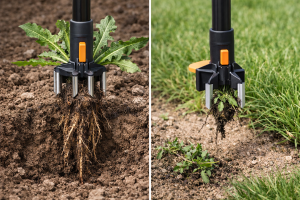
Both tools promise root-level weed removal, but they are designed for different soil conditions and weed types. Choosing the wrong model can lead to broken roots, faster regrowth, and wasted effort.
In this article, we explain the 10 best differences between Fiskars weed puller 4 claw and 3 claw in a clear, side-by-side style. This guide will help you choose the right weed puller for your lawn, garden beds, or driveway.
What Is The Difference Between Fiskars Weed Puller 4 Claw And 3 Claw?
1. Claw Design and Root Grip Strength
The Fiskars 4 claw weed puller uses four stainless steel claws that surround the weed root evenly. This design creates a full circular grip that locks onto the root from multiple angles. As a result, the weed is removed more cleanly and completely.
The Fiskars 3 claw weed puller uses a triangular claw layout that grips the weed from three points. This works well for smaller weeds and shallow roots in loose soil. However, it offers less grip when weeds are mature or deeply rooted.
When comparing grip strength, the 4-claw weed puller clearly provides superior holding power. This makes it more reliable for stubborn weeds that resist removal.
2. Performance in Different Soil Types
Soil type plays a major role in weed removal success. The Fiskars 4 claw weed puller performs exceptionally well in clay, compacted, and dry soil. Its extra claw distributes pressure more evenly and penetrates harder ground.
The Fiskars 3 claw weed puller is better suited for loose, sandy, or well-watered soil. In these conditions, the claws sink easily and extract weeds with minimal resistance. Problems arise when soil becomes dense or rocky.
If your yard has mixed or tough soil conditions, the 4-claw model offers greater consistency and reliability. This makes it the preferred option for year-round use.
3. Weed Removal Success Rate
The main goal of any weed puller is removing the entire root system. The Fiskars 4 claw weed puller has a higher success rate because it grips the root more securely. This reduces the chances of roots breaking off underground.
The Fiskars 3 claw weed puller can sometimes snap the weed stem instead of pulling the root. This usually happens with older weeds or thick taproots. Broken roots often grow back quickly.
For gardeners focused on long-term weed control, the 4-claw weed puller delivers better results per attempt. Fewer repeat weeds mean less work over time.
4. Ease of Use and Ergonomics
Both Fiskars weed pullers are designed for stand-up operation. This reduces strain on the back, knees, and joints during weeding. The handle height and grip are comfortable on both models.
The 4-claw weed puller includes a stronger foot pedal that improves leverage. This allows users to drive the claws deeper into the soil with less effort. The extraction motion feels smoother and more controlled.
The 3-claw weed puller is lighter and easier to maneuver for short tasks. However, it may require more twisting force when pulling tough weeds.
5. Durability and Build Quality
Durability is an important factor when choosing garden tools. The Fiskars 4 claw weed puller is built with thicker stainless steel claws. This makes it more resistant to bending and wear.
The Fiskars 3 claw weed puller is still well made but slightly less reinforced. Over time, heavy use in hard soil may affect claw alignment. This is less common with the 4-claw version.
For frequent or heavy-duty use, the 4-claw weed puller offers better long-term durability. It is designed to handle demanding conditions.
6. Precision Around Plants and Edges
Precision matters when working near flowers, edging stones, or walkways. The 3-claw weed puller has a narrower claw spread. This allows better access in tight or crowded spaces.
The 4-claw weed puller has a wider footprint that may disturb nearby soil. Careful placement is needed when working close to delicate plants. With practice, this becomes manageable.
If precision is your main concern, the 3-claw weed puller provides slightly better control. This makes it suitable for detailed garden beds.
7. Weight and Maneuverability
Weight affects comfort during extended use. The 3-claw weed puller is lighter and easier to carry across large lawns. This can reduce arm fatigue for casual users.
The 4-claw weed puller is slightly heavier due to reinforced components. However, the added weight improves stability during extraction. Many users find it balances effort more efficiently.
For large weeding jobs, the 4-claw model often feels easier overall despite being heavier. Fewer repeated pulls save energy.
8. Lawn Impact and Soil Disturbance
Both weed pullers are designed to minimize lawn damage. The 4-claw weed puller creates a slightly larger hole after removal. This is usually easy to press back down with your foot.
The 3-claw weed puller leaves a smaller opening in the soil. This can be beneficial for maintaining a neat lawn appearance. Grass recovers quickly in most cases.
Neither tool causes significant damage when used correctly. Proper technique ensures a clean and tidy lawn.
9. Maintenance and Cleaning Requirements
Maintenance for both tools is minimal. The 4-claw weed puller may collect more soil between claws after use. A quick rinse keeps it functioning smoothly.
The 3-claw weed puller is easier to clean due to fewer contact points. Dirt and roots release quickly after pulling weeds. This saves time during cleanup.
Both models benefit from occasional inspection and rinsing. No special maintenance is required.
10. Price and Overall Value
The Fiskars 4 claw weed puller usually costs more than the 3-claw version. The higher price reflects stronger performance and durability. For frequent use, this investment pays off.
The Fiskars 3 claw weed puller is more affordable. It is ideal for homeowners with light or occasional weeding needs. Budget-conscious buyers often prefer it.
When comparing long-term value, the 4-claw weed puller offers better performance per dollar for serious gardeners. The 3-claw remains a good entry-level option.
What Is The Difference Between Fiskars Weed Puller 4 Claw And 3 Claw (FAQs)
1. What is the main difference between Fiskars 4 claw and 3 claw weed pullers?
The main difference is grip strength, with the 4-claw providing stronger root control.
2. Which Fiskars weed puller is better for clay soil?
The 4-claw weed puller performs better in hard and compact soil.
3. Does the 3-claw weed puller remove roots completely?
It can, but success depends on soil softness and weed maturity.
4. Is the Fiskars 4 claw weed puller worth the extra cost?
Yes, especially for frequent use and tough weeds.
5. Are Fiskars weed pullers safe for lawns?
Yes, both models cause minimal lawn disturbance.
6. Which model is better for seniors?
The 3-claw is lighter, but the 4-claw requires less pulling force.
7. Can these tools replace chemical weed killers?
Yes, both allow chemical-free weed control.
Conclusion
The difference between Fiskars weed puller 4 claw and 3 claw comes down to strength, durability, and soil performance. Both tools are effective, but they serve different gardening needs.
The 3-claw weed puller is ideal for light weeding and soft soil. It offers precision, lower weight, and affordability for casual users.
The 4-claw weed puller excels in tough conditions and deep-rooted weeds. Its stronger grip and durability make it the better long-term investment.
If you want faster, cleaner, and more reliable weed removal, choosing the right Fiskars weed puller will save time and effort. Pick the model that matches your soil and workload and start enjoying a weed-free lawn today.
Recent Posts
The best fertilizer for Aechmea fasciata is essential for promoting vibrant bract coloration, strong root systems, and steady vegetative growth throughout the active season. Selecting fertilizers...
The best fertilizer for landscaping is essential for maintaining lush lawns, vibrant plants, and healthy soil structure across diverse outdoor environments. Selecting fertilizers with NPK ratios such...