Agricultural drones have become a cornerstone of modern farming systems, enabling precise crop management, efficient input application, and real-time field intelligence across diverse agricultural environments.
Global agricultural technology assessments show that drone-assisted farming can improve yield uniformity by up to 25% and reduce chemical input waste by 20–30%, making these tools indispensable for sustainable food production.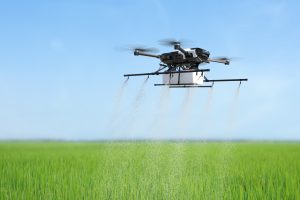
Leading manufacturers such as DJI Agriculture, XAG, Parrot, Yamaha, senseFly, and Autel Robotics have refined drone platforms to support spraying, mapping, crop health analysis, and operational monitoring. These systems reduce labor dependency while improving decision accuracy in both smallholder and large-scale commercial farms.
This guide presents the Top 10 Agricultural Drones, detailing performance, reliability, and practical farm applications. Each drone is evaluated to support informed adoption decisions across different farming models and production goals.
Top 10 Agricultural Drones
1. DJI Agras T40 – DJI Agriculture – Best High-Capacity Drone for Large-Scale Crop Spraying
The DJI Agras T40, developed by DJI Agriculture, is best for high-volume spraying and granular spreading on expansive commercial farms. It features a 40-liter liquid tank and a 50-kilogram spreading payload, enabling coverage of approximately 21 hectares per hour under standard field conditions.
 The drone integrates active phased-array radar and binocular vision, allowing it to detect obstacles such as trees, poles, and terrain variations in real time. This ensures consistent operation even in orchards, hilly farmland, and irregular field layouts.
Its IPX6K-rated airframe protects internal components from dust, moisture, and chemical corrosion during intensive spraying operations. This durability supports continuous use throughout demanding planting and treatment seasons.
Field application studies indicate up to 30% reduction in pesticide waste due to precision flow control and variable-rate delivery. Large rice, wheat, maize, and sugarcane operations gain the greatest efficiency benefits.
Pros
-
Large payload
-
High coverage
-
Precision spraying
-
Radar sensing
-
Durable frame
-
Terrain tracking
-
Labor reduction
Cons
-
High cost
-
Skilled operation
-
Large footprint
2. XAG P100 Pro – XAG Agriculture – Best Autonomous Drone for Precision Crop Management
The XAG P100 Pro, manufactured by XAG Agriculture, is best for fully autonomous precision crop management. It employs AI-based navigation and centimeter-level positioning to execute spraying and spreading missions with minimal human input.
This drone supports liquid spraying, granular distribution, and aerial data collection, allowing farmers to perform multiple tasks using one platform. Modular components enable rapid switching between applications.
Its enclosed centrifugal spraying system significantly minimizes drift and evaporation losses during application. Autonomous agricultural systems like this have been shown to reduce labor requirements by up to 40% across a growing season.
The drone performs reliably across rice paddies, plantations, and row-crop systems. It is especially valuable in regions experiencing agricultural labor shortages.
Pros
-
Full autonomy
-
Modular design
-
Drift control
-
High precision
-
Labor savings
-
Multi-function
-
Stable flight
Cons
-
Learning curve
-
Initial setup
-
Battery planning
3. DJI Agras T25 – DJI Agriculture – Best Compact Spraying Drone for Medium Farms
The DJI Agras T25, from DJI Agriculture, is best for medium-sized farms requiring portability and efficiency. It features a 20-liter spray tank combined with a foldable airframe for easier transport.
Despite its compact size, the drone delivers uniform droplet distribution across crops. It is effective in narrow plots and irregular field boundaries.
Advanced obstacle sensing improves operational safety near trees and infrastructure. This is particularly useful in mixed-use agricultural landscapes.
Farm-level evaluations show faster application compared to manual backpack sprayers. The drone balances affordability with professional-grade performance.
Pros
-
Compact size
-
Easy transport
-
Accurate spraying
-
Radar safety
-
Efficient use
-
Fast deployment
-
Reliable build
Cons
-
Smaller tank
-
Reduced range
-
Limited payload
4. Parrot Bluegrass Fields – Parrot – Best Crop Health Mapping Drone
The Parrot Bluegrass Fields, produced by Parrot, is best for crop health monitoring and multispectral analysis. It captures NDVI and RGB imagery to assess plant vigor and stress indicators.
This fixed-wing drone can cover up to 180 hectares per flight, making it suitable for large field scouting. Its long endurance supports efficient survey missions.
Collected data enables early detection of nutrient deficiencies and disease pressure. Farmers can respond proactively rather than after yield loss occurs.
The system integrates with farm management platforms for long-term analysis. This improves strategic planning accuracy.
Pros
-
Long endurance
-
Multispectral data
-
Wide coverage
-
High accuracy
-
Lightweight
-
Easy launch
-
Reliable mapping
Cons
-
No spraying
-
Data processing
-
Landing space
5. Autel EVO II Enterprise – Autel Robotics – Best Multi-Role Agricultural Inspection Drone
The Autel EVO II Enterprise, by Autel Robotics, is best for agricultural inspection and infrastructure monitoring. It supports visual, thermal, and zoom imaging within a single platform.
Farmers use it to inspect irrigation systems, greenhouses, and livestock enclosures. Thermal imaging helps identify water stress and equipment inefficiencies.
Its foldable design allows rapid deployment across remote properties. The drone maintains stable flight in moderate wind conditions.
Battery endurance supports extended inspection sessions. This makes it valuable for diversified agricultural operations.
Pros
-
Thermal imaging
-
Multi-sensor
-
Portable design
-
Strong signal
-
Stable flight
-
Fast setup
-
Versatile use
Cons
-
No spraying
-
Higher cost
-
Mapping limits
6. Yamaha RMAX – Yamaha Motor – Best Industrial Agricultural Helicopter Drone
The Yamaha RMAX, produced by Yamaha Motor, is best for industrial-scale agricultural spraying operations. It has been commercially deployed for over 25 years in professional farming systems.
This unmanned helicopter carries heavy spray loads efficiently across large acreage. It is widely used in rice and wheat production systems.
The platform performs reliably in stronger wind conditions compared to multirotor drones. This enhances consistency during open-field operations.
Proven engineering and maintenance support ensure long operational life. It remains a benchmark for professional aerial spraying.
Pros
-
Heavy payload
-
Wind stability
-
Proven design
-
Industrial use
-
Long lifespan
-
Strong engine
-
Consistent output
Cons
-
Very expensive
-
Complex operation
-
Large footprint
7. DJI Phantom 4 Multispectral – DJI – Best Precision Crop Scouting Drone
The DJI Phantom 4 Multispectral, developed by DJI, is best for precision crop scouting and analysis. It integrates six multispectral sensors for accurate vegetation assessment.

This platform simplifies data collection without requiring external sensor attachments. It is widely used by agronomists and researchers.
Flight stability ensures consistent image capture across varied lighting conditions. Data accuracy supports reliable analysis.
Collected insights guide fertilizer optimization and stress management decisions. This improves field-level efficiency.
Pros
-
Integrated sensors
-
High accuracy
-
Stable flight
-
Easy setup
-
Research grade
-
Reliable data
-
Compact design
Cons
-
No spraying
-
Limited endurance
-
Premium price
8. XAG V40 – XAG Agriculture – Best Lightweight Drone for Smallholder Farms
The XAG V40, from XAG Agriculture, is best for smallholder and cooperative farming operations. It provides precision spraying in a lightweight configuration.
The drone supports autonomous flight paths for consistent application accuracy. This significantly reduces operator fatigue.
Its compact design suits fragmented land plots and small fields. Maintenance requirements remain minimal.
Small farms benefit from improved productivity without high capital investment. This makes it suitable for emerging agricultural markets.
Pros
-
Lightweight
-
Autonomous flight
-
Easy handling
-
Efficient spraying
-
Low maintenance
-
Compact design
-
Cost effective
Cons
-
Smaller tank
-
Short range
-
Limited power
9. senseFly eBee Ag – senseFly – Best Fixed-Wing Mapping Drone for Large Fields
The senseFly eBee Ag, manufactured by senseFly, is best for large-scale agricultural mapping. It delivers high-resolution imagery across extensive farmland.
The fixed-wing design enables long-duration flights. This improves efficiency in wide-area surveys.
Farmers use collected data for yield estimation and land planning. Accuracy supports informed strategic decisions.
Its lightweight structure allows hand launching in remote locations. This improves operational flexibility.
Pros
-
Long endurance
-
Large coverage
-
Accurate mapping
-
Lightweight
-
Easy launch
-
Reliable data
-
Proven platform
Cons
-
No spraying
-
Landing space
-
Weather sensitive
10. DJI Mini 4 Pro – DJI – Best Entry-Level Drone for Farm Monitoring
The DJI Mini 4 Pro, produced by DJI, is best for entry-level farm monitoring and scouting. It offers high-quality imaging at an accessible cost point.

Farmers use it for visual inspections and planning tasks. It performs well on small plots and gardens.
The lightweight build simplifies transport and storage. Flight controls are beginner friendly.
Although it does not support spraying, it assists early observation. This helps prevent larger crop issues.
Pros
-
Affordable
-
Easy use
-
High resolution
-
Lightweight
-
Portable
-
Stable flight
-
Quick setup
Cons
-
No spraying
-
Limited sensors
-
Short range
Top 10 Agricultural Drones FAQs
1. How do agricultural drones improve farm efficiency?
They reduce labor, improve precision, and enable faster field assessments.
2. Are spraying drones safe for crops?
Yes, controlled droplet application reduces plant stress.
3. Can small farms use agricultural drones?
Yes, lightweight models suit smallholders well.
4. Do drones reduce chemical usage?
Studies show reductions of up to 30%.
5. Are drones effective in hilly terrain?
Advanced terrain-following systems support uneven land.
6. How long do agricultural drones last?
Professional models often exceed five years with maintenance.
7. Do drones require special training?
Advanced spraying systems typically require operator training.
Conclusion
Agricultural drones have fundamentally transformed modern farming by improving accuracy, efficiency, and decision-making across all production scales.
Each drone reviewed in this guide serves a distinct role, from heavy-duty spraying to advanced crop monitoring and mapping. Selecting the right platform depends on farm size, crop type, and operational priorities.
When deployed correctly, these tools contribute to higher productivity and reduced resource waste. Take the next step by evaluating your farm’s specific needs and investing in an agricultural drone that aligns with your long-term production goals.
Recent Posts
Choosing the Best Fertilizer For Salvias is essential for achieving vibrant blooms, lush foliage, and strong root systems. Proper nutrient management ensures salvias receive the right balance of...
Choosing the best fertilizer for ginger plant is essential for achieving strong rhizome development, vigorous foliage, and high yields. Proper nutrient management ensures ginger plants receive the...