Selecting the Best Lizards For A Paludarium requires understanding how reptiles interact with semi-aquatic ecosystems where land and water zones must remain chemically stable. These environments demand species that tolerate high humidity, variable oxygen levels, and dynamic nutrient cycling.
A well-designed enclosure relies on biological balance, where animals, plants, and microbes interact continuously. Therefore, choosing the wrong species can disrupt ammonia conversion, oxygen diffusion, and humidity regulation.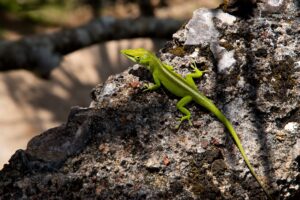
Paludarium setups mimic rainforest edges, swamp systems, and riparian habitats where reptiles naturally thrive. Consequently, species selection should reflect ecological compatibility rather than visual appeal alone.
In this guide , we will explore the top 10 best lizards for paludarium environments, focusing on biochemical adaptation, hydration efficiency, and environmental tolerance to help you build a stable and thriving ecosystem.
Top 10 Best Lizards For A Paludarium (Expert Picks)
1. Green Anole – Best beginner-friendly climbing lizard for paludarium setups
Green Anoles are the best beginner-friendly climbing lizard for paludarium setups because they naturally thrive in humid forest edges. Additionally, their semi-arboreal nature allows them to utilize vertical space effectively. As a result, they adapt well to enclosures with plants and water features. Their physiology supports moisture absorption through skin and respiration.
They regulate body temperature through basking, which complements a paludarium’s gradient design. Moreover, their lightweight bodies reduce stress on delicate plants and branches. Therefore, they maintain ecological balance without damaging the habitat. Their insectivorous diet also helps control pest populations.
Humidity levels between 60–80% mimic their native environment, improving shedding cycles and hydration. Furthermore, they exhibit color-changing ability due to chromatophores reacting to stress and temperature. Overall, they are low-maintenance and visually appealing reptiles.
Pros:
- Easy care
- Lightweight
- Arboreal
- Color changing
- Affordable
- Active
- Hardy
Cons:
- Short lifespan
- Small size
- Territorial
2. Mourning Gecko – Best self-reproducing micro lizard for paludariums
Mourning Geckos are the best self-reproducing micro lizard for paludariums, offering unique parthenogenetic reproduction. Additionally, they thrive in high humidity due to their tropical origin. As a result, they integrate seamlessly into bioactive environments. Their adhesive toe pads allow vertical climbing.
They consume fruit mixes and insects, supporting a balanced feeding cycle. Moreover, their small size minimizes ecological disruption in planted tanks. Therefore, they coexist well with invertebrates like isopods. Their skin retains moisture efficiently.
Humidity enhances egg viability and overall metabolic function. Furthermore, their nocturnal activity adds diversity to observation cycles. Overall, they are perfect for small, lush enclosures.
Pros:
- Self-reproducing
- Small size
- Low maintenance
- Arboreal
- Bioactive friendly
- Quiet
- Unique
Cons:
- Escape artists
- Tiny eggs
- Hard to handle
3. Day Gecko – Best vibrant display lizard for tropical paludariums
Day Geckos are the best vibrant display lizard for tropical paludariums, known for their striking coloration. Additionally, their diurnal nature allows daytime observation. As a result, they enhance visual appeal significantly. Their toe pads rely on van der Waals forces for adhesion.
They require high humidity and UVB lighting to maintain calcium metabolism. Moreover, their diet includes nectar and insects, which supports ecological diversity. Therefore, they fit well in planted tanks. Their bright colors signal health and activity.
Their skin is delicate, so handling should be minimized. Furthermore, their metabolism thrives in stable warm temperatures. Overall, they are ideal for display-focused setups.
Pros:
- Bright colors
- Diurnal
- Arboreal
- Active
- Attractive
- Medium size
- Engaging
Cons:
- Fragile skin
- Fast movement
- Requires UVB
4. Chinese Water Dragon – Best semi-aquatic lizard for large paludariums
Chinese Water Dragons are the best semi-aquatic lizard for large paludariums, thriving near water bodies. Additionally, they are strong swimmers, which suits aquatic sections. As a result, they fully utilize both land and water zones. Their muscular tails aid in swimming propulsion.
They require high humidity and large enclosures to support growth. Moreover, their diet includes insects and small vertebrates. Therefore, they demand careful feeding management. Their skin absorbs moisture efficiently.
Their basking behavior regulates metabolism and digestion. Furthermore, proper UVB prevents metabolic bone disease. Overall, they are ideal for advanced setups.
Pros:
- Semi-aquatic
- Strong swimmer
- Large size
- Intelligent
- Active
- Impressive
- Hardy
Cons:
- Needs space
- High maintenance
- Expensive
5. Basilisk Lizard – Best water-running lizard for dynamic paludariums
Basilisk Lizards are the best water-running lizard for dynamic paludariums, famous for their ability to run on water. Additionally, their long limbs and lightweight bodies enhance this ability. As a result, they thrive in enclosures with large water areas. Their tail aids in balance and propulsion.
They require high humidity and warm temperatures for optimal metabolism. Moreover, they consume insects and plant matter. Therefore, they are omnivorous and adaptable. Their behavior adds excitement to the enclosure.
Their stress levels must be managed through proper hiding spaces. Furthermore, hydration supports skin health and shedding. Overall, they are visually fascinating reptiles.
Pros:
- Unique ability
- Active
- Fast
- Semi-aquatic
- Eye-catching
- Intelligent
- Agile
Cons:
- Skittish
- Needs space
- High care
6. Fire Skink – Best burrowing lizard for humid paludarium substrates
Fire Skinks are the best burrowing lizard for humid paludarium substrates, thriving in moist soil layers. Additionally, their bright coloration adds visual contrast. As a result, they enhance ground-level activity. Their scales reduce water loss.
They prefer hiding under leaf litter and substrate layers. Moreover, they consume insects efficiently. Therefore, they help control pests. Their behavior supports bioactive setups.
Humidity improves shedding and skin elasticity. Furthermore, they are relatively docile compared to other skinks. Overall, they are excellent for substrate-based environments.
Pros:
- Colorful
- Burrowing
- Docile
- Hardy
- Pest control
- Medium size
- Unique
Cons:
- Shy
- Rarely visible
- Needs substrate
7. Crocodile Skink – Best shy forest-floor lizard for paludariums
Crocodile Skinks are the best shy forest-floor lizard for paludariums, resembling miniature dragons. Additionally, they thrive in cool, humid environments. As a result, they are ideal for shaded enclosures. Their armor-like scales reduce predation risk.
They require hiding spaces and minimal disturbance. Moreover, they feed on small insects. Therefore, they are low-impact feeders. Their behavior is calm and reclusive.
Humidity supports their delicate skin structure. Furthermore, stress can affect their appetite significantly. Overall, they are best for quiet environments.
Pros:
- Unique look
- Calm
- Humidity tolerant
- Small size
- Low aggression
- Easy diet
- Interesting
Cons:
- Shy
- Hard to find
- Limited activity
8. Tokay Gecko – Best aggressive climber for vertical paludariums
Tokay Geckos are the best aggressive climber for vertical paludariums, known for strong grip and vocalization. Additionally, they thrive in humid conditions. As a result, they adapt well to tall enclosures. Their bite force is significant.
They require secure enclosures due to escape tendencies. Moreover, they feed on insects and small vertebrates. Therefore, they need controlled feeding. Their skin retains moisture efficiently.
Their territorial nature requires solitary housing. Furthermore, proper humidity ensures healthy shedding. Overall, they are for experienced keepers.
Pros:
- Strong grip
- Loud
- Hardy
- Climber
- Large size
- Durable
- Striking
Cons:
- Aggressive
- Bites
- No handling
9. Schneider’s Skink – Best ground-dwelling lizard for mixed paludariums
Schneider’s Skinks are the best ground-dwelling lizard for mixed paludariums, combining activity and resilience. Additionally, they adapt to moderate humidity levels. As a result, they work in partially aquatic setups. Their smooth scales reduce friction.
They require basking areas to regulate metabolism. Moreover, they consume insects and vegetables. Therefore, they are omnivorous. Their behavior is active and curious.
Humidity must be balanced to avoid respiratory issues. Furthermore, substrate depth supports digging behavior. Overall, they are versatile reptiles.
Pros:
- Active
- Curious
- Omnivorous
- Hardy
- Medium size
- Ground-dwelling
- Adaptable
Cons:
- Needs basking
- Moderate humidity
- Space required
10. Gold Dust Day Gecko – Best colorful nano lizard for small paludariums
Gold Dust Day Geckos are the best colorful nano lizard for small paludariums, offering bright patterns. Additionally, they thrive in tropical humidity. As a result, they suit compact setups. Their adhesive pads enable climbing.
They require nectar-based diets supplemented with insects. Moreover, their activity enhances enclosure liveliness. Therefore, they are ideal for display tanks. Their skin reacts to environmental changes.
Humidity ensures proper hydration and shedding. Furthermore, UVB lighting supports calcium absorption. Overall, they are excellent for beginners and experts alike.
Pros:
- Bright colors
- Small size
- Active
- Arboreal
- Easy care
- Attractive
- Engaging
Cons:
- Fragile
- Fast
- Needs UVB
Best Lizards For A Paludarium (FAQs)
1. What are the best lizards for a paludarium setup?
The best lizards for a paludarium setup are species that naturally thrive in humid, semi-aquatic, or tropical environments. Examples include Green Anoles, Day Geckos, and Chinese Water Dragons due to their adaptability and environmental compatibility.
2. Are beginner-friendly species available for paludariums?
Yes, several beginner-friendly options exist among the best lizards for a paludarium, including Green Anoles and Mourning Geckos. These species require simpler care routines while still thriving in high-humidity enclosures.
3. What humidity level is ideal for paludarium lizards?
Most of the best lizards for a paludarium environment require humidity levels between 60% and 90%. Maintaining this range supports proper shedding, hydration, and overall metabolic function.
4. Do all paludarium lizards need UVB lighting?
Yes, UVB lighting is essential for most of the best lizards for a paludarium tank because it enables vitamin D3 synthesis. This process is critical for calcium absorption and preventing metabolic bone disease.
5. Can multiple lizards live together in a paludarium?
Some of the best lizards for a paludarium habitat can cohabitate, but compatibility depends on species behavior and enclosure size. Territorial species should always be housed separately to avoid stress or aggression.
6. What size enclosure is best for paludarium lizards?
The best lizards for a paludarium system require enclosures that provide both vertical and horizontal space. Larger setups improve environmental stability and allow natural behaviors like climbing and basking.
7. What do paludarium lizards eat in a bioactive setup?
Most of the best lizards for a paludarium ecosystem are insectivores or omnivores that feed on live insects, fruit mixes, or nectar. Their diet often complements the ecosystem by controlling pests and maintaining balance.
Conclusion
In conclusion, choosing the best lizards for a paludarium depends on environmental compatibility, care level, and enclosure size. The best overall choice is the Green Anole due to its adaptability and beginner-friendly nature, while the runner-up is the Day Gecko for its vibrant color and active behavior.
Each species highlighted offers unique advantages, whether it is climbing ability, semi-aquatic adaptation, or low-maintenance care. Therefore, selecting the right lizard ensures both visual appeal and long-term ecological stability.
A properly designed paludarium can significantly improve reptile health, especially when humidity, lighting, and habitat structure mimic natural conditions. As a result, careful planning directly impacts lifespan, activity levels, and overall well-being.
To achieve the best results, invest in high-quality equipment, monitor environmental conditions consistently, and choose species that match your experience level. Start building your ideal paludarium today and create a thriving, self-sustaining ecosystem that stands out.
Recent Posts
Spring fertilization supports healthy leaf development, root activity, and productive shoot growth when apple trees have insufficient soil nutrients. Selecting an appropriate fertilizer requires...
Cucumbers (Cucumis sativus) are vigorous, fast-growing vines that can produce abundant harvests when their roots receive enough water, warmth, and balanced nutrition. The best fertilizer for cukes in...