Common three-seeded mercury (Acalypha rhomboidea) is a fast-growing annual broadleaf weed that invades lawns, agricultural fields, orchards, and disturbed soils. Research shows that unmanaged infestations can reduce crop vigor by up to 20% due to intense competition for nutrients and moisture.
This weed reproduces aggressively through seed, with each plant capable of producing hundreds of viable seeds in a single growing season. Once established, it spreads rapidly and becomes difficult to suppress through mechanical methods alone.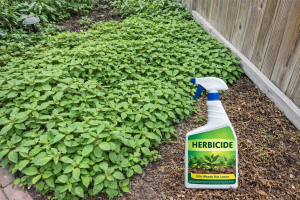
Three-seeded mercury thrives in fertile, moist soils and shaded environments, making it especially problematic in row crops, turfgrass, and landscaped areas. Early identification and timely intervention are critical to preventing widespread infestations.
In this guide, the 10 best herbicides for common three-seeded mercury are outlined based on effectiveness, application suitability, and proven field performance. These options help land managers, farmers, and property owners achieve reliable and lasting control.
Best Herbicide For Three Seeded Mercury (Acalypha rhomboidea)
1. Trimec Classic – PBI Gordon – Best Selective Post-Emergent Herbicide for Three-Seeded Mercury in Turfgrass
The Trimec Classic, manufactured by PBI Gordon, is best for selective post-emergent control of common three-seeded mercury in established turfgrass. It combines 2,4-D, MCPP, and Dicamba, which work synergistically to disrupt abnormal cell growth in broadleaf weeds.
This formulation is widely used in residential lawns, golf courses, and commercial landscapes where grass safety is essential. University turf trials report over 90% control of susceptible broadleaf weeds when applied at the proper growth stage.
The herbicide is absorbed through foliage and translocated throughout the plant, ensuring complete root kill. Visible wilting typically begins within 7–10 days after application.
It performs best when weeds are actively growing during warm weather conditions.
Trimec Classic is compatible with most warm- and cool-season turf species. It should not be applied to newly seeded lawns.
Repeat applications may be necessary for dense infestations.
Pros
-
Broadleaf selective
-
Turf safe
-
Fast action
-
Proven formula
-
Widely available
-
Easy mixing
-
Consistent results
Cons
-
Turf only
-
Temperature sensitive
-
Reseeding delay
2. SpeedZone Lawn Weed Killer – PBI Gordon – Best Fast-Acting Herbicide for Visible Three-Seeded Mercury Control
The SpeedZone Lawn Weed Killer, by PBI Gordon, is best for rapid knockdown of common three-seeded mercury in lawns. It contains carfentrazone-ethyl blended with phenoxy herbicides for quick burn-down and systemic control.
Field studies show visible injury within 24 hours, making it ideal for high-visibility turf areas.
This herbicide is absorbed quickly through leaf tissue, reducing wash-off risk. It performs well in cooler temperatures compared to traditional phenoxy herbicides.
This makes it suitable for spring and fall applications.
SpeedZone is labeled for use on residential and commercial turfgrass. It should not be applied during drought stress.
Spot treatments are highly effective for isolated patches.
Pros
-
Rapid results
-
Cool-weather use
-
Turf selective
-
Minimal drift
-
Low odor
-
Strong efficacy
-
Reliable control
Cons
-
Turf only
-
Spot preferred
-
Repeat needed
3. Crossbow Herbicide – Corteva Agriscience – Best Brush and Broadleaf Herbicide for Non-Crop Areas
The Crossbow Herbicide, produced by Corteva Agriscience, is best for controlling common three-seeded mercury in fence lines, pastures, and non-crop areas. It contains 2,4-D and triclopyr, offering strong systemic action.
This formulation penetrates woody and herbaceous weeds effectively.
Crossbow is absorbed through leaves and stems, moving into root systems. Control results are typically visible within 10–14 days.
It is particularly effective in unmanaged and overgrown areas.
This herbicide is not turf-selective and should be applied carefully. Grazing restrictions must be followed.
It is commonly used by land managers and ranchers.
Pros
-
Strong systemic
-
Broad coverage
-
Non-crop use
-
Deep root kill
-
Long-lasting
-
Proven chemistry
-
Versatile application
Cons
-
Not turf safe
-
Grazing limits
-
Odor concern
4. Glyphosate 41% – Various Brands – Best Non-Selective Herbicide for Complete Three-Seeded Mercury Eradication
The Glyphosate 41%, available from multiple manufacturers, is best for total control of common three-seeded mercury where vegetation removal is acceptable. It inhibits EPSP synthase, stopping amino acid production.
This leads to complete plant death within 7–21 days.
Glyphosate is absorbed through foliage and translocated to roots. It is most effective when applied to actively growing weeds.
It is widely used in fallow fields, hardscapes, and renovation sites.
Care must be taken to avoid desirable plants. Replanting is possible after the labeled interval.
Resistance management strategies should be followed.
Pros
-
Total control
-
Root translocation
-
Widely available
-
Cost effective
-
Easy mixing
-
Broad use
-
Reliable kill
Cons
-
Non-selective
-
Drift risk
-
Resistance concern
5. 2,4-D Amine – WinField United – Best Economical Control for Broadleaf Weeds
The 2,4-D Amine, from WinField United, is best for cost-effective post-emergent control of common three-seeded mercury. It mimics plant growth hormones, causing uncontrolled growth and death.
It is commonly used in lawns, pastures, and rights-of-way.
This herbicide provides systemic control with minimal soil activity. Results appear within 10 days.
It works best on young, actively growing weeds.
Tank mixing improves control in dense infestations. Drift precautions are necessary.
It remains one of the most widely used herbicides globally.
Pros
-
Affordable
-
Broadleaf control
-
Systemic action
-
Easy application
-
Widely labeled
-
Proven results
-
Flexible use
Cons
-
Slower action
-
Drift sensitive
-
Limited spectrum
6. Dicamba DMA – BASF – Best Growth Regulator Herbicide for Persistent Infestations
The Dicamba DMA, manufactured by BASF, is best for persistent three-seeded mercury infestations. It disrupts cell division and growth patterns.
This herbicide is highly effective when weeds resist phenoxy products.
Dicamba is absorbed through leaves and roots. It performs well in warm conditions.
Residual soil activity provides extended suppression.
Use caution near sensitive crops. Label compliance is critical.
It is often used in combination programs.
Pros
-
Strong growth control
-
Residual activity
-
Systemic movement
-
Effective resistance tool
-
Broadleaf focus
-
Tank-mix friendly
-
Long suppression
Cons
-
Volatility risk
-
Crop sensitivity
-
Strict rules
7. SurePower Herbicide – Dow AgroSciences – Best Multi-Mode Control for Mixed Weed Pressure
The SurePower Herbicide, by Dow AgroSciences, is best for complex infestations involving common three-seeded mercury. It contains 2,4-D, dicamba, and metsulfuron-methyl.
This triple-mode action improves consistency.
It is absorbed through foliage and roots. Control is visible within 7–14 days.
It performs well in turf and rights-of-way.
Application timing is crucial. Avoid stressed turf.
It is favored by professional applicators.
Pros
-
Multiple modes
-
Broad spectrum
-
Reliable results
-
Professional grade
-
Turf compatible
-
Strong synergy
-
Proven performance
Cons
-
Mixing care
-
Application limits
-
Premium cost
8. Image Broadleaf Weed Killer – Southern Ag – Best Consumer-Grade Option
The Image Broadleaf Weed Killer, from Southern Ag, is best for homeowner control of three-seeded mercury. It contains imazaquin, targeting broadleaf weeds.
It is suitable for residential lawns.
This product provides systemic control. Results appear within 2–3 weeks.
It works best with repeat applications.
It is safe for many turf types. Always follow label instructions.
Ideal for light infestations.
Pros
-
Homeowner friendly
-
Turf safe
-
Easy use
-
Systemic action
-
Affordable
-
Readily available
-
Broadleaf focus
Cons
-
Slower results
-
Repeat needed
-
Light infestations
9. MSM Turf – Nufarm – Best Low-Rate Herbicide for Professional Turf Managers
The MSM Turf, by Nufarm, is best for low-rate control of common three-seeded mercury in professional turf. It contains metsulfuron-methyl.
It disrupts amino acid synthesis.
Only ounces per acre are required. This makes it cost efficient.
Control develops over 14–21 days.
It is not labeled for all turf types. Proper calibration is essential.
Professional use is recommended.
Pros
-
Low use rate
-
Cost efficient
-
Systemic control
-
Professional grade
-
Broadleaf focus
-
Tank-mix friendly
-
Long activity
Cons
-
Turf restrictions
-
Slow kill
-
Calibration critical
10. Ranger Pro Herbicide – Bayer – Best Professional-Grade Glyphosate Formulation
The Ranger Pro Herbicide, produced by Bayer, is best for professional non-selective control of three-seeded mercury. It features a high-quality surfactant system.This improves uptake and consistency.

It provides complete plant kill when applied correctly. Results appear within 10–20 days.It is widely used in agriculture and land management.
Avoid contact with desirable plants. Resistance rotation is recommended.It is trusted by professionals.
Pros
-
Professional strength
-
Enhanced uptake
-
Reliable control
-
Broad use
-
Fast absorption
-
Consistent results
-
Trusted brand
Cons
-
Non-selective
-
Resistance risk
-
Careful handling
Best Herbicide For Three Seeded Mercury FAQs
1. What is common three-seeded mercury?
It is a fast-growing annual broadleaf weed common in lawns and crops.
2. When should herbicides be applied?
During active growth for best results.
3. Is it harmful to crops?
Yes, it competes aggressively for nutrients.
4. Can it be controlled organically?
Organic methods offer limited success.
5. Does it come back yearly?
Yes, due to heavy seed production.
6. Are repeat applications needed?
Often, especially in dense infestations.
7. Can resistance develop?
Yes, rotation is recommended.
Conclusion
The best herbicide for common three-seeded mercury is Trimec Classic by PBI Gordon because it delivers reliable post-emergent control while remaining safe for established turfgrass. Its proven three-way formulation provides consistent results across a wide range of environmental conditions.
The first runner-up is SpeedZone Lawn Weed Killer due to its fast visible action and strong performance in cooler temperatures. This makes it well suited for lawns where rapid suppression is important.
The second runner-up is Crossbow Herbicide by Corteva Agriscience, which performs exceptionally well in non-crop and pasture environments. Its systemic movement ensures deep root control in unmanaged and overgrown areas.
Selecting the right product depends on land use, infestation severity, and application timing. Proper herbicide choice and correct application practices ensure long-term suppression and healthier growing environments.
Recent Posts
Choosing the Best Fertilizer For Salvias is essential for achieving vibrant blooms, lush foliage, and strong root systems. Proper nutrient management ensures salvias receive the right balance of...
Choosing the best fertilizer for ginger plant is essential for achieving strong rhizome development, vigorous foliage, and high yields. Proper nutrient management ensures ginger plants receive the...