10 Best Herbicides for Sorghum
1. Atrazine 4L – Best Foundation Herbicide For Sorghum Weed Control
Atrazine 4L is widely regarded as one of the best foundation herbicides for sorghum due to its broad‑spectrum activity and crop safety when used according to label directions. Its triazine chemistry targets common broadleaf weeds and some grasses, making it a versatile base in weed control programs. Sorghum growers often rely on atrazine to suppress pigweed, lambsquarters, and foxtail in both conventional and no‑till systems.
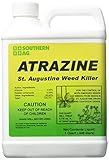
This herbicide can be applied as a pre‑emergence or early post‑emergence treatment, giving flexibility based on weed pressure and weather. The product’s residual activity helps reduce weed flushes, which can lower the need for additional passes. Proper rate selection and timing are key to leveraging its effectiveness while minimizing crop stress.
Research trials from agricultural universities have consistently shown that atrazine‑based programs improve weed control and support greater yield potential. Its cost‑effectiveness compared to some newer chemistries also makes it attractive for growers managing large acreages. Now growers who combine atrazine with complementary modes of action can reduce the risk of resistance development over time.
Pros:
• Broad spectrum
• Residual control
• Cost‑effective
• Flexible timing
• Well‑researched
• Supports tank mixing
• Good baseline control
Cons:
• Soil persistence
• Potential runoff
• Crop sensitivity
2. S‑metolachlor (Dual Magnum) – Best Pre‑Emergence Weed Preventer For Sorghum
S‑metolachlor, marketed as Dual Magnum and other brand names, is a pre‑emergence herbicide that excels at preventing grassy weed emergence in sorghum fields. Its mode of action interrupts cell division in germinating weed seeds, which is especially effective against barnyardgrass and foxtail when activated by moisture. Adding this chemistry into a sorghum program early can greatly reduce the weed seed bank’s impact.

Applied before sorghum emerges, S‑metolachlor binds in the soil and provides a window of protection during the critical early growth stages. Its longevity in the soil profile allows sorghum seedlings to establish with minimal weed competition. Farmers often tank‑mix it with atrazine to broaden the spectrum to include more broadleaf weeds.
Because of its dependable performance and compatibility with other herbicide classes, S‑metolachlor is considered a cornerstone of pre‑emergence weed management in sorghum. Its ability to reduce weed density early saves time and fuel costs later in the season. However, adequate rainfall or irrigation shortly after application is necessary to activate the herbicide and maximize control.
Pros:
• Strong pre‑emergence
• Grass control
• Soil residual
• Tank mix friendly
• Early season help
• Reduces follow‑ups
• Consistent performance
Cons:
• Needs moisture
• Not broadleaf
• Environmental limits
3. 2,4‑D Amine – Best Broadleaf Post‑Emergence Herbicide For Sorghum
2,4‑D Amine is a cost‑effective post‑emergence herbicide that targets broadleaf weeds like kochia, pigweed, and lambsquarters in sorghum. Its synthetic auxin mode of action disrupts growth patterns in susceptible weed species while being labeled for safe use in sorghum when applied correctly. Many growers depend on 2,4‑D in mid‑season weed control strategies.
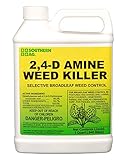
This herbicide works best on actively growing weeds and should be used when sorghum is at a labeled stage of development. Drift precautions and environmental conditions are crucial considerations because off‑target movement can harm sensitive crops nearby. When used with a drift‑reduction agent, 2,4‑D Amine can be a reliable tool to clean up broadleaf escapes that survive pre‑emergence treatments.
Extension research supports the efficacy of 2,4‑D in controlling resistant broadleaf populations when part of a rotational herbicide approach. Using it in sequences or with tank mixes containing other modes of action helps preserve its long‑term utility. For sorghum growers facing heavy broadleaf weed pressure, 2,4‑D remains a go‑to herbicide.
Pros:
• Broadleaf control
• Cost friendly
• Weed uptake
• Rotation help
• Tank mixes
• Proven track record
• Mid‑season tool
Cons:
• Drift risk
• Timing sensitive
• Crop stress
4. Dicamba (Clarity) – Best Tough Broadleaf Fighter For Sorghum
Dicamba, often sold under the Clarity brand in agricultural formulations, is known for controlling tough broadleaf weeds like waterhemp and Palmer amaranth in sorghum. Its systemic action moves through weed tissues to interrupt growth at the root. Because dicamba can affect sensitive crops, following label directions and observing buffer zones is critical.
When applied during the correct sorghum growth stage, dicamba provides a broad spectrum of post‑emergence control. It is especially valuable where glyphosate or ALS‑resistant broadleaf weeds are present. Farmers integrating dicamba into their programs often see significant reductions in weed biomass and seed return.
While potent, dicamba’s potential for off‑target volatilization or drift requires careful application practices, including low‑drift nozzles and favorable weather. Its inclusion in a herbicide rotation can aid in resistance management by diversifying modes of action. When used responsibly, dicamba enhances control of stubborn broadleaf populations that challenge sorghum growers.
Pros:
• Tough broadleaf kill
• Systemic action
• Resistance help
• Mid‑season control
• Enhances tank mix
• Reduces escapes
• Strong efficacy
Cons:
• Drift concerns
• Sensitive timing
• Label restrictions
5. Basagran – Best Contact Broadleaf Herbicide For Sorghum
Basagran, with bentazon as its active ingredient, is a contact herbicide that quickly disrupts photosynthesis in broadleaf weeds around sorghum plants. It is useful where rapid knockdown of small weeds is desired, such as morning glory or small pigweed. Because it acts on contact rather than systemically, it’s best used when weeds are small and actively growing.
This herbicide performs well in a post‑emergence setting and can be tank‑mixed with other products like atrazine for enhanced effect. Users typically see visible browning and desiccation of weed leaves within days of application. Basagran’s safety profile for sorghum supports its use as part of an integrated program when weeds escape earlier passes.
However, repeated applications may be necessary because Basagran does not provide long residual activity in the soil. Its strength lies in quick response rather than duration of control. When matched with residual products, it can strengthen a comprehensive weed control strategy.
Pros:
• Rapid contact kill
• Broadleaf focus
• Tank mix ready
• Easy to see results
• Sorghum safe
• Useful rescue tool
• Flexible rates
Cons:
• No residual
• Repeat needed
• Weather limits
6. Permit (Halosulfuron) – Best Nutsedge Control For Sorghum
Permit, whose active ingredient is halosulfuron, targets tough weeds like yellow and purple nutsedge that are often difficult to manage in sorghum fields. Its ALS‑inhibiting action offers both foliar and some residual soil activity. This makes it a valuable specialty herbicide when specific weed challenges arise.
Growers use Permit when nutsedge pressure has reduced the efficacy of more generalized herbicide programs. Its low use rates make it economical when only certain weed targets require control. Tank‑mixing with broader spectrum products can expand its utility against other weeds present in the field.
University extension trials have shown Permit to deliver high levels of control on susceptible sedge species, reducing competition and helping sorghum plants access nutrients. Because sedges compete aggressively for water and nutrients, controlling them early benefits crop vigor. Permit’s precision allows growers to manage weeds that might otherwise thrive despite standard herbicide programs.
Pros:
• Nutsedge focus
• Low rate
• ALS mode
• Tank mixes
• Soil + foliar
• Helps escapes
• Specialist tool
Cons:
• Narrow spectrum
• Weather dependent
• Needs timing
7. Zidua (Pyroxasulfone) – Best Early Residual For Sorghum
Zidua, containing pyroxasulfone, is a pre‑emergence herbicide that provides extended residual control of grassy and some broadleaf weeds in sorghum. Its mode of action disrupts germinating weed seeds and offers early season protection. Because sorghum establishment can be slow relative to weeds, early residual products like Zidua are highly valued.
Applied before sorghum or immediately after planting, this herbicide becomes activated with moisture and creates a protective zone in the soil profile. Its activity against tough annual grasses gives growers a head start in weed suppression. Combining Zidua with atrazine can broaden spectrum and maximize coverage across weed types.
While powerful, sorghum growers must follow label guidance on rate and soil conditions, as performance can vary with soil organic matter and moisture levels. Proper activation through timely rain or irrigation enhances control. When integrated wisely, Zidua supports a weed‑free window during critical early crop development.
Pros:
• Strong residual
• Grass + some broadleaf
• Early control
• Soil protect
• Tank mix potential
• Moisture activated
• Supports clean start
Cons:
• Soil limits
• Needs rain
• Not all weeds
8. Liberty (Glufosinate) – Best Non‑Glyphosate Post‑Emergence For Sorghum
Liberty, whose active ingredient is glufosinate, is a non‑glyphosate post‑emergence herbicide widely used in sorghum hybrids that tolerate this chemistry. It provides a broad spectrum of control on emerged grassy and broadleaf weeds without relying on glyphosate, which many weeds have developed resistance to. This makes it a key option in resistance management plans.
Applied when weeds are small and actively growing, Liberty works through contact action, causing desiccation and death. Its use in sorghum offers growers an alternative mode of action, helping preserve long‑term herbicide effectiveness across fields. Timing and thorough coverage are crucial because glufosinate’s contact nature means it does not translocate deeply within weed tissues.
Liberty’s label includes safety for tolerant sorghum varieties, and its inclusion in a weed control program can reduce reliance on traditional herbicides alone. When integrated with residual and pre‑emergence products, it strengthens overall control. University trials often show high control levels when Liberty is used as directed on tolerant hybrids.
Pros:
• Glyphosate alternative
• Broad spectrum
• Contact action
• Resistance help
• Tolerant varieties
• Quick results
• Works on escapes
Cons:
• Needs coverage
• Crop specificity
• Not systemic
9. Outlook (Dimethenamid‑P) – Best Flexible Residual For Sorghum
Outlook, with dimethenamid‑P as its active ingredient, is another pre‑emergence herbicide that delivers residual control of key grassy and select broadleaf weeds in sorghum. Its flexibility allows use across a range of soil types and weed spectrums. Growers choose Outlook for its ability to protect emerging sorghum from weed competition early in the season.
After soil activation, Outlook inhibits weed seedling growth, reducing the need for early post‑emergence passes. Its compatibility with other herbicides like atrazine improves spectrum breadth without sacrificing crop safety. When used in a rotation with other residuals, it helps manage resistance development across fields.
Outlook’s performance is enhanced by adequate soil moisture, which ensures consistent activation. Many growers find it particularly useful in fields with mixed weed populations where a single mode of action might be insufficient. Its role in early season programs supports cleaner fields during key crop establishment windows.
Pros:
• Broad residual
• Early season
• Soil flexible
• Tank mix
• Weed suppression
• Crop protect
• Resistance help
Cons:
• Moisture needed
• Not all broadleaf
• Label specific
10. Laudis (Tembotrione) – Best HPPD Inhibitor For Sorghum
Laudis, containing tembotrione, is an HPPD‑inhibiting post‑emergence herbicide that enhances control of broadleaf and some grass weeds in sorghum. Its mode of action targets a different biochemical pathway than many traditional herbicides, making it valuable in resistance management. When weeds are small, Laudis delivers strong control with minimal impact on crop safety.
This chemistry works well in tank mixes with residual products to provide both immediate and lasting control. Its inclusion helps fill gaps left by other herbicides, particularly where resistant weed populations complicate management. Sorghum growers appreciate Laudis for its broad spectrum and reduced likelihood of cross‑resistance with other modes.
University research supports Laudis’s role in integrated programs where diversity of chemistry is essential. By pairing it with pre‑emergence residuals and post‑emergence broadleaf options, growers can build robust programs tailored to their fields’ weed pressures. Responsible use and rotation safeguard its long‑term utility on sorghum acres.
Pros:
• Different mode
• Broad control
• Resistance help
• Post‑emergence
• Tank mix
• Weed spectrum
• High efficacy
Cons:
• Costly
• Timing key
• Label limits
Buyer’s Tips for Sorghum Herbicides
Identify Weed Species
Choose Sorghum Herbicide based on the dominant weed species in your field – grassy vs. broadleaf weeds.
Consider Soil Type
Select Sorghum Herbicide formulations suitable for your soil type – sandy vs. clay soils.
Time Applications Properly
Apply Sorghum Herbicide during the recommended growth stages to avoid crop injury.
Use Proper Adjuvants
Add surfactants or crop oil concentrates to Sorghum Herbicide sprays for better weed absorption.
Rotate Modes of Action
Alternate Sorghum Herbicide chemistry to prevent herbicide resistance in weeds.
Follow Label Rates
Measure Sorghum Herbicide carefully – over-application can cause crop injury.
Consider Tank Mixes
Combine Sorghum Herbicide with other products for broader weed control.
Best Herbicide For Sorghum FAQs
1. What is the best herbicide for sorghum fields?
The best herbicide for sorghum depends on the type of weeds present. Pre-emergence options like atrazine are widely used for broadleaf and some grassy weeds, while post-emergence herbicides such as 2,4-D help control already established weeds. Selecting the right product requires identifying weed species and growth stage.
2. When should I apply herbicide in sorghum farming?
Herbicide application in sorghum is most effective when timed correctly. Pre-emergence herbicides should be applied immediately after planting but before weeds emerge. Post-emergence herbicides should be used when weeds are young and actively growing for maximum control.
3. Can I use glyphosate in sorghum fields?
Glyphosate can be used before planting sorghum as a burndown herbicide to clear existing weeds. However, it should not be applied directly on growing sorghum plants unless using herbicide-tolerant varieties, as it can damage or kill the crop.
4. Is atrazine safe for sorghum crops?
Atrazine is commonly used and generally safe for sorghum when applied at recommended rates. It effectively controls many broadleaf weeds and some grasses. However, overuse or неправиль application can lead to crop injury and environmental concerns.
5. What weeds do herbicides in sorghum control?
Herbicides in sorghum are designed to control a wide range of weeds, including broadleaf weeds like pigweed and lambsquarters, as well as grasses such as foxtail. The effectiveness depends on choosing a herbicide suited to the specific weed problem.
6. How can I prevent herbicide resistance in sorghum fields?
To prevent herbicide resistance, rotate herbicides with different modes of action and avoid repeated use of the same product. Combining chemical control with cultural practices like crop rotation and proper field management also helps reduce resistance risks.
7. Can herbicides affect sorghum yield?
Yes, herbicides can influence sorghum yield both positively and negatively. Proper use improves yield by reducing weed competition, while incorrect application rates or timing can stress the crop and reduce productivity. Always follow label instructions for best results.
Conclusion
In conclusion, choosing the best herbicide for sorghum comes down to effectiveness, reliability, and crop safety. Atrazine 4L stands out as the best option because of its broad-spectrum weed control and cost-efficiency across most sorghum fields.
Atrazine 4L is widely trusted for controlling both broadleaf weeds and some grasses, making it a strong foundation in sorghum weed management programs. Its consistent performance and affordability make it the preferred choice for growers aiming for high yields with manageable input costs.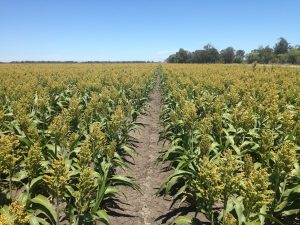
The runner-up is Dual Magnum, which excels in fields with heavy grassy weed pressure. It provides excellent pre-emergence control, helping prevent weeds from emerging and competing with sorghum during critical early growth stages.
For optimal results, always apply sorghum herbicides at the correct growth stages and follow integrated weed management practices. Combining the best and runner-up options with proper timing reduces resistance risks and ensures healthier, more productive sorghum crops.
Recent Posts
Choosing the Best Fertilizer For Salvias is essential for achieving vibrant blooms, lush foliage, and strong root systems. Proper nutrient management ensures salvias receive the right balance of...
Choosing the best fertilizer for ginger plant is essential for achieving strong rhizome development, vigorous foliage, and high yields. Proper nutrient management ensures ginger plants receive the...