Choosing the Best Climbing Plants For Paludarium is a critical step in building a stable, self-sustaining ecosystem that mimics tropical rainforest structure. A paludarium depends on vertical plant growth to regulate humidity, stabilize nitrogen cycles, and support biological filtration across land and water zones.
Plants in a paludarium are not just decorative elements but active biochemical systems. Their roots, leaves, and microbial interactions continuously process nitrogen compounds, carbon dioxide, and organic waste. This makes plant selection a scientific decision rather than a purely aesthetic one.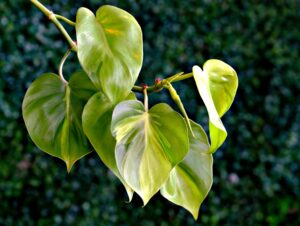
Healthy climbing species improve oxygen exchange rates and regulate evapotranspiration cycles within enclosed habitats. These processes directly influence amphibian health, microbial balance, and water clarity. As a result, plant choice determines long-term ecosystem stability.
In this guide , we will explore the Best Climbing Plants For Paludarium environments in depth, focusing on nutrient cycling, enzymatic activity, humidity regulation, and structural adaptation to help you build a scientifically balanced enclosure.
Related: Best Frogs For Paludarium
10 Best Climbing Plants For Paludarium
1. Pothos (Epipremnum aureum) – Best nitrate-assimilation climbing plant for paludarium filtration
Pothos is the best nitrate-assimilation climbing plant for paludarium filtration because it actively converts dissolved nitrates into plant proteins through nitrogen assimilation pathways. In a paludarium, this biochemical reaction reduces toxic nitrogen accumulation in water zones and stabilizes ammonia levels. The plant’s roots absorb nitrate ions and convert them into amino acids using enzymatic nitrate reductase activity. This process directly improves water quality inside a paludarium ecosystem.
Additionally, Pothos enhances microbial nitrification by releasing organic exudates into the substrate. These exudates stimulate beneficial bacteria that convert ammonia into nitrites and then nitrates, completing the nitrogen cycle inside a paludarium. The interaction between plant roots and microbes forms a biological filtration loop. This loop significantly reduces toxic spikes in closed aquatic systems. Therefore, it strengthens ecosystem resilience in a paludarium.
Moreover, its stomatal regulation controls transpiration rates, which stabilizes humidity levels in a paludarium enclosure. The plant maintains high chlorophyll activity under low to medium light, increasing photosynthetic efficiency and oxygen output. Consequently, oxygen diffusion improves water oxygenation in submerged zones. This makes Pothos a functional biofilter and structural climber in a paludarium.
Pros:
• Nitrate uptake
• Fast growth
• Root filtration
• Humidity boost
• Low light
• Easy care
• High resilience
Cons:
• Invasive spread
• Toxic sap
• Heavy pruning
2. Philodendron hederaceum – Best ammonia-regulating vine for paludarium stability
Philodendron hederaceum is the best ammonia-regulating vine for paludarium stability due to its ability to metabolize nitrogen compounds through foliar and root absorption. In a paludarium, it reduces ammonia toxicity by converting nitrogen into cellular proteins via enzymatic assimilation. This stabilizes water chemistry and prevents toxic buildup. As a result, aquatic life in a paludarium remains healthier and less stressed.
Furthermore, its aerial roots release biochemical compounds that enhance microbial colonization in the substrate of a paludarium. These microbes accelerate decomposition of organic waste into usable nutrients. This interaction improves nutrient cycling efficiency across terrestrial and aquatic zones. Therefore, the plant indirectly enhances biological filtration.
Additionally, Philodendron regulates gas exchange through adaptive stomatal responses that balance oxygen and moisture levels. In a paludarium, this reduces humidity fluctuations and improves atmospheric stability. Its waxy leaf structure minimizes water loss while maximizing CO₂ absorption. Overall, it functions as a stabilizing biochemical engine inside a paludarium.
Pros:
• Ammonia control
• Fast adaptation
• Humidity balance
• Strong vines
• Easy growth
• Air purification
• Stable roots
Cons:
• Toxic leaves
• Needs support
• Moderate spread
3. Ficus pumila – Best biofilm-enhancing wall climber for paludarium ecosystems
Ficus pumila is the best biofilm-enhancing wall climber for paludarium ecosystems because it promotes microbial colonization on vertical surfaces. In a paludarium, its root exudates stimulate biofilm formation, which improves nutrient breakdown efficiency. These microbial layers accelerate decomposition of organic waste. As a result, water quality becomes more stable in a paludarium.
Additionally, its dense root network increases surface area for microbial nitrification processes. This enhances ammonia conversion into nitrate compounds, which are then absorbed by surrounding plants in a paludarium. The plant effectively integrates into the nitrogen cycle. Therefore, it strengthens ecosystem recycling efficiency.
Moreover, Ficus pumila regulates humidity through high transpiration rates that release water vapor into the air. This stabilizes moisture levels in a paludarium environment. Its adhesive root system also improves structural integrity across enclosure walls. Overall, it forms a living filtration wall in a paludarium.
Pros:
• Wall coverage
• Humidity boost
• Dense growth
• Strong adhesion
• Biofilm support
• Natural look
• Fast spread
Cons:
• Overgrowth risk
• High humidity
• Needs trimming
4. Monstera adansonii – Best fenestrated gas-exchange climber for paludarium oxygenation
Monstera adansonii is the best fenestrated gas-exchange climber for paludarium oxygenation due to its perforated leaf structure that enhances airflow and light penetration. In a paludarium, these fenestrations reduce internal leaf resistance, improving CO₂ diffusion rates. This increases photosynthetic efficiency and oxygen production. As a result, oxygen levels improve across the paludarium system.
Additionally, its aerial roots absorb moisture and dissolved nutrients directly from humid air in a paludarium. These roots function as semi-aquatic nutrient collectors that improve plant hydration efficiency. This adaptation enhances survival in fluctuating humidity conditions. Therefore, it maintains stable growth in a paludarium environment.
Moreover, its broad leaf architecture creates shaded microhabitats that regulate temperature gradients inside a paludarium. This reduces thermal stress for amphibians and microbial colonies. The plant also improves structural layering within vertical ecosystems. Overall, it enhances ecological stratification in a paludarium.
Pros:
• Oxygen boost
• Unique leaves
• Humidity use
• Strong growth
• Shade provider
• Root absorption
• Decorative
Cons:
• Needs support
• Sensitive roots
• Medium care
5. Syngonium podophyllum – Best adaptive morphogenesis climber for paludarium growth control
Syngonium podophyllum is the best adaptive morphogenesis climber for paludarium growth control due to its ability to shift between juvenile and mature growth forms. In a paludarium, this morphological adaptation is triggered by light intensity and humidity gradients. The plant adjusts leaf shape to optimize photosynthesis efficiency. This improves energy conversion across the system.
Furthermore, its root system absorbs dissolved minerals from water zones in a paludarium. These minerals are incorporated into cellular structures through active transport channels. This reduces nutrient imbalance in aquatic zones. Therefore, it supports chemical stability in a paludarium.
Additionally, Syngonium enhances transpiration-driven humidity cycling, releasing controlled moisture into the air. This stabilizes evaporation rates inside a paludarium enclosure. Its rapid growth allows quick coverage of vertical structures. Overall, it is a dynamic stabilizer in a paludarium.
Pros:
• Fast growth
• Adaptive form
• Humidity control
• Easy care
• Decorative
• Strong roots
• Versatile
Cons:
• Toxic sap
• Needs pruning
• Fast spread
6. Scindapsus pictus – Best reflective chlorophyll climber for paludarium light optimization
Scindapsus pictus is the best reflective chlorophyll climber for paludarium light optimization due to its silver variegation that enhances photon reflection. In a paludarium, this improves light distribution across lower plant layers. The plant optimizes chlorophyll absorption efficiency under low light conditions. This increases photosynthetic output.
Additionally, its stomatal regulation improves CO₂ uptake efficiency in humid paludarium environments. The plant minimizes water loss while maximizing gas exchange. This supports stable metabolic activity. Therefore, it adapts well to enclosed ecosystems.
Moreover, Scindapsus reduces microbial imbalance by maintaining consistent organic shedding rates. This supports decomposition cycles in a paludarium substrate. Its slow growth reduces maintenance demand. Overall, it is a low-energy stabilizer in a paludarium.
Pros:
• Silver leaves
• Low light
• Stable growth
• Easy care
• Compact vines
• Decorative
• Durable
Cons:
• Slow growth
• Needs support
• Limited spread
7. Marcgravia sp. – Best shingling epiphyte climber for paludarium wall ecosystems
Marcgravia is the best shingling epiphyte climber for paludarium wall ecosystems due to its unique leaf-pressing growth mechanism. In a paludarium, it attaches tightly to surfaces using specialized adhesion cells. These cells improve nutrient absorption from humid air layers. This enhances survival in vertical ecosystems.
Additionally, Marcgravia increases micro-humidity retention along wall surfaces in a paludarium. Its overlapping leaves trap moisture and reduce evaporation loss. This creates stable microclimates for amphibians. Therefore, it improves environmental consistency.
Moreover, it supports microbial colonization on vertical substrates, improving nitrogen cycling efficiency. The plant’s slow metabolism ensures long-term structural stability. Its exotic growth pattern enhances visual depth. Overall, it is a premium wall species in a paludarium.
Pros:
• Unique growth
• Wall climber
• Humidity trap
• Exotic look
• Stable form
• Rare plant
• Microclimate
Cons:
• Hard find
• Slow growth
• High humidity
8. Hoya carnosa – Best waxy CAM photosynthesis climber for paludarium water efficiency
Hoya carnosa is the best waxy CAM photosynthesis climber for paludarium water efficiency because it uses Crassulacean Acid Metabolism to reduce water loss. In a paludarium, it opens stomata at night to minimize evaporation. This improves water conservation efficiency.
Additionally, its thick waxy cuticle reduces transpiration in high humidity paludarium environments. The plant stores organic acids that regulate nighttime CO₂ fixation. This improves metabolic efficiency. Therefore, it thrives in controlled ecosystems.
Moreover, Hoya produces slow nutrient uptake cycles that stabilize substrate chemistry in a paludarium. Its flowering process increases ecological diversity. The plant is highly resilient under variable conditions. Overall, it is a stable climber for controlled paludarium setups.
Pros:
• Water efficient
• Wax leaves
• Fragrant blooms
• Low care
• Durable vine
• Stable growth
• Unique form
Cons:
• Slow growth
• Needs support
• Limited spread
9. Peperomia prostrata – Best micro-climate stabilizer climber for paludarium nano zones
Peperomia prostrata is the best micro-climate stabilizer climber for paludarium nano zones due to its compact water-retentive leaves. In a paludarium, it maintains localized humidity pockets that stabilize small ecosystems. This improves micro-habitat consistency.
Additionally, its shallow root system absorbs nutrients efficiently from moist substrates. These nutrients are processed into cellular biomass through slow metabolic pathways. This reduces nutrient fluctuation in a paludarium. Therefore, it stabilizes biochemical cycles.
Moreover, its trailing growth pattern reduces spatial competition with larger plants. This improves biodiversity balance in a paludarium. Its lightweight structure prevents ecosystem overload. Overall, it is ideal for micro layering.
Pros:
• Compact size
• Moisture hold
• Easy care
• Decorative
• Stable growth
• Lightweight
• Micro balance
Cons:
• Slow growth
• Fragile stems
• Small spread
10. Vanilla planifolia – Best tropical orchid vine for paludarium biochemical enrichment
Vanilla planifolia is the best tropical orchid vine for paludarium biochemical enrichment due to its complex root symbiosis with mycorrhizal fungi. In a paludarium, this relationship enhances nutrient absorption efficiency. The fungi break down organic matter into bioavailable compounds. This improves ecosystem fertility.
Additionally, its climbing roots absorb moisture and minerals directly from humid air layers in a paludarium. This supports sustained metabolic growth. The plant also contributes to nitrogen stabilization through organic recycling. Therefore, it strengthens ecosystem chemistry.
Moreover, Vanilla planifolia produces high biomass under stable humidity conditions in a paludarium. This increases oxygen production and structural coverage. Its long-term growth supports ecological maturity. Overall, it is a premium climber for advanced setups.
Pros:
• Fast vine
• Exotic orchid
• Functional crop
• Humidity love
• Strong roots
• High biomass
• Rare value
Cons:
• Needs space
• High humidity
• Advanced care
Best Climbing Plants For Paludarium (FAQs)
1. What makes climbing plants important in a paludarium?
Climbing plants in a paludarium regulate humidity, stabilize nitrogen cycles, and improve oxygen exchange. They also enhance microbial activity that supports ecosystem balance.
2. Which climbing plant is easiest for a paludarium?
Pothos is the easiest climbing plant for a paludarium due to its fast adaptation and strong nutrient absorption capacity.
3. Do climbing plants improve water quality in a paludarium?
Yes, many climbing plants in a paludarium absorb nitrates and ammonia, reducing toxic buildup in aquatic zones.
4. How do climbing plants affect humidity in a paludarium?
Climbing plants increase humidity in a paludarium through transpiration and water vapor release from leaves.
5. Can climbing plants grow underwater in a paludarium?
Some climbing plants in a paludarium can grow partially submerged, but most thrive in humid air zones.
6. Do climbing plants need fertilizers in a paludarium?
In a balanced paludarium, climbing plants often rely on natural nutrient cycling instead of heavy fertilization.
7. How often should climbing plants be trimmed in a paludarium?
Climbing plants in a paludarium should be trimmed regularly to prevent overgrowth and maintain ecosystem balance.
Conclusion
In conclusion, the best climbing plant for a paludarium is Pothos due to its powerful nitrate-assimilation chemistry and exceptional ability to stabilize water quality. It works by absorbing dissolved nitrogen compounds and converting them into plant biomass, which reduces toxin buildup and strengthens the overall biological balance of a paludarium.
The runner-up is Philodendron hederaceum because of its reliable ammonia regulation, strong aerial root system, and consistent performance in humid environments. It is ideal for maintaining chemical stability in a paludarium while supporting microbial activity that improves nutrient cycling.
Combining fast-growing climbers, structural vines, and epiphytes delivers the most effective long-term ecosystem stability in a paludarium. Each plant contributes differently by regulating humidity, oxygen exchange, and nitrogen breakdown across both land and water zones.
A well-designed paludarium requires continuous plant management and environmental balance. Therefore, selecting the right mix of climbing plants ensures long-term health, visual depth, and biological efficiency.
Take action today by choosing proven climbing plants and building a structured paludarium that supports natural cycling processes and creates a thriving, self-sustaining ecosystem.
Recent Posts
Spring fertilization supports healthy leaf development, root activity, and productive shoot growth when apple trees have insufficient soil nutrients. Selecting an appropriate fertilizer requires...
Cucumbers (Cucumis sativus) are vigorous, fast-growing vines that can produce abundant harvests when their roots receive enough water, warmth, and balanced nutrition. The best fertilizer for cukes in...